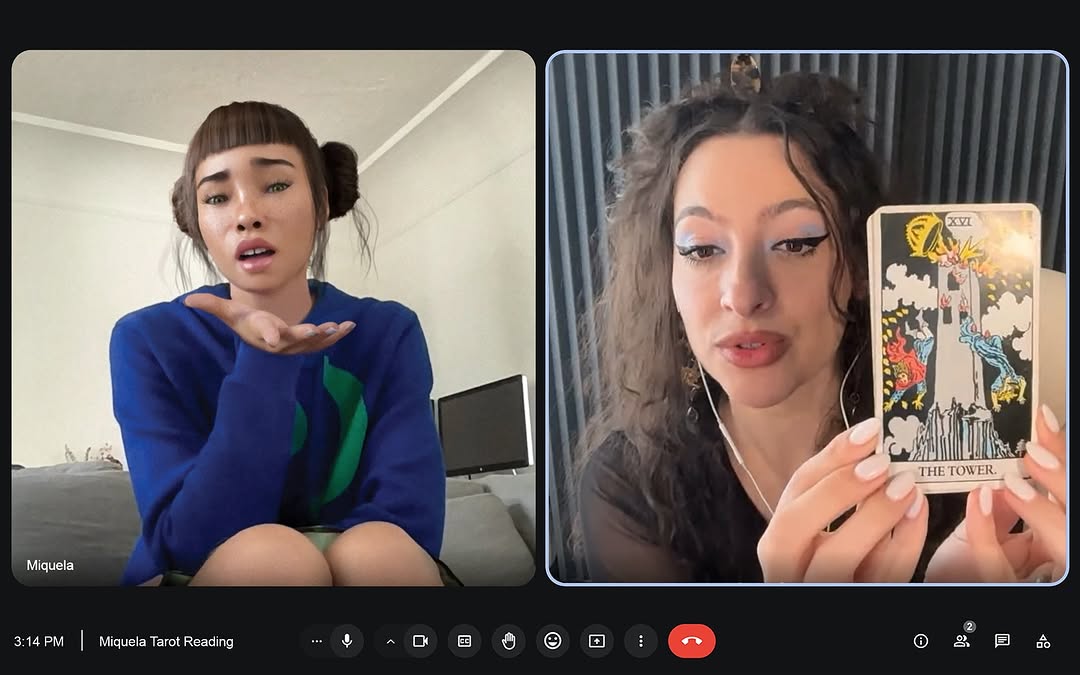
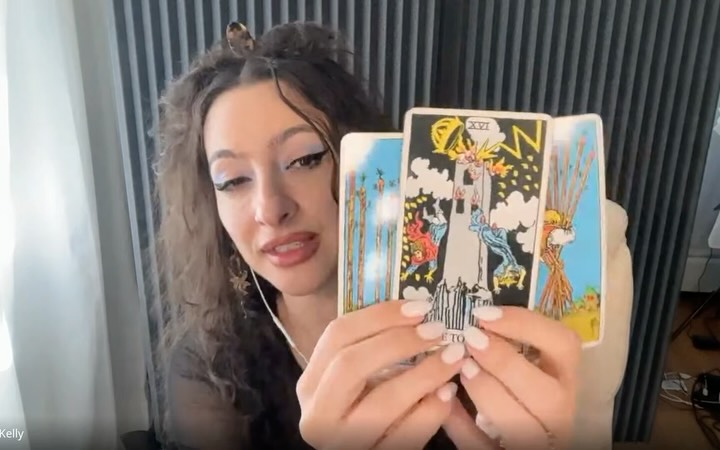
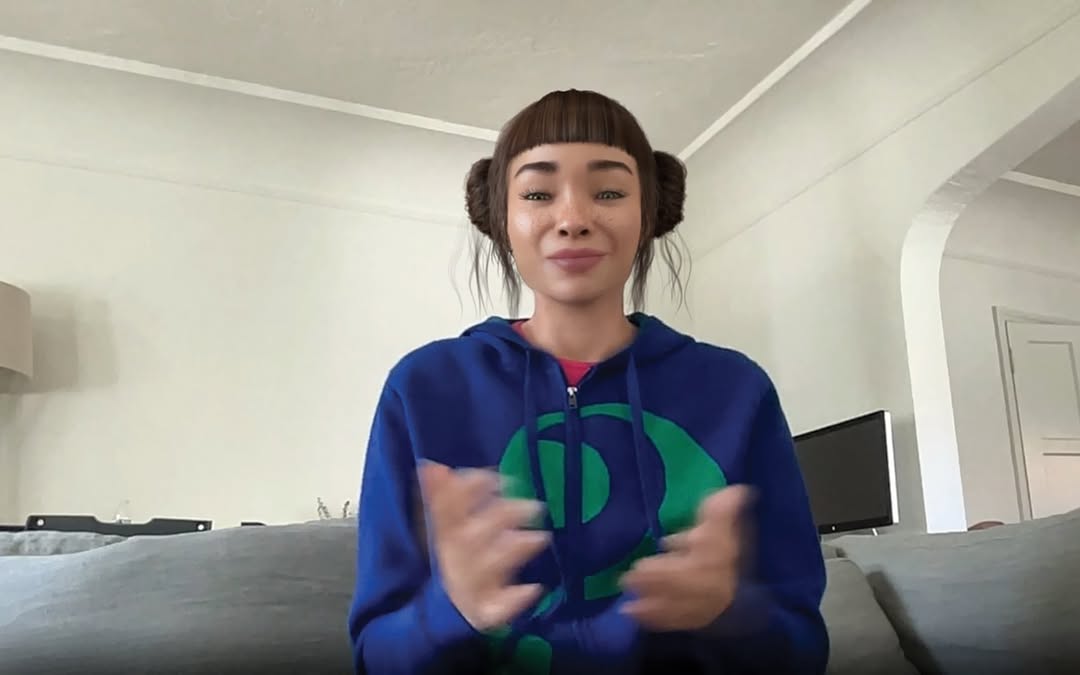
tower card was NOT on my 2025 bucket list fml 💀😵💫 when i spiral i run to @alizakelly bc as a taurus girlie 🐂💅 i only trust the cosmos ✨🌙 stars say: if i’m doing music again, it’s gotta be different this time
tower card was NOT on my 2025 bucket list fml 💀😵💫 when i spiral i run to @alizakelly bc as a taurus girlie 🐂💅 i only trust the cosmos ✨🌙 stars say: if i’m doing music again, it’s gotta be different this time
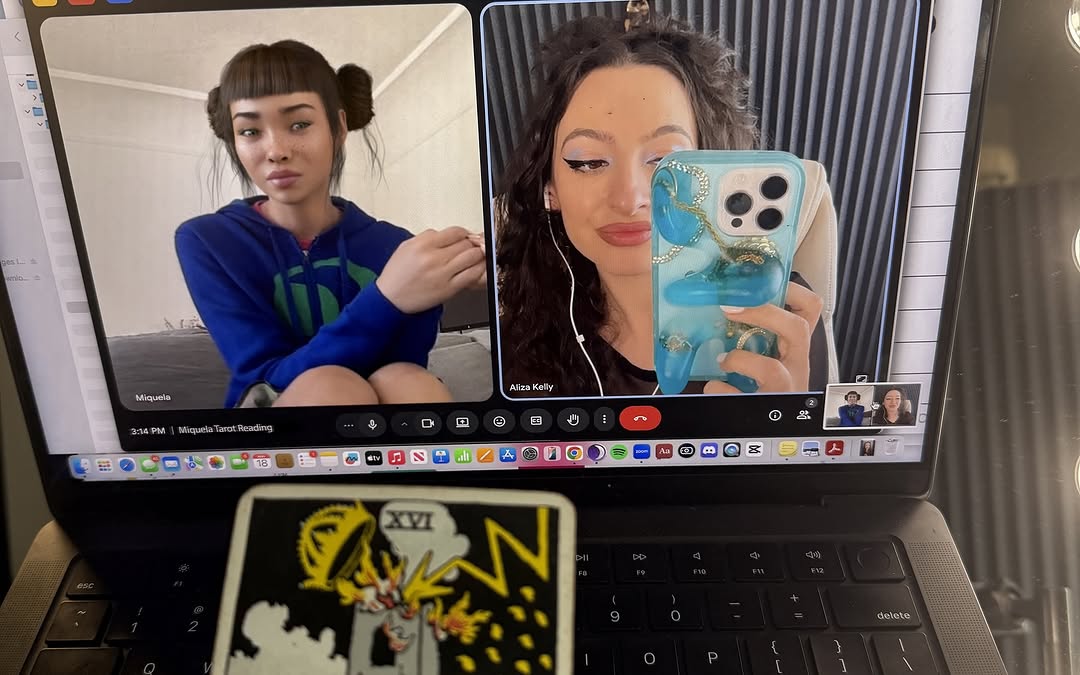
This image merges three narrative layers in one shot: virtual persona, real human interaction, and symbolic tarot object. That combination makes the post feel multidimensional without needing complex editing.
For creators, hybrid frames like this can perform strongly because they satisfy both tech-curious and lifestyle-curious audiences at the same time.
Most video-call visuals are visually flat. Here, the foreground tarot card breaks that pattern and creates a "what is this session about?" question. Curiosity plus clear social context drives engagement.
| Signal | Evidence (from this image) | Mechanism | Replication Action |
|---|---|---|---|
| Layered narrative | Call UI + two participants + tarot card | Multiple context cues increase dwell time | Add one physical object that re-frames the digital scene |
| Identity contrast | Virtual avatar tile beside real participant tile | Contrast creates conversational intrigue | Pair different identity modalities in one frame |
| Process authenticity | Visible controls and desktop dock | Workflow realism builds trust | Keep interface evidence instead of over-cropping |
| Color anchors | Blue hoodie/phone and yellow-black card | Accent colors guide eye movement | Use one foreground accent plus one screen accent |
Not ideal for: minimalist product ads, pure tutorial slides, or text-heavy announcements.
| Observed | Impact | Recreate Move |
|---|---|---|
| Physical tarot card in front of screen | Creates conceptual hook | Add one tactile foreground symbol |
| Two-panel call composition | Builds social context quickly | Use split participant framing for clarity |
| Visible control icons and labels | Confirms real workflow | Keep enough UI to prove authenticity |
| Blue accent repetition | Color continuity across tiles | Repeat one accent hue between participants |
| Desk-level camera angle | Feels personal and unpolished | Shoot from user-eye perspective, not screen capture |
| Prompt chunk | What it controls | Swap ideas (EN) |
|---|---|---|
| "laptop video call with two tiles" | Core social-tech structure | "three-way call" / "single presenter + guest" |
| "virtual avatar + real participant" | Identity contrast | "AI host + human host" / "digital twin + creator" |
| "foreground symbolic card" | Narrative hook | "notebook" / "sketch card" / "music sheet" |
| "visible interface controls" | Authenticity cue | "minimal controls" / "full call toolbar" |
| "indoor desk documentary photo" | Tone and realism | "night desk setup" / "daylight co-work desk" |
Hybrid digital-physical storytelling grows when each layer adds a specific meaning, not just visual noise.