
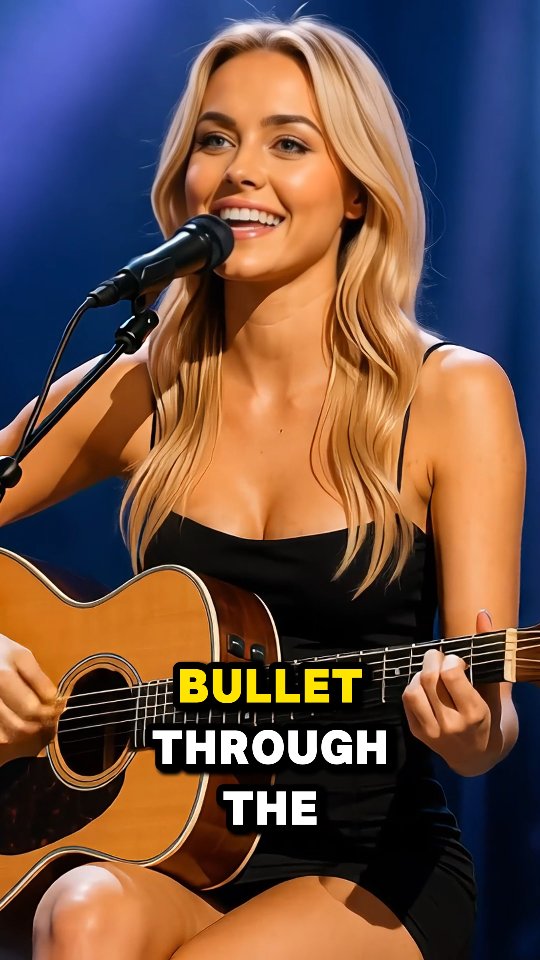
This is my latest track, Boom Boom Bazooka — performed especially for you! 💥🎶 What do you think of the song and the performance?
This is my latest track, Boom Boom Bazooka — performed especially for you! 💥🎶 What do you think of the song and the performance?
This frame from April 21, 2025 works because it makes a viewer understand the promise instantly: a performer, a song moment, and a clear emotional tone. The post reached 1,536 likes and 83 comments, and the visual setup explains why. You get a warm human face, recognizable instrument cues, and a mobile-native composition that survives fast scrolling.
Recipe 1: Expert Talk Variant
Keep: warm key light, 9:16 medium crop, direct expression.
Change: guitar to desk mic + notebook, stage blue to studio gray.
Slot template (EN): "{speaker} presenting {topic} with {prop} in {scene}, warm key light, vertical tight crop"
Recipe 2: Fitness Motivation Variant
Keep: strong foreground subject, lower-third hook text, color contrast.
Change: wardrobe and prop to sports context, background to gym depth blur.
Slot template (EN): "{athlete} doing {action} with {gear} in {location}, high-energy smile, bold hook text"
Recipe 3: Beauty Tutorial Variant
Keep: face priority, shallow depth, clean readable overlay.
Change: mic/guitar to brush/palette, blue stage to neutral vanity lights.
Slot template (EN): "{creator} demonstrating {look} using {tool} in {setup}, close portrait, warm skin tones"
This image succeeds because it combines editorial polish with social immediacy. The lighting is directional but soft, likely a front-left key with gentle fill, so facial planes stay dimensional without hard shadows. The background holds a restrained two-to-three color family centered on deep blue, which avoids visual noise and keeps attention on skin, hair, and guitar wood. Framing places the subject as the dominant mass, roughly over half of the frame, while the guitar body creates a curved counter-shape that prevents the portrait from feeling flat.
Texture handling is also deliberate: skin is clean but not plastic, hair strands are readable, and guitar edges stay crisp against the blur. The microphone crossing the face zone adds authentic performance context, and the lower-third text sits in a high-contrast zone where readability is strongest. Overall, this is less about complexity and more about disciplined hierarchy: one person, one action, one emotional cue, one clear hook.
| Observed | Recreate move | Why it matters |
|---|---|---|
| Soft key from front-left | Lock a warm key at 30-45 degrees | Defines face without harsh shadow |
| Deep blue blurred background | Use cool backdrop with low-detail bokeh | Subject separation and premium tone |
| Subject fills most of vertical frame | Keep medium-tight crop in 9:16 | Maintains small-screen legibility |
| Single dominant prop (guitar) | Include one iconic tool in foreground | Instant category recognition |
| Prompt chunk | What it controls | Swap ideas (EN, 2-3 options) |
|---|---|---|
| Subject + expression | Identity, emotion, and trust signal | "confident smile" | "focused singing face" | "calm intimate expression" |
| Primary prop | Content category and story context | "acoustic guitar" | "podcast microphone" | "makeup brush set" |
| Lighting direction | Depth, skin rendering, cinematic mood | "warm front-left soft key" | "butterfly key" | "soft side key + cool rim" |
| Background cleanliness | Visual noise and attention control | "blue stage blur" | "neutral studio gradient" | "minimal indoor depth bokeh" |
| Lens + crop feel | Perceived intimacy and readability | "50mm medium portrait" | "35mm energetic close-mid" | "70mm compressed portrait" |
| Lower-third text style | Hook visibility in feed thumbnails | "3-word bold uppercase" | "question fragment" | "impact verb + noun" |
Change only one or two knobs per run. If you adjust wardrobe, do not also change lens and background in the same iteration.
{subject} performing {action} with {primary_prop}, vertical 9:16 medium portrait, warm soft key light from front-left, cool blurred background, high facial clarity, mobile-first hook text in lower third.