If you haven’t yet, check out my track ‘Speak with Hands’—one of my faves. Stream it now on Spotify/Apple Music (or your favorite service). 💙🎧
If you haven’t yet, check out my track ‘Speak with Hands’—one of my faves. Stream it now on Spotify/Apple Music (or your favorite service). 💙🎧
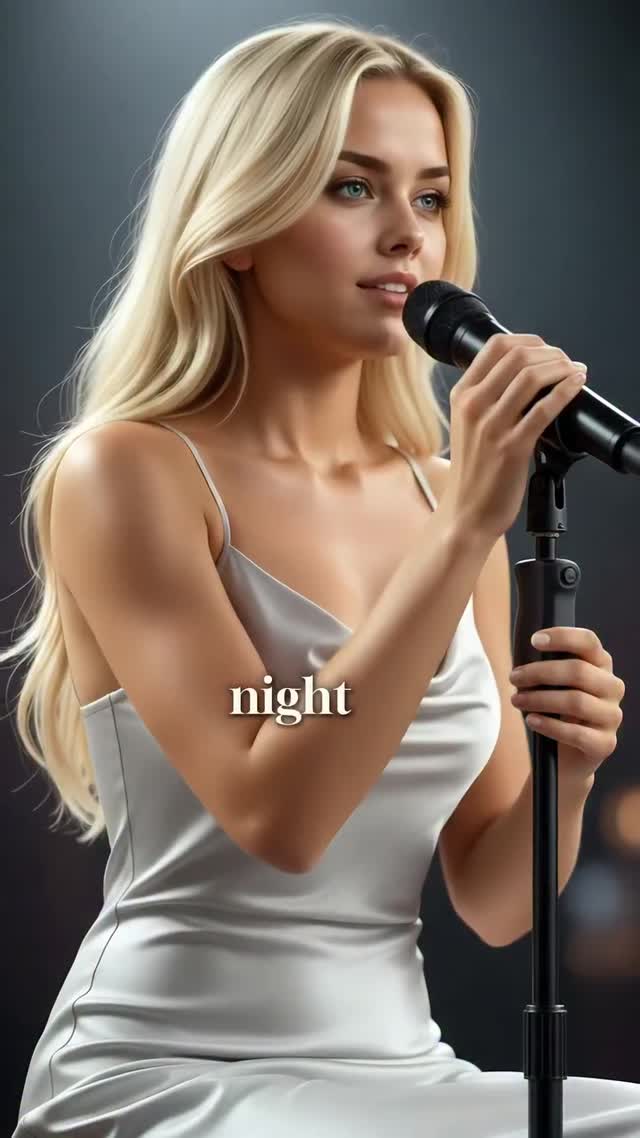
This frame proves a practical growth rule: when the visual is clean, a tiny text cue can become a strong retention trigger. The image uses one performer, one microphone, and one word (“night”). That restraint creates immediate readability and emotional direction without overexplaining the story.
For creators in music and voice-first formats, this is a scalable template. You can keep the same visual identity and rotate just the lyric word, color tone, or expression to produce a coherent series.
The first mechanism is focal discipline. Face and microphone are the only dominant anchors, so users instantly decode context. The second mechanism is tonal contrast: silver satin against a dark soft background reads premium and calm at the same time. The third mechanism is micro-copy anchoring. A single word is lightweight, but it gives the audience an interpretive direction, which increases comment probability (“night what?” “night vibes,” etc.).
Another advantage is repeatability with low production cost. This setup does not rely on complicated set pieces, yet it still feels polished because light quality and material texture are doing the heavy lifting.
| Signal | Evidence (from this image) | Mechanism | Replication Action |
|---|---|---|---|
| Two-anchor clarity | Singer face + microphone stand dominate frame | Fast comprehension improves stop rate | Keep only one subject and one prop anchor |
| Material premium cue | Reflective satin dress in controlled light | Texture implies quality without complex setup | Use one reflective fabric and soft key lighting |
| Single-word hook | Overlay text “night” | Lightweight text invites interpretation and comments | Add one emotionally loaded word at lower-third |
| Background suppression | Dark blur with tiny bokeh highlights | Keeps attention density on subject | Reduce background detail and open aperture |
{artist} close mic portrait, {single_word_overlay}, soft background blur, clean tonal palette
{subject} in recording setup, one mic anchor, minimal text cue, intimate close framing
{performer} lounge portrait, satin styling, soft tungsten bokeh, one-word mood caption
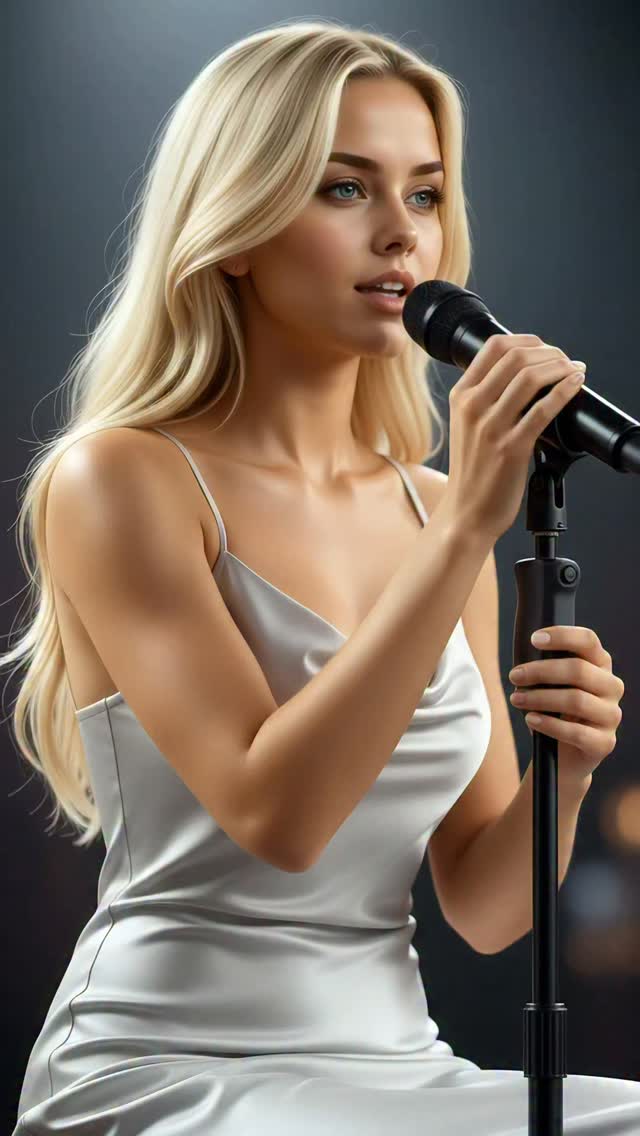
The composition is efficient: left-side facial presence, right-side microphone structure, and empty dark space that prevents clutter. This triangle makes the frame feel stable and intentional. The satin fabric contributes controlled highlights, adding depth without demanding extra props.
The word overlay is also aesthetically smart because it does not dominate. It works as a mood key, not a headline. For creators, this is a useful balance: image-first storytelling with text as a subtle direction cue.
| Observed | Recreate | Practical benefit |
|---|---|---|
| Single-word overlay placement | Place short text in lower-third with high contrast | Retains visual elegance while adding interaction hook |
| Dark simplified background | Use low-detail backdrop and shallow depth | Keeps focus on face and mic |
| Reflective silver fabric | Choose one sheen material and soft key light | Adds premium look with minimal styling complexity |
| Three-quarter profile pose | Turn subject slightly toward microphone axis | Creates dynamic line and natural performance posture |
| Prompt chunk | What it controls | Swap ideas (EN, 2-3 options) |
|---|---|---|
| “single blonde singer, three-quarter close portrait” | Identity and framing intimacy | “brunette vocalist” / “short-hair singer” / “soft profile portrait” |
| “black microphone on stand as right-side anchor” | Performance context and structure | “vintage chrome mic” / “studio condenser mic” / “handheld dynamic mic” |
| “silver satin spaghetti-strap dress” | Wardrobe tone and reflectance | “ivory silk slip” / “black satin top” / “champagne gown” |
| “dark blurred stage with warm bokeh” | Mood and depth separation | “neutral gray studio blur” / “amber lounge lights” / “blue club haze” |
| “single word text overlay” | Hook and memory cue | “midnight” / “echo” / “still” |