Milla Sofia – Where I Begin 3/3 🎵 If this moment touched you, there’s more of that feeling waiting for you on Spotify. 💗
Milla Sofia – Where I Begin 3/3 🎵 If this moment touched you, there’s more of that feeling waiting for you on Spotify. 💗
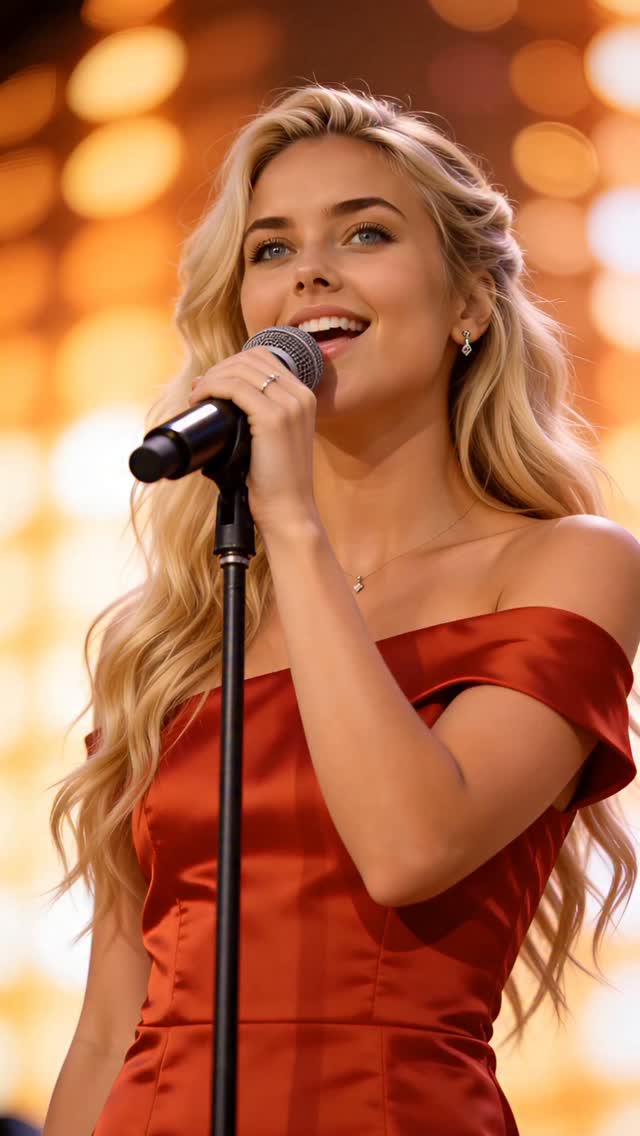
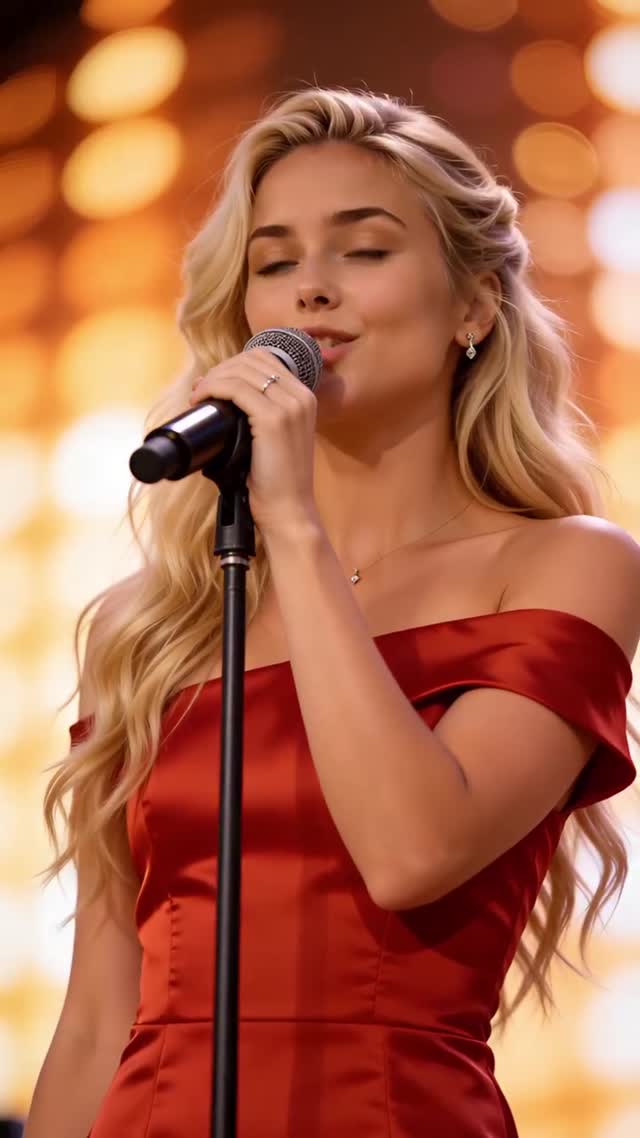
This visual works because it turns one still frame into a complete emotional promise: a singer in red, a mic in hand, warm stage bokeh, and an expression that signals confidence and joy. If your caption invites listeners to continue the journey on Spotify, this kind of image acts like a perfect bridge between social attention and streaming intent.
The image lands because it is both glamorous and readable. The red satin dress provides a bold focal block, while the golden background stays abstract enough to avoid distraction. The subject fills a large portion of the vertical frame, which increases intimacy and improves small-screen performance. A black microphone stand cuts through the composition like a visual anchor, preventing the warm bokeh from becoming too soft or dreamy. Hair texture and jewelry details add depth without clutter. The lighting is flattering but believable: bright enough to feel stage-ready, soft enough to preserve skin realism. This is a smart combination for music posts because it communicates quality without looking overly manufactured. The frame also respects attention economy: one face, one action, one dominant color statement. For creators, this is a strong lesson in conversion design. If you want followers to leave the feed and press play elsewhere, your image must be emotionally clear in under a second.
| Observed | Recreate | Why it matters |
|---|---|---|
| Warm circular bokeh behind subject | Use defocused amber practical lights as backdrop | Adds stage mood while keeping visual softness |
| Crimson off-shoulder satin dress | Choose one high-impact wardrobe color with subtle sheen | Creates instant focal hierarchy |
| Mic held at mouth level during singing | Capture active vocal moment, not neutral pose | Signals authenticity and performance energy |
| Medium portrait crop in vertical frame | Keep upper torso-to-head framing for social covers | Balances expression detail and wardrobe visibility |
| Prompt chunk | What it controls | Swap ideas (EN, 2-3 options) |
|---|---|---|
| performance gesture | Whether the frame reads as active singing or passive posing | open-mouth vocal line / soft smile between lyrics / emotional closed-eye phrase |
| hero wardrobe color | Thumbnail impact and emotional temperature | crimson satin / midnight black silk / champagne gold dress |
| background light character | Stage realism versus studio look | warm amber bokeh / cool violet bokeh / mixed tungsten and magenta |
| camera crop and lens feel | Intimacy and facial readability | 50mm medium portrait / 85mm tight portrait / 35mm energetic close stage shot |
| prop discipline | Message clarity and cognitive load | mic only / mic + stand / headset mic no stand |
[Subject] {artist} singing with {expression}, {signature hair}
[Environment] stage-like backdrop with {bokeh color family}
[Composition/Camera] vertical medium portrait, single hero, clear microphone line
[Lighting] warm flattering key + soft fill + subtle hair rim
[Style/Rendering] photoreal social performance cover, clean and high-clarityBaseline lock: (1) one-singer hero composition, (2) warm bokeh stage background, (3) visible microphone action.
One-change rule: adjust one main variable per iteration to keep performance attribution clear.