▶
Milla Sofia – Where I Begin 3/3 🎵 If this moment touched you, there’s more of that feeling waiting for you on Spotify. 💗
Milla Sofia – Where I Begin 3/3 🎵 If this moment touched you, there’s more of that feeling waiting for you on Spotify. 💗
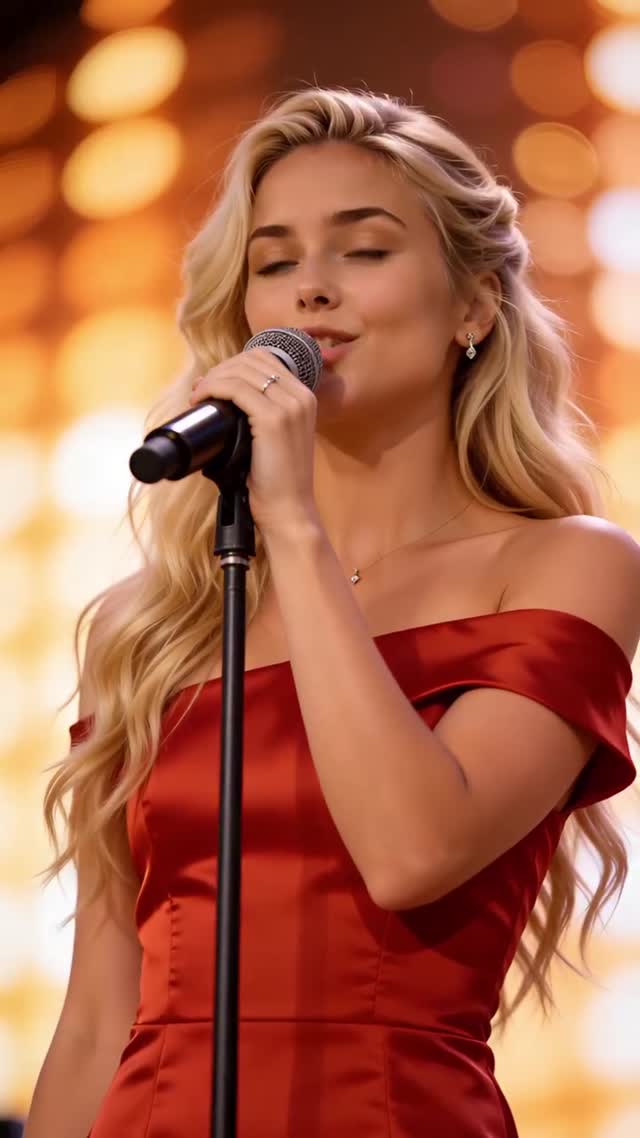
This short-form music clip uses almost no scene complexity, yet it still feels polished and premium because every visual decision serves the same goal: keep the singer elegant, readable, and emotionally centered. The whole reel is built around one glamorous portrait setup, one microphone, one dress color, and one warm stage background.
That simplicity is exactly why the format works for music promotion. Nothing competes with the artist's face, styling, or implied vocal emotion, so the audience reads the clip as a clean performance teaser rather than a busy montage.
The caption points viewers toward Spotify, so the reel is not trying to be a full music video. It functions as a conversion-oriented teaser that makes the performer and song title easy to remember in under half a minute.
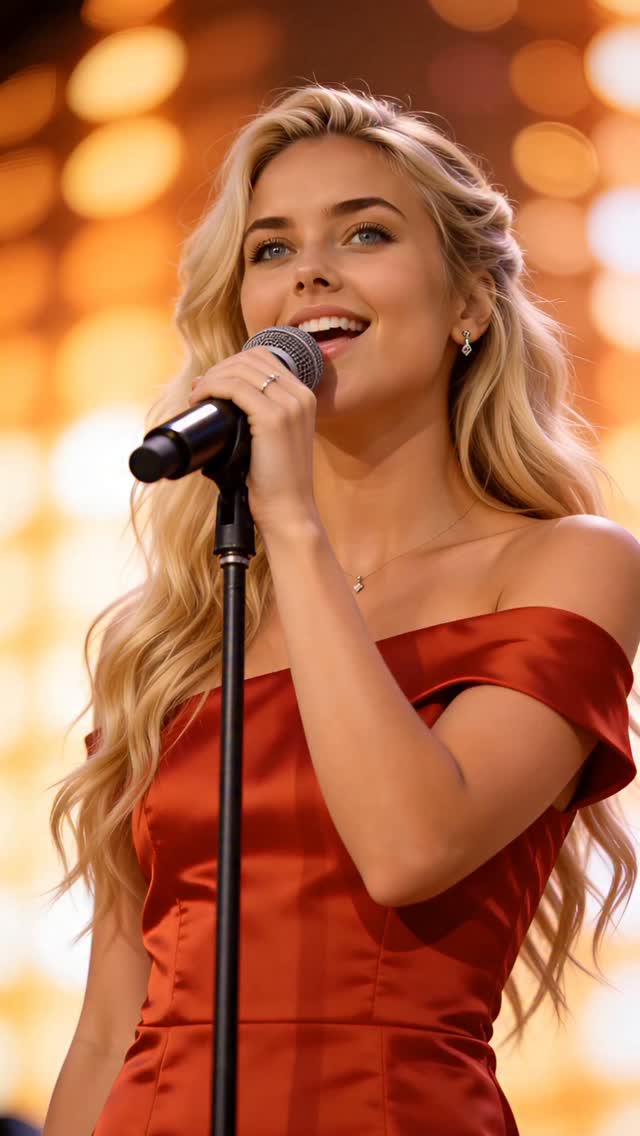
The entire video stays on one singer in one setup. She stands behind a black microphone stand and sings in a medium-close vertical frame that captures her face, neckline, hair, microphone, and most of the bodice of her red satin dress. The wardrobe does a lot of the branding work here because the rich red fabric instantly adds glamour and emotional intensity.
The background is intentionally abstract: large warm golden light circles create a stage-like atmosphere without showing a real venue, audience, or band. That keeps the clip visually luxurious while remaining simple enough to reproduce with AI. The camera barely moves, so the viewer's attention stays fixed on expression changes, mouth shapes, and the subtle sway of the performance.
Near the end, white serif text appears over the lower-left portion of the frame reading Milla Sofia and Where I Begin. This turns the last seconds into a soft title card and makes the short feel like a branded song teaser instead of a generic singing portrait.
1. The performer remains the whole story. With no cutaways or scenery changes, the viewer absorbs face, styling, and emotion immediately.
2. The color contrast is memorable. Red satin against warm gold lighting creates a premium music-promo look with very little production complexity.
3. One camera setup makes the clip feel stable. The lack of aggressive camera movement gives the performance a calm, sincere quality.
4. The ending text clarifies the product. Artist name plus song title convert the portrait into a clear streaming teaser.
5. It is highly reusable. The same structure can support verse snippets, chorus previews, acoustic edits, and alternate songs with only small styling changes.
Start by locking the visual identity. Use a glamorous singer portrait with a strong single-color wardrobe choice, then place her in front of a soft stage-inspired light wall or an abstract golden bokeh background. Keep the microphone hardware visible so the clip reads as performance content immediately.
Resist the urge to over-edit. The strength of this format is its restraint. A mostly static camera, shallow depth of field, flattering beauty lighting, and subtle facial performance are enough. The reel should feel like a premium song moment, not a narrative short film.
If you want the teaser to push streaming intent, save branded text for the final few seconds. That keeps the beginning emotionally clean and lets the viewer first connect with the singer before seeing the artist name and track title.
When prompting, focus on portrait consistency, satin fabric highlights, hair texture, microphone placement, and warm stage bokeh. Those are the elements that carry the entire clip.
This template is especially effective for AI musicians, virtual pop singers, cover-song marketers, and creators building a recognizable performance persona across repeated short-form releases.
Because the styling, lighting, color palette, and framing are all consistent and intentionally focused on the singer's face and performance.
The red satin dress against the warm golden stage blur creates immediate contrast and makes the artist easy to remember.
It preserves the emotional mood in the opening seconds and then turns the closing moment into a branded call-to-remember for the song.
Music creators, AI performer channels, virtual influencers, and release marketers can all adapt this one-shot teaser format for repeated song promotion.