▶
Performing Hallelujah by Lucy Thomas — love this beautiful timeless song 🎶 ❤️
Performing Hallelujah by Lucy Thomas — love this beautiful timeless song 🎶 ❤️
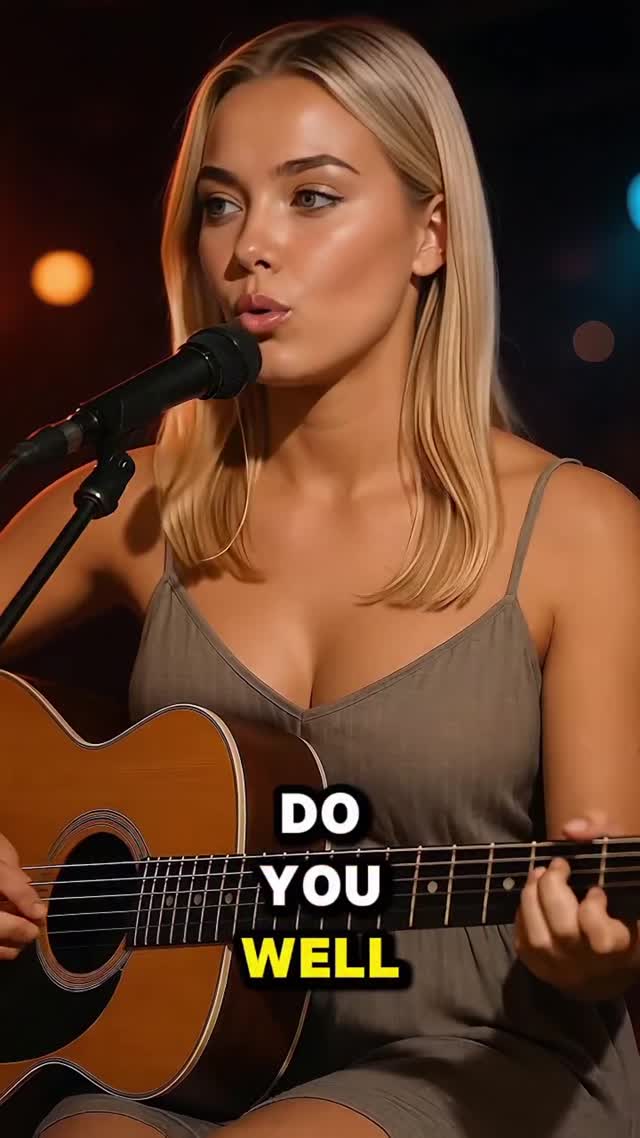
This case study analyzes a high-fidelity AI-generated video featuring a "cinematic editorial portrait" of a virtual influencer performing a cover of "Hallelujah." The video leverages a warm, intimate stage aesthetic with a shallow depth of field, focusing on a blonde female subject playing an acoustic guitar. By combining high-quality AI visuals with a timeless, emotionally resonant song, the creator achieves a "hyper-real" look that blurs the line between digital art and reality. The core keywords for this aesthetic include AI virtual influencer, cinematic stage lighting, acoustic performance, and hyper-realistic lip-sync.
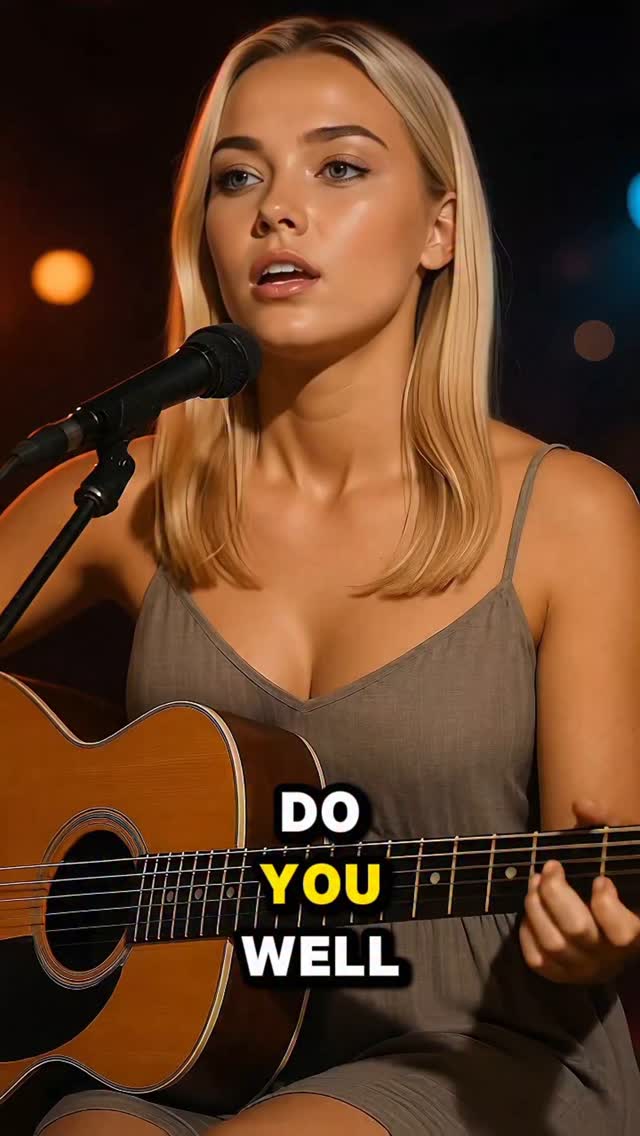
The video features a young blonde woman with a natural, "girl-next-door" yet polished look. She is wearing a simple olive-green spaghetti strap dress, positioned behind a professional studio microphone. She holds an acoustic guitar, and her fingers move convincingly across the strings. The scene is set in a dimly lit environment, likely a stage or a cozy studio, characterized by soft, warm bokeh lights in the background that create a sense of depth and professional production value.
The color palette is dominated by warm ambers and earthy greens, giving the video a "golden hour" or "intimate concert" feel. The editing is minimal, relying on a single, steady Medium Close-Up (MCU) shot that allows the viewer to focus entirely on the subject's facial expressions and the emotional delivery of the song. Large, bold yellow and white text overlays appear in the center of the frame, synchronized perfectly with the lyrics to enhance engagement and accessibility.
| Time Range | Visual Content | Shot Language | Lighting & Tone | Viewer Intent |
|---|---|---|---|---|
| 00:00–00:03 | Subject begins singing "Do you well, it goes like this." | MCU, static, eye-level. | Warm key light, soft bokeh. | Hook: Establish the "live" performance vibe. |
| 00:03–00:06 | Transition to "The fourth, the fifth, the minor fall." | Subtle push-in (estimated). | Consistent warm tones. | Reinforce persona: Show emotional connection to lyrics. |
| 00:06–00:10 | Singing "And the major, the baffled king." | MCU, slight head tilt. | Highlighting skin texture. | Build tension: Leading into the chorus. |
| 00:10–00:19 | The "Hallelujah" chorus with eyes closing. | MCU, focus on mouth/eyes. | Dramatic rim lighting on hair. | Emotional payoff: The "money shot" for shares. |
This video succeeds primarily because it chooses a universally recognized and emotionally charged song. "Hallelujah" is a "safe" viral bet; it triggers nostalgia and emotional resonance across almost all demographics. By pairing this song with a high-fidelity AI avatar, the creator taps into the "Uncanny Valley" curiosity—viewers stop scrolling not just for the music, but to figure out if the person is real. This "pause-and-stare" behavior is a massive signal to platform algorithms that the content is engaging.
From a platform perspective (Instagram/TikTok), this video hits several high-performance markers. The 0–3 second hook is purely aesthetic: a beautiful face, a professional mic, and a familiar melody. The loop effect is subtle; because the song is a continuous flow, viewers often let it play through twice to catch the details of the AI generation. The captions are crucial—they reduce the "explanation cost," allowing users to sing along or watch without sound initially, which increases retention rates. The high "save" rate likely comes from other creators using it as an aesthetic reference for what is possible with modern AI tools.
Template 1: The Emotional Connection
There’s something about this song that never gets old. 🎶 It feels like a warm hug for the soul. Which lyric hits you the hardest? Let me know below! 👇 #Hallelujah #AImusic #Cinematic
Template 2: The Tech Curiosity
AI is getting scary good. 🤖 I spent hours perfecting the lighting and lip-sync for this performance. Do you think AI will eventually replace live performers? 🎤 #AIinfluencer #DigitalArt #FutureTech
Use Flux for the base image and Hedra or Kling for the lip-sync and animation.
"Cinematic," "Bokeh," and "Hyper-realistic."
You aren't using a fixed seed or a Character Reference (--cref) in your image generation tool.
Add subtle "imperfections" like stray hairs, skin texture, and natural eye blinking.
Instagram currently favors high-aesthetic "lifestyle" AI, while TikTok favors "weird" or "process" AI content.