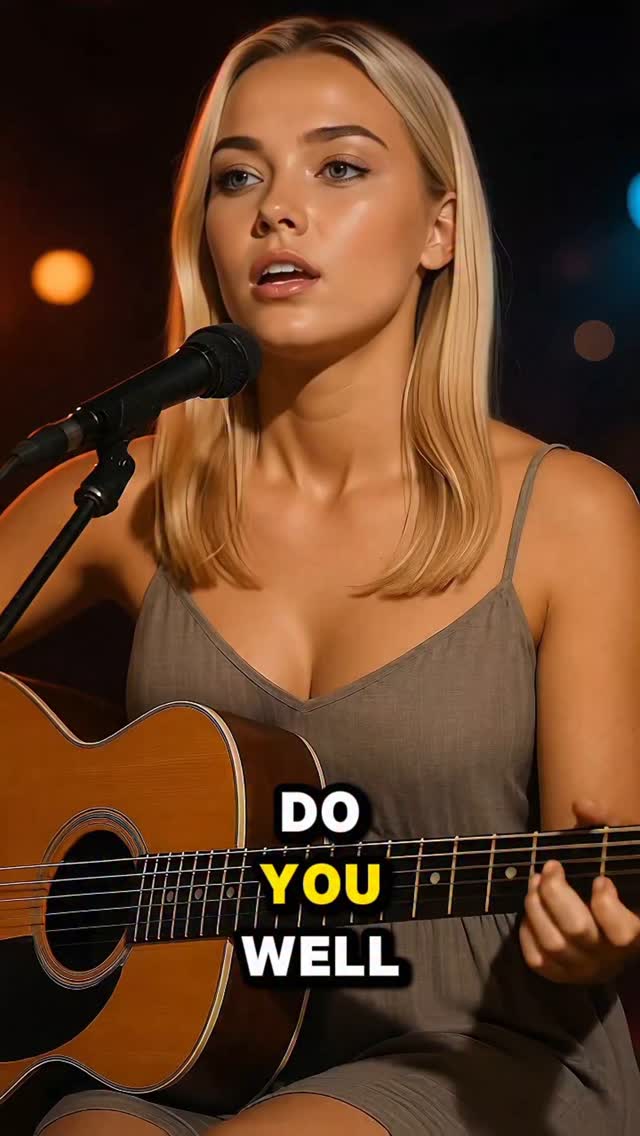

Performing Hallelujah by Lucy Thomas — love this beautiful timeless song 🎶 ❤️
Performing Hallelujah by Lucy Thomas — love this beautiful timeless song 🎶 ❤️
This image works because it combines vocal and instrument cues in one compact frame. The microphone says “live performance,” and the acoustic guitar says “stripped-back authenticity.” For creators, this dual-cue structure is highly effective for music promotion because it signals both talent and format instantly.
The text overlay is also strategic. It is short, high-contrast, and placed where attention naturally falls after the face and instrument. This makes the visual useful as both a storytelling post and a teaser cover. If your goal is to drive listens, this format provides clarity without overloading design.
| Signal | Evidence (from this image) | Mechanism | Replication Action |
|---|---|---|---|
| Format clarity | Guitar plus microphone visible together | Audience instantly understands acoustic performance context | Include at least two role-defining objects in promo visuals |
| Emotion-first face framing | Tight crop with singing expression | Facial micro-expression increases emotional connection | Frame face and instrument in same shot, not separate slides |
| Overlay utility | Short title text with one highlighted word | Quick readability improves repost and memory | Use a 2-4 word overlay with one color-emphasis keyword |
{acoustic portrait} + {performance objects} + {short title overlay}{intimate stage lighting} + {single performer} + {lyric-like text cue}{musician close-mid frame} + {instrument texture} + {clean typography}The frame balances softness and structure. Warm skin tones and matte wardrobe keep the mood grounded, while the guitar wood grain adds tactile authenticity. The black microphone and dark background provide contrast anchors so the subject does not blend into stage light haze. This is a repeatable aesthetic for artists who want polished intimacy.
| Observed | Recreate |
|---|---|
| Instrument crossing lower frame | Place guitar body prominently in foreground for immediate format signal |
| Mic entering from side toward mouth | Use directional mic line to connect object and expression |
| Short stacked text with one highlighted word | Limit overlay to a concise phrase and emphasize one keyword |
| Warm key with cool/warm background accents | Light subject warmly and keep ambient stage colors soft and blurred |
| Prompt chunk | What it controls | Swap ideas (EN, 2-3 options) |
|---|---|---|
| Performance object block | Context certainty | "acoustic guitar + mic" / "piano + vocal mic" / "ukulele + stand mic" |
| Expression block | Emotional pull | "mid-song focus" / "soft smile while singing" / "intense lyric delivery" |
| Lighting block | Mood quality | "warm key + dark bokeh" / "amber spotlight" / "mixed stage practicals" |
| Overlay block | Promotional readability | "3-word stacked title" / "single-line hook" / "highlighted keyword" |
| Wardrobe block | Tonal coherence | "taupe minimal dress" / "black camisole" / "neutral knit top" |
Baseline lock: lock mic+guitar visibility, lock medium crop, lock short text overlay system.
Track saves and link clicks; acoustic promo visuals usually improve when context objects stay constant and message text remains short.