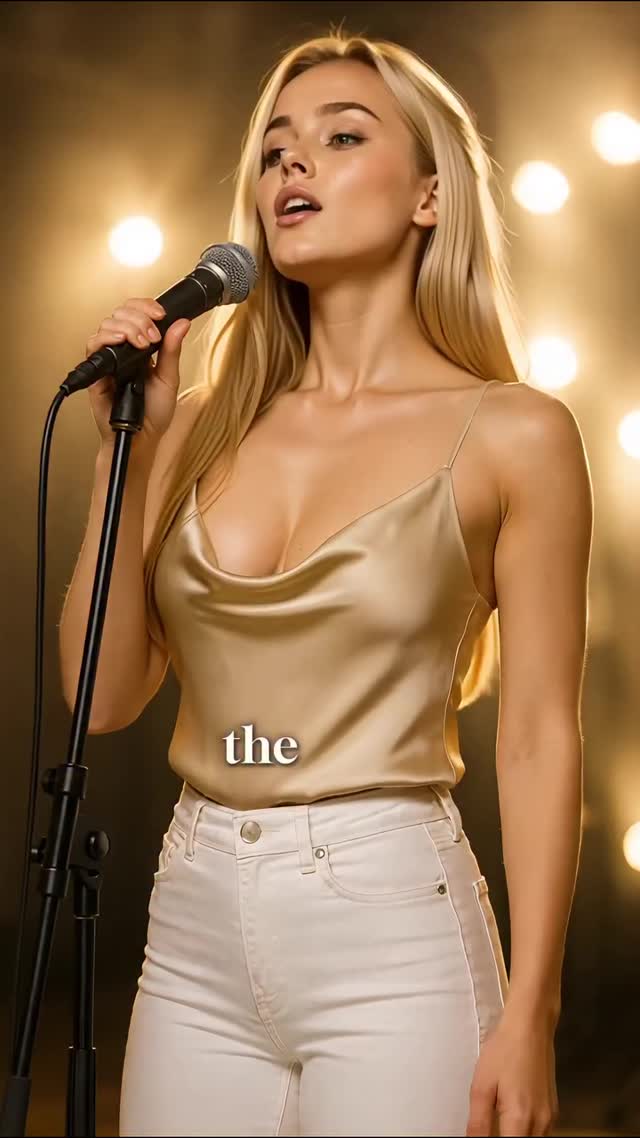
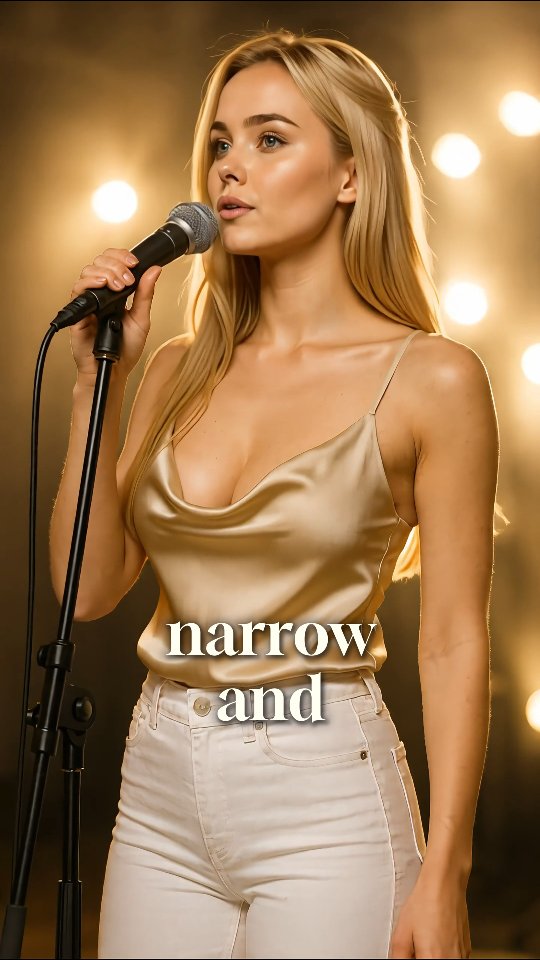
✨ A heartfelt visual tribute to Woman in Love — originally by Dana Winner. Brought to life through elegant style, soft light, and emotional depth by Milla Sofia.
🎬 Not a vocal cover — a cinematic performance capturing the quiet strength of love.
🎧 Let the music speak beyond words.
💫 Follow for more visual tributes & timeless moments.
How millasofiafin Made This Woman in Love AI Portrait
This frame is optimized for aspirational performance content. The creator combines a polished wardrobe, clean body-line framing, and warm stage lighting to create a premium music identity in one shot. It is not trying to document a live concert. It is building a branded performer image that can scale across reels.
The key insight is balance: the image is glamorous but still simple. One subject, one microphone, one lighting language. That clarity makes it easy for viewers to process on a small screen and easy for creators to replicate without complex production.
Signal Table
Signal
Evidence (from this image)
Mechanism
Replication Action
Premium performer identity
Satin wardrobe + controlled warm bokeh stage
Raises perceived quality and creator authority
Lock one elevated fabric (satin/silk look) and one consistent light color family
Clear music context
Visible microphone stand and singing posture
Instant category recognition in feed
Always include one unmistakable music prop in first frame
Readable body framing
Medium full portrait shows posture, outfit, and expression
Combines emotional face signal with fashion styling
Use thigh-up framing for singer-brand posts
Warm emotional tone
Golden back practicals and soft skin highlights
Creates nostalgia and share-friendly mood
Set warm key temperature before fine-tuning contrast
Use Cases and Adaptation
Best fit: New single teaser. Why fit: visually announces artist identity fast. What to change: lyric subtitle phrase only.
Best fit: Tour announcement. Why fit: stage language feels event-ready. What to change: add city/date overlay in lower safe area.
Best fit: Fashion x music crossover posts. Why fit: outfit is part of story. What to change: swap fabric color by brand partner.
Best fit: Weekly cover series. Why fit: repeatable composition builds recognition. What to change: rotate background bokeh density per song mood.
Not ideal: Behind-the-scenes tutorials. Reason: image language is polished, not instructional.
Not ideal: High-energy dance snippets. Reason: standing pose prioritizes elegance over motion.
Transfer 1: Pop-lounge variant Keep: mic stand geometry, medium-full framing, warm bokeh core. Change: wardrobe color and subtitle tone. Slot template (EN):{singer medium-full} {luxury top texture} {single mic stand} {warm stage bokeh}
Transfer 2: Outdoor sunset live version Keep: one-subject composition and performance posture. Change: background from indoor bokeh to sunset sky gradient. Slot template (EN):{singer portrait} {sunset environment} {minimal stage prop} {soft golden key}
Transfer 3: Minimal monochrome campaign Keep: framing and microphone anchor. Change: palette to black/white and harder contrast ratio. Slot template (EN):{performer thigh-up} {mono wardrobe} {single mic} {high-contrast lighting}
Aesthetic Read
This image works because it merges fashion polish with music proof. The satin top creates controlled specular highlights that catch stage light and signal quality. White denim stabilizes the palette, preventing the frame from becoming too heavy in warm tones. The bokeh circles in the background are large and soft, which creates visual rhythm without stealing attention from the face. Pose direction is another subtle strength: the singer’s torso is front-facing while the head tilts slightly, adding elegance and avoiding stiffness. The microphone stand introduces a vertical line that structures the composition and reinforces purpose. For creators, this is a useful blueprint: pick one hero texture, one iconic prop, and one cohesive color temperature, then keep everything else quiet.