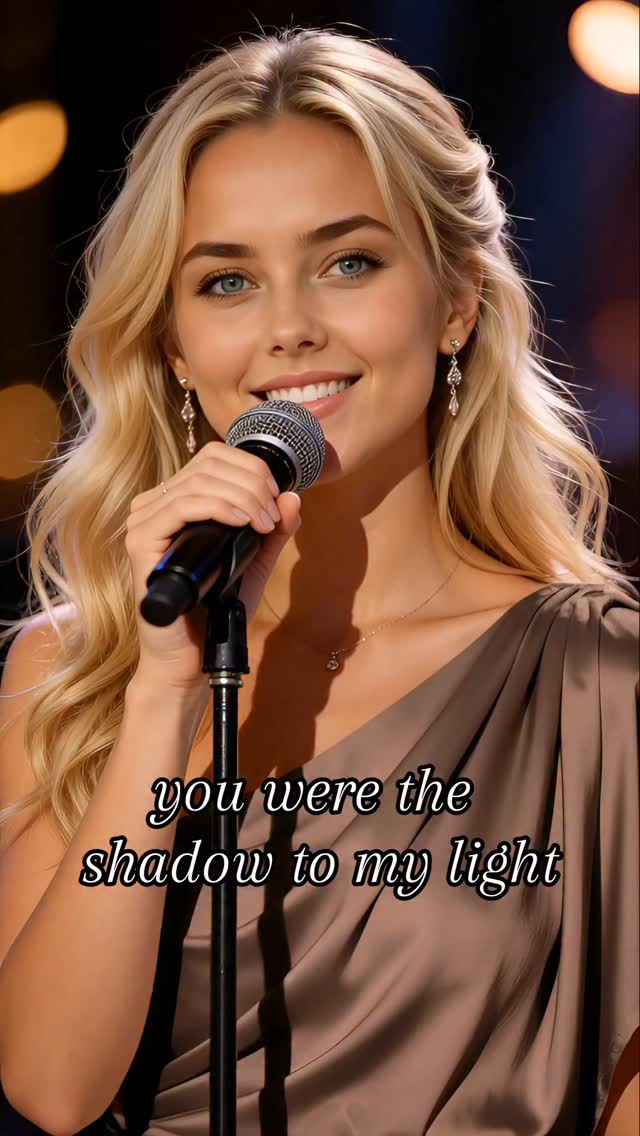
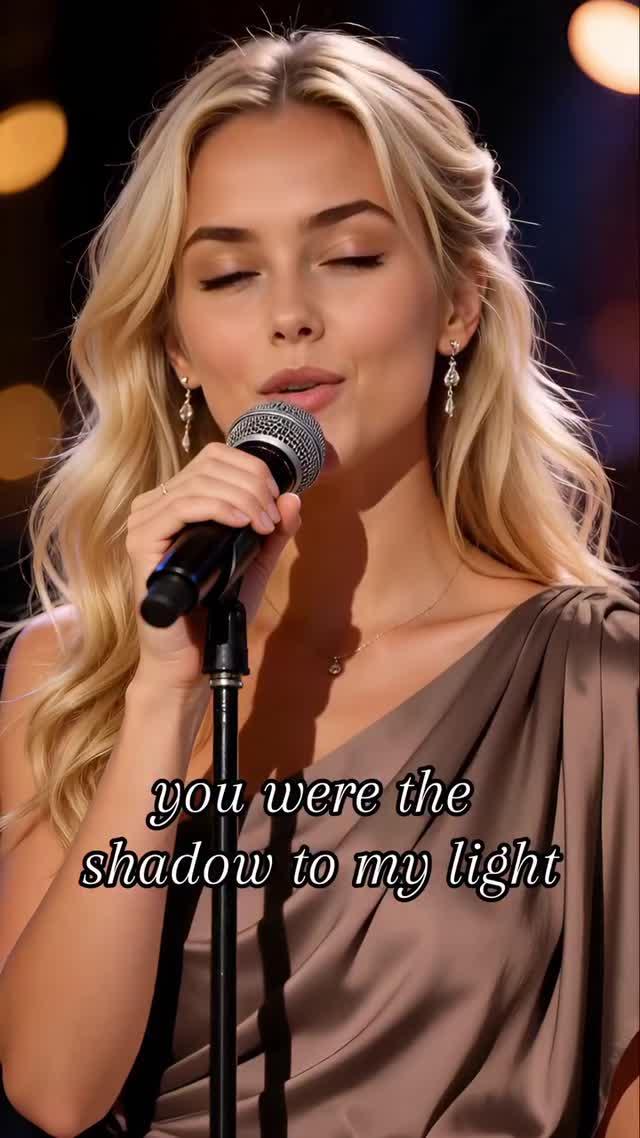
A short moment from Faded by Alan Walker. This song always pulls me into its atmosphere and emotion. Let me know if you feel it too 🤍 This video is a lipsync using the original song.
A short moment from Faded by Alan Walker. This song always pulls me into its atmosphere and emotion. Let me know if you feel it too 🤍 This video is a lipsync using the original song.
This image works because it feels like a real pause inside a song. A smiling singer, a close microphone, warm stage light, and a lyric line that people already carry emotionally in their head. It is simple, but it is not shallow. Every element points to one feeling, and that clarity is exactly why this format travels.
Acoustic Studio Transfer
Keep: close-up framing, warm soft key, handheld mic intimacy.
Change: stage bokeh to minimal studio wall and a subtle practical lamp.
Slot template (EN): “{singer close-up} with {mic type}, {warm light setup}, {lyric line overlay}”.
Neon Night Transfer
Keep: one-subject composition and sharp face-versus-blur hierarchy.
Change: amber bokeh to teal-magenta club lights; outfit shifts to black leather.
Slot template (EN): “{performer} in {wardrobe}, {neon bokeh background}, {emotive lyric caption}”.
Soft Daylight Busking Transfer
Keep: smile-driven expression, lyric-text storytelling layer.
Change: indoor stage to outdoor street blur, golden-hour daylight instead of indoor practicals.
Slot template (EN): “{street performance scene}, {subject expression}, {mic + lyric text}, {depth-of-field style}”.
The beauty of this frame is discipline. First, the composition is controlled: medium close-up, eye-level feel, and a strong vertical line from the mic stand that anchors the lower half. Second, light design stays flattering and believable: a warm, soft key brings out skin and hair while shadows remain gentle. Third, texture layering is intentional. Satin folds, metal microphone grille, and clean hair highlights provide realism at different scales.
The lyric overlay is also a visual design choice, not just text. It sits where viewers naturally land after reading the face and microphone, so the reading order feels natural: expression first, lyric second, emotion third. That sequence is why the post feels cohesive instead of cluttered.
| Observed | Recreate evidence |
|---|---|
| Warm soft key on face from front-left | Use “soft warm stage key + gentle fill, no hard flash” |
| Background heavily blurred with amber light orbs | Use shallow DOF and explicitly request “dark concert bokeh” |
| Single-subject frame with clear mic prop | Lock object count to one performer and one microphone setup |
| Moderate contrast and clean cinematic color grade | Request warm-neutral grading and avoid oversaturated neon processing |
| Lyric overlay with high readability | Specify exact text, italic serif style, and dark outline for legibility |
| Prompt chunk | What it controls | Swap ideas (EN, 2–3 options) |
|---|---|---|
| Subject expression | Emotional tone and viewer relatability | “soft smile” / “closed-eye emotional line” / “calm half-smile” |
| Wardrobe material | Perceived quality and aesthetic genre | “taupe satin drape” / “black lace stage dress” / “silver silk top” |
| Background cleanliness | Focus speed and feed readability | “dark amber bokeh” / “blue-violet concert blur” / “minimal black backdrop” |
| Lighting direction and softness | Skin rendering and cinematic intimacy | “front-left soft key” / “side warm key with gentle fill” / “rim-light plus soft front fill” |
| Lens + depth-of-field feel | Subject isolation and portrait polish | “85mm shallow DOF” / “70mm moderate blur” / “100mm compressed portrait” |
| Lyric caption style | Narrative hook and shareability | “italic serif two-line lyric” / “thin sans lyric subtitle” / “script-style short quote” |
[Subject] young blonde singer, warm smile, natural glam makeup, dangling earrings, holding handheld microphone close to lips
[Environment] dark stage background with warm amber bokeh and slight cool accents
[Composition/Camera] vertical medium close-up, near eye-level, subject and mic central-left, shallow depth of field
[Lighting] soft warm front-left key, gentle fill, flattering shadows
[Style] photoreal cinematic concert portrait, realistic skin, satin fabric detail
[Text overlay] “you were the shadow to my light”, italic serif white text with dark outlineChange only one or two knobs per generation. If you modify lighting, lens, outfit, and text style simultaneously, you lose control and cannot diagnose why quality dropped.