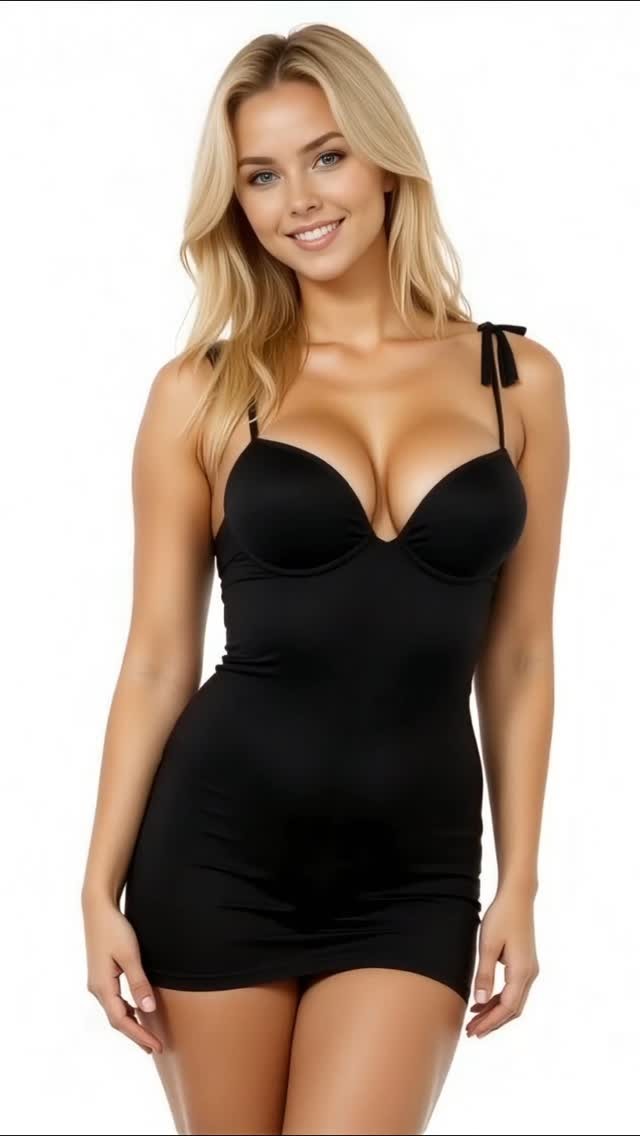
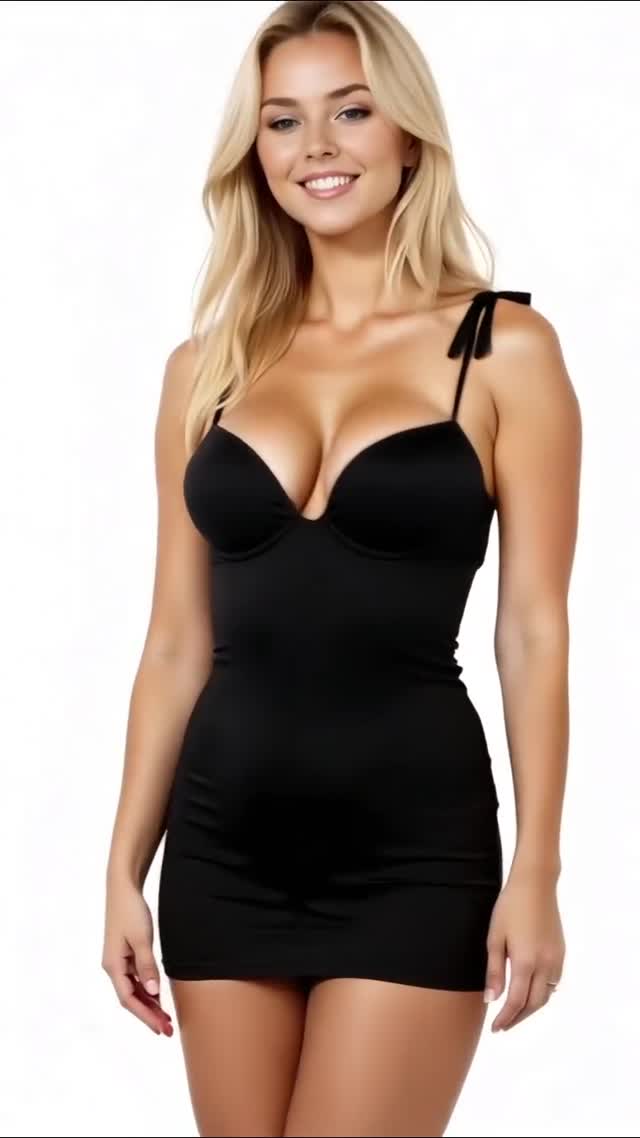
Me, myself and this black dress.
Me, myself and this black dress.
This image works because it removes almost everything except the decision object: one person, one dress, one neutral background. There is no environment story competing for attention. That makes silhouette, fit, and confidence the core message. For fashion creators, this is a high-efficiency format when the goal is clarity and conversion-friendly visibility.
The caption is equally minimal: "Me, myself and this black dress." That line reinforces the visual strategy of reduction. No over-explaining, no trend jargon, just ownership of a look. This simplicity often performs better than complex copy when the frame already communicates confidence.
Keep: one garment, one subject, one neutral background.
Change: rotate garment category (dress, blazer, denim) while preserving layout.
Slot template (EN): "me, myself, and this {wardrobe staple}."
Keep: clean crop and expression-forward confidence.
Change: swap caption tone from minimal to practical fit notes.
Slot template (EN): "simple look, strong shape: {one fit insight}."
Keep: clear silhouette visibility.
Change: produce three styling variants as follow-up posts (day/night/event).
Slot template (EN): "same base piece, three moods."
The composition relies on symmetry and restraint. Subject sits near center with enough negative space to maintain focus on body line and garment contour. Soft studio light avoids harsh shadows, keeping texture and shape readable without visual noise. This is classic commerce-meets-editorial execution.
The black dress acts as high-contrast anchor against the pale background, which improves mobile visibility. Hair and skin tones provide warmth so the frame does not feel sterile. For creators, this is a useful reminder: minimal does not mean flat, as long as lighting and posture are intentional.
| Observed | Recreate evidence |
|---|---|
| Centered near full-body portrait | Keep subject vertically dominant with clean side spacing. |
| Plain high-key background | Use light seamless backdrop for distraction-free silhouette reading. |
| Dark garment vs light field contrast | Maximize tonal separation between outfit and background. |
| Soft even beauty lighting | Avoid hard shadows to preserve fabric/skin clarity. |
| Prompt chunk | What it controls | Swap ideas (EN, 2-3 options) |
|---|---|---|
| "single model in fitted black mini dress" | Hero product identity | "bodycon staple look" | "minimal evening dress" | "clean monochrome outfit" |
| "light-gray seamless studio background" | Visual noise reduction | "off-white backdrop" | "neutral studio wall" | "soft gradient seamless" |
| "centered near full-body crop" | Fit visibility | "3/4 body framing" | "lookbook crop" | "straight-on silhouette frame" |
| "soft even beauty light" | Texture and skin rendering | "clean front fill" | "diffused studio key" | "low-contrast portrait light" |
| "minimal confidence caption" | Tone coherence | "simple ownership line" | "short first-person statement" | "low-word high-confidence copy" |
Baseline Lock: lock clean background, lock centered fit visibility, lock concise caption voice.
One-change rule: change only one to two variables per version, usually garment type and caption utility.