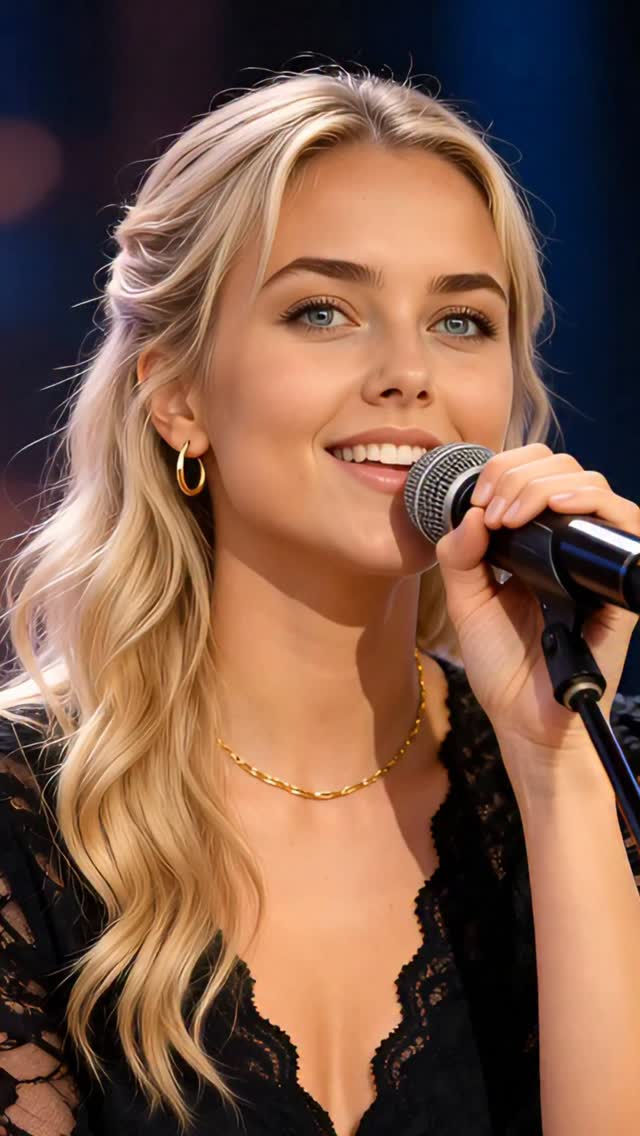
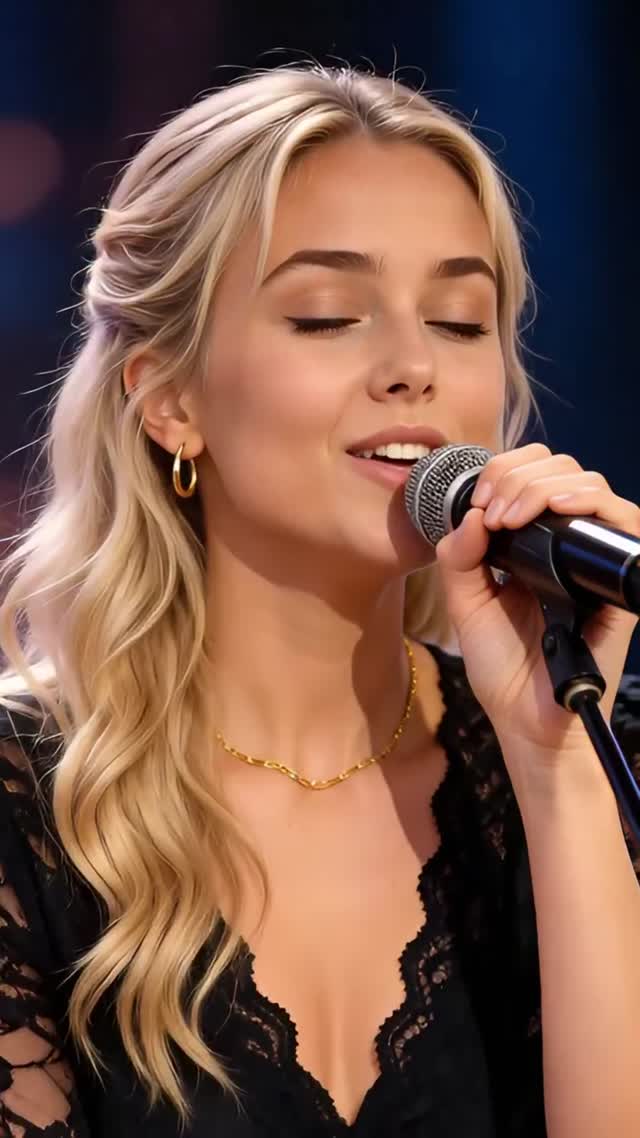
“Woman in Love” is such a timeless and emotional song. Every line feels like devotion, vulnerability, and quiet strength. I wanted to focus purely on the feeling and let the emotion speak 🤍 This is lip sync performance using the original song performed by Dana Winner.
How millasofiafin Made This Woman in Love AI Portrait — and How to Recreate It
Some images don’t go viral because they’re loud. They go viral because they feel like a private conversation. This frame is a perfect example: a single performer, a microphone, and an expression that reads as devotion rather than performance.
Why This Works (and Why People Hit Share)
What makes this kind of post travel is the emotional readability. You don’t need context to understand it: the smile is soft, the gaze is steady, the microphone is close enough to feel intimate. It’s not “look at me,” it’s “feel this with me.” That’s a share trigger because audiences love content that lets them borrow a mood.
The second mechanism is simplicity under control. There are almost no moving parts: one face, one prop, one background. That means every pixel points to the same story. Even if the performance is a lip sync, the visual language still communicates sincerity—warm light on skin, cool blur behind, and a clean close-up that feels like a front-row seat.
Finally, the format is designed for feeds. Vertical framing, tight crop, and shallow depth of field create instant focus on mobile. It reads in under a second, but it rewards a longer look: lace texture, gold accents, and that “timeless ballad” vibe that matches the caption’s theme of devotion and quiet strength.
Signal Table
Signal
Evidence (from this image)
Mechanism
Replication Action
Emotional clarity
Warm smile + steady eyes, microphone close to lips
Audience instantly understands the feeling; lowers friction to engage
Prompt for “warm genuine smile, relaxed eyes, intimate mic distance” and avoid exaggerated expressions
Subject isolation
Background is dark and fully blurred in cool tones
Removes distractions; makes the face the entire story
Lock “dark stage background, blue/purple bokeh, uncluttered” + enforce shallow depth of field
Premium texture cues
Lace fabric detail + gold jewelry highlights
Signals quality and craft; increases rewatch/zoom behavior
Add “detailed black floral lace, realistic skin texture, gold metal accents” and increase texture realism
Mobile-first framing
Vertical, chest-up close-up, face fills most of the frame
Reads instantly in feed; maximizes attention per second
Use 9:16, tight crop, and place the face slightly off-center with the mic in foreground
Where This Style Fits (and How to Transfer It)
Best-fit scenarios
Ballads, covers, lip syncs: The close-up sells emotion; keep the mic distance consistent and reduce background detail.
Creator introductions: Use the same framing to make “who I am” feel personal; swap the stage for a simple studio backdrop.
Brand partnerships (beauty/jewelry): Texture + gold accents read premium; keep lighting soft and let materials sparkle.
Short-form hooks: One expressive frame can carry a 1–2 second hook; keep the eyes tack-sharp and the crop tight.
Not ideal
Complex storytelling scenes: This style compresses context; it’s not built for multi-object narratives.
Comedy/skit formats: The visual language is sincere and romantic; exaggerated humor can feel mismatched.
Busy environments: If you need set detail, the heavy blur will erase what makes the scene meaningful.
The most important aesthetic choice here is contrast of temperatures: warm skin and hair against a cool, dim stage blur. That single move creates separation without needing a complex set. Next is controlled intimacy. The crop is chest-up, the microphone is close, and the eyes are sharp—so the viewer feels invited in, not kept at a distance.
Then there’s texture hierarchy. The lace dress provides micro-detail, the gold jewelry provides specular highlights, and the microphone grille adds a familiar “performance” texture. All of that sits on top of a background that refuses to compete. Finally, the image is clean but not sterile: it’s polished like a concert promo, yet the smile feels human. That blend is exactly what makes the frame replayable.
Prompt Technique Breakdown (Think Like a Control Panel)
Prompt chunk
What it controls
Swap ideas (EN, 2–3 options)
Subject + expression
Emotional readability and shareability
“soft smile” / “teary-eyed but composed” / “joyful laugh mid-lyric”
Remix Steps: Converge Fast Without Losing the Magic
Baseline Lock (lock these first)
Composition: vertical chest-up close-up with face slightly off-center
Lighting: warm soft key from front-left + gentle fill
Lens feel: 85mm portrait with very shallow depth of field
One-change rule
Change only 1–2 knobs per run. If you change wardrobe, lighting, and background at once, you’ll never know what broke the vibe. Treat prompts like a mixing board: move one slider, listen, repeat.
Example 4-step iteration sequence
Run 1 (baseline): lock composition + lighting + mic placement; aim for the exact intimacy.
Run 2 (texture): keep everything, increase lace detail and realistic skin texture; reduce over-smoothing.
Run 3 (mood): keep framing, shift background bokeh color slightly (blue → purple) to match the song’s tone.
Run 4 (identity): keep the entire lighting/camera setup, swap only wardrobe or hairstyle to create a new “same series” post.