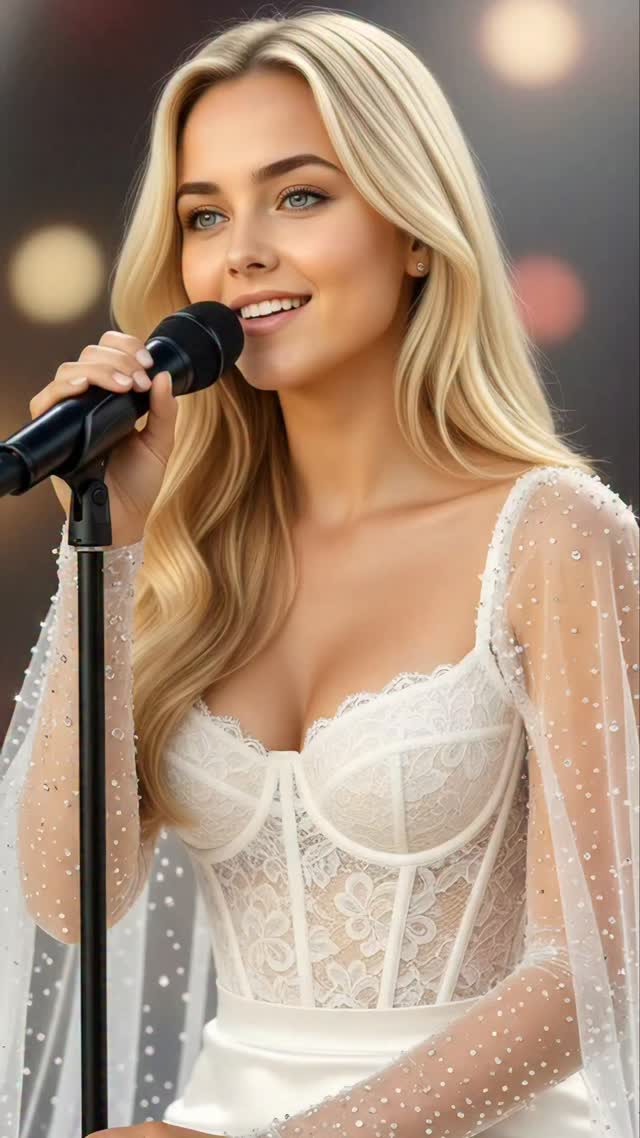
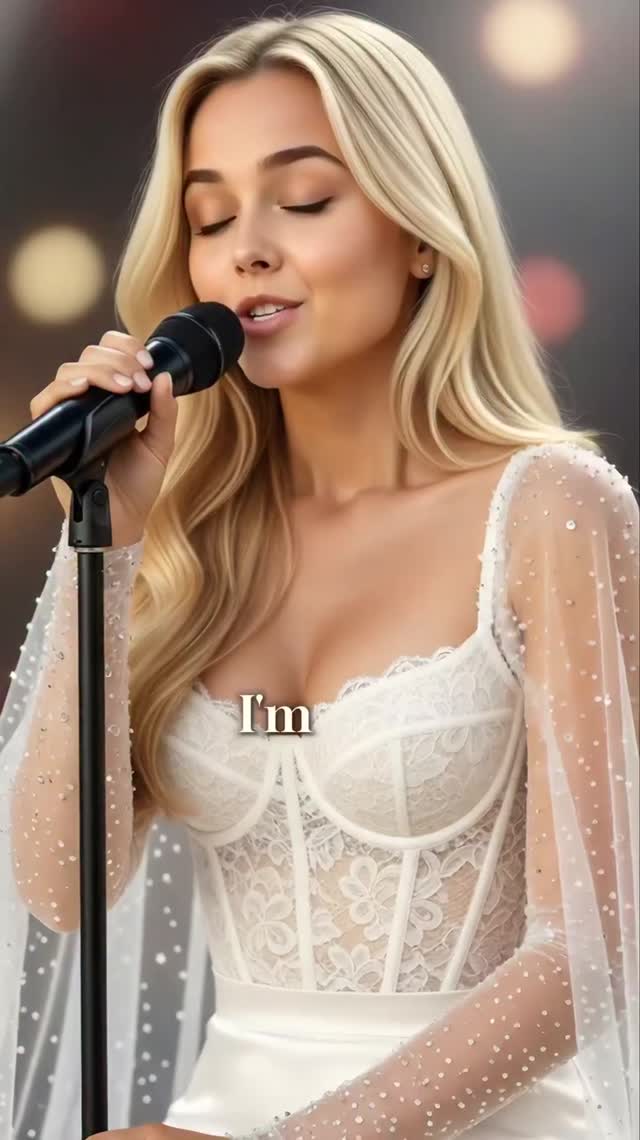
Tonight I’m letting the mood lead. Soft light, slow movement, and a heart that hears every note of “Broken Angel.” No big staging, just me, a veil of motion, and a melody that feels both fragile and fearless. Consider this a little tribute to a song that still finds the cracks and glows through them. Lip sync - original track used. Song: “Broken Angel” - Arash
How millasofiafin Made This Broken Angel White Lace AI Portrait - and How to Recreate It
This image performs because it captures performance without spectacle overload. It is a close singer portrait with one clear emotional cue, one clear prop (microphone), and one coherent visual mood. That simplicity makes it highly shareable for both music fans and creators looking for emotional reference visuals.
Why this image can go viral
The first mechanism is emotional proximity. Tight framing brings the audience close to the singer’s expression, creating a feeling of personal connection rather than distant stage coverage. The second mechanism is aesthetic coherence: white lace texture, warm bokeh lights, and natural smile all support the caption’s “fragile but fearless” mood.
The third mechanism is prop clarity. A microphone instantly encodes the performance context, so viewers understand the scene without needing explanatory text. Combined with soft light and minimal background noise, the image reads quickly and elegantly on mobile.
Signal
Evidence (from this image)
Mechanism
Replication Action
Close emotional framing
Upper-body crop focused on face and mouth near mic
Builds intimacy and increases emotional resonance
Use tight portrait crop for song mood posts
Performance anchor object
Black microphone and stand clearly visible
Instantly communicates music context
Keep one unmistakable performance prop in-frame
Texture-led elegance
Lace bodice and sheer dotted sleeves
Adds premium detail without visual clutter
Choose one hero garment texture and light it softly
Warm bokeh mood
Blurred amber light circles behind subject
Adds cinematic softness and romantic tone
Use shallow depth with small warm light points in background
Use cases and transfer map
Single release visuals: ideal for emotionally driven tracks. Why fit: close portrait supports lyrical mood. What to change: adapt wardrobe to song genre.
Live-session teasers: strong for announcing acoustic or stripped versions. Why fit: microphone cue is immediate. What to change: include song title in caption or secondary slide.
Creator vocal covers: useful for face-first performance branding. Why fit: audience connects with expression quickly. What to change: keep background consistent as signature set.
Personal brand storytelling: good for “vulnerable but confident” themes. Why fit: soft lighting and expression humanize the persona. What to change: tune pose and gaze for authenticity.
Not ideal
High-energy dance tracks needing wide movement coverage.
Behind-the-scenes documentary posts focused on production gear.
Acoustic cafe transfer Keep: close singer framing + soft warm bokeh.
Change: gown styling to casual knit + pendant mic setup.
Slot template (EN): {intimate venue background} {close singer portrait} {clear microphone anchor} {warm emotional lighting}
Piano-ballad transfer Keep: emotional face-first composition and elegant texture cues.
Change: mic stand to piano edge + seated posture.
Slot template (EN): {low-light stage} {expressive vocalist portrait} {instrument cue} {fragile-romantic mood}
Podcast/live-talk transfer Keep: tight head-and-torso crop and clean prop readability.
Change: song-performance styling to spoken-word interview tone.
Slot template (EN): {studio bokeh backdrop} {host close portrait} {microphone foreground} {warm conversational energy}
Aesthetic read: what makes this frame memorable
The image succeeds through controlled contrast: soft white wardrobe detail against darker blurred background and black mic hardware. This contrast separates subject and context cleanly. The face remains the primary focal point, while lace and sheer textures reward closer viewing.
Lighting and expression are synchronized. The subject looks present and emotionally open, while light remains gentle enough to avoid theatrical harshness. For creators, this is a strong reminder that intimacy often outperforms spectacle for song-driven social posts.
Observed
How to recreate
Evidence anchor
Face-dominant composition
Crop from upper torso to head and keep eye line prominent
Expression reads before wardrobe details
Shallow performance depth
Use narrow focus plane and retain warm light circles behind
Background bokeh supports stage mood
Elegant texture hierarchy
Feature one detailed garment with translucent elements