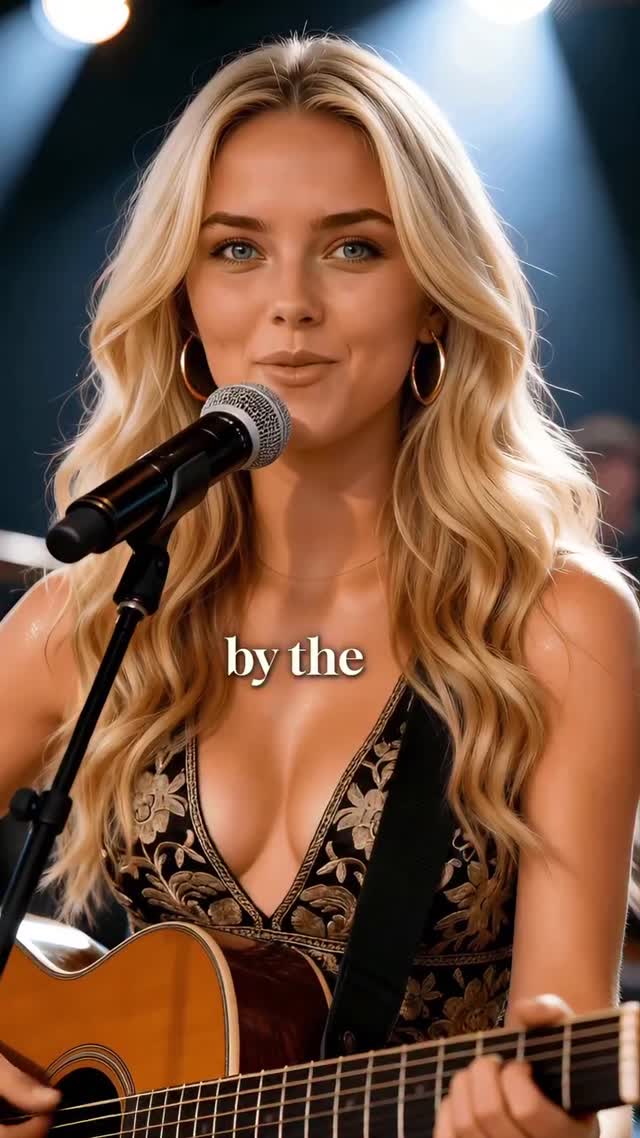
A timeless melody filled with longing, history, and emotion.This song carries a deep sense of reflection and quiet strength, and I love how its message still resonates today.
If this performance touched you even a little, feel free to leave a comment or share it. Every interaction truly means a lot and encourages me to create more. This is a visual lipsync performance using the original recording of By the Rivers of Babylon by Boney M. 🎶
How millasofiafin Made This Boney M By the Rivers of Babylon Lip Sync AI Portrait — and How to Recreate It
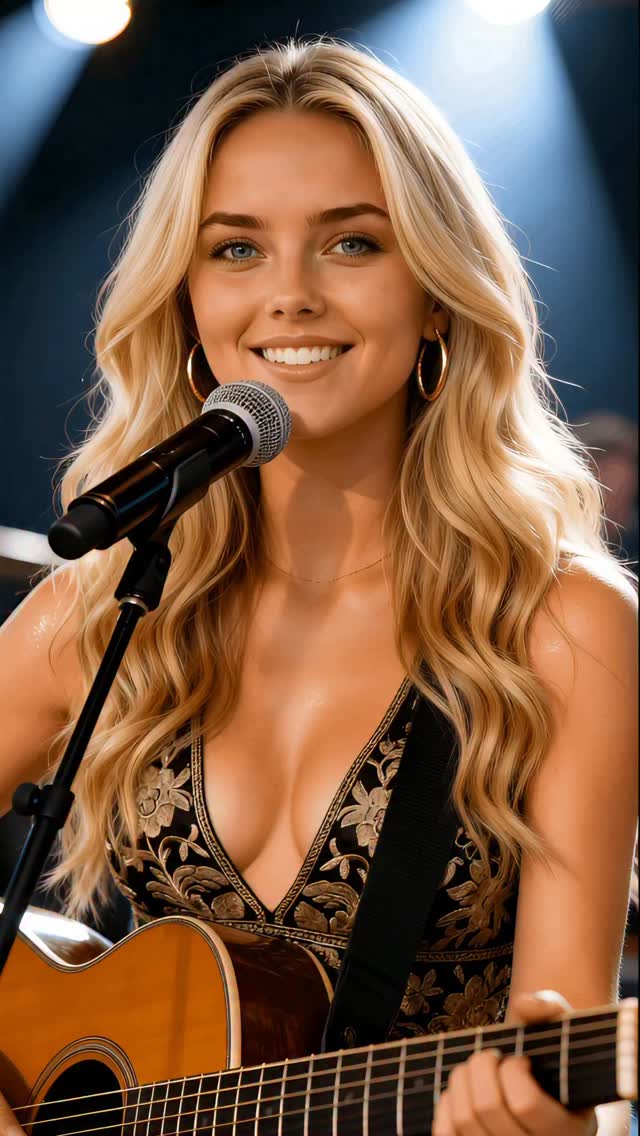
This image performs because it delivers complete role clarity in a single shot. The microphone and guitar together confirm singer-songwriter identity immediately, while the smile keeps the tone approachable. For creators, this “triple cue” format is extremely effective for music promotion because it balances professionalism with personality.
The embroidered black outfit adds premium texture without overwhelming the frame. Combined with stage spotlights and shallow depth, the image feels polished but still live. This is a strong repeatable template for artists building a consistent campaign look.
Signal table
Signal
Evidence (from this image)
Mechanism
Replication Action
Identity compression
Mic + guitar + vocal expression all visible together
Instant role recognition increases engagement efficiency
Frame at least two performance tools with face in the same shot
Texture sophistication
Gold embroidery on dark outfit
Fine details raise perceived production value
Select one textured stage garment with subtle contrast accents
Light drama control
Back spotlights with clear front facial exposure
Concert atmosphere without losing facial readability
Pair rear stage lights with soft front fill for balanced portraits
Use cases and transfer patterns
Best fit: single release promo visuals. Why fit: role and mood are explicit. What to change: caption hooks and color accents.
Best fit: live-session clip covers. Why fit: guitar context is immediate. What to change: crop tighter for reels and shorts.
Best fit: artist-brand signature posts. Why fit: repeatable and recognisable composition. What to change: outfit texture per era.
Not ideal: pure instrumental tutorials. Reason: face-first framing reduces technical hand detail clarity.
Keep: face + mic + guitar triad. Change: outfit palette and stage light color. Template: {smiling performer} + {stand mic} + {acoustic instrument}
Keep: medium close crop and shallow depth. Change: expression tone and head angle. Template: {identity-forward music portrait} + {live light cues} + {instrument texture}
Keep: dark outfit with metallic detail. Change: embroidery motif and accessory type. Template: {textured wardrobe} + {clear role objects} + {clean stage background}
Aesthetic read
The frame’s strength is visual balance: warm skin tones, dark costume base, bright spotlights, and natural wood guitar. None of these elements dominate alone. Together, they form a clear, high-quality performance image that works across feeds, stories, and promo banners. For creators, this is a practical “hero frame” architecture.
Observed
Recreate
Mic and guitar both visible in close portrait
Compose from chest-up while preserving instrument edge and mic line
Subtle ornate wardrobe detail
Use dark base garment with metallic pattern accents
Overhead stage spotlights with blurred background
Keep rear lights bright but out of focus
Friendly direct smile
Capture approachable expression for audience warmth
Prompt technique breakdown
Prompt chunk
What it controls
Swap ideas (EN, 2-3 options)
Role cue block
Immediate context
"vocalist with acoustic guitar" / "singer at stand mic" / "live songwriter frame"
Wardrobe detail block
Premium feel
"black with gold embroidery" / "velvet with metallic trim" / "dark satin with beadwork"
Lighting block
Mood and separation
"cool back spotlights" / "warm front key" / "dual-tone stage wash"