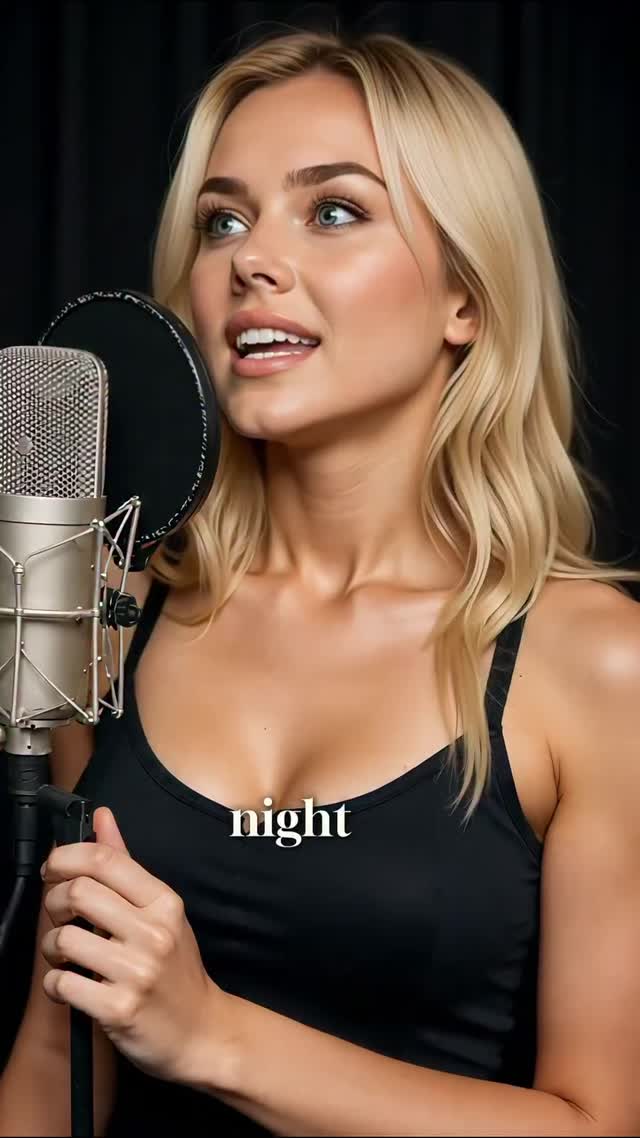
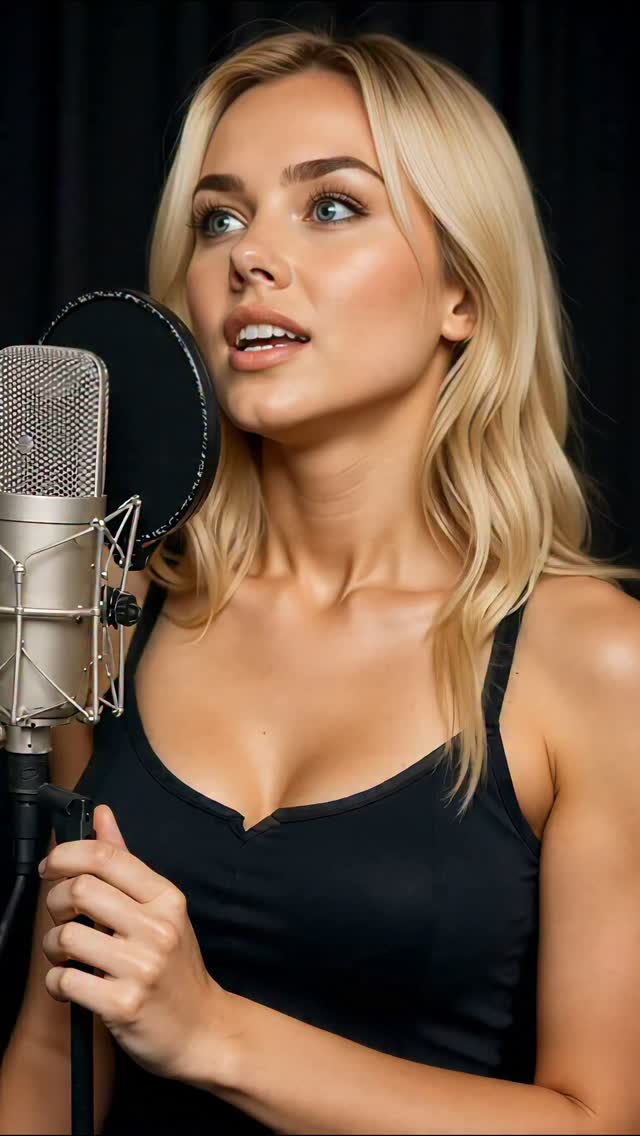
🎙️ Step into the studio with me as I bring "Speak with Hands" to life. This track is all about raw emotion and musical storytelling — and here’s a sneak peek from behind the mic. Can’t wait to hear what you think! 💬🎶
🎙️ Step into the studio with me as I bring "Speak with Hands" to life. This track is all about raw emotion and musical storytelling — and here’s a sneak peek from behind the mic. Can’t wait to hear what you think! 💬🎶
This image is optimized for audio credibility. The condenser mic and pop filter are not background props; they are proof elements. Viewers instantly read this as “real recording process,” which adds trust compared with generic singer portraits.
The composition is also efficient: face on one side, microphone rig on the other. This split creates a clean story in one frame and leaves just enough space for a single lyric word (“night”) without cluttering the visual hierarchy.
First, it has process authenticity. Recording hardware signals effort and craft. Second, it has emotional readability. The vocalist is captured in an active phrase, not a static model pose. Third, it uses text restraint: one word is enough to trigger curiosity while keeping attention on voice and expression.
This combination is especially useful for short-form clips where users decide in seconds whether content feels “real” or staged. Studio cues help pass that test quickly.
| Signal | Evidence (from this image) | Mechanism | Replication Action |
|---|---|---|---|
| Craft proof | Visible condenser mic + pop filter | Increases trust and perceived professionalism | Keep studio hardware large and readable in frame |
| Emotional immediacy | Mid-phrase facial expression | Conveys live performance energy | Prompt for “mid-vocal moment” instead of static expression |
| Balanced composition | Subject right, mic left, dark background | Creates clear visual flow and readability | Use two-zone layout: voice source + human expression |
| Minimal text hook | Single word “night” in lower center | Adds lyric context without distracting | Use one-word overlays for teaser cuts |
Acoustic diary transfer
Keep: mic prominence and close crop.
Change: wardrobe and one-word subtitle by mood.
Slot template: {singer_closeup} + {studio_mic_setup} + one-word lyric {word} + dark clean background
Podcast quote transfer
Keep: left-right composition split.
Change: lyric word to quote keyword.
Slot template: {host_face_right}, {mic_left}, lower keyword {topic_word}, studio lighting
Producer session transfer
Keep: dark background and equipment sharpness.
Change: subject expression and subtitle tone.
Slot template: {creator_in_session} with {hardware_focus}, minimal text hook, high-clarity studio portrait
The image works because the microphone is treated as a hero object, not a background accessory. Combined with a dark backdrop and simple wardrobe, that creates a focused “voice-first” atmosphere that can be reproduced across many episodes.
| Observed | Why it matters | How to recreate |
|---|---|---|
| Condenser mic and pop filter dominate left side | Signals recording authenticity quickly | Frame mic setup large and near subject face |
| Dark uncluttered background | Keeps all attention on voice and expression | Use low-detail backdrop and controlled lighting spill |
| One-word lower text | Creates teaser effect without visual overload | Limit overlays to one short keyword |
| Natural vocal expression | Adds credibility and emotional pull | Prompt active singing/speaking moment |
| Simple black wardrobe | Improves contrast and text readability | Avoid patterned clothing in close studio frames |
| Prompt chunk | What it controls | Swap ideas (EN, 2-3 options) |
|---|---|---|
| single blonde vocalist, mid-phrase close-up | Emotion and performer identity | serious focus; smiling phrase; whisper-soft delivery |
| silver condenser mic + black pop filter | Process authenticity | broadcast dynamic mic; ribbon mic; podcast setup mic |
| dark studio background | Visual focus and professional mood | warm wood booth; acoustic foam wall; deep blue stage backdrop |
| black sleeveless top | Low-distraction wardrobe control | white tank; gray knit top; simple black tee |
| one-word overlay “night” | Lyric hook mechanism | “again”; “home”; “wait” |
Use this visual as the first frame of a short singing clip. Strong microphone context in frame one increases trust before the audio hook lands.