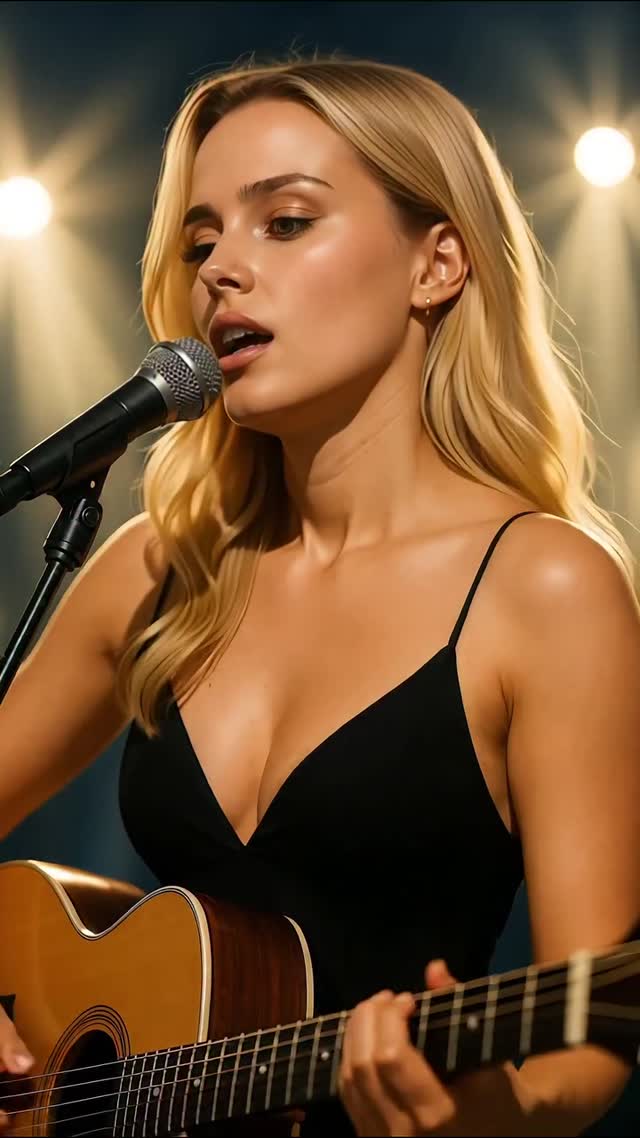
A moving tribute to one of Lady Gaga’s most emotional performances.
Milla Sofia channels the raw vulnerability and timeless beauty of Always Remember Us This Way in a powerful visual interpretation.
Every glance, every frame is a quiet echo of love, loss, and memory.
🎤 Vocals: Original by Lady Gaga
🎥 Visual Performance: Milla Sofia
✨ Tribute style only – no AI vocals used
Subscribe for more heartfelt visual performances and timeless moments.
How millasofiafin Made This Lady Gaga Remember Us This Way AI Portrait — and How to Recreate It
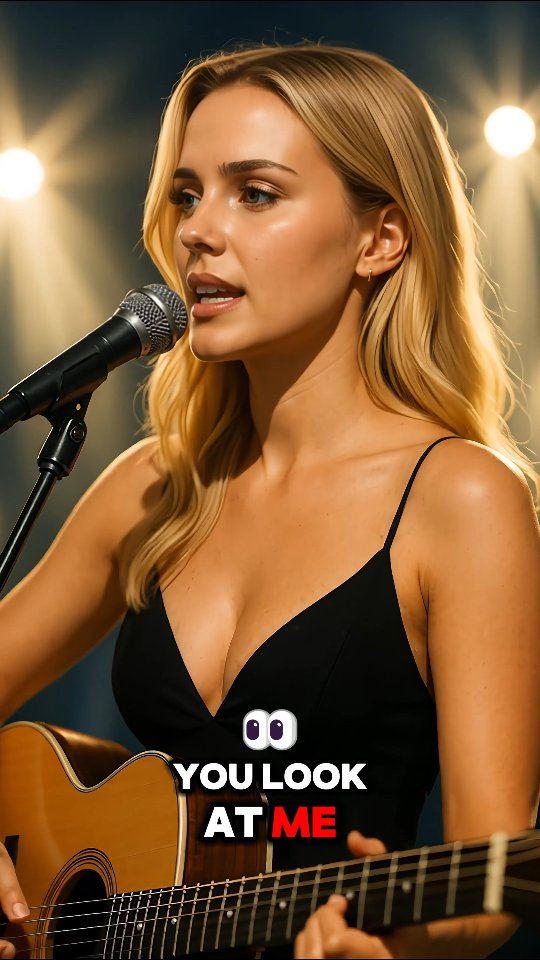
This is not just a singer photo. It is a tension frame: voice, eye-line, and lyric hook all point to one emotional target. The subject is mid-phrase, the microphone is close, and the guitar confirms authenticity. The audience reads “real performance” before they even process the caption.
The text “YOU LOOK AT ME” is strategically direct. It turns a stage image into a one-to-one moment, which increases comment probability because people feel addressed. That is a core social mechanic: convert spectacle into personal dialogue.
Viral Mechanics Hidden in Plain Sight
The first mechanism is directional storytelling. The microphone line from the left and the singer’s profile angle both converge at the mouth, so viewers immediately identify this as an active moment, not a posed portrait. Action beats static beauty in feed competition.
The second mechanism is trust through props. The acoustic guitar is partially shown, which is enough to signal musicianship without cluttering the frame. You get credibility plus visual simplicity, a combination that usually raises save/share behavior.
Signal
Evidence (from this image)
Mechanism
Replication Action
Performance authenticity
Mic close to lips + visible acoustic guitar
Viewers infer “real session,” reducing ad-like resistance
Keep one instrument edge in frame while prioritizing face and mouth
Directional energy
Profile pose toward left mic, diagonal composition
Creates motion and narrative direction
Pose subject 20-35 degrees off camera and align with main prop
Personal hook text
Caption says “YOU LOOK AT ME” with red emphasis
Turns passive viewer into addressed participant
Use short second-person lines with one highlighted keyword
Warm stage emotion
Amber spotlights and rim light on hair
Associates scene with intimacy and nostalgia
Lock warm back practicals and avoid cold-blue grade
Best Use Cases, Bad Fits, and Transferability
Best fit: original song snippets where lyrics matter; keep profile singing angle and rotate text line.
Best fit: acoustic cover announcements; keep guitar edge visible and swap wardrobe style by genre.
Best fit: tour teaser reels; keep lighting grammar and change city/date in caption layer.
Best fit: creator-brand storytelling about artistic process; keep mic intimacy and tighten crop.
Not ideal: choreography-focused content where full-body motion must be visible.
Not ideal: product detail campaigns requiring object close-ups and clear branding.
Not ideal: casual vlog updates; this visual language is intentionally performative.
Transfer Recipes (Exactly 3)
Poetry Reading Format — Keep: side-profile speaking pose + warm backlight. Change: guitar to notebook/book. Slot template: {creator} in side profile, {spoken_prop}, warm stage backlights, hook line {text}
Podcast Live Session — Keep: mic proximity and emotional eye-line. Change: wardrobe and set to studio desk edge. Slot template: {host} close performance frame, {mic_type}, low-clutter background, quote {line}
Brand Voice Clip — Keep: one-subject action moment, high contrast. Change: music prop to product prop. Slot template: {spokesperson} action portrait, {hero_prop}, warm practical bokeh, CTA line {message}
Aesthetic Read (Observed to Recreate)
The image feels premium because it prioritizes controlled imperfection: visible skin sheen, directional shadows, and practical light bloom. Nothing is overly polished to the point of looking synthetic. The frame keeps enough texture in mic metal and guitar wood to anchor realism.
Color also does heavy lifting. Black wardrobe gives silhouette clarity, warm lights soften emotion, and the single red text accent acts like a visual beat drop. This is a strong lesson for creators: emotional color contrast can outperform expensive set design.
Observed
Recreate evidence rule
Three-quarter profile singing posture
Lock subject rotation and keep mouth near microphone grille
Acoustic guitar partially framed
Show only 25-40% of instrument to avoid clutter while keeping context
Two warm back practicals
Place bright warm lights behind subject for rim and atmosphere
Deep black wardrobe anchor
Use dark fitted clothing to increase face and hand prominence
Caption as emotional trigger
Use short direct phrase, one highlighted word, bottom-center placement
Prompt Technique Breakdown
Prompt chunk
What it controls
Swap ideas (EN, 2-3 options)
young blonde female singer in three-quarter profile
Identity and viewing angle
“brunette indie vocalist”; “short bob alt-pop singer”; “male acoustic performer”
black spaghetti-strap stage outfit
Silhouette and contrast
“dark velvet dress”; “white satin top”; “sequined black bodysuit”