Some images perform because they are built around whatever aesthetic is hot this month. This one works for a different reason. It leans on a much older visual language: retro pin-up styling, polka dots, glossy curls, beauty-mark charm, and a clean studio background. That kind of design has already survived multiple eras, which is exactly why it still feels strong now. It is not chasing novelty. It is using a timeless formula with enough polish to feel fresh again.
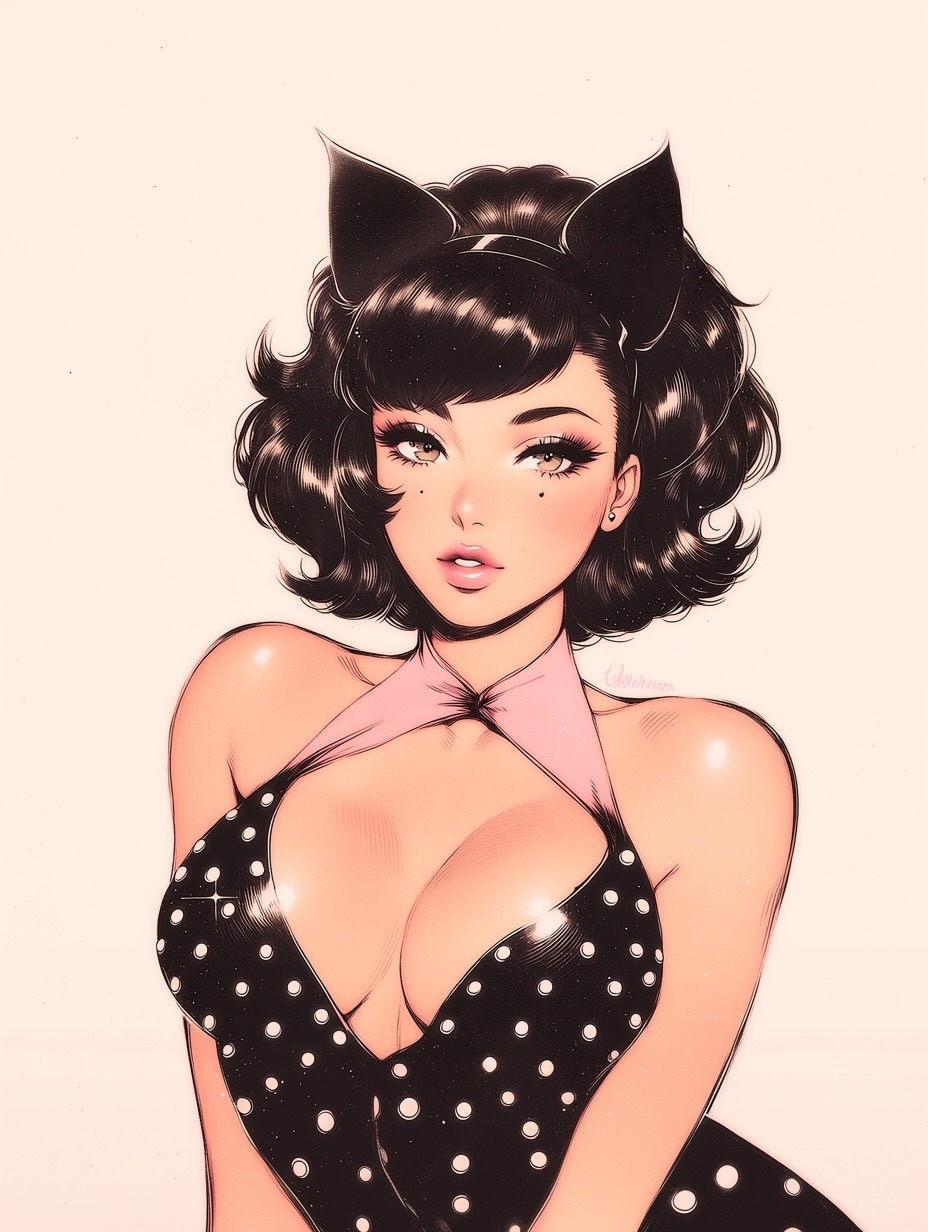
The image is simple, but not generic. The black bow headpiece, short curled bob, pink halter neckline, and black-and-white polka-dot dress each contribute to the same retro-feminine direction. Nothing feels out of place. That is one of the main reasons the picture feels so complete. It is not trying to be many things. It is committing to one visual era and presenting it cleanly.
For creators, this is a strong reminder that timeless references often outperform trend-stacking. If a post is visually coherent enough, it can feel both nostalgic and current at the same time. That overlap is a powerful place to make content from.
The first reason is silhouette clarity. Even before you notice the face, you register the head bows, the rounded bob haircut, and the plunging halter shape. That immediate readability is part of what makes the post memorable. It can be understood at a glance, which is exactly what strong shareable images need on fast-moving feeds.
The second reason is pattern discipline. Polka dots are doing the heavy lifting here. They are playful, vintage, and instantly readable, but they also stay structured. Pattern is often underused in AI fashion imagery because creators tend to focus on silhouette alone. This image shows how a familiar print can become a major identity layer when the rest of the frame stays clean.
The third reason is mood softness. The expression is flirtatious, but not exaggerated. The lighting is glossy, but not harsh. The palette is feminine, but not overloaded with pink. That balance makes the image easier to save as inspiration, not just consume as entertainment. It feels reference-worthy.
| Signal | Evidence (from this image) | Mechanism | Replication Action |
|---|---|---|---|
| Timeless motif stack | Curled bob, polka dots, beauty mark, bow headpiece, halter neckline | Retro fashion signals create instant era recognition and nostalgia | Choose 4-5 motifs from one visual era and keep them tightly aligned |
| High pattern recall | Black dress covered with evenly spaced white dots | Readable print gives the outfit identity even in a close crop | Use one iconic pattern and let it remain visible in the main crop |
| Soft glamour finish | Glossy hair, warm skin highlights, clean cream background | Beauty-light polish makes the image feel poster-ready and collectible | Favor smooth high-key lighting over dramatic shadow when selling elegance |
| Broad aesthetic usability | Image works as fashion ref, hairstyle ref, or poster ref | Minimal environment lets viewers project their own use onto the image | Keep backgrounds simple when the styling itself is strong enough to carry the frame |
The best decision in the image is restraint. A retro pin-up concept could easily become too loud with diner signs, cherry lipstick props, or heavy background styling. Instead, this portrait removes almost all setting and lets the styling speak. That move gives the image longevity. It is much easier for viewers to adapt a clean reference than a scene overloaded with period clichés.
The hair design is especially important. The curled black bob adds softness and structure at the same time. It gives the portrait a recognizable shape from afar and frames the face with enough volume to feel glamorous. Hair is not secondary here. It is one of the main architectural features of the image, and that is part of why the portrait feels complete.
The pink halter strap is also a very smart accent. Without it, the frame might feel too monochrome. With it, there is just enough color to soften the black-and-white contrast and add femininity without competing with the pattern. It is a small color decision, but it changes the whole mood of the piece.
| Observed | Why it matters | How to recreate it |
|---|---|---|
| Short curled glossy bob | Creates a classic silhouette with strong retro recognition | Use one distinct period hairstyle as a primary shape anchor |
| Large black bow headpiece | Makes the portrait instantly recognizable and playful | Add one oversized head accessory rather than many small accessories |
| Polka-dot garment in a tight crop | Keeps the outfit memorable even with limited body framing | Make sure the print stays visible in the main portrait crop |
| Warm cream background | Supports vintage softness without distracting from the subject | Choose a toned neutral background instead of pure white when you want retro warmth |
| Beauty mark and glossy lips | Adds character-specific charm without complication | Use one or two facial signature details to increase memorability |
This approach works well for retro fashion moodboards, beauty-editorial anime portraits, feminine poster concepts, hairstyle inspiration posts, and prompt examples built around timeless styling rather than modern trend cycles. It is especially effective for creators who want a visual that feels charming and reusable instead of overly specific to a single meme moment.
It is less ideal for gritty realism, maximalist scene building, or aggressive streetwear content. The whole strength of the image comes from softness, polish, and a highly curated retro mood.
{retro hairstyle} {head accessory} {signature pattern} {neckline or collar} {expression}{warm backdrop} {glossy hair shape} {iconic print} {small facial signature} {mood}{hair silhouette} {graphic accessory} {pattern family} {clean crop} {color accent}If you want to recreate this kind of image, do not start with “cute retro girl.” That prompt is too loose. Build from visible blocks instead: hairstyle, head accessory, pattern, neckline, beauty-light finish, and warm background. Once those are locked, the portrait becomes much easier to keep coherent. Timeless styling works best when every piece belongs to the same visual grammar.
| Prompt chunk | What it controls | Swap ideas (EN, 2-3 options) |
|---|---|---|
| short glossy curled black bob with side-swept bangs | Era recognition and facial framing | vintage bob curls; polished retro pageboy; soft curled noir bob |
| oversized black bow headpiece | Playful silhouette accent and recognizability | large ribbon ears; bold retro bow; statement head bow |
| black dress with white polka dots | Pattern identity and nostalgia cue | classic dot print; monochrome polka-dot fabric; vintage spotted dress |
| pink halter neckline with deep pin-up cut | Feminine accent and body-line styling | soft pink neck strap; blush halter detail; pastel neckline accent |
| warm cream background | Soft retro atmosphere and clean focus | beige studio backdrop; warm off-white paper background; creamy poster field |
| soft beauty lighting with glossy highlights | Poster polish and collectible finish | high-key glamour light; smooth vintage beauty light; gentle editorial shine |
Start by locking the hair and headpiece first. If the silhouette around the head does not feel era-specific, the image will drift into generic pretty-girl territory immediately. Once that is stable, solve the garment pattern and neckline. Only after those two layers are working should you refine facial detail and lighting. This order keeps the portrait identity-driven rather than merely attractive.
A practical four-step iteration path would be: first generate the face, bob, and bow against a warm cream background. Second, add the polka-dot garment and make sure the pattern stays readable in the crop. Third, refine the halter strap and shoulder line so the body styling feels pin-up rather than generic. Fourth, polish the lips, beauty mark, and glossy highlights. That sequence produces a much cleaner retro effect than trying to prompt the entire vibe in a single sentence.
The larger lesson is simple. Timeless-looking images rarely come from randomness. They come from respecting the structure of an era, then simplifying it enough for modern feeds. This post works because it keeps only the parts of retro glamour that still read instantly today.