0:00 / 0:00
▶
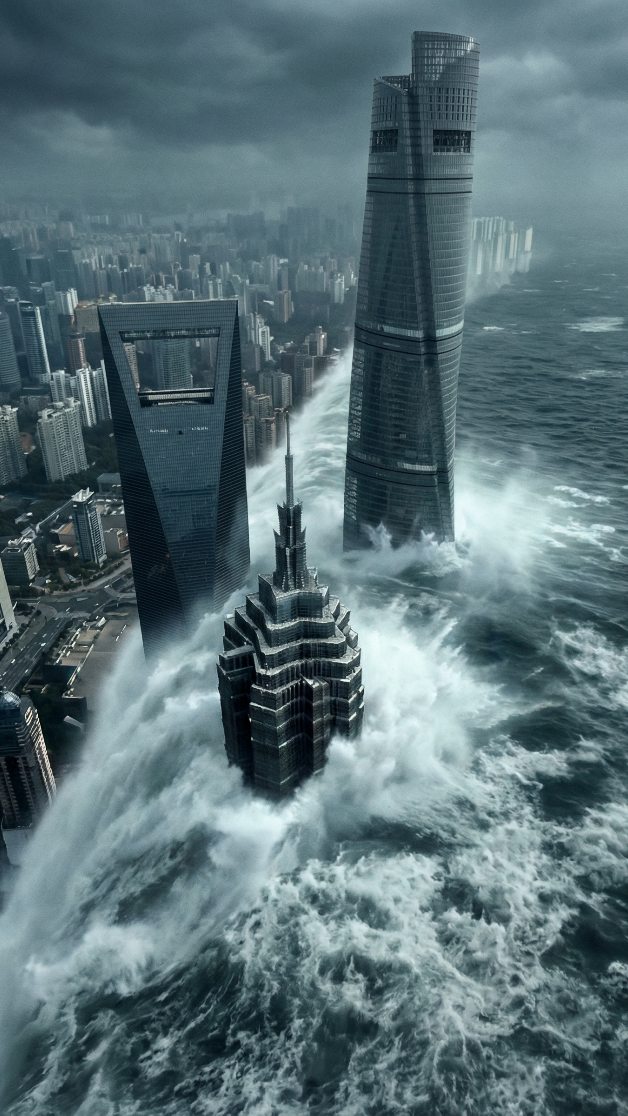
This viral masterpiece is a cinematic disaster simulation depicting a massive tsunami engulfing the iconic Lujiazui financial district in Shanghai. Utilizing high-fidelity AI video generation, the creator @rioaigc has crafted a "what-if" scenario that blends hyper-realistic architectural rendering with complex fluid dynamics. The aesthetic is characterized by a "stormy cinematic" palette—desaturated teals, heavy greys, and high-contrast white foam. By focusing on world-renowned landmarks like the Oriental Pearl Tower and the Shanghai Tower, the video taps into a global sense of awe and primal fear, achieving a level of visual spectacle usually reserved for Hollywood blockbusters. It’s a prime example of how indie creators can now produce "disaster porn" content that competes with high-budget VFX studios using accessible AI tools.
The video is a montage of destruction. It begins with a wide, ominous shot of a mountain-sized wave in the open sea, immediately establishing the scale. As the wave hits the city, we see specific, recognizable locations: the historical Bund, the Nanpu Bridge, and finally the futuristic skyscrapers of Lujiazui. The "actors" are the buildings themselves—the Oriental Pearl Tower snaps like a toy, and the Jin Mao Tower is swallowed by churning white water.
The second half shifts to a human perspective: street-level chaos, people running through waist-deep water, cars being tossed like corks, and a haunting underwater sequence showing the submerged city. The lighting is consistently "motivated" by a dark, overcast sky, which helps hide AI artifacts and enhances the somber, realistic tone. The texture of the water is particularly impressive, showing fine spray, foam, and turbulent currents that interact realistically with the urban environment.
| Time Range | Visual Content | Shot Language | Lighting & Tone | Viewer Intent |
|---|---|---|---|---|
| 00:00–00:03 | A massive, dark wave crests in the ocean with ships in the foreground. | Extreme Wide Shot (EWS) | Cold, dark teal, high contrast. | The Hook: Establish scale and immediate threat. |
| 00:03–00:05 | The wave crashes over the historical buildings of The Bund. | Wide Shot (WS), Static | Overcast, desaturated. | Localization: Show the impact on a famous landmark. |
| 00:05–00:08 | Nanpu Bridge is hit; cars are swept away as the wave towers over the structure. | Low Angle WS | Muted greys, white foam highlights. | Escalation: Increase the sense of danger to infrastructure. |
| 00:08–00:12 | The Oriental Pearl Tower is struck and collapses into the flood. | Mid-Wide Shot | Cinematic "disaster" grade. | The "Money Shot": Destruction of the most iconic landmark. |
| 00:12–00:14 | Top-down view of the "Big Three" skyscrapers being engulfed. | Aerial/Drone Shot | High-key white water vs. dark glass. | Perspective shift: Show the total inundation of the city. |
| 00:14–00:18 | Street level: People running, a girl looking back in terror. | Handheld, Eye-level | Naturalistic, chaotic. | Emotional Connection: Shift from spectacle to human survival. |
| 00:18–00:22 | Cars floating; a hand grips a pole; a father carries a child. | Close-ups (CU) | Dark, wet textures. | Reinforce stakes: Focus on individual struggle. |
| 00:22–00:27 | Underwater view of submerged cars and people floating. | Submerged POV | Murky green/blue, ethereal. | The "Aftermath": A haunting, surreal look at the result. |
The success of this video lies in the "Spectacle of the Familiar." Humans have a biological fascination with large-scale disasters (the "sublime"), and seeing a city as modern and recognizable as Shanghai destroyed triggers a powerful psychological response. It taps into collective anxieties about climate change and urban vulnerability while providing the "safety" of a digital simulation.
From a platform perspective, the video utilizes a rapid-fire editing rhythm. Each shot lasts only 2-3 seconds, providing a constant stream of new, high-intensity visual information. This maximizes "Watch Time" because the viewer doesn't have time to look away. The "loop effect" is also strong; the sheer amount of detail in the destruction (like the specific way the Oriental Pearl Tower breaks) encourages users to re-watch to catch what they missed.
The absence of dialogue makes the content globally accessible. It doesn't matter what language you speak; the visual story of a tsunami is universal. This allows the video to travel across borders, from Instagram to TikTok and Douyin, without losing its impact.
Runway Gen-3 Alpha or Kling AI are currently the best for high-velocity fluid simulations.
"Hyper-realistic," "Cinematic," and "Scale."
Use a desaturated color palette and add "film grain" or "motion blur" in post-production.
Instagram Reels favors high-quality "aesthetic" spectacle, while TikTok favors "shock value" and trends.
Use the platform's "AI-generated" label and include #AI in the first three hashtags to maintain transparency.
Use "Image-to-Video" with a very high "Image Prompt Strength" setting to lock the architecture.