How rioaigc Made This Wu Song Tiger Historical Action Poster Breakdown — and How to Recreate It
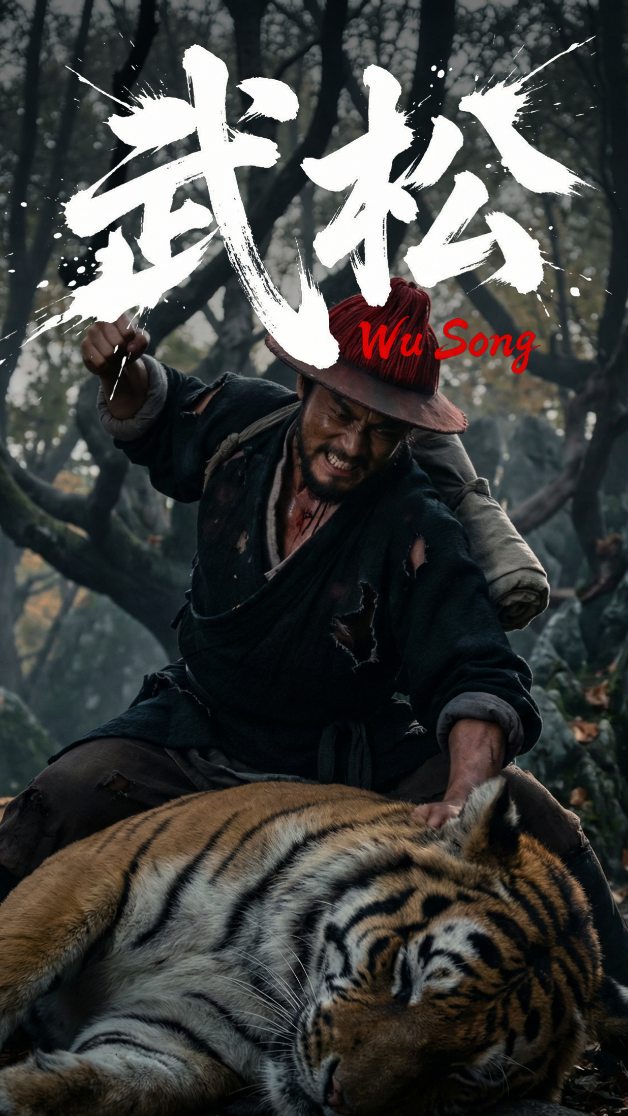
This image works because it compresses an entire Chinese folklore legend into one brutal, readable frame. You do not need prior context to understand it. A single warrior is pinning down a tiger in a dark forest while the title hammers the mythic identity into place. It is raw, direct, and immediately dramatic.
Why It Feels Powerful
The composition does not split attention. There is one man, one beast, one decisive action. The tiger occupies the lower foreground as a mass of muscle and fur, while Wu Song rises above it in a downward striking pose. That hierarchy makes the image legible even at thumbnail size.
The frame also benefits from cultural specificity. This is not a generic hunter-versus-animal poster. The brush-calligraphy title, traditional wardrobe, and forest atmosphere tie the image to a recognizable historical legend. That gives the violence symbolic weight rather than making it feel random.
Signal Table
| Signal | Evidence (from this image) | Mechanism | Replication Action |
|---|---|---|---|
| Mythic clarity | Single hero overpowering a tiger under a title card | Simple conflict structure is instantly understood | Reduce the scene to one iconic confrontation |
| Physical intensity | Raised fist, bent torso, tense arm muscles, pinned tiger | Visible force makes the action believable | Direct the body into a downward impact pose rather than a neutral stance |
| Cultural specificity | Brush-calligraphy title, historical clothes, forest setting | Specific references make the image feel rooted and memorable | Use heritage-coded visual language instead of generic fantasy design |
| Foreground weight | The tiger body fills the bottom half of the frame | Large foreground mass increases danger and scale | Place the threat close to camera so it physically dominates the composition |
| Gritty realism | Torn clothes, dirty palette, harsh expression | Texture and wear make the legend feel bodily and costly | Specify damage, dirt, and strain in both wardrobe and performance |
Aesthetic Read
The image is selling folklore, but through the language of modern action-poster realism. The forest is dim and cold, the wardrobe is weathered, and the actor’s face is allowed to look ugly with effort. That choice matters. If the image were too polished, the legend would lose force. The grit is what converts mythology into cinema.
The title treatment also does smart work. The oversized white calligraphy feels traditional and immediate, while the smaller red English subtitle makes the image exportable to a wider promotional context. Together they turn the frame into a complete poster rather than an isolated still.
Prompt Technique Breakdown
| Prompt chunk | What it controls | Swap ideas (EN, 2–3 options) |
|---|---|---|
| “A fierce live-action portrayal of Wu Song” | Mythic identity and role framing | “legendary outlaws hero”, “classical Chinese folk warrior”, “historical martial protagonist” |
| “pinning down a massive tiger beneath him” | Main conflict and physical action | “wrestling a tiger to the ground”, “mid-strike over a fallen beast”, “subduing a huge striped predator” |
| “dark woodland clearing with bare twisted trees” | Atmosphere and folklore terrain | “misty mountain forest”, “shadowy bamboo edge”, “storm-dark old-growth woods” |
| “large white Chinese calligraphy title across the top” | Poster identity and cultural framing | “brush-painted title header”, “oversized ink-calligraphy masthead”, “white title splashed across the sky area” |
| “gritty Chinese action-cinema key art” | Finish quality and tonal realism | “historical prestige action poster”, “rough heroic film still”, “martial folklore promotional art” |
Why Creators Can Reuse This Structure
This is a highly reusable poster structure because it is built on a durable narrative skeleton:
1. Choose a legendary feat or archetypal confrontation.
2. Keep the frame centered on a single decisive action.
3. Put the threat in the foreground.
4. Use cultural styling to deepen meaning.
5. Add title typography that completes the premise.
That logic works for folklore heroes, mythic beasts, historical epics, and prestige character posters. The key is to avoid splitting the story across too many subjects or actions.
Remix Playbook
Legend remix: swap Wu Song for another folklore warrior, outlaw, monk, hunter, or rebel hero.
Creature remix: replace the tiger with a wolf, leopard, boar, demon-mask lion, or giant snake while preserving the one-on-one conflict.
Setting remix: move from a forest clearing to a snow pass, riverbank, temple ruins, bamboo grove, or mountain ledge.
Tone remix: make it prestige historical drama, grindhouse pulp, woodblock-inspired action art, or documentary-style realism.
Typography remix: experiment with red seal stamps, brushed vertical credits, or aged paper poster overlays.
Execution Advice
The easiest mistake with a folklore combat poster is overcomplication. You do not need five villains, flying debris, supernatural auras, or excessive blood to make the image intense. This frame succeeds because the action is singular and easy to read.
If you want similar images to travel well online, keep the hero pose readable, let the creature own the foreground, and anchor the frame with a title treatment that signals myth rather than generic action. When the concept is this old and powerful, clarity is more valuable than excess.