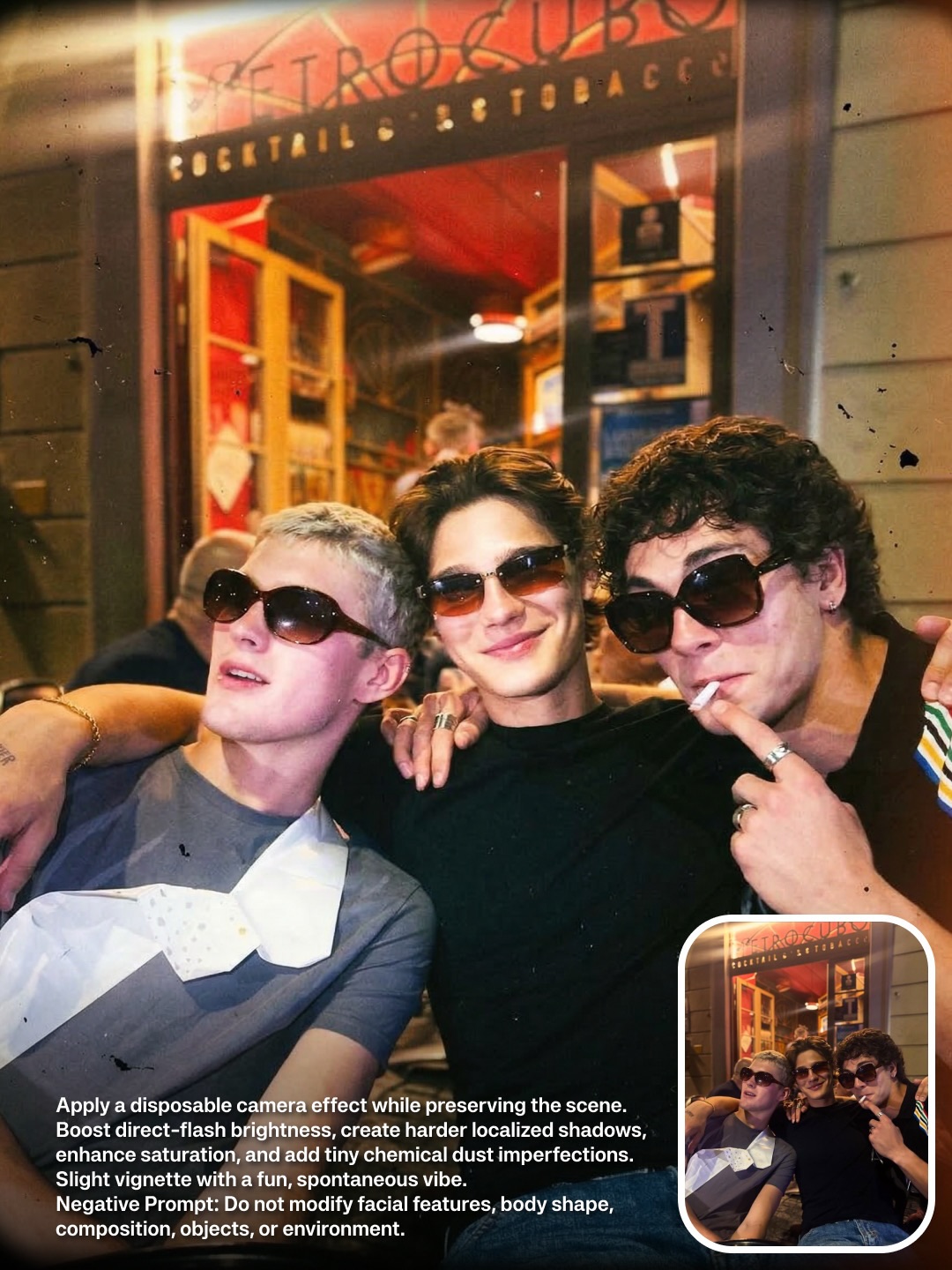
This image works because it captures a very specific internet-era cool: the “we were out, someone flashed a camera, and the photo accidentally became iconic” look. It is not about technical perfection. It is about chemistry, flash harshness, and social texture. That combination gives the image a kind of credibility that polished nightlife photography often loses.
The strongest move is the direct-flash intimacy. The camera is close enough that the trio feels immediate and enclosed in the same social bubble. That closeness makes the image feel lived, not staged. The viewer is not observing from a distance; they feel like they are at the same table.
The second key is attitude styling. Sunglasses at night, loose posture, and physical closeness create a very specific coded confidence. None of it needs formal fashion language to read as stylish. The mood comes from comfort in the scene rather than polish for the camera.
| Signal | Evidence from the image | Mechanism | Replication action |
|---|---|---|---|
| Friend-group chemistry | Arms around shoulders, bodies pressed close, relaxed expressions | Physical closeness makes the photo feel socially real | Direct subjects to interact with each other before they perform for the camera |
| Disposable-camera authenticity | Hard flash, bright faces, slight dirt and imperfection | Technical roughness creates emotional credibility | Keep flash harshness visible instead of correcting it away |
| Nightlife cool | Sunglasses, bar entrance, late-night warm lighting | Context and styling encode scene identity instantly | Choose one unmistakable nightlife cue in wardrobe and one in environment |
| Thumbnail readability | Three faces tightly grouped in the center | Compact composition survives small-format viewing | Cluster subjects tightly when building cover or filter-demo imagery |
| Filter-demo utility | The image clearly shows what the flash effect does across skin, fabric, and background | Style examples become more persuasive when the treatment is obvious | Use socially expressive scenes to demonstrate image-processing aesthetics |
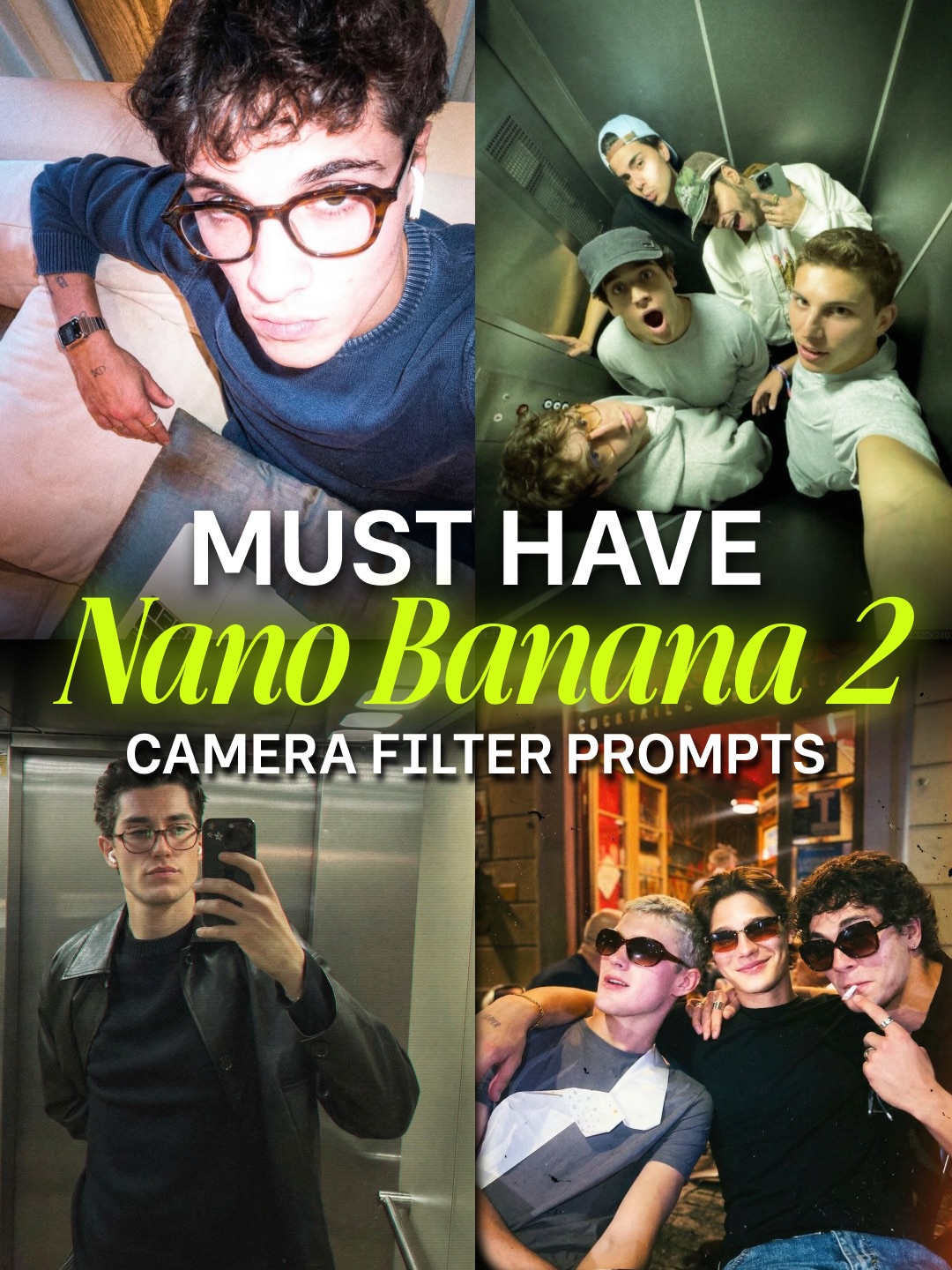
The image sits between nightlife candids, trend-board collage, and creator tutorial cover design. It is not trying to be a luxury campaign, and that is exactly why it feels useful. The photo is aspirational because it looks attainable. Viewers can imagine recreating it with their own friends, not renting a set to achieve it.
The warm doorway glow behind the group matters a lot. It adds context and depth without taking over. The image would be flatter in a black void. With the venue behind them, the trio becomes part of a wider social scene, which makes the snapshot feel like one frame from a bigger night.
| Prompt chunk | What it controls | Swap ideas |
|---|---|---|
| Three friends in a tight nightlife portrait | Main social composition | Swap to duo, larger group, or mixed-gender table scene depending on target vibe |
| Direct disposable-camera flash | Core treatment and image identity | Try softer point-and-shoot flash, camcorder still, paparazzi flash, or club-bathroom flash depending on tone |
| Sunglasses at night | Attitude and youth-culture coding | Use tiny shades, baseball caps, leather jackets, or chain jewelry for variant cool-language systems |
| Warm bar entrance background | Environmental proof of nightlife setting | Replace with convenience store glow, diner neon, club queue, or street-corner takeaway window |
| Raw but stylish candid energy | Overall social realism | Shift toward messier party chaos, fashionier cool, indie-film intimacy, or tabloid nightlife edge |
This structure is reusable because youth-culture imagery depends heavily on repeatable situations: outside venues, mirrors, cars, couches, and stairwells. Once you lock the flash language and the friend-group chemistry, the scene can move across many spaces without losing its appeal.
It is especially useful for prompt libraries because it demonstrates both an aesthetic and a social pose. That combination is stronger than a technical filter demo on a generic portrait. The viewer sees the style and instantly understands where it belongs.
You can remix this concept by changing venue type first. A convenience-store version would feel more street-level and chaotic. A hotel-hallway version would feel more fashion-adjacent. A bathroom-mirror version would feel even more internet-native. The same flash grammar can support all of them.
You can also remix the social mood. More laughter makes the image friendlier. More blank expressions make it cooler and more editorial. More motion blur makes it feel less curated and more party-documentary. The current version balances casual charisma and creator-demo clarity very well.
When building a photo like this, do not over-direct the subjects into performance. The image succeeds because the interaction feels slightly unguarded. Let the body language get comfortable first, then fire the shot before everything becomes self-conscious.
Keep the flash visible, keep the background recognizable, and keep the grouping tight. This style works best when it feels accidental in the best possible way.