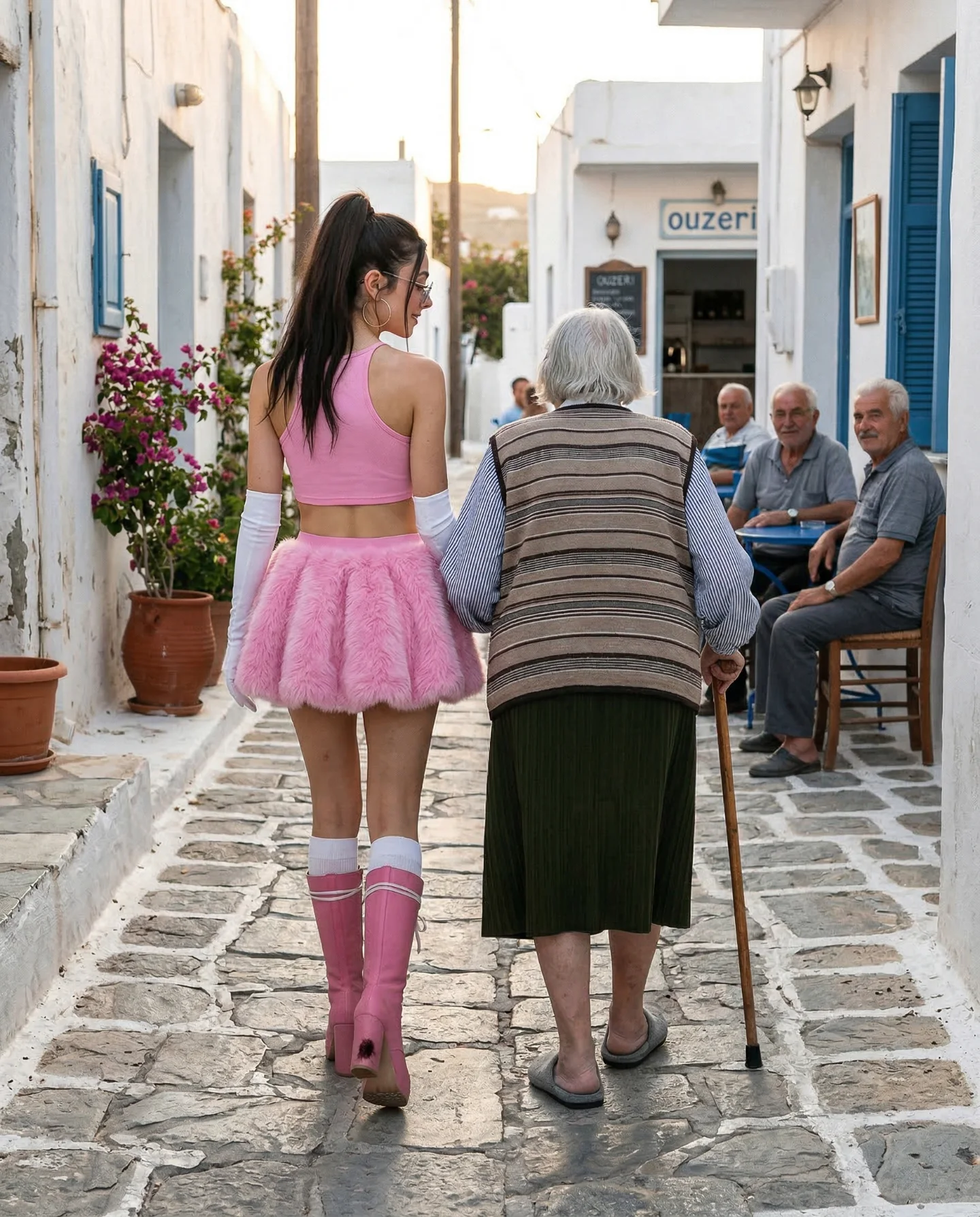
This image works because it does not stop at visual contrast. The younger subject clearly arrives from an exaggerated pop-fashion world, but the frame becomes memorable because she is not using that style only for spectacle. She is sharing space, pace, and attention with an elderly woman walking through a quiet village lane. That human link transforms the image.
The strongest choice is the rear-view composition. By showing both figures from behind, the image becomes less about face performance and more about relationship. We read body language first: the older woman leaning on her cane, the younger woman matching her speed, the villagers watching, and the narrow lane holding all of it together.
| Element | Function |
|---|---|
| Pink hyper-feminine outfit | Introduces visual shock and humor immediately. |
| Elderly woman with cane | Adds gravity, tenderness, and a slower emotional rhythm. |
| Mediterranean alley | Provides place, intimacy, and cultural specificity. |
| Watching café elders | Turn the image into a lived social scene rather than a private performance. |
| Rear-view walking pose | Shifts focus from posing to shared movement and companionship. |
The picture is effective because the palette is divided but not hostile. Pink still dominates the younger figure, but the warm white walls, blue shutters, stone path, and muted clothing around her absorb that absurdity and make it feel human. The result is not only comic. It is affectionate.
The seated men outside the café are a crucial detail. They act like a chorus in a staged scene. They do not overtake the image, but they confirm that the moment exists in public life. That is what gives the picture its sense of community and its meme potential at the same time.
| Prompt move | Purpose |
|---|---|
| Lead with the paired walk | The emotional meaning depends on the relationship, not only the pink styling. |
| Describe the village architecture clearly | The whitewashed lane and blue details are central to the setting. |
| Keep the onlookers in frame | Their presence turns the image into a social tableau. |
| Use warm natural daylight | This preserves the tenderness and avoids making the scene feel hostile or ironic. |
| Preserve rear-view composition | The image becomes more humane when the pair are seen moving together, not performing toward the lens. |
This setup is reusable for culture-clash storytelling, intergenerational fashion satire, travel-documentary prompt packs, and wholesome-absurd editorial concepts. The formula is strong: one stylized outsider figure, one grounded local counterpart, one narrow social space, and a handful of witnesses that make the scene feel real.
You can push this further into comedy by heightening the styling contrast, or make it more emotional by reducing the absurdity and focusing on the care between the two figures. You can also apply the same structure to other locations: a futuristic look in a mountain hamlet, luxury styling in a fishing village, or hyper-digital aesthetics inside traditional community space.
If you recreate this style, protect the warmth. The image only works when the contrast feels affectionate rather than mocking. Keep the environment authentic, let the older figure remain dignified, and make sure the younger subject appears engaged with the shared walk rather than detached from it.