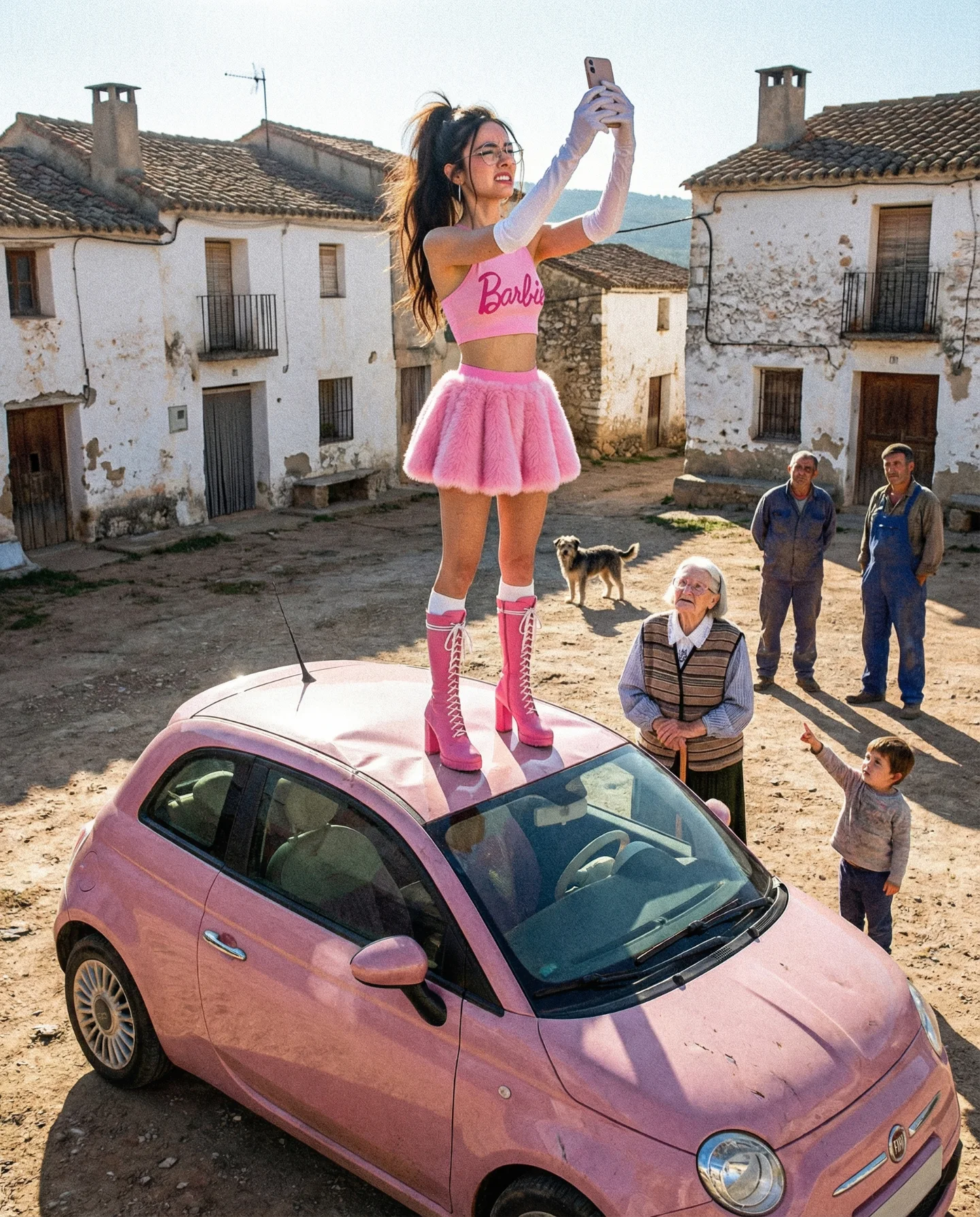
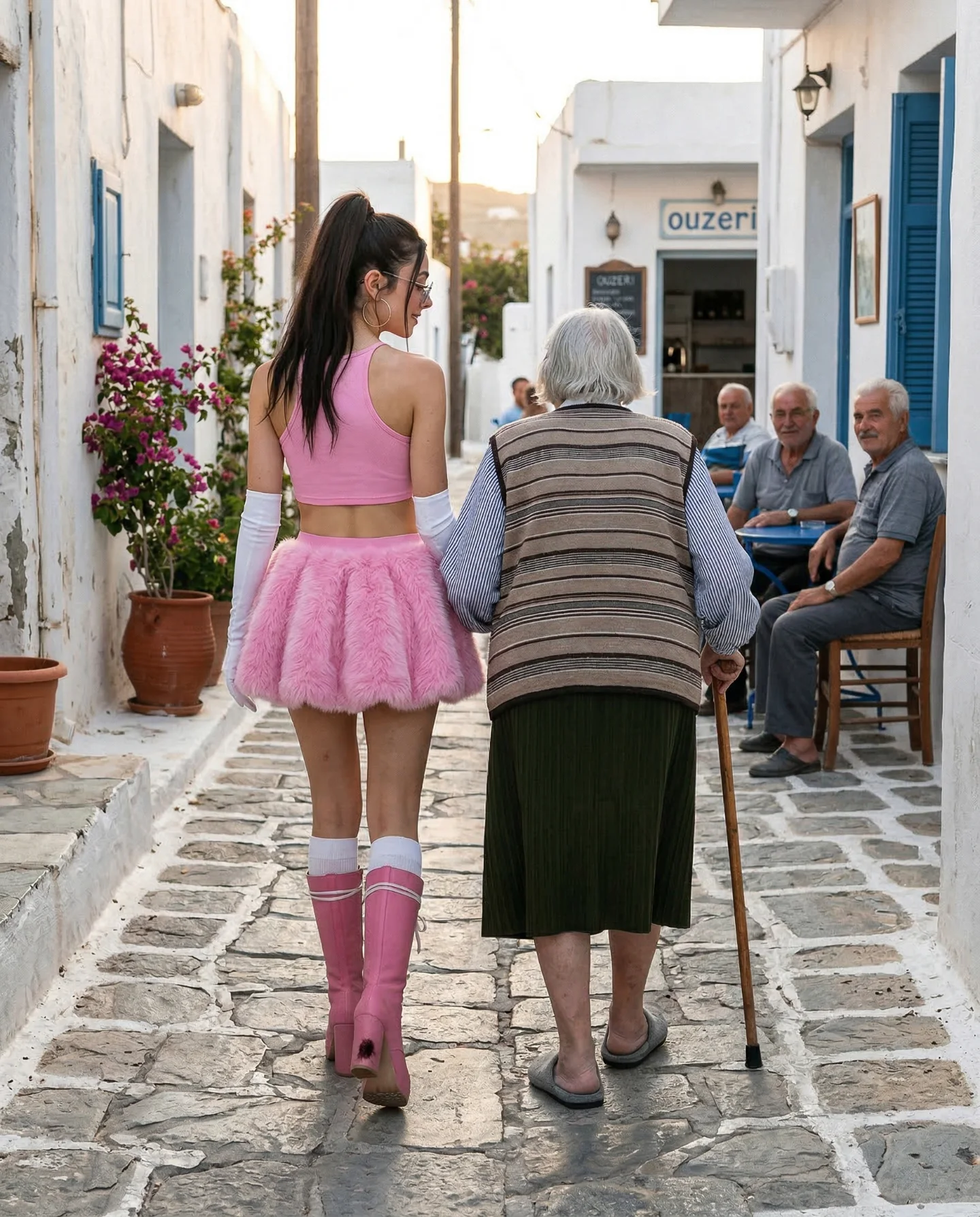
This image works because it is built on collision. On one side you have hyper-styled pink influencer fantasy. On the other side you have a dry, weathered village that feels grounded, ordinary, and local. The humor comes from how completely these two worlds refuse to match, yet fit together perfectly inside one frame.
The central move is putting the subject on top of the car instead of beside it. That turns the image from quirky outfit photo into social satire. She is not merely visiting the village. She is performing for the phone above it, while everyone else becomes an audience. The villagers and child are essential because they give the viewer a model for how to react.
| Element | Function |
|---|---|
| Pink Barbie-coded outfit | Creates immediate pop-culture recognition and visual absurdity. |
| Standing on the car roof | Escalates the scene from fashion pose to spectacle. |
| Small pink compact car | Acts as a color anchor and a physical stage. |
| Rural whitewashed houses | Provide strong cultural and geographic contrast. |
| Watching villagers and child | Add narrative reaction and complete the joke structure. |
The image succeeds because the color palette is brutally divided. Pink belongs almost entirely to the subject and car, while the rest of the world is beige, white, and brown. That separation makes the central figure feel like an imported idea dropped into a real place. It is not subtle, and that is exactly why it is memorable.
The car is also doing more than transportation duty. It acts as a platform, a stage, and a visual bridge between fashion fantasy and village realism. Without it, the subject would be just another tourist in costume. With it, the scene becomes absurdly theatrical.
| Prompt move | Purpose |
|---|---|
| Lead with the roof-selfie action | The scene is defined by the performative gesture, not only by the outfit. |
| Specify the rural architecture | The contrast depends on believable village textures and worn buildings. |
| Keep reaction figures in frame | The villagers are what turn the image into situational comedy. |
| Use bright hard sunlight | Daylight keeps the satire feeling documentary rather than dreamlike. |
| Preserve the pink-on-earth palette split | The visual joke weakens if the environment becomes too colorful. |
This setup is reusable for culture-clash visuals, satire-driven prompt packs, meme editorials, and social commentary imagery. The formula is clear: one exaggerated hyper-modern persona, one highly grounded local environment, one elevated performing gesture, and one visible audience reacting to the mismatch.
You can push this more comedic by exaggerating villager reactions or making the outfit even more synthetic. You can push it more editorial by reducing the crowd and sharpening the wardrobe. Or you can apply the same idea to different settings: a futuristic influencer dropped into a monastery, a runway look in a farmyard, or a luxury shoot in a working-class square.
If you recreate this style, make sure the environment remains genuinely ordinary. The image only works when the contrast feels real. Keep the local architecture specific, let the reaction figures stay believable, and make the central pose so excessive that the humor reads before the viewer even notices the details.