How dreamfall.art Built This Restaurant Editorial AI Portrait
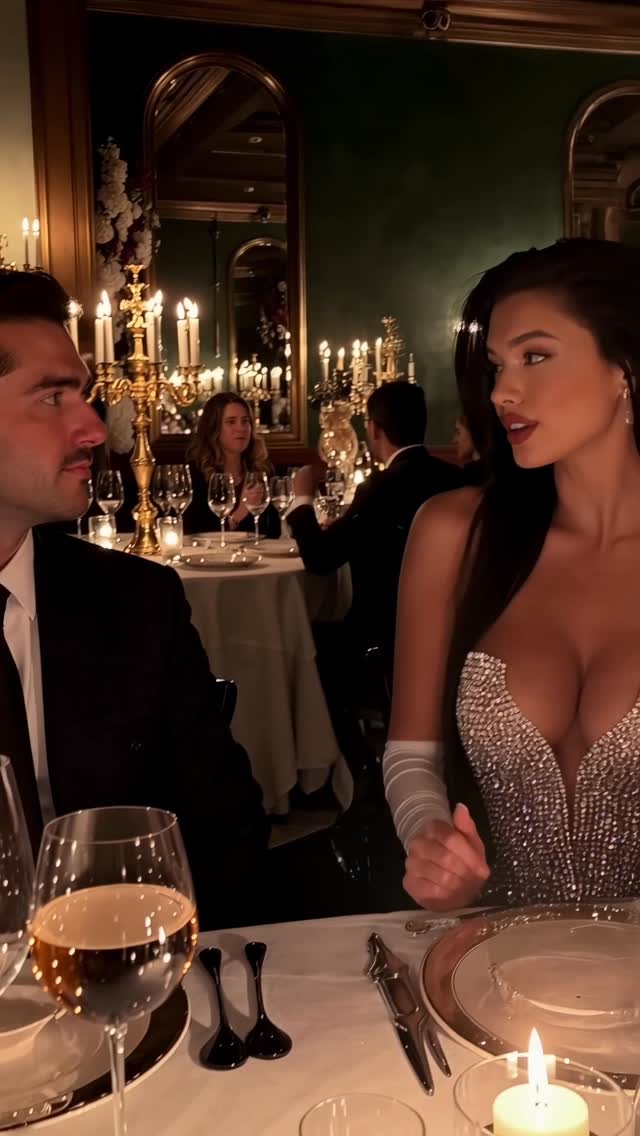
This image is built for saves. Candlelight, mirrors, gold metal, and a clean centered face create an instant “premium night out” fantasy. Viewers don’t need context—they understand the vibe in one second, and they want to keep it for references, moodboards, and future prompts.
Now add the caption strategy: calling it a “restaurant collection” quietly signals this is a series (so people expect more), and the comment keyword CTA (“COURSE”) converts attention into an action that also boosts distribution.
Why it went viral (the non-obvious parts)
Luxury visuals go viral when they’re simple to read but rich to look at. Here, the composition is straightforward—subject centered, table foreground, candles left—but the materials do the heavy lifting. Candle flames create organic highlights, mirrors multiply the scene into depth, and gold metal reflects warm tones that flatter skin. That’s the recipe for “expensive” without needing a complicated location.
Most creators miss the mirror trick. Mirrors turn one candle setup into a whole room of light. That’s why this frame feels cinematic and layered, even though it’s basically a portrait at a table.
Signal Table: what to copy and how
| Signal |
Evidence (from this image) |
Mechanism |
Replication Action |
| Material richness |
Gold candle holders, glass reflections, satin-like highlights |
Signals “premium” instantly → saves and shares |
Choose 2–3 reflective materials (metal + glass + satin) and make them readable |
| Depth without clutter |
Mirrors repeat candlelight in the background |
Feels cinematic and expensive while staying clean |
Add “mirrored wall panels + repeated reflections” to your environment prompt |
| Warm flattering light |
Candlelight glow on skin and hair |
Creates comfort + beauty; people linger longer |
Lock “warm candlelight key + gentle ambient fill” and avoid flash lighting |
| Series + CTA loop |
“Collection” framing + comment keyword CTA |
Sets expectation for more; comments boost reach |
Package images as a named collection; use one keyword CTA only |
Use cases & transfers
Best-fit scenarios
- Fashion/editorial pages: one face, one iconic light source, one luxe material stack.
- Hospitality/restaurant vibes: sell atmosphere, not menu items—let candles do it.
- AI art portfolios: build a “collection” and post daily variations with consistent grade.
- Course/offer marketing: premium visuals as proof, then one comment keyword CTA.
- Brand moodboards: use it as a “night campaign” anchor and keep the look consistent.
Not ideal
- Bright minimal feeds: candlelit darkness is the whole point.
- Fast meme humor: this is slow luxury; jokes can feel out of place.
- Busy product shots: too many items will fight the reflections.
Transfers (exactly 3 transfer recipes)
-
Transfer Recipe 1 — “Swap the venue, keep the light”
- Keep: warm candlelight key, mirror reflections, shallow DOF
- Change: {venue} (jazz bar / hotel lobby / rooftop dinner)
- Slot template (EN): “glamorous portrait at {venue}, gold candle holders, mirrored background reflections, warm candlelight, editorial photo”
-
Transfer Recipe 2 — “Change the wardrobe story”
- Keep: centered subject, luxury table setting, candle flames visible
- Change: {wardrobe} (red satin dress / white blazer / vintage lace)
- Slot template (EN): “subject wearing {wardrobe}, candlelit fine dining, gold accents, soft bokeh, high-end editorial”
-
Transfer Recipe 3 — “Turn it into a 7-post collection”
- Keep: same grade, same lens feel, same candle/mirror environment
- Change: one detail per post (earrings / plate color / candle count)
- Slot template (EN): “same scene, change only {one detail}, keep candlelight + mirror reflections consistent”
Aesthetic read: how to make “expensive” feel inevitable
The trick is disciplined repetition. White candles, gold holders, glassware, and a mirror grid create visual rhythm. The plate’s blue rim is a quiet accent that prevents the scene from becoming pure brown-and-black. And because the lighting is motivated (flame light), the highlights look believable. Believability is what makes people stop arguing about “AI vs real” and start saving the vibe.
Prompt technique breakdown (control manual)
Lego blocks to remix without losing the look
| Prompt chunk |
What it controls |
Swap ideas (EN, 2–3 options) |
| Light source |
Mood + facial flattering |
“candlelight key” / “warm lamp light” / “string lights” |
| Reflection depth |
Cinematic layering |
“mirrored wall panels” / “glass partition reflections” / “polished wood reflections” |
| Material stack |
Luxury signal strength |
“gold metal + glass” / “silver + crystal” / “brass + porcelain” |
| Table styling density |
Clean vs maximal |
“one plate + two glasses” / “full tasting menu” / “tea service” |
| Lens/DOF |
Editorial feel |
“85mm shallow DOF” / “50mm editorial” / “cinematic anamorphic bokeh” |
Remix steps: iterate like a lighting director
Baseline lock
- Lighting: candlelight stays the key (don’t swap to daylight halfway)
- Environment: mirrors stay, crowd stays out
- Materials: gold + glass must be readable
One-change rule (example)
- Run 1: lock face + hair realism.
- Run 2: lock candle count and flame visibility.
- Run 3: adjust mirror reflections (more depth, less noise).
- Run 4: change only one styling accent (plate rim color or earrings).