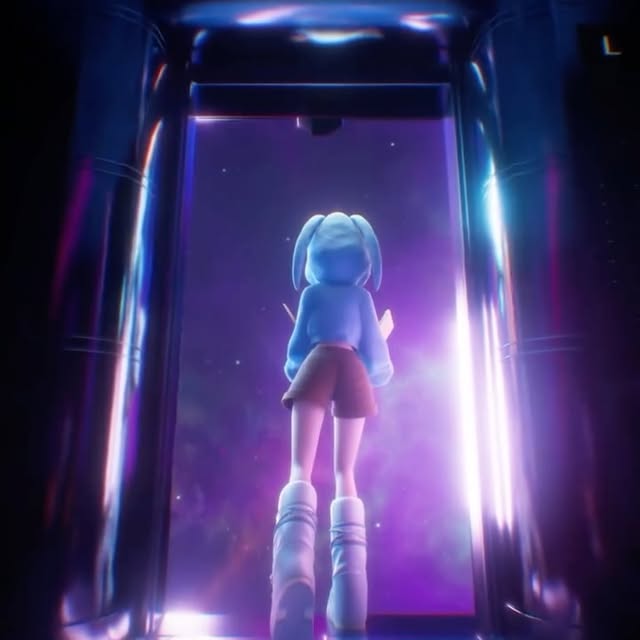
There’s no place like Space✨👠🌌 . . #APOKI #아뽀키 #アポキ
There’s no place like Space✨👠🌌 . . #APOKI #아뽀키 #アポキ
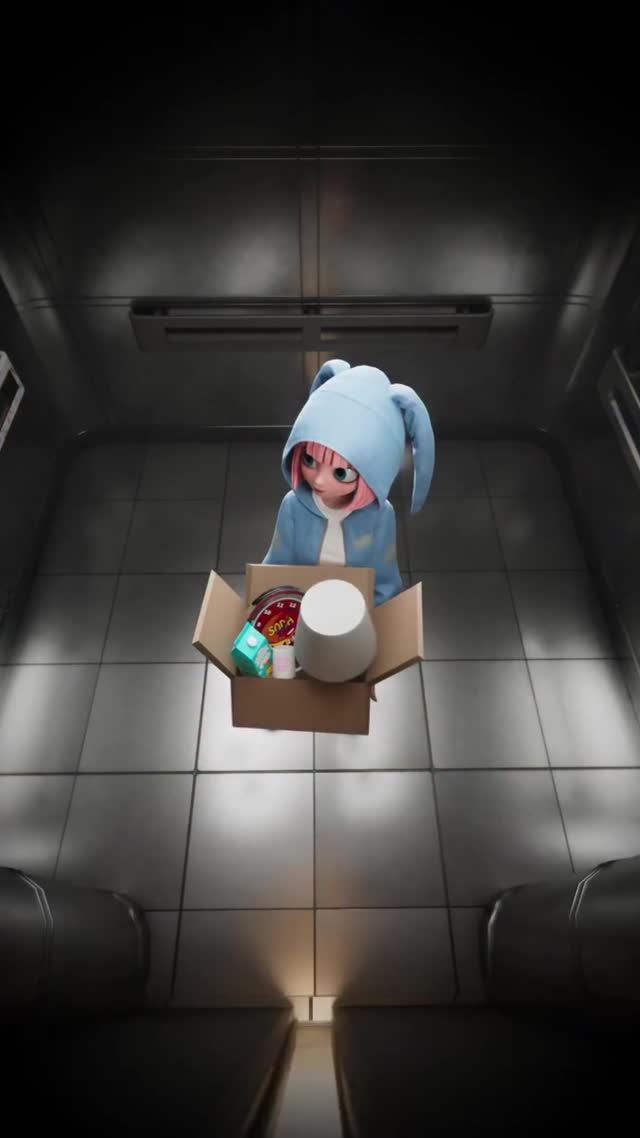
This image performs because it is not just "cute." It is narrative-ready. The top-down camera, the empty elevator, and the small character holding a box create immediate emotional context: transition, solitude, and quiet momentum. Viewers naturally ask, "Where is she going?" and that question drives dwell time.
For creators, this is a useful reminder that mood often beats complexity. You do not need many characters or props. You need one clear emotional state plus one environmental frame that supports it. Here, symmetry and negative space do most of the storytelling work.
The grocery box is also strategic. It grounds the scene with everyday realism, preventing the stylized character from feeling abstract. That realism anchor makes the frame easier to connect with and easier to remix into different narratives.
| Signal | Evidence (from this image) | Mechanism | Replication Action |
|---|---|---|---|
| Narrative perspective | Overhead top-down view inside enclosed elevator | Non-standard angle creates instant cinematic interest | Use one unusual camera position as the core hook |
| Isolation coding | Single small subject surrounded by empty space | Negative space amplifies emotional reading | Keep hero subject under 30 percent of frame area |
| Reality anchor | Open box with recognizable convenience items | Makes stylized world feel relatable | Add one everyday prop set tied to daily routine |
| Symmetry and structure | Elevator walls and floor tiles frame the subject | Geometric order increases visual clarity on mobile | Lock symmetrical architecture around subject |
Transfer 1: Subway Version
Keep: top-down camera, single subject, negative space.
Change: environment from elevator to empty train car.
Slot template: {character} holding {daily_prop} in {enclosed_space}, overhead cinematic framing
Transfer 2: Hallway Episode Card
Keep: moody low-key lighting and centered subject.
Change: floor pattern and wall material for new chapter identity.
Slot template: {hero} in {corridor_type}, {prop_set}, {mood_adjective}, high-angle shot
Transfer 3: Brand Campaign Variant
Keep: symmetry and story-like still-frame aesthetic.
Change: box contents to featured product line.
Slot template: {stylized_character} carrying {brand_products} in {architectural_space}, cinematic top-down
The visual strength is architectural storytelling. The elevator walls are not passive background; they act like stage curtains around the character. This makes the frame feel composed and intentional, even though the subject appears candid.
Color design is minimal and effective. Cool steel and gray tiles establish emotional quiet, while the light-blue hoodie becomes the focal color cue. A tiny warm reflection on the floor adds depth and keeps the palette from feeling flat.
The character scale is another key choice. By keeping the figure relatively small, the image communicates vulnerability and transition. In social growth terms, this is powerful because emotional ambiguity invites comments and interpretations.
| Observed | Recreate evidence |
|---|---|
| Top-down high-angle perspective | Place virtual camera near ceiling and point straight downward |
| Centered small subject inside symmetry | Constrain subject size and align with frame centerline |
| Low-key cool lighting with soft falloff | Use dim practical lights, avoid harsh highlights |
| Everyday prop box adds realism | Include readable grocery items with clear shapes |
| Prompt chunk | What it controls | Swap ideas (EN, 2-3 options) |
|---|---|---|
| "single stylized girl in bunny hoodie" | Character identity and tone | "boy in oversized coat" / "masked courier" / "robot mascot" |
| "open cardboard box with convenience items" | Narrative grounding | "flower box" / "vinyl records" / "book stack" |
| "metal elevator interior, tiled floor" | Spatial context and geometry | "parking stairwell" / "subway elevator" / "service corridor" |
| "overhead cinematic top-down framing" | Visual novelty and emotional distance | "security-cam angle" / "45-degree high angle" / "ground-level low angle" |
| "cool low-key light + warm reflection" | Mood contrast | "all-cool monochrome" / "amber tungsten" / "neon cyan-magenta" |
This creates a repeatable cinematic template without losing narrative clarity.