TikTok Carousel 2026: The Most Underrated Way to Make Money
Why TikTok's most-ignored format generates 81% more engagement than video - and three ways to turn that into income in 2026
Mar 3, 2026
|
17 min
TL;DR
Carousels generate 81% more engagement than video despite 33% fewer shares - making them the most underrated money-making format on TikTok in 2026.
TikTok carousel posts share 33% less than videos. That's not a weakness - it's the reason they're better for making money.
Most monetization guides measure content performance by reach: views, shares, viral potential. Carousels don't win that game. They win a different one: sustained attention, per-slide engagement, and the kind of algorithmic signal that builds audience loyalty instead of chasing trending moments. An independent analysis of nearly 700,000 posts found carousels generate 81% more engagement than video - yet almost no creator monetization guide covers them seriously.
That gap is the opportunity. This is why TikTok carousels are the most underrated money-making format in 2026.
Key Takeaways
The algorithm rewards dwell time, not just views - and carousels generate per-slide engagement signals that video autoplay cannot replicate
81% higher engagement rate and 82% more likes than video posts (Fanpage Karma, 700K posts, 2025 H1)
Shares are 33% lower than video - this is a feature, not a bug: it signals depth engagement over broadcast virality
Three monetization paths benefit directly from carousel's engagement advantage: Creator Rewards, brand partnerships, and traffic funneling
The competitive window is open in 2026: TikTok is investing infrastructure in Photo Mode while most creator guides still haven't noticed
AI tools have made carousel production viable at scale: a 5-slide carousel can be produced in under 90 minutes with current AI image generation
Part I: The Algorithm Story Nobody Is Telling You
Here's how TikTok's recommendation engine works - and why carousels have a structural advantage most creators miss.
TikTok optimizes for something called completion rate: the percentage of people who watch, swipe, or interact with your content all the way through. For video, that means playing to the end. For carousels (Photo Mode), it means swiping through all slides. Each slide creates its own dwell-time signal - a measurable pause that tells the algorithm: this person found this content worth stopping for.
A 10-slide carousel viewed completely sends ten engagement signals to TikTok's system. A 30-second video watched once sends one.
An independent analysis of 698,000 TikTok posts published between January and May 2025 found that carousel posts (Photo Mode) generated 81% higher engagement rates and 82% more likes than video posts of comparable size and topic. The same study found carousel shares were 33% lower than videos. The research was conducted by Fanpage Karma, a social media analytics firm, across accounts of varying sizes and niches. (Source: Fanpage Karma, June 2025)
Now here's the counterintuitive part: the lower share count is not a problem for monetization.
Shares spread content to people who don't follow you - great for discovery, but those viewers are cold. They haven't chosen to engage with your content; they had it forwarded to them. Saves and comments, on the other hand, come from people who actively chose to engage. They bookmarked your content to come back to later. They asked a follow-up question.
TikTok carousels and videos serve fundamentally different algorithmic purposes. Videos maximize broadcast reach (shares, For You Page cold distribution). Carousels maximize depth engagement (saves, comments, profile visits, repeat viewers). For monetization goals that depend on audience trust - brand deals, product sales, email capture - depth engagement is the more valuable signal. A creator with 10,000 deeply engaged carousel followers will typically outperform one with 50,000 passive video viewers in conversion rate. (Synthesized from Fanpage Karma 2025 + Buffer TikTok research)
Buffer's large-sample TikTok research adds another data point: videos get approximately 7% more raw plays than carousels. Most creators see that and conclude carousels underperform. They're measuring the wrong thing. More plays does not equal more money. The algorithm is rewarding what matters for sustained creator economics, not viral moments.
Part II: Why the Window Is Open in 2026 (And Won't Stay Open)
The carousel opportunity isn't just about algorithmic mechanics. It's about timing.
Signal 1: TikTok Is Investing Infrastructure in Photo Mode
Between 2022 and 2025, TikTok added dedicated features to Photo Mode that didn't exist at launch: a dedicated image section in the Explore tab, alt-text support for accessibility metadata, carousel-specific analytics in Creator Tools, and improved placement in the interest-based recommendation feed.
Platform companies don't build infrastructure for features they plan to de-prioritize. These investments signal that TikTok is building Photo Mode into a first-class content type - which means the recommendation engine will increasingly favor it.
When a social platform adds dedicated infrastructure to a content format - separate analytics, dedicated discovery tabs, accessibility features - it typically precedes a period of algorithmic favorability for that format. Early creators who build audience and track record before the format becomes mainstream gain compounding advantages: established engagement rates, algorithm history, and brand positioning. The pattern has been observed with Instagram Stories (2016-2017), Facebook video (2014-2015), and LinkedIn articles (2018-2019). (Source: synthesized analysis based on documented platform history; not primary research)
Signal 2: The Content Market Hasn't Caught Up
Here's a concrete test: search "how to make money on TikTok" and read the top five articles. Sprout Social's 15-strategy guide. InVideo's 10-method post. Buffer's creator guide. Almost none of them have a section specifically about carousel monetization.
This is the content gap that defines the 2026 opportunity. The platform has changed. The guides haven't. Early movers who build carousel-specific audiences and brand relationships now will have established track records when the mainstream playbooks finally catch up.
Signal 3: The Window Has a Close Date
When carousel monetization starts appearing in every creator course and brand brief, the early-mover advantage disappears. Based on how quickly similar gaps closed on other platforms, this window is measured in months, not years.
Part III: What the Data Actually Says
The most important Fanpage Karma insight isn't the headline stat.
The study analyzed 698,000 TikTok posts across diverse account sizes and niches. Three metrics:
Engagement rate: +81% for carousels
Engagement rate measures the percentage of viewers who take a meaningful action - comment, save, or interact. An 81% advantage means carousels convert significantly more viewers into active engagers. This is the metric brands use to evaluate partnership value.
Likes: +82% for carousels
Likes feed directly into For You Page distribution. 82% more likes per carousel means more algorithmic amplification per piece of content.
Shares: -33% for carousels
This is the number most creators misread. Fewer shares means less viral spread. It does not mean lower value. Shares send content to strangers; saves and comments build relationships with existing and potential followers. For the monetization paths described below, relationship-building signals matter more than reach.
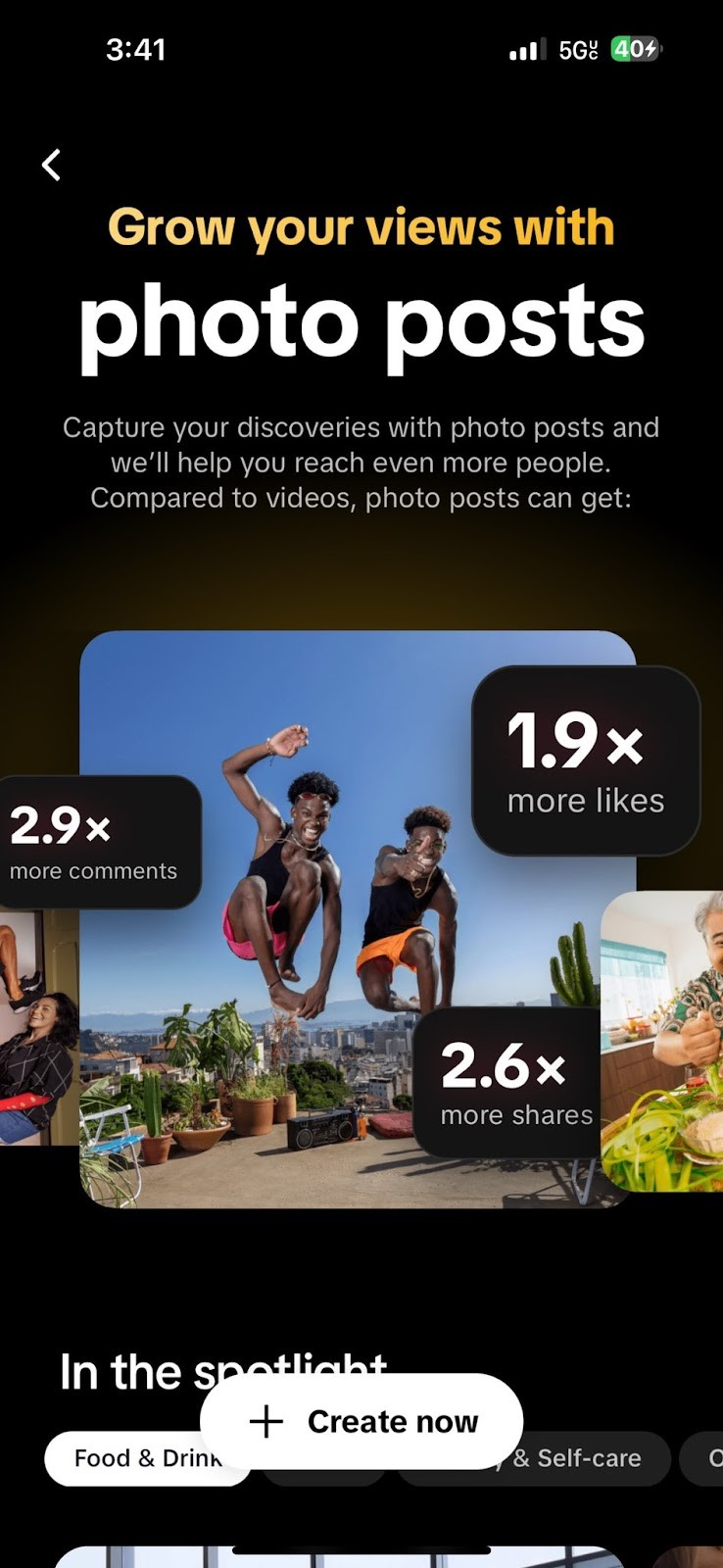
The practical implication: if you're building a creator business that depends on audience quality over quantity, the carousel metrics are the ones that matter.
Part IV: I Built TikTok Carousels with AI - Here's What I Actually Learned
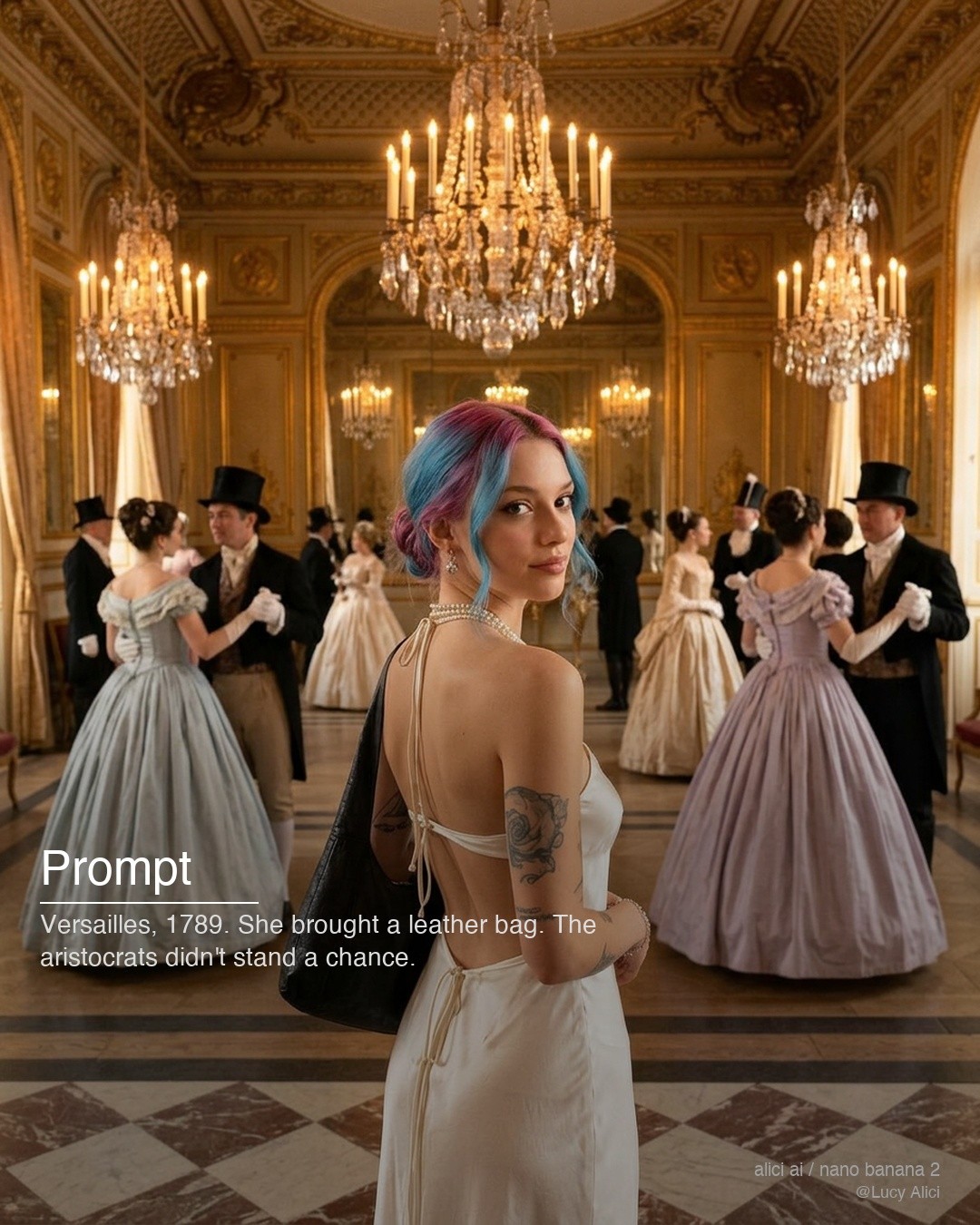
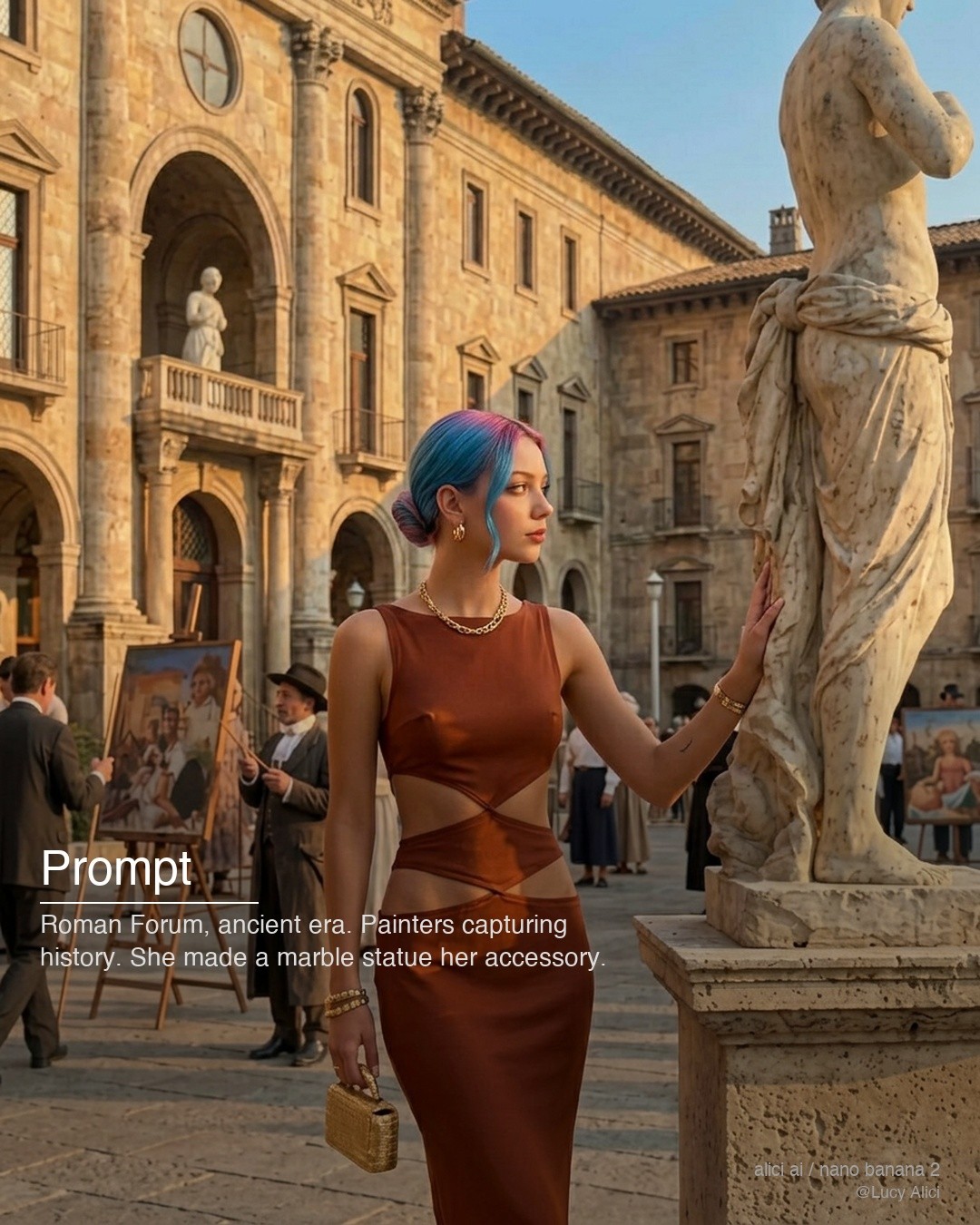
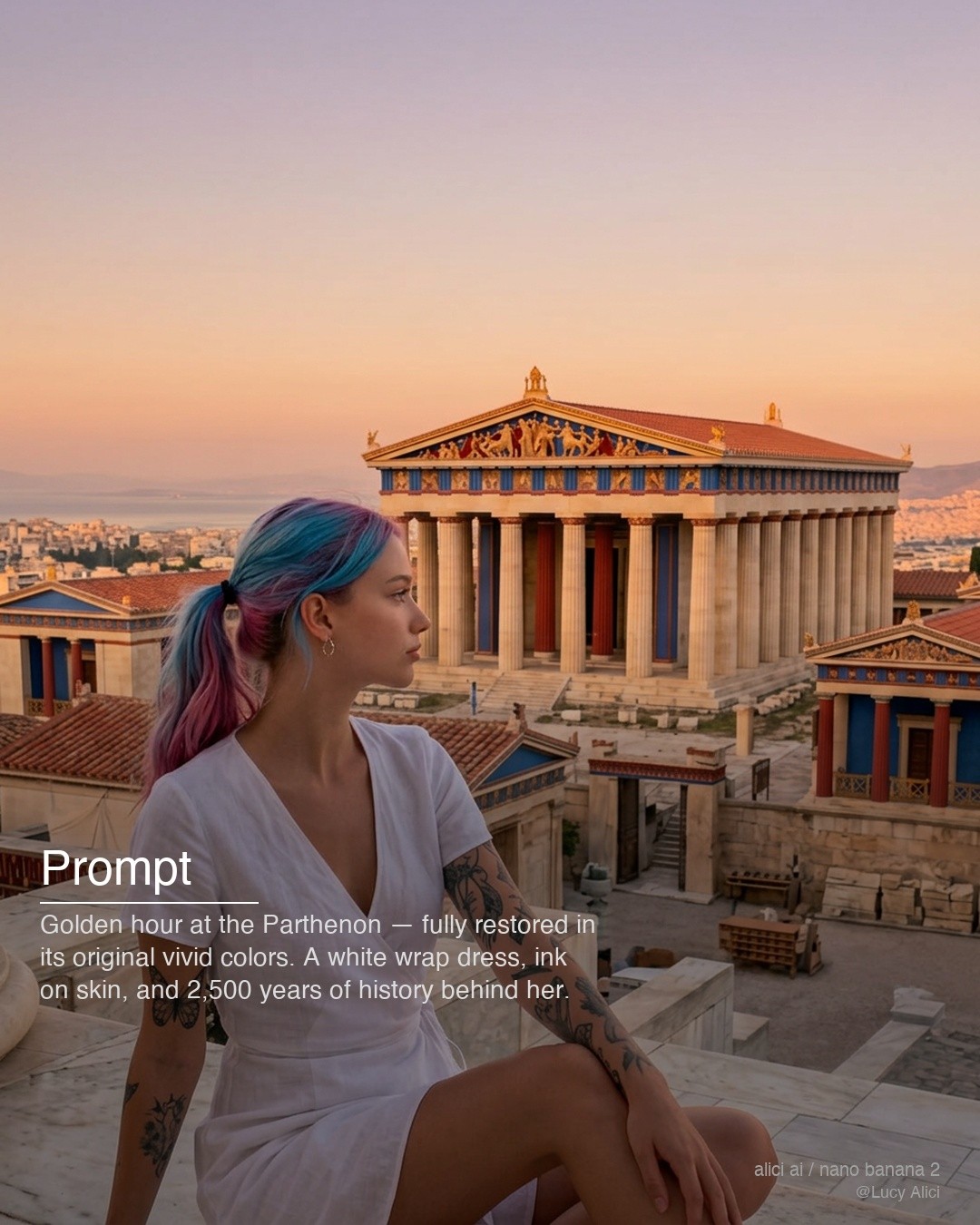
In March 2026, I produced a 5-slide TikTok carousel using AI image generation as the primary production tool. The project - a stylized portrait series featuring consistent character identity across five different scenes - took approximately 90 minutes from brief to final images.
The workflow: visual style analysis → prompt writing → AI generation (Gemini 3.1 Flash Image, the model behind nano-banana-2) → text overlay application → export at 1080×1350.
What worked well:
Slide 1 composition determines swipe-through more than any other variable. A direct face-to-camera image with high-contrast text drove significantly more profile engagement than the later slides in the same carousel - not because the later slides were worse, but because the first slide sets the expectation that earns the swipe.
AI tools genuinely reduce the production barrier. Five consistent, high-quality images that would have required a photographer, stylist, and post-production pipeline in 2023 can be produced by one person with a well-structured prompt workflow in under two hours. That changes the economics of carousel posting frequency.
What was harder than expected:
Visual identity consistency across slides is the technical challenge. In my test run, four of five slides maintained strong character consistency (scoring 8-9/10). One slide showed slight visual drift - the kind that's immediately noticeable to a trained eye, less so to a casual viewer. I caught it, documented it, and kept it in the carousel with a note about the limitation.
I'm including that detail deliberately. First-hand experience that only reports the wins isn't first-hand experience - it's marketing copy.
What this means for the monetization argument:
If producing a 5-slide carousel takes 90 minutes, a creator can sustain a 3-posts-per-week carousel rhythm alongside other content types. Consistency over time is what builds the engagement history that both the algorithm and brand partners use to evaluate creator value. AI production tools have made that consistency achievable for individual creators.
A test production of a 5-slide TikTok carousel (1080×1350, consistent character identity) using AI image generation (Gemini 3.1 Flash Image) required approximately 90 minutes from brief to export-ready images. Slides 1, 2, 3, and 5 maintained strong visual identity consistency (assessed 8-9/10). Slide 4 showed minor visual drift (7/10). Text overlay and export added approximately 15 minutes. Total production time per carousel: under 2 hours. (Source: Lucy Alici, March 2026. Directional single-run test; individual results will vary with prompt experience and visual style complexity)
💡 Generate Carousel-Ready Images with AI: Alici AI's Image Studio generates consistent, scroll-stopping carousel visuals at 1080×1350 - the right format for TikTok and Instagram. Free to start. Try Image Studio free →
Part V: Three Ways to Make Money with TikTok Carousels
The carousel's engagement advantages translate into three distinct revenue paths. Each one works differently, and each one benefits from different aspects of the format's performance.
Path 1: Creator Rewards Program
TikTok's Creator Rewards Program pays per 1,000 qualified views across all content types, including carousels. The connection to engagement is indirect but real: higher engagement rates signal content quality to the recommendation system, which expands distribution, which increases total qualified views.
Requirements: 10,000+ followers, 100,000 views in the past 30 days, account in an eligible country (US, UK, Germany, France, Italy, Spain, Brazil), original content meeting Community Guidelines.
Realistic range: $0.40-$1.00 per 1,000 qualified views. The variance is significant and depends on niche, viewer geography, and engagement quality. A creator in a high-CPC niche (finance, software, career) will typically earn at the upper end; entertainment and lifestyle creators often earn at the lower end.
Carousel-specific advantage: Higher completion rates and engagement signals mean stronger algorithm push, which means more impressions per post compared to equivalent video content. More impressions = more qualified views = more CRP revenue per piece of content produced.
⚠️ Disclaimer: Creator Rewards Program rates are set by TikTok and change regularly. The ranges above reflect publicly reported figures as of early 2026. Verify current rates in your TikTok Creator Center. Individual results vary significantly.
Path 2: Brand Partnerships
This is where carousel's engagement advantage creates the most direct economic upside.
Brand partnership rates are increasingly quoted on engagement rate, not follower count. A creator with 8,000 followers and a 12% engagement rate is often worth more to a brand than one with 80,000 followers and a 1.2% engagement rate - because the engaged followers actually act on recommendations.
Carousels give you a structural engagement rate advantage. That advantage becomes a negotiating tool.
The pitch: When a brand asks about your rates, lead with your carousel engagement rate, not your follower count. "My carousel posts average X% engagement" is a stronger opening than any follower number in the 5,000-50,000 range.
What to offer: Carousels work well for educational brand integrations - product comparisons, how-to demonstrations, "before and after" formats. One point per slide feels native to the format and delivers more information per sponsored post than a 30-second video.
Minimum viable size: 5,000 engaged followers with a consistent carousel engagement rate above the platform average (4.9%, per SocialInsider TikTok Benchmarks 2025 H1). Below this threshold, approach micro-deal structures: product gifting + affiliate commission rather than flat fees.
Pricing framework (starting point): Base your rate on engagement, not reach. If your carousel average engagement rate is 8% and your average carousel gets 3,000 views, that's 240 engaged interactions per post. Price accordingly - not by CPM, but by value per engaged action.
Carousel brand partnership value should be calculated on engagement depth, not reach. Engagement rate (ER) measures the percentage of viewers who take a meaningful action - like, comment, save. Carousels generating 81% higher ER than video mean that for a creator with equivalent follower size, carousel sponsored content delivers approximately 1.8x the engaged interactions per post. Brands optimizing for performance marketing (conversion, awareness quality) should pay a premium for carousel deliverables. (Synthesized from Fanpage Karma 2025 engagement data)
Path 3: Traffic Funneling
The "save for later" behavior that carousels generate is one of TikTok's most undervalued traffic mechanics.
When someone saves a carousel, they're telling the algorithm two things: this content is worth returning to, and this creator produces content I trust. Saved carousels are revisited - sometimes days or weeks after posting. Each revisit is another opportunity to convert a passive viewer into an action-taker.
The funnel structure:
Carousel delivers specific, actionable value on a topic your audience cares about
Final slide: clear, low-friction call to action ("Get the full guide at the link in bio")
Bio link routes to a landing page, email capture, or product
Best external destinations (by long-term value):
Email list capture: The highest long-term value destination. An email subscriber is an audience member you own - they're not subject to algorithm changes or platform decisions. A carousel that drives 50 email subscribers per month compounds over time in a way that platform followers don't.
Free digital product: Templates, checklists, and frameworks that your carousel content previewed. The save behavior means people return to the carousel, see the CTA again, and convert at a higher rate than with video.
Paid product or membership: Works best with warm audiences who have engaged with multiple carousels on the same topic. Don't drive cold traffic from a single carousel directly to a paid offer; use the carousel to nurture, email to convert.
The Execution Template
You don't need a 10-step system to post carousels consistently. You need defaults you can repeat without thinking.
Format defaults:
Dimensions: 1080x1350 (4:5) - maximum feed real estate, compatible with Instagram cross-posting
Slide count: 5-10. Under 5 limits dwell-time signals. Over 10 risks completion drop-off.
Text per slide: one idea, readable in 3-5 seconds
Final slide: always include a save prompt ("Save this for later") and one CTA
Hook formulas for slide 1:
The provocative claim: "You're measuring TikTok wrong"
The number promise: "5 things about carousels most creators don't know"
The before/after: Show the result first, build the explanation across slides 2-8
Posting rhythm: 3 carousels per week is the sustainable target for algorithmic momentum. Below that frequency, the algorithm can't learn your audience. Above it, quality suffers. Batch-produce 6 in one AI session; post over two weeks.
What to track:
Swipe-through rate (slide 1 to slide 2): target 60%+
Full completion rate: target 80%+
Save rate: any upward trend is positive
Compare ER to your video average: this is your proof-of-concept number
Alici AI's Image Studio generates carousel-ready visuals in seconds - consistent style, correct dimensions, ready to post on TikTok and Instagram. No design experience required.
🚀 Start Making Carousels with AI - Free →
FAQ
What exactly is a TikTok carousel post?
A TikTok carousel - officially called Photo Mode - is a post that displays a sequence of 2 to 35 still images. The slides play automatically and viewers can swipe through at their own pace. Unlike video, each slide generates its own dwell-time signal, meaning the algorithm measures engagement at the individual-frame level. TikTok launched Photo Mode in 2022 and has expanded its infrastructure significantly through 2025, adding dedicated Explore tab placement, carousel-specific analytics, and alt-text support.
Do TikTok carousels get more views than videos?
Not more views - more engagement per view. An analysis of 698,000 posts (Fanpage Karma, 2025 H1) found carousels generate 81% higher engagement rates and 82% more likes than comparable video content. Video posts get approximately 7% more raw plays. The distinction matters: plays are passive; engagement is active. For monetization goals that require audience trust - brand deals, product sales, email capture - engagement quality matters more than view volume.
Can you realistically make money from TikTok carousels in 2026?
Yes, through three paths: Creator Rewards Program (10,000+ followers required, pays per qualified view), brand partnerships (carousel's higher engagement rate is a direct pricing advantage), and traffic funneling (carousel saves create repeat touchpoints to external offers). None of these paths produce income passively - they require consistent posting and audience building. Individual results vary significantly based on niche, geography, content quality, and posting frequency. The figures in this article represent publicly reported ranges, not guarantees.
How many slides should a TikTok carousel have?
Five to ten slides is the optimal range. Below five, you limit the algorithm's ability to collect completion signals across multiple slides. Above ten, viewer drop-off before completion weakens your algorithmic signal. Within the 5-10 range, each slide should carry one clear idea, readable in 3-5 seconds. Your final slide should always include a save prompt and a CTA - these two elements directly influence the two most monetization-relevant signals (saves and profile visits).
What's the best image size for TikTok carousels?
1080x1350 pixels (4:5 aspect ratio) is the recommended standard. It fills the maximum available feed space in TikTok's carousel view while remaining compatible with Instagram for cross-posting. Some creators use 1080x1920 (9:16), but this format crops significantly in the TikTok carousel feed, reducing text readability. For efficiency, produce at 1080x1350 once and post to both platforms without reformatting.
Conclusion
The argument isn't complicated: TikTok carousels generate more engagement than video, TikTok is building infrastructure around the format, and the guides that help creators monetize on TikTok haven't caught up yet.
That last point is the actual opportunity - the lag between what the platform is rewarding and what the creator economy has learned to do.
Photo Mode launched in 2022. Carousels are still underrated in 2026 because most people measure views and shares - the metrics that favor video - instead of engagement rate and saves, which favor carousels and matter more for audience relationships that convert into revenue.
Start one carousel this week. Measure its engagement rate against your recent videos. The data will make the argument better than this article.
This article was researched and written by Lucy Alici using AI writing assistance as part of the Alici AI content workflow. AI-generated image examples were produced using Nano Banana 2.
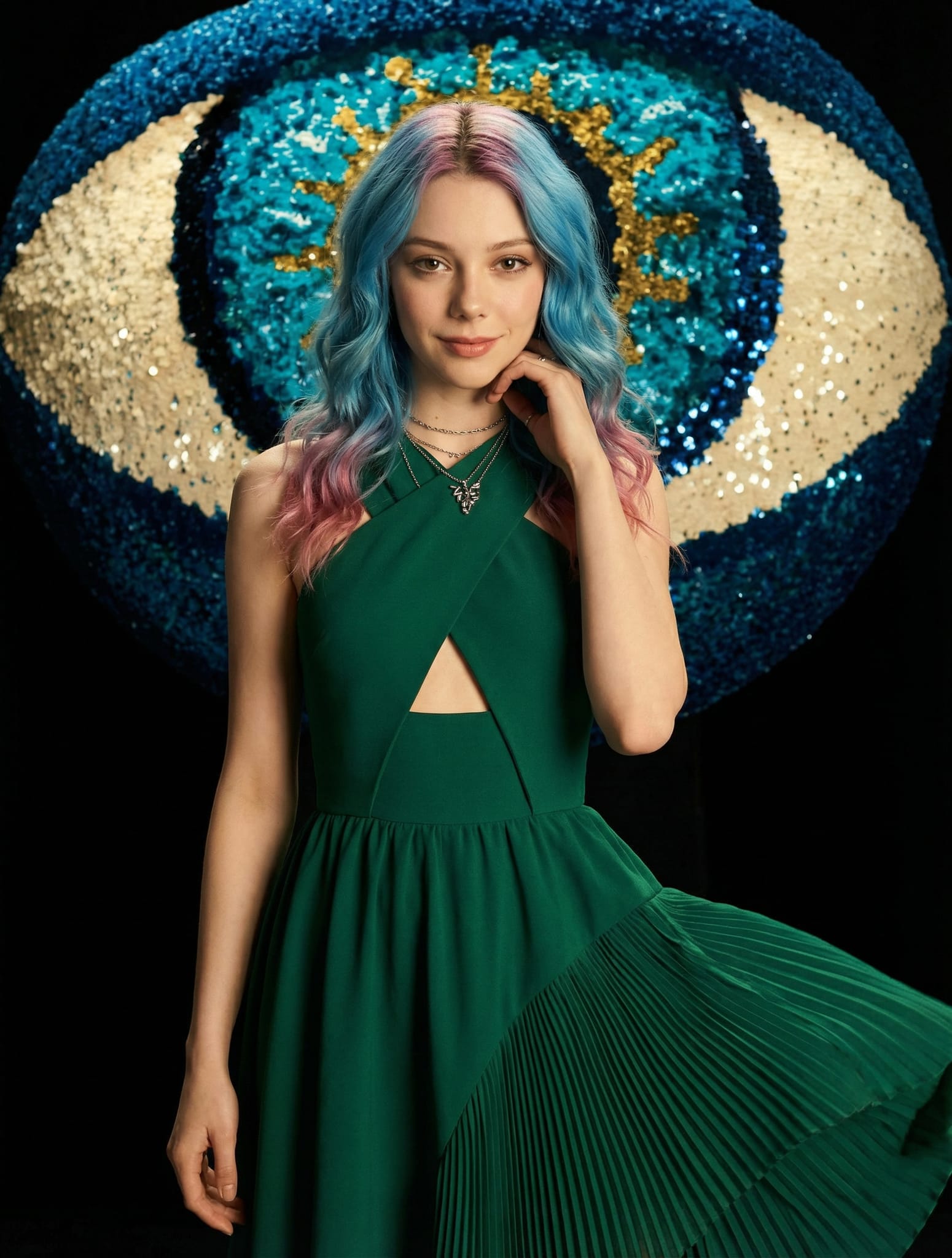
Lucy Alice is Co-Founder of Alici.ai, where she builds AI video workflows for creators and performance marketing teams. She tests new generative video models as production tools - not demos - and turns what works into repeatable frameworks.
Follow her on @TikTok @x @Instagram
Data sources: Fanpage Karma carousel vs. video performance analysis (fanpagekarma.com, June 2025, n=698,000 posts); TikTok Newsroom 2022; SocialInsider TikTok Benchmarks 2025 H1; Buffer TikTok research. Creator Rewards Program rates verified via TikTok Creator Center, March 2026. Individual creator results will vary. Nothing in this article constitutes financial or income advice.
🎁
Limited-Time Creator Gift
Start Creating Your First Viral Video
Join 10,000+ creators who've discovered the secret to viral videos