

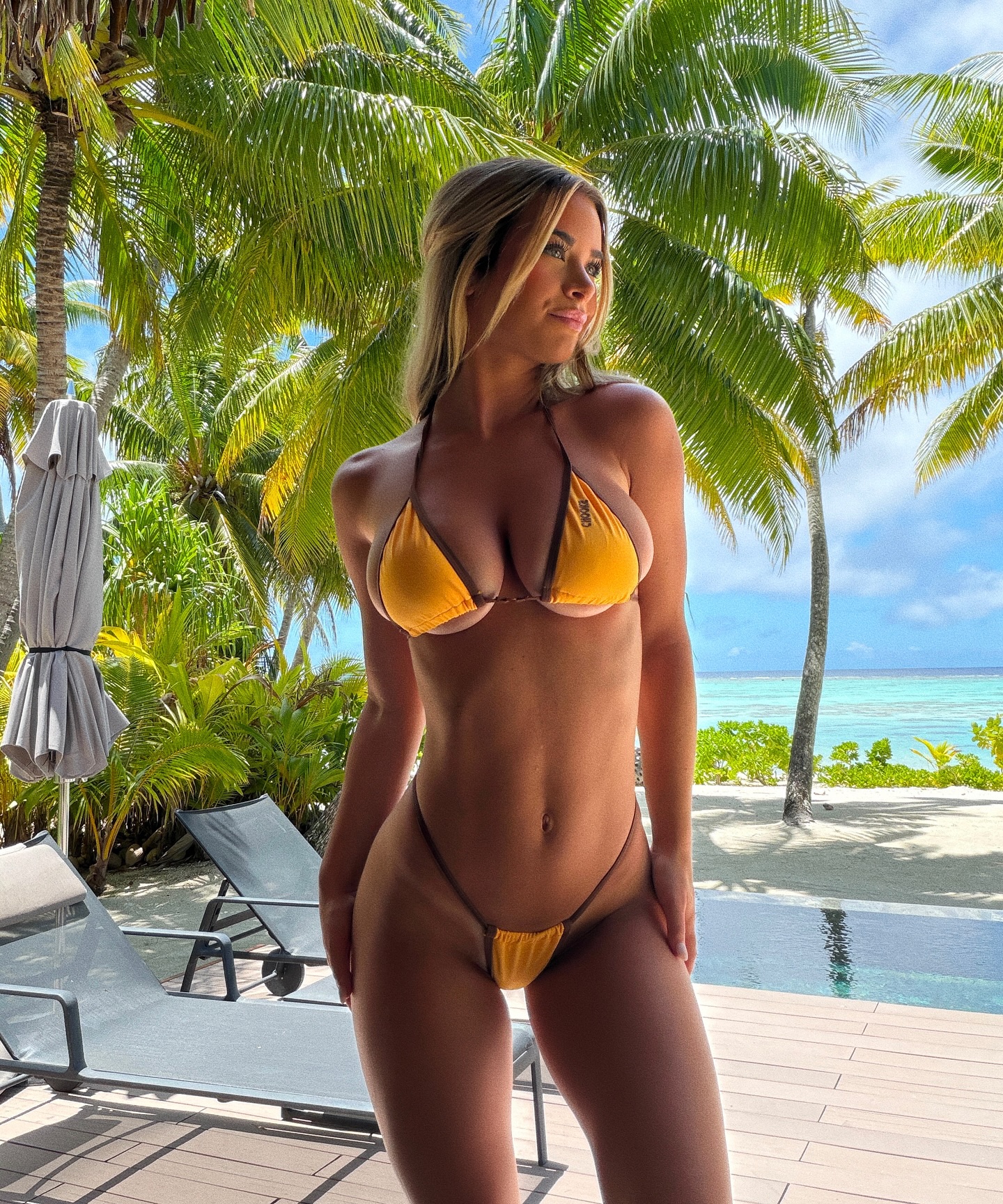

Bora Bora dump 🏝️🌺🐠
Bora Bora dump 🏝️🌺🐠
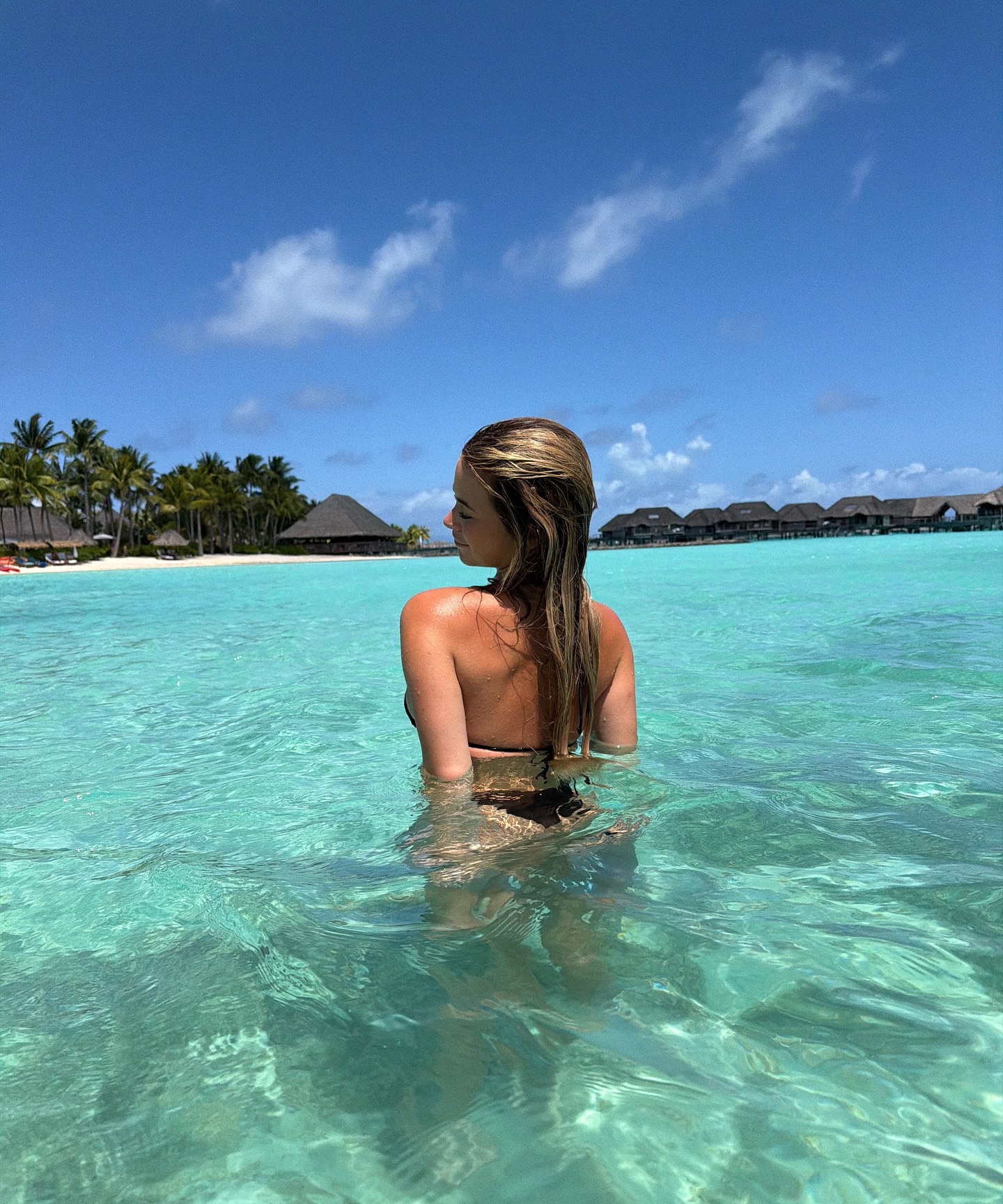
This image works because it lets the place do as much storytelling as the person. The subject is important, but she is not fighting the landscape for attention. That is why the frame feels expensive. The clear turquoise water, the open sky, the palms, and the distant overwater villas build a full fantasy of location, while the back-view pose keeps the mood understated. For creators, that is the core lesson: not every vacation image needs direct eye contact or a high-energy pose. Sometimes distance and calmness create more desire than performance.
The other strength is point of view. The camera sits close to water level, which makes the viewer feel physically present inside the lagoon. That is very different from a balcony shot or a beach lounger image. Here, the viewer is immersed. The water becomes part of the composition, not just a background element. Because the subject is turned away, the frame invites projection. The viewer can imagine themselves inside the scene, which is one reason this kind of travel image performs so well.
This frame is strong because it combines privacy, place, and clarity. The viewer gets a clean read in one second: tropical luxury, warm weather, clear water, quiet moment. But the image still has enough detail to hold attention longer, especially in the ripples, horizon line, and bungalow shapes.
| Signal | Evidence (from this image) | Mechanism | Replication Action |
|---|---|---|---|
| Immersive point of view | The camera sits just above the water surface. | Water-level perspective makes the viewer feel inside the scene instead of outside it. | Lower the camera to near-surface height when prompting or shooting lagoon images. |
| Back-view projection | The subject faces away with only a partial profile visible. | A turned-away pose invites the viewer to imagine themselves in the moment. | Use back or three-quarter-back poses for travel fantasy instead of direct front-facing poses. |
| Hyper-clear destination cue | Turquoise water, palms, and overwater villas all appear in one frame. | Multiple strong location anchors create instant luxury recognition. | Include at least three unmistakable destination markers, but keep them far enough back to avoid clutter. |
| Quiet emotional tone | No props, no exaggerated pose, no crowd interference. | Calmness increases the feeling of exclusivity and escape. | Remove unnecessary accessories and let the environment carry the fantasy. |
This style works best for luxury travel content, honeymoon or resort storytelling, destination branding, and AI-generated vacation imagery aimed at aspiration rather than fashion detail. It is especially useful when the place itself needs to be the hero as much as the subject.
This approach is less ideal for swimwear detail pages, social-group vacation scenes, or nightlife resort content. The image is about solitude, clarity, and immersion.
The most useful aesthetic feature here is scale control. The subject is large enough to anchor the image, but small enough to let the lagoon and sky breathe. That makes the photo feel open instead of cramped. Many weak travel images crop too tightly and lose the sense of destination. This one understands that the empty space is part of the luxury signal.
The water itself is also doing more than just looking pretty. Its transparency creates a sensation of purity and warmth, while the ripples keep the foreground alive. That is why the image feels more tactile than a simple beach pose. For prompt writing, this matters a lot. If you want a tropical image to feel memorable, describe the water behavior precisely. The clarity, refraction, and shallow depth are not optional details here. They are the whole emotional engine of the shot.
| Observed | Why it matters | How to recreate |
|---|---|---|
| Water fills most of the frame | Makes immersion the main experience | Let the lagoon occupy the foreground and midground instead of treating it as background |
| Subject viewed mostly from behind | Creates projection and privacy | Use a back-view pose with a slight profile turn only |
| Overwater villas on the horizon | Signals destination luxury instantly | Place iconic resort architecture far back but clearly readable |
| Blue sky with light clouds | Keeps the frame bright and open | Use a clean tropical sky rather than dramatic weather |
| Prompt chunk | What it controls | Swap ideas (EN, 2-3 options) |
|---|---|---|
| "woman waist-deep in crystal-clear lagoon seen from behind" | Core pose logic and emotional tone | "swimmer in shallow cove", "subject in infinity pool from behind", "person standing in alpine lake" |
| "palm-lined beach and overwater villas" | Destination specificity and luxury cue | "cliffside villas", "Mediterranean harbor", "private island dock" |
| "camera at water level" | Immersion and viewer presence | "slightly elevated drone angle", "shoreline eye level", "low deck-level perspective" |
| "bright tropical midday sun" | Water sparkle and clarity | "soft morning light", "warm late-afternoon sun", "hazy noon glow" |
| "clean travel realism with no props" | Authenticity and calmness | "subtle snorkel gear", "resort towel nearby", "sun hat on the shore" |
The biggest mistake with this kind of image is under-describing the water. If you only say “ocean” or “lagoon,” the result often loses the clarity and shallow transparency that make the scene feel elite. Describe the water like it is a main subject, because it is.
Lock three things first: the water-level camera height, the back-view subject pose, and the destination-specific horizon line. Those are the identity anchors. Then change one or two variables at a time.
Baseline Lock:
- camera: just above water level
- pose: solitary subject viewed from behind
- setting: crystal-clear tropical lagoon with luxury horizon cue

One-change rule:
Change destination first, light second, horizon anchor third.
Do not alter all three in the same generation.