0:00 / 0:00
▶
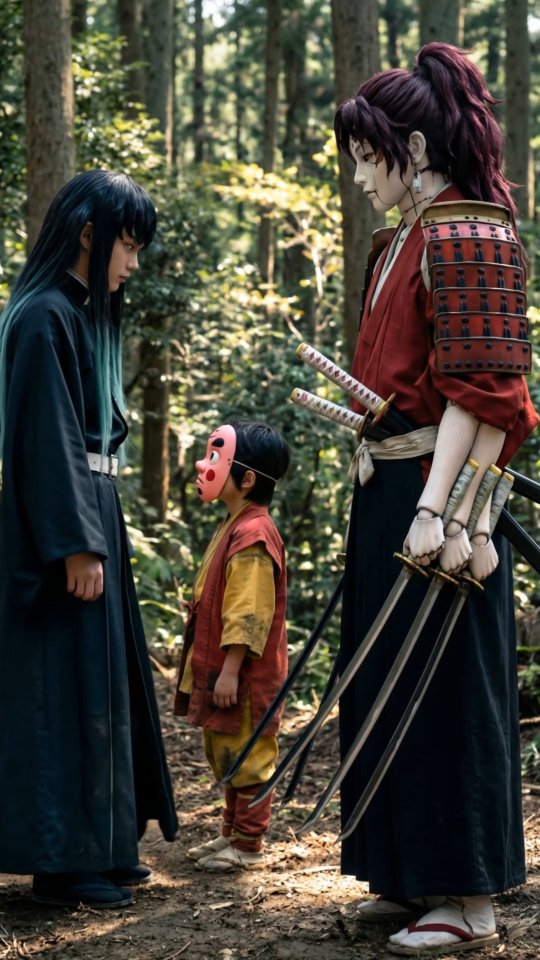
This reel plays like a compressed Japanese folk-horror short film. It begins with a child in a forest village setting, moves through illness and mourning inside a traditional wooden house, then transforms into a sword-bearing supernatural confrontation wrapped in white smoke and ritual tension.
The video works because it does not treat horror as random shock imagery. It uses continuity of place, costume, and character to move from memory to grief to confrontation, making the supernatural shift feel earned rather than arbitrary.
The first third is domestic and tragic. We see the black-haired girl as a child and as a witness inside dim rooms where someone lies sick on the floor and elders kneel in silence. The emotional tone is quiet, heavy, and intimate.
The middle section changes the heroine from witness into participant. She steps outside, carries a blade, and enters a confrontation in the forest. Smoke erupts, enemies appear, and the reel becomes a misty action-horror sequence with intense close-ups and stylized sword movement.
The final section softens again. After the smoke and violence, the story returns to daylight, kneeling villagers, and the house garden, suggesting aftermath rather than triumph. That cyclical structure is what gives the piece dramatic weight.
The visual palette is built around contrast. Warm autumn gold in the forest and pale daylight at the house are set against cold blue interiors and dense white battle fog. This alternating temperature helps separate memory, grief, and combat without needing explicit exposition.
Costume is also used as narrative information. The pale sleeveless dress belongs to the vulnerable child phase, while the black layered robe and hakama-style silhouette signal the heroine’s later supernatural or martial role. Long black hair with bangs remains the key continuity marker throughout the reel.
Camera language stays dramatic but readable. The film uses still portraits, doorway compositions, kneeling tableaux, and then close sword-action inserts, all of which support a ghost-story rhythm instead of generic action pacing.
To recreate this reel, the prompt needs to preserve the full sequence of states: village child, mourning interior, black-clad swordswoman, smoke battle, and quiet aftermath. A single “samurai horror girl” prompt would miss the emotional progression that makes the clip compelling.
The prompt should also lock the Japanese architectural setting, the tatami interiors, the engawa hallways, the fog-filled outdoor ritual ground, and the heroine’s hair and wardrobe continuity. These repeating anchors are what allow the timeline to feel like one story instead of unrelated scenes.
Most importantly, the horror tone should stay mournful and ceremonial. The reel is not loud or chaotic. Even the sword section is framed like a tragic ritual, which is why the clip feels cinematic rather than merely action-heavy.
For creators, this is a strong example of how AI video can compress a genre story into under a minute without losing atmosphere. It shows how to combine horror, folklore, and action through visual continuity instead of dialogue.
For SEO, this clip is especially useful because it teaches several production lessons at once: how to build a character arc with wardrobe changes, how to use lighting temperature to signal emotional stages, and how to stage smoke and blade action without breaking a coherent story world.