How fantasoner Made This Demon Slayer Giyu Tanjiro Rengoku AI Portrait -- and How to Recreate It
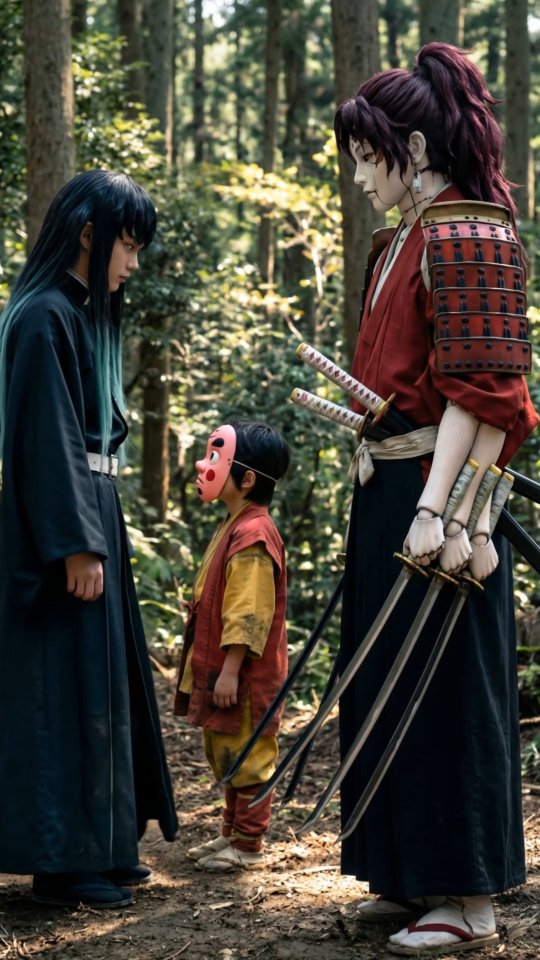
This image works because it understands that stillness can carry more narrative force than action. No sword is swinging, no explosion dominates the frame, and yet the picture feels emotionally loaded. That tension comes from placement, scale, and silence. The child stands at the center while two older figures hold the space on either side. The entire image reads like a paused memory, a test of allegiance, or a ceremonial encounter.
The strongest structural choice is the triangular relationship built into the composition. One adult figure anchors the left side, another holds the right, and the child acts as the emotional hinge in the middle. This is far more effective than a basic two-person faceoff because the central figure changes the meaning of the entire image. The scene stops being only about opposition and becomes about connection, history, and consequence.
The forest setting supports that emotional reading perfectly. Tall trunks, filtered daylight, and a relatively uncluttered forest floor create a sense of sacred calm. This environment does not distract with spectacle. Instead, it behaves like a container for the tension between the characters. That is a useful lesson for cinematic fantasy prompting: when the story depends on relational gravity, choose a setting that holds stillness instead of noise.
The child in the tengu mask is especially effective because masks inherently imply interpretation. A masked child feels symbolic. The figure can suggest innocence, initiation, memory, lineage, or unresolved destiny depending on how the adults are read. This kind of symbolic center is one reason the image feels richer than a simple character lineup. The child is not decorative. The child is the narrative pivot.
Another reason the image works is the distinction between the two adult silhouettes. One figure reads darker, quieter, more inward. The other reads more visibly martial through red garments and sword presence. That difference helps the viewer decode the tension quickly. Even before understanding a specific franchise reference, the audience reads a contrast in temperament and role.
The live-action adaptation mood also contributes a lot. The costumes feel textured and wearable rather than flattened into graphic anime shorthand. Robes, armor, and swords have weight. That tactile realism is what prevents the image from feeling like cosplay documentation. Instead, it feels closer to prestige genre cinema or high-end key art inspired by anime narrative structures.
Lighting is understated but correct. Soft daylight filters through the trees, creating mild separation between the figures and the darker trunks. The result is grounded and believable. If the scene were drenched in exaggerated rim light or fantasy effects, it would lose the solemnity that makes it interesting. This image proves that realism can intensify emotion when the staging is strong enough.
The composition also benefits from vertical framing. The tall aspect ratio lets the tree trunks reinforce the standing posture of the characters, which adds gravity and ritual feeling. A wider frame might have made the scene feel more like landscape storytelling. This narrower vertical emphasis makes it feel like a poster or dramatic character tableau, which is exactly the right use case for a moment like this.
If you want to recreate this kind of scene, do not start with franchise references. Start with relationship architecture. Ask who is the emotional center, who is the opposing force, and who frames the scene with authority. Once that geometry is locked, clothing, props, and forest mood can refine the reading without carrying the full burden of the image.
This is also a strong example of why silence is useful in prompts. Many fantasy images fail because they include too many active verbs. Running, slashing, exploding, screaming, leaping, colliding. This scene uses almost none of that. The power comes from pause. In visual storytelling, a pause can often imply more history than a fight can show.
The swords are also handled well because they remain part of the silhouette language rather than becoming the entire point of the image. They contribute status and role definition, but they do not turn the scene into an action poster. That distinction matters. Weapons can add tension without requiring immediate violence.
The forest itself is understated but coherent. Straight trunks, earthy ground, and filtered canopy light give the scene a quiet realism. This is the right approach when the environment is meant to deepen mood rather than showcase worldbuilding. The viewer receives enough information to understand the setting, but not so much detail that the characters lose psychological dominance.
If you wanted to iterate on this concept, the safest axis is emotional temperature. You could push it toward grief with colder fog, toward mentorship with warmer dawn light, or toward confrontation with a slightly greater physical gap between the adults. But the central formula should remain intact: two larger forces, one child at the center, and a setting that amplifies stillness.
This image is especially good reference material for creators who want to build memory scenes, adaptation posters, or quiet confrontation visuals. It proves that a fan-inspired scene does not need maximal effects to feel cinematic. It only needs clear emotional geometry, readable silhouettes, and a setting with the discipline to support the people in it.
From a prompt-writing perspective, the key lesson is that you should describe the relationship first and the ornament second. “Child centered between two warriors in a calm forest clearing” is more valuable than a long list of decorative details. Once that structural sentence is correct, the rest of the scene can be tuned without breaking the emotional core.
The image also works because it feels suspended between story beats. It is neither prologue nor climax nor aftermath alone. It could be the start of instruction, the memory of a meeting, or the edge of a conflict. That ambiguity gives the frame replay value. Viewers return to it because it suggests more than it explicitly states.
If you want to create similarly strong ensemble fantasy images, protect these four things: one clear emotional center, one readable contrast between surrounding figures, one quiet but supportive setting, and one restrained lighting design that preserves realism. That combination is enough to make a static scene feel cinematic, serious, and narratively alive.