How feedthekittys Made This Viking Warrior Woman AI Art and How to Recreate It
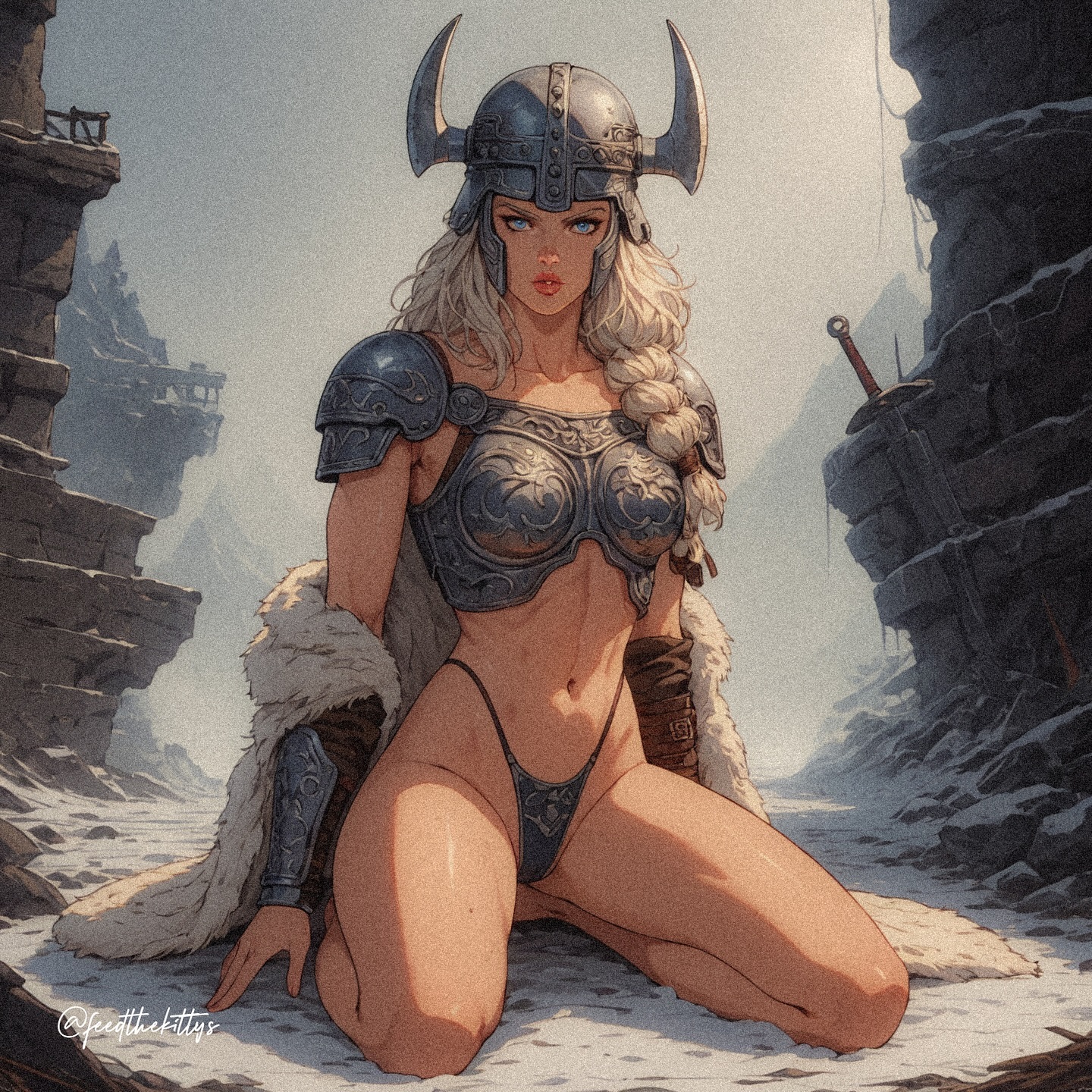
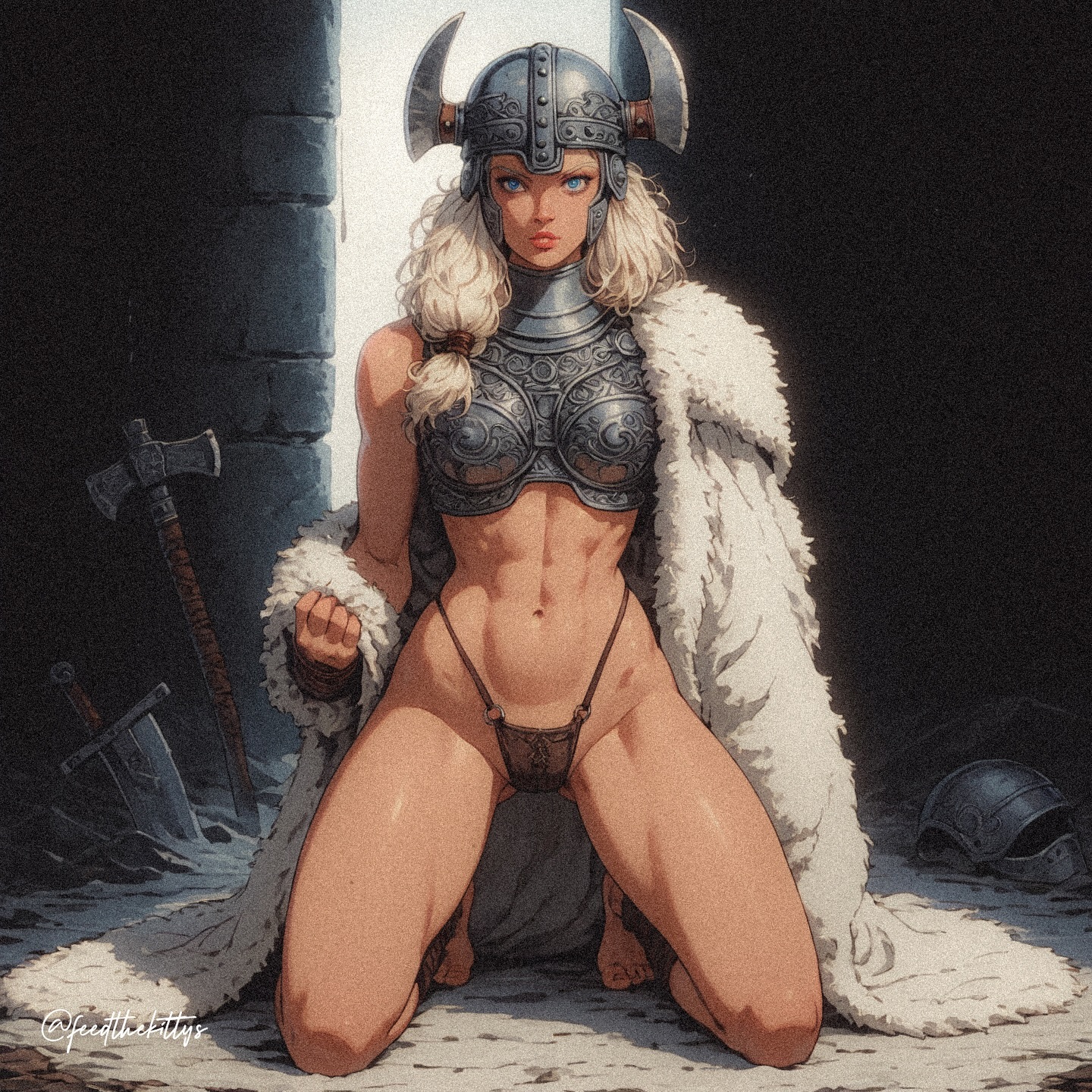
This image works because it does not try to prove strength through motion. The character is kneeling, not charging. That changes the emotional read completely. Instead of action, the image gives you presence. The figure feels grounded, ceremonial, and unshaken, which is often a stronger kind of power on a visual platform than another generic mid-swing combat frame.
The cold ruin setting also helps because it is suggestive without being busy. You get snow, stone, distance, and one sword fixed in the background. That is enough to imply history and violence without turning the frame into a chaotic battlefield. The result is cleaner, more collectible, and easier to read.
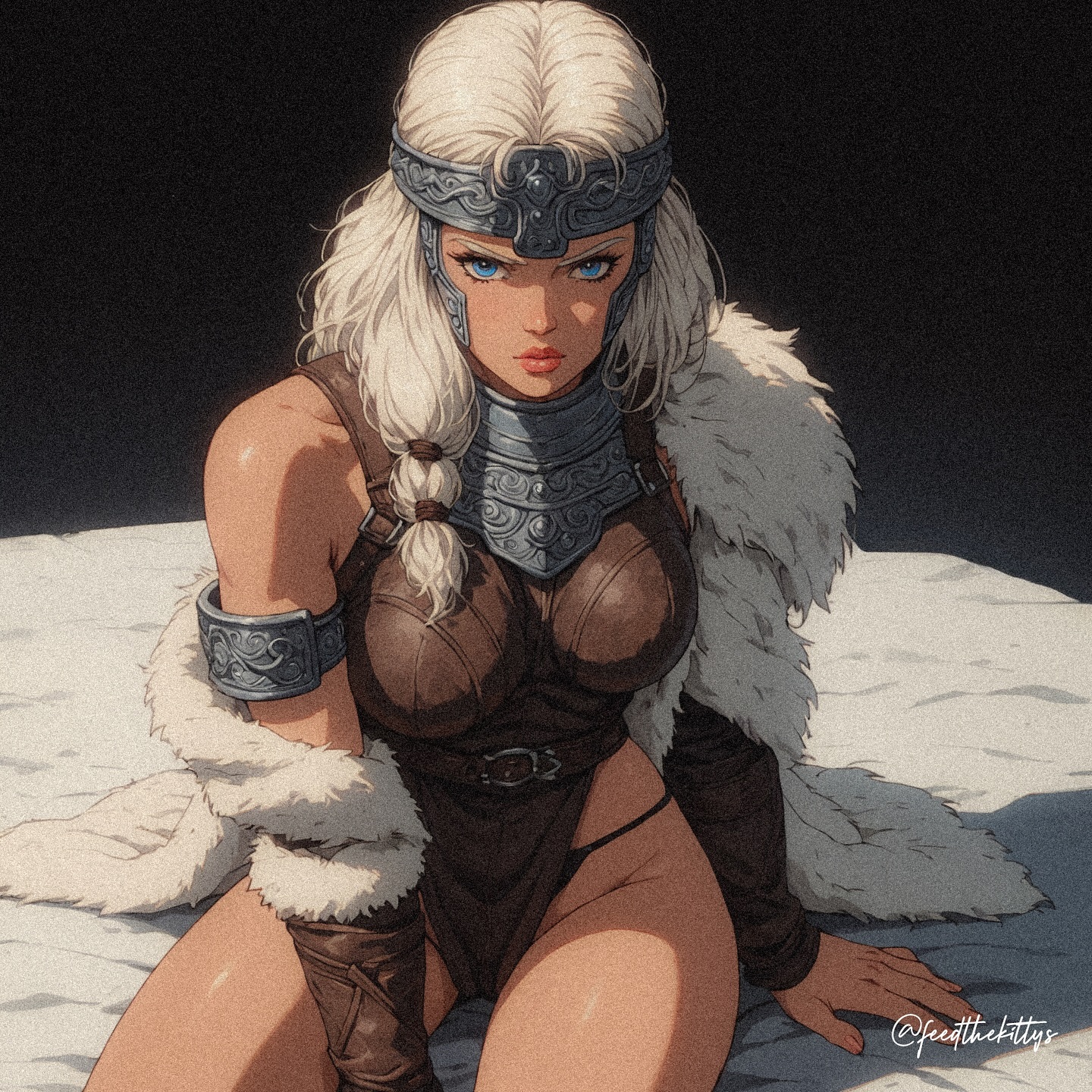
For creators, the useful lesson is that warrior art becomes more memorable when the costume and posture are allowed to carry the image. This portrait trusts the armor silhouette, the horns, and the braid to do the identity work. That is exactly why it stays sharp.
Signal table
Signal
Evidence (from this image)
Mechanism
Replication Action
Stillness as authority
Kneeling pose with direct gaze instead of active combat
Composure makes the character feel stronger and more iconic
Try a rooted ceremonial pose before defaulting to battle motion
Archetype silhouette
Horned helmet, braid, fur, and engraved chestplate
Clear costume markers make the theme readable instantly
Choose 3-4 unmistakable archetype signals and keep them prominent
Selective environment storytelling
Snowy canyon walls and a single sword in the stone
Minimal environmental cues imply history without overloading the frame
Use one or two setting clues that reinforce the character rather than competing with her
Where this aesthetic fits best
This look is strongest for Viking heroine posters, fantasy warrior character sheets, cold-climate mythic pin-up art, collectible mood boards, and cover images that need to feel strong without becoming chaotic.
Character reveal posters: ideal because the kneeling pose already feels ceremonial; preserve the direct gaze.
Mythic warrior mood art: strong because the snow and stone setting keep the tone restrained; maintain the wintry palette.
Collectible fantasy studies: useful when costume silhouette matters more than narrative; keep the horns and braid readable.
Cold-fantasy edits: effective because the image suggests a wider world through just a few objects; avoid extra battlefield clutter.
This setup is less suited to high-action combat art, historical realism, or soft romantic fantasy. Its strength is dignified warrior iconography.
Keep: minimal environment and engraved armor. Change: culture cue from Viking to barbarian queen or frost knight, and helmet shape. Slot template: "{archetype shift} {helmet design} {armor motif} {still heroic presence}"
Keep: one rooted pose and one ruined corridor. Change: snow to ash, horn size, and sky brightness. Slot template: "{ground texture} {horn silhouette} {light level} {mythic pin-up control}"
Aesthetic read
The strongest visual move here is the centered kneeling posture. It creates a broad triangular body shape, which feels stable and ceremonial. That is why the image feels heavier than its actual detail count. The pose gives the whole portrait weight.
The sword in the background is also doing more than decoration. It suggests aftermath, legacy, or threat without forcing an action moment into the frame. This is a good example of how one background object can imply a bigger world more effectively than many small props.
Observed
Why it matters
How to recreate
Horned helmet centered over the face
Makes the Viking read immediate
Keep the helmet silhouette clear and front-facing
Blonde side braid
Adds softness and character specificity
Use one clean hair feature that breaks the symmetry slightly
Snowy ruin corridor
Frames the figure and adds atmosphere
Let the environment create a simple funnel toward the subject
Sword lodged in the stone
Hints at story without taking over the frame
Use one symbolic prop in the background rather than several foreground objects
Prompt chunk breakdown
Prompt chunk
What it controls
Swap ideas (EN, 2-3 options)
Helmet silhouette
Main archetype recognition
"horned Viking helmet", "curved horn war helm", "engraved northern headpiece"
"snowy ruin canyon", "frosted stone corridor", "cold shattered fortress path"
Background symbol
Subtle lore implication
"sword in stone", "abandoned spear", "weathered battle relic"
Finish
Prevents realism drift
"retro anime warrior poster", "grainy fantasy pin-up", "collectible heroine illustration"
Remix steps that keep the image dignified
Lock three things first: the centered kneeling pose, the horned helmet, and the snowy ruins. Those are the identity anchors. If one drifts, the portrait quickly becomes generic fantasy armor art.
Run 1: solve only the body shape and corridor framing. The image should already feel stable and iconic before the armor details are refined.
Run 2: keep the pose fixed and refine the helmet, braid, and engraved chestplate. This is where the Viking identity becomes unmistakable.
Run 3: freeze the costume and tune the snow, stone, and sword cue. Keep the environment minimal and supportive.
Run 4: adjust one mood knob only, such as light coldness, fur softness, or armor brightness. Do not add battle clutter unless you want a different genre result.
That last rule matters because this portrait is strongest when it feels ceremonial rather than busy. The stillness is part of the power.
Quick variation idea
If you want a harsher version, keep the same pose and deepen the canyon shadows while making the helmet more weathered. If you want a cleaner collectible version, preserve the snow and braid but polish the armor and reduce the background haze slightly.