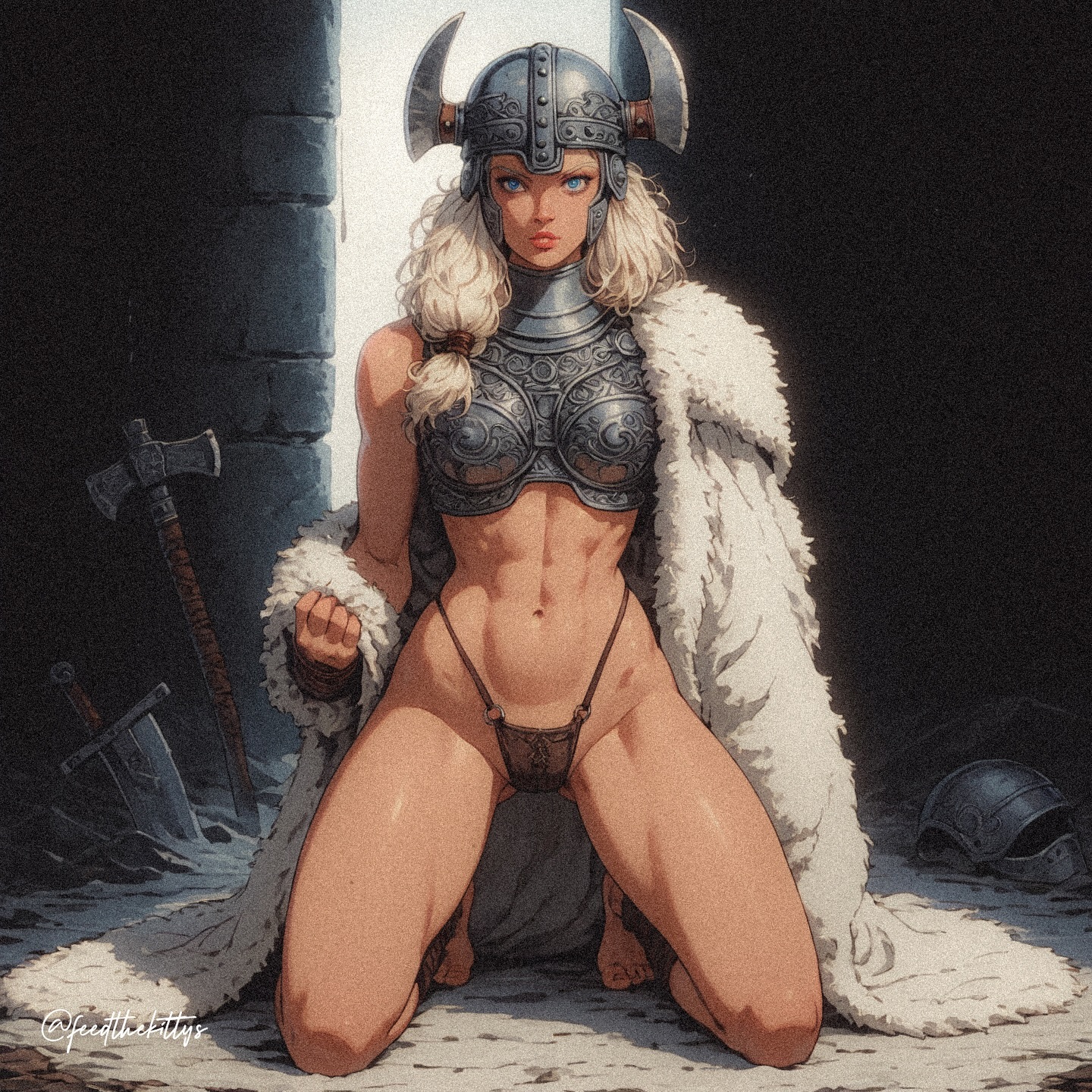
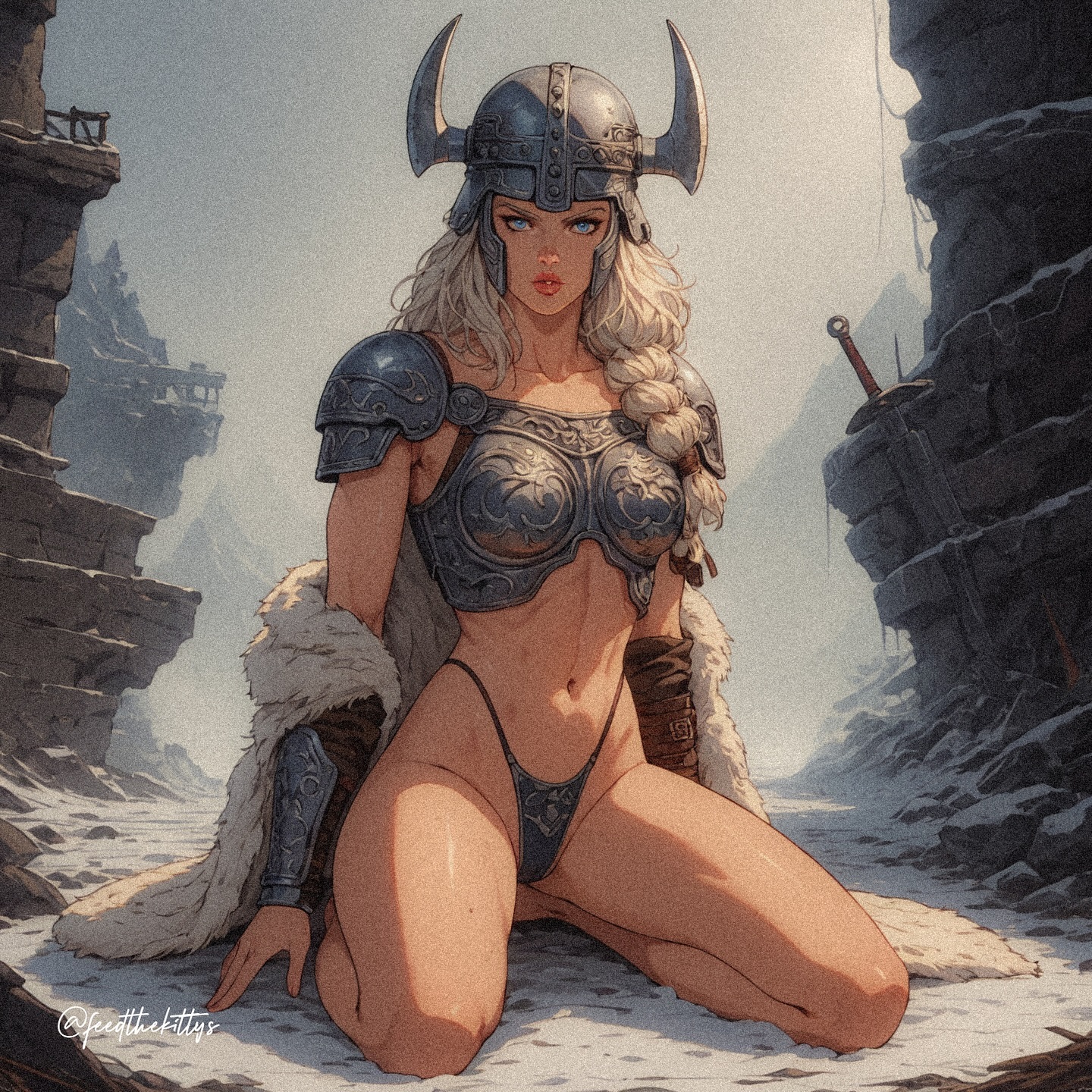
How feedthekittys Made This Nordic Warrior AI Portrait and How to Recreate It
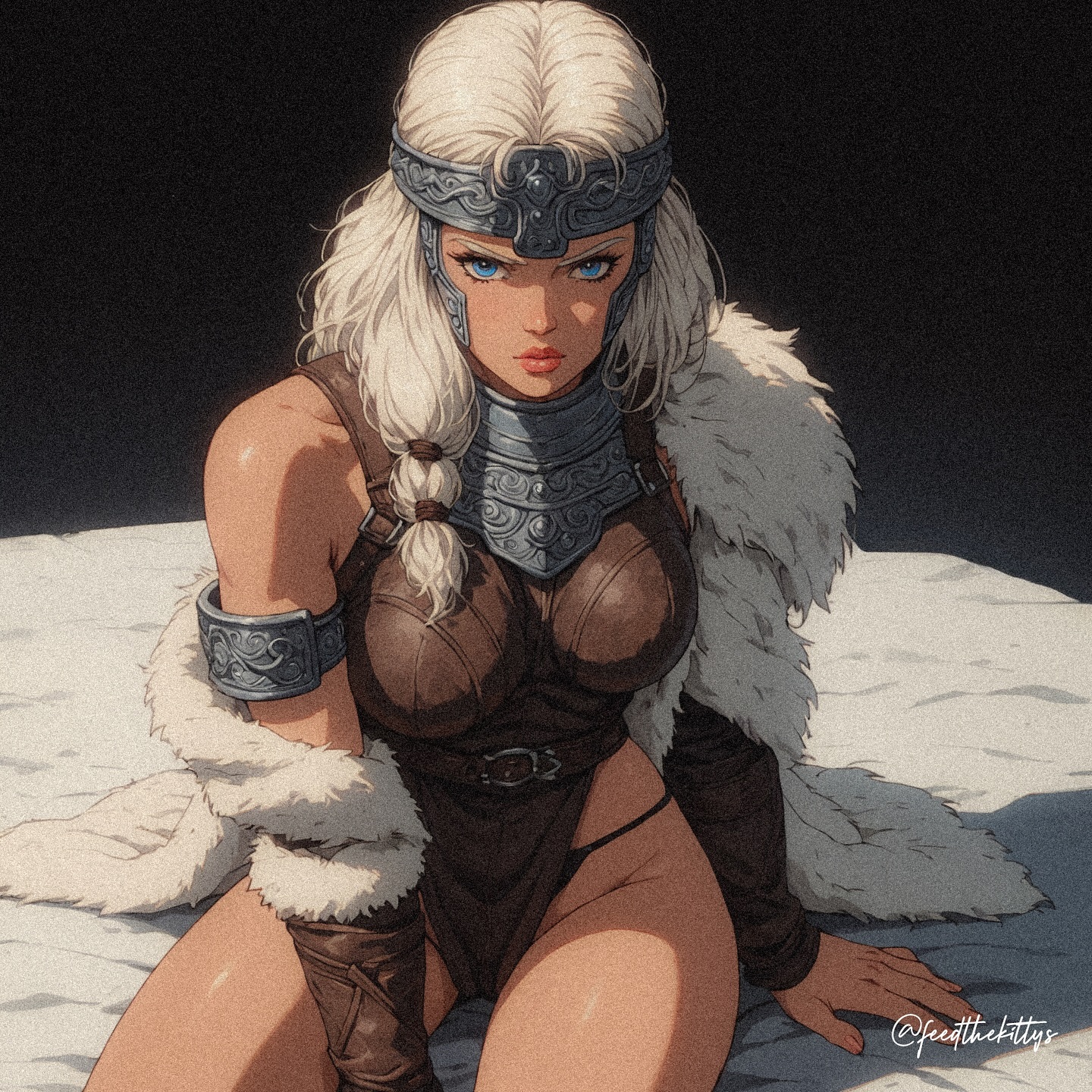
The image works because it strips the world down to almost nothing. Snow below, darkness behind, and one heavily styled figure in the middle. That reduction makes the metalwork, fur, hair, and expression do all the storytelling. The result feels focused and more memorable than a crowded fantasy environment would.
The second reason it lands is the texture hierarchy. Fur, engraved metal, leather, snow, and pale hair all behave differently under the same cool light. That gives the image richness without forcing any extra props or action. It is a good reminder that material contrast can carry far more visual weight than scene complexity.
For creators, the lesson is simple. If the character design is strong, the smartest move is often to simplify the background until the textures and silhouette can do the work by themselves.
Signal table
Signal
Evidence (from this image)
Mechanism
Replication Action
Background reduction
The environment is almost entirely snow and darkness.
Minimal surroundings make costume and expression more dominant.
Remove scenery until the character materials become the main source of interest.
Cold texture stack
Fur, silver metal, leather, and snow each bring a distinct surface quality.
Texture variety creates depth without additional story objects.
Specify 3 to 4 contrasting materials and let them share the same light.
Centered stoic framing
The subject sits directly in the middle with a fixed serious stare.
Centered framing makes the character feel emblematic and authoritative.
Place the subject on the center axis before adjusting pose details.
Controlled palette
Whites, grays, muted browns, pale skin, and blonde hair stay within a cold natural family.
Restrained color keeps the image serious and collectible.
Limit the palette to one biome logic instead of adding accent colors for decoration.
What the aesthetic is really doing
The first strong decision is the fur mantle. It widens the figure and immediately gives the portrait a northern identity. More importantly, it softens the armor and keeps the character from feeling mechanically hard.
The second is the dark backdrop. It works almost like a studio void, but because the subject is sitting in snow, it still feels environmental. That hybrid approach gives the image both character-poster clarity and fantasy-world atmosphere.
Third, the metal pieces are ornate enough to suggest heritage and rank without becoming cumbersome armor. That is a useful balance for creators who want a warrior feel but still need the face and body language to stay visible.
Observed
Recreate it by locking
White fur mantle around the shoulders
Silhouette width and cold-biome identity
Engraved silver circlet and neck armor
Cultural detail and rank cue
Blonde braid and icy gaze
Face identity and emotional tone
Snow foreground plus dark backdrop
High-contrast portrait stage
Brown leather core garment
Warm neutral anchor inside the cold palette
Where this visual language transfers well
Fantasy character posters. Why fit: the image already works like key art. What to change: rotate the fur color, circlet design, or braid treatment for different clans.
Game or book-cover portraits. Why fit: the composition leaves the character easy to brand and remember. What to change: free one edge for typography and keep the snow-dark split intact.
Nordic or winter-themed social visuals. Why fit: the biome identity is immediate. What to change: push the metal ornament language or add one faction symbol if needed.
High-end fantasy portrait studies. Why fit: the material interplay is the main attraction. What to change: vary leather, fur, and silver patterning while leaving the background minimal.
This approach is less ideal for epic battle scenes, creature-heavy fantasy, or lush environmental storytelling. Its strength is character focus and controlled texture.
Three transfer recipes
Keep: centered portrait, fur mantle, and dark backdrop. Change: Nordic warrior to tundra queen, mountain scout, or frost priestess. Slot template (EN): "{cold-biome heroine} with {signature fur detail} against {minimal winter stage}".
Keep: silver ornamentation and restrained palette. Change: snow foreground to ash, salt flats, or pale stone. Slot template (EN): "{ornamented character} seated in {simple pale ground} before {dark backdrop}".
Keep: stoic expression, braid, and tactile material contrast. Change: armor set to tribal beads, chainmail accents, or carved bone pieces. Slot template (EN): "{stoic portrait} with {material family} in a {reduced environment}".
Prompt technique breakdown
Prompt chunk
What it controls
Swap ideas (EN, 2-3 options)
white fur mantle over shoulders
Cold identity and silhouette breadth
wolf pelt, dark shearling cape, feathered winter mantle
engraved silver circlet and neck armor
Rank cue and regional styling
bronze filigree collar, bone crest circlet, chainmail gorget
snow foreground with dark backdrop
Portrait staging and contrast
ash field with smoke void, pale sand with cave shadow, white stone with dusk wall
blonde braid and stern expression
Face identity and emotional read
silver braid, raven hair, windswept bob
retro anime fantasy key-art finish
Polish and nostalgic illustration tone
soft manga cover rendering, cel-shaded fantasy portrait, painterly winter poster
How to iterate without losing the cold authority
Baseline lock first: the fur mantle, the silver headpiece, and the snow-dark environment split. If any of those drift, the image stops reading as Nordic character art and turns into generic fantasy fashion. Once those are stable, tune the braid shape, leather fit, and facial intensity.
Use a one-change rule across four runs. First run: solve the centered seated framing and dark background. Second run: solve the fur silhouette and the silver armor ornaments. Third run: solve hair, braid, and face. Fourth run: refine snow texture, leather detail, and final grain. That order works because the viewer reads silhouette and biome first, detail second.
Iteration 1: lock centered pose, snow base, and dark backdrop
Iteration 2: lock fur mantle, circlet, neck armor, and overall silhouette
Iteration 3: lock blonde braid, blue eyes, and stern expression
Iteration 4: refine leather texture, snow folds, and final print-like grain
The practical takeaway is simple: a fantasy warrior feels stronger when the image is reduced to a few cold materials and one steady expression.