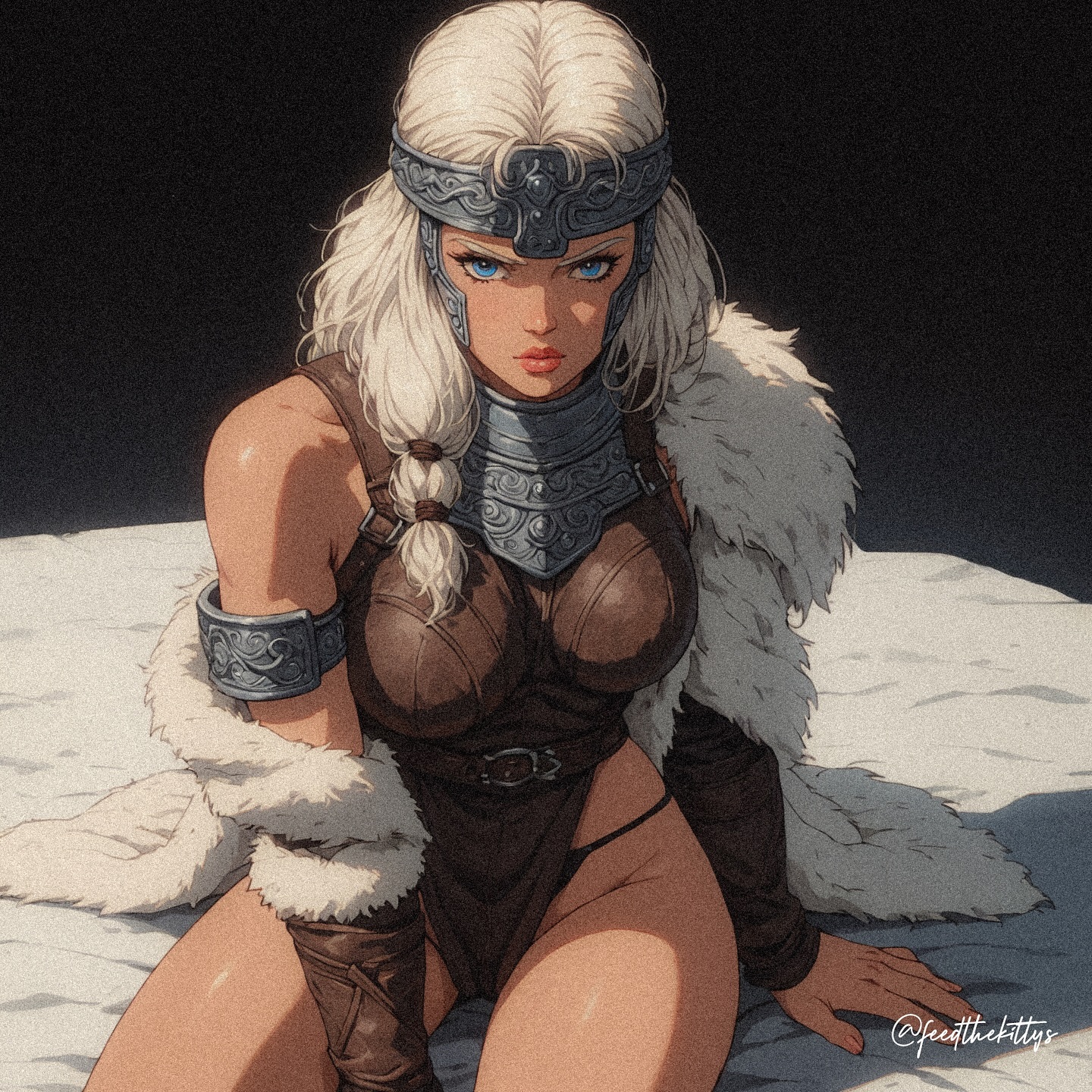
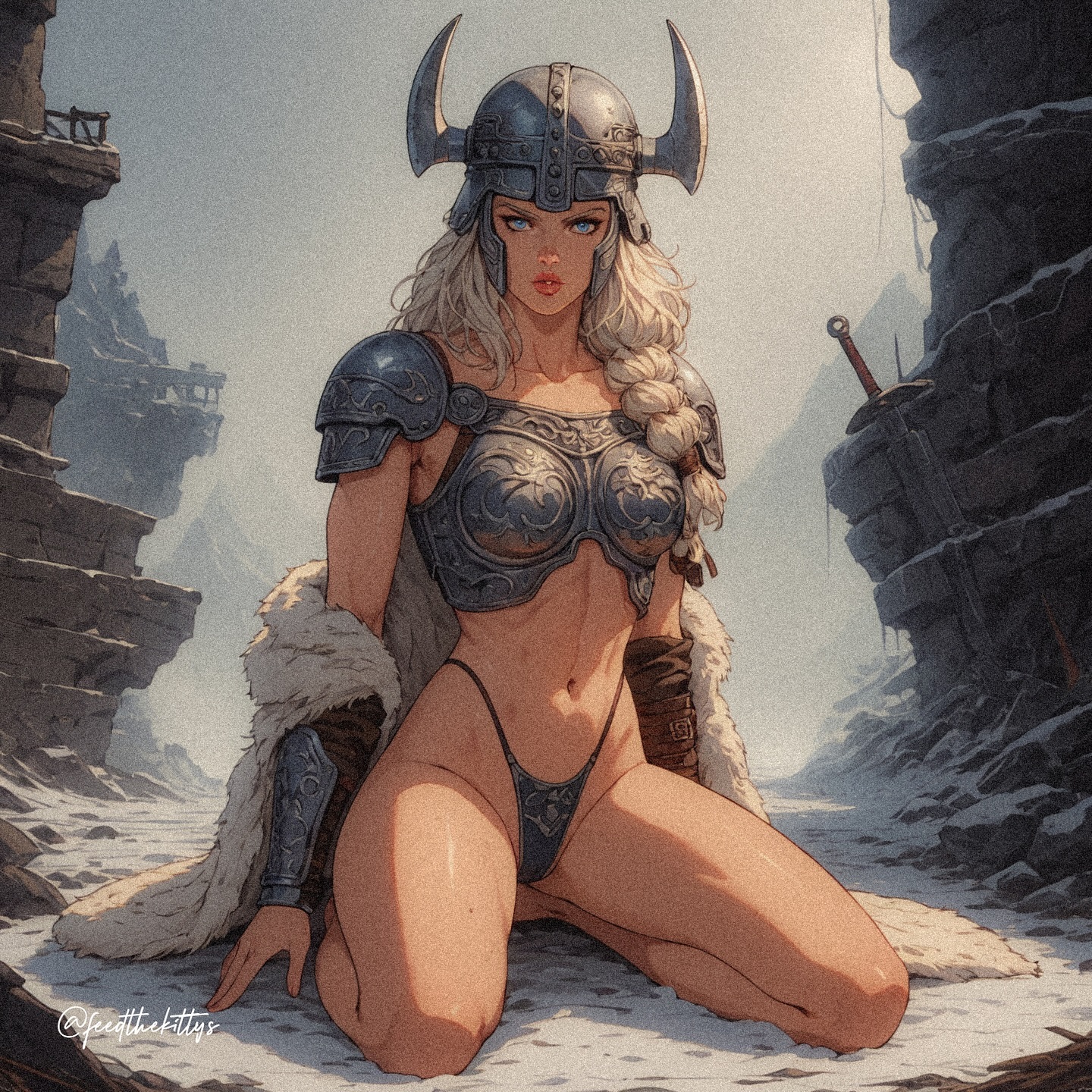
How feedthekittys Made This Viking Warrior Woman AI Art and How to Recreate It
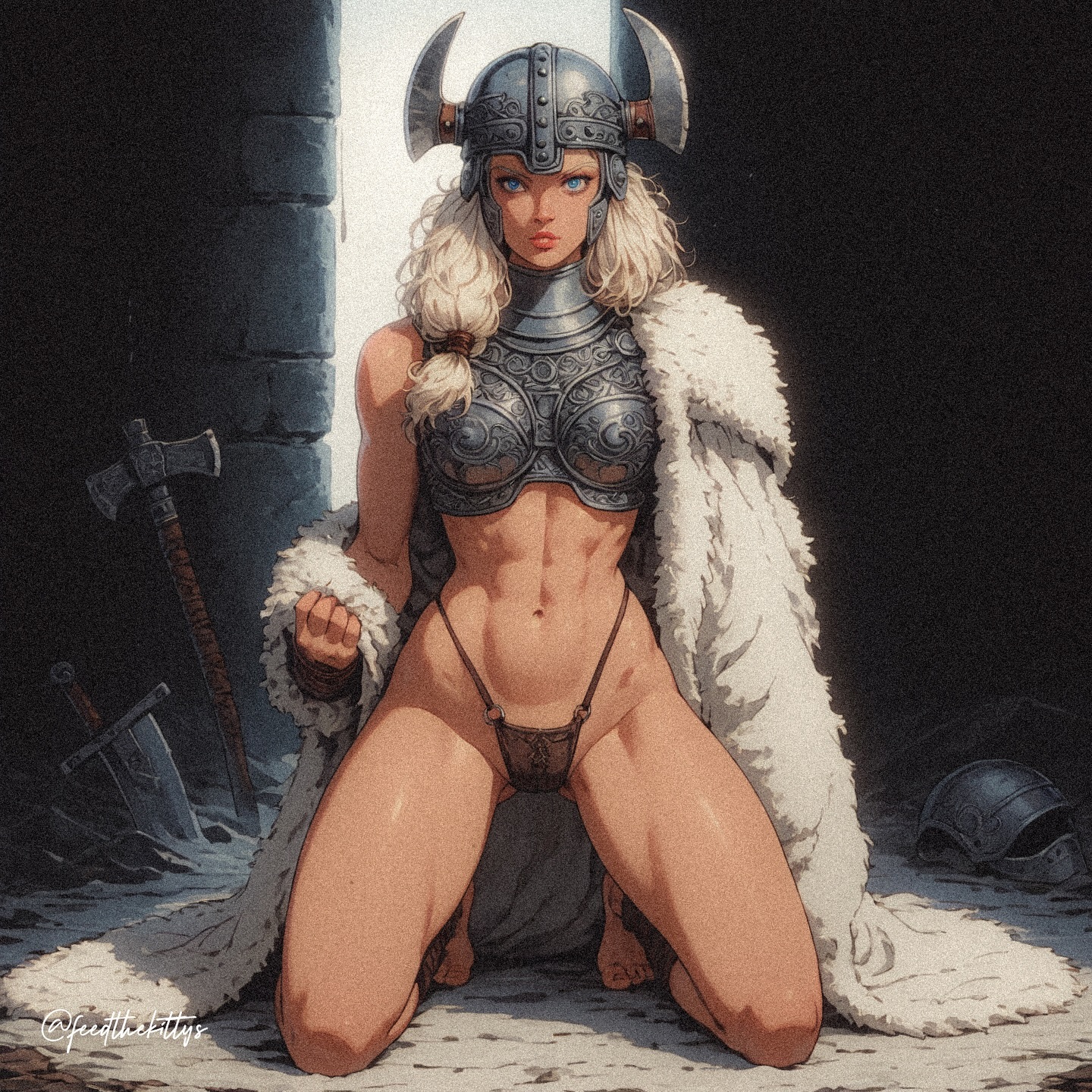
This image works because it understands that authority does not always come from motion. The warrior is kneeling, but the scene still feels dominant because the composition treats her like an icon. The body is centered, the doorway behind becomes a vertical halo, and the supporting props stay quiet. That makes the image feel staged with intent, not merely posed.
The most effective choice here is the doorway light. Instead of relying on an open landscape or battle backdrop, the image uses one clean shaft of brightness to isolate the figure from the dark chamber. That single design choice makes the character feel monumental. It is a good reminder that environment contrast can do more than environment detail.
The horned helmet also changes the tone immediately. Even though historically accurate Viking design is a different question, visually the horned silhouette works because it pushes the head shape into something mythic. In stylized fantasy art, that kind of silhouette clarity is often more important than strict realism when the goal is strong feed recognition.
Signal
Evidence (from this image)
Mechanism
Replication Action
Mythic silhouette
The horned helmet and fur cloak make the figure readable before you inspect details.
Prioritize silhouette-defining accessories first when designing a warrior portrait.
Backlit authority
The bright doorway behind the character frames and elevates her.
Backlight turns a static figure into a visual centerpiece.
Use one clean background opening or light source instead of complex scenery.
Prop restraint
Axe, sword, and spare helmet stay off to the sides instead of crowding the center.
Peripheral props imply a world without diluting the focal point.
Place lore objects at the edges and keep the face/body dominant.
Centered ritual posture
The kneeling pose and frontal symmetry make the image feel ceremonial.
Symmetry adds seriousness and memorability.
Use centered compositions when you want a warrior image to feel iconic instead of narrative.
What Makes The Aesthetic Feel Heavy And Clean At The Same Time
The armor design is dense, but the image still feels clean because the costume is organized by big materials: steel, fur, skin, leather. That clear material grouping prevents the fantasy styling from becoming messy. You can read the entire outfit almost instantly.
The fur is especially useful here. It creates a visual bridge between the hard metal chestpiece and the dark stone background. Without it, the armor might feel too cold and the figure too harsh. With it, the character gets softness without losing force.
The side props help the scene feel lived-in, but they do not interrupt the symmetry. This balance is what many fantasy images miss. They add weapons to prove the theme, but then those weapons fight the portrait. Here, the main body still wins.
Observed
Why it matters when recreating
Horned helmet and blonde hair silhouette
Creates a memorable fantasy-warrior profile immediately.
Bright doorway behind a dark room
Improves separation and makes the character feel elevated.
White fur over silver armor
Adds luxury and contrast to the warrior styling.
Peripheral axes and spare helmet
Suggests context without stealing the center.
Centered kneeling structure
Makes the whole image feel emblematic rather than incidental.
Best Uses And Transfer Paths
Fantasy hero key art: Strong when one character needs to carry an entire poster or card image.
Game or concept-sheet mockups: The clear silhouette and minimal environment make it highly usable for cover placements.
Nordic myth moodboards: Works when the goal is a mythic feminine warrior archetype rather than historic realism.
Character branding posts: Good for creators who want one image to define a fantasy persona fast.
Less ideal for chaotic raid scenes, weather-heavy action, or crowd-based storytelling. This image is strongest when it stays iconic and interior.
Sacred guardian variant Keep: ceremonial posture and isolated chamber mood. Change: swap Viking cues for temple-guardian armor, replace the side weapons with one staff or relic, preserve symmetry.
Sci-fi warlord variant Keep: doorway halo, kneeling dominance, prop restraint. Change: convert armor into plated tech gear, make the background an airlock or hangar, keep the same centered icon logic.
Prompt Technique Breakdown
To recreate this image well, start from the structural idea, not the fandom tag. The real formula is “centered kneeling warrior under a backlit opening.” Once that works, the Viking signifiers can sit on top of it. If you start from lore words alone, the image often drifts into generic outdoor barbarian scenes.
Prompt chunk
What it controls
Swap ideas (EN, 2-3 options)
centered kneeling anime Viking shieldmaiden
Pose and identity
ritual warrior kneel; frontal fantasy warrior portrait; centered Nordic heroine
horned silver helmet and ornate breastplate
Silhouette and main material language
mythic horned helm; engraved steel cuirass; fantasy Viking armor set
white fur cloak over one shoulder
Soft contrast and luxury cue
fur-draped shoulders; heavy white pelt wrap; snow-wolf cloak accent
90s anime warrior texture; cel-airbrush hybrid; nostalgic fantasy illustration
How I Would Iterate This Portrait
The first three locks are easy: keep the centered kneeling pose, keep the doorway backlight, keep the helmet-and-fur silhouette. After that, I would tune armor engraving, the amount of weapon visibility at the sides, and the exact balance between skin warmth and chamber darkness.
A clean iteration sequence would be run one for pose and crop, run two for the doorway light and room darkness, run three for armor and fur readability, and run four for prop cleanup. That protects the image’s core identity, which is its ritual-like stillness.
Baseline Lock
1. Centered kneeling pose
2. Bright doorway backlight in a dark room
3. Horned helmet plus white fur silhouette

Iteration Sequence
1. Fix pose symmetry and crop
2. Fix doorway light and background darkness
3. Refine armor engraving, fur texture, and blonde hair
4. Tune side-weapon hints and final contrast balance
The larger lesson is that strong fantasy portraits often need less action and more structure. When the composition behaves like an emblem, the image stays memorable.