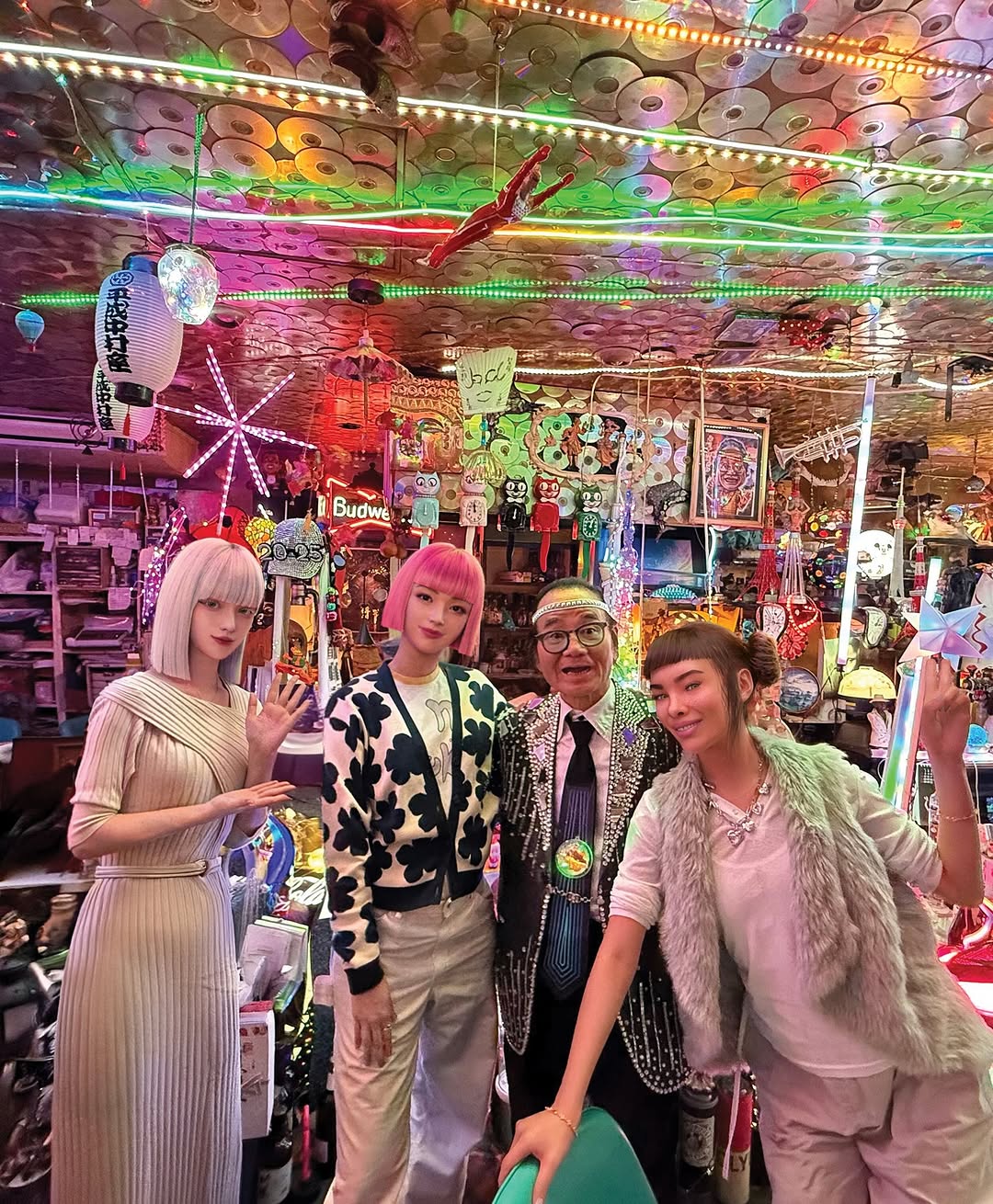
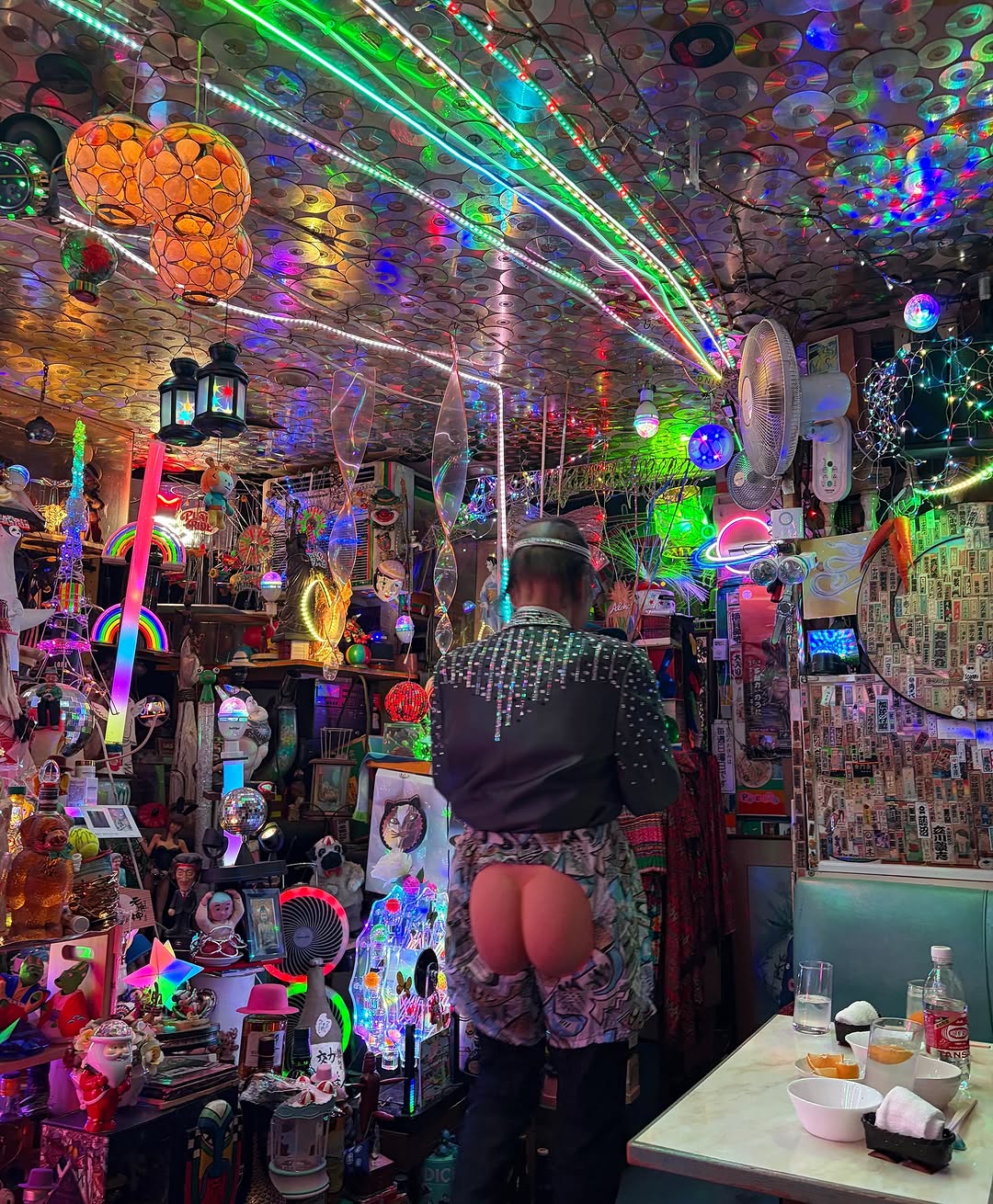
tokyo hide away 🍽️✨ last night in tokyo with my besties 💔🥂 still here mentally…
tokyo hide away 🍽️✨ last night in tokyo with my besties 💔🥂 still here mentally…
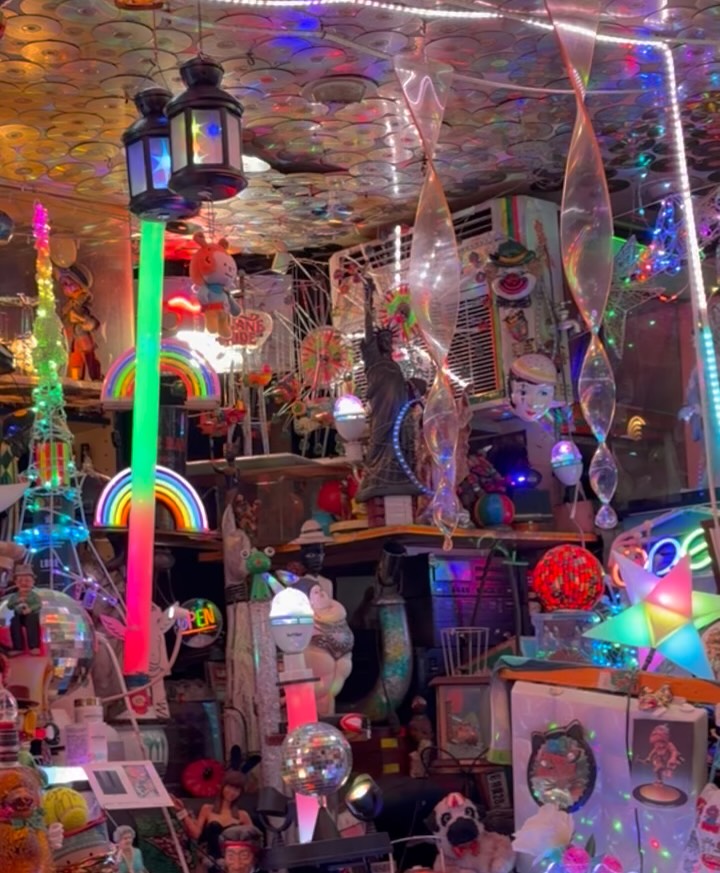
This image performs because it turns clutter into choreography. Every corner contains a light source, toy, mirror, or object with personality. Instead of one focal point, the viewer gets a visual treasure hunt, which naturally increases dwell time and repeat views.
The second strength is emotional color layering. Rainbow arcs, cyan glows, red bulbs, and star lights build a playful late-night atmosphere that feels nostalgic and futuristic at the same time. That contradiction is highly shareable because it feels unique and hard to replicate casually.
It also works as place branding. Even without faces, the space has a clear identity. For creators documenting "hidden spots" or nightlife culture, environment-led storytelling like this can be stronger than portrait-first posts.
| Signal | Evidence (from this image) | Mechanism | Replication Action |
|---|---|---|---|
| Visual treasure-hunt density | Dozens of objects and lights across all depth layers | High detail density increases replay and saves | Compose with 3+ depth layers and avoid empty zones |
| Signature color chaos | Rainbow, neon, and mixed practical light sources | Color complexity creates memorable sensory identity | Use 4-6 coordinated neon hues instead of one flat tone |
| Place personality | Retro toys, lanterns, disco accents, unique ceiling | Distinct environment improves destination desirability | Highlight 5-7 unique venue objects in one frame |
| No-human narrative | Room itself is the protagonist | Space-led storytelling broadens aesthetic audience | Shoot one environment hero shot before portraits |
Night Bar Transfer
Keep: object-density layering and practical neon sources.
Change: prop themes by neighborhood or cultural motif.
Slot template (EN): "maximal interior of {venue_type}, layered neon objects, retro-futuristic decor, no empty space"
Retail Display Transfer
Keep: color-rich lighting and shelf stacking logic.
Change: novelty toys to branded product categories.
Slot template (EN): "dense display scene with {product_family}, multicolor practical lights, immersive visual clutter"
Art Installation Transfer
Keep: environment-as-subject approach and reflective elements.
Change: decor objects to conceptual art modules.
Slot template (EN): "immersive room installation with {light_objects}, mirrored accents, maximal composition, nightlife mood"
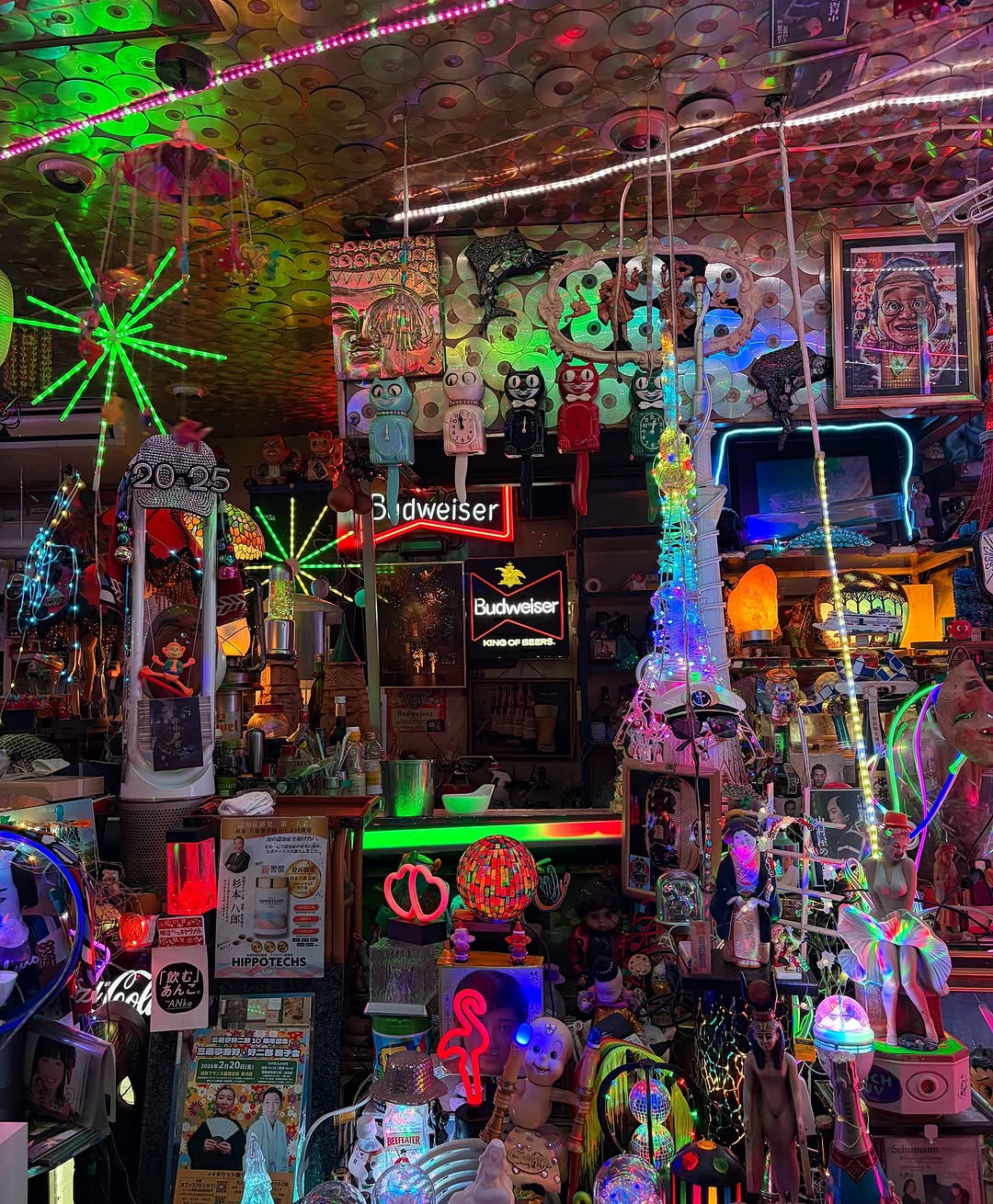
The aesthetic is controlled overload. Repetition of light shapes (arcs, orbs, stars, tubes) creates rhythm, while varied object scales prevent monotony. Reflective ceiling and disco highlights multiply color and depth. Despite apparent chaos, the room remains cohesive because everything belongs to one playful retro-future universe. This is a useful approach for creators who want environmental content that feels immersive, memorable, and highly saveable.
| Observed | Recreate |
|---|---|
| Edge-to-edge object coverage | Fill the frame fully with layered decor elements |
| Multiple practical lights | Use real luminous objects instead of one global light source |
| Shape repetition | Repeat arcs/spheres/stars for visual rhythm |
| Reflective surfaces | Add mirror/disco components to amplify color spill |
| Minimal empty negative space | Keep composition dense but curated, not random mess |
| Prompt chunk | What it controls | Swap ideas (EN, 2-3 options) |
|---|---|---|
| Density command | Immersion level | "fully packed" | "medium clutter" | "sparse curated" |
| Light-object inventory | Color richness | "rainbow arches + star lamps" | "neon tubes + globes" | "lanterns + mirror lights" |
| Surface style | Spatial character | "reflective ceiling" | "mirrored wall" | "metallic shelves" |
| Narrative mode | Focus direction | "space-led no people" | "one hidden figure" | "crowded nightlife" |
| Color spread control | Harmony vs chaos | "5-color neon" | "warm-only" | "cool-only" |
Baseline Lock: lock object density, practical light count, and retro-futuristic prop language first.
One-change rule: adjust one to two variables per iteration.