tokyo hide away 🍽️✨ last night in tokyo with my besties 💔🥂 still here mentally…
tokyo hide away 🍽️✨ last night in tokyo with my besties 💔🥂 still here mentally…
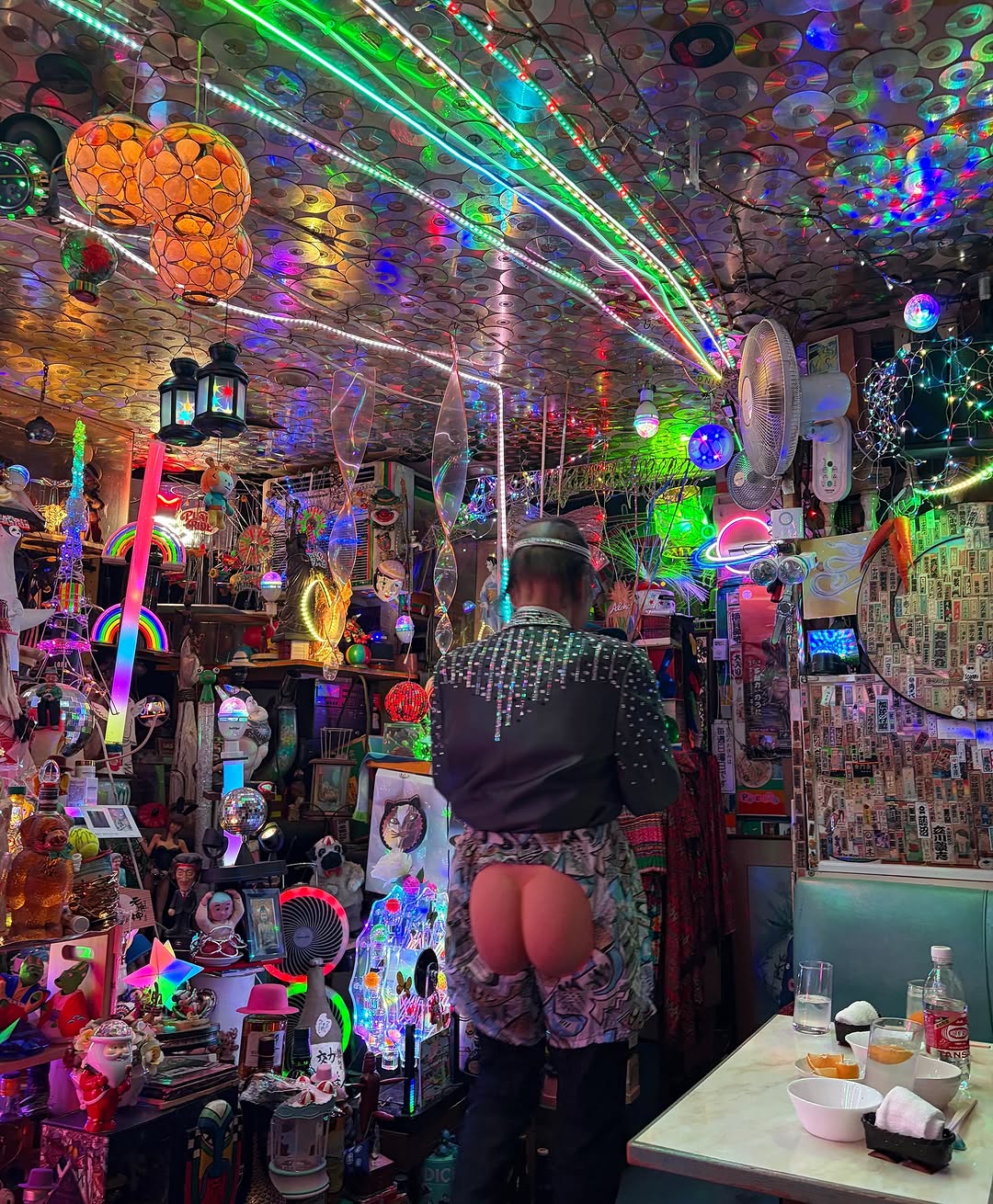
This image is pure sensory overload: neon, mirrors, hanging objects, reflective ceiling textures, table remains, and one back-facing figure as anchor. It does not ask for quick consumption. It asks viewers to wander inside the frame. That is exactly why this format can drive strong saves.
The post also captures a specific social emotion: the “last night still stuck in my head” feeling. Visual chaos mirrors emotional afterglow. For creators, matching visual density to emotional context is a major growth lever.
The first mechanism is discovery depth. Each revisit reveals new micro-details: lamps, posters, light strings, figurines, ceiling surfaces. Posts with high discoverability tend to generate repeated viewing behavior. The second mechanism is contrast hierarchy. Despite the clutter, the centered back-facing figure gives the eye a starting point, so the image remains navigable.
Color intensity adds another layer. Multi-hue neon spills make the thumbnail unmistakable. Saturation is not random here; it is the language of nightlife memory and urban intimacy.
| Signal | Evidence (from this image) | Mechanism | Replication Action |
|---|---|---|---|
| High discovery density | Dozens of layered objects across walls and ceiling | Encourages zooming and repeat viewing | Build scenes with 20+ readable micro-elements |
| Anchor in visual chaos | Single centered back-facing figure | Provides orientation inside clutter | Always place one strong central silhouette |
| Emotional color mapping | Neon green/magenta/blue over dark base | Color intensity matches nightlife nostalgia mood | Assign palette according to emotional caption theme |
The image succeeds because chaos is organized. The environment is crowded, but the composition still has a spine: center subject, depth toward back wall, and table foreground at right. This tri-layer structure stops the frame from collapsing into noise. Reflective ceiling elements amplify light and make the room feel dreamlike, while practical objects on the table keep it grounded in lived experience. The back-facing pose is another smart choice. It withholds facial expression, allowing viewers to project their own memory onto the scene. This is why the post feels emotional without explicit performance. For creators, maximalism works best when one compositional rule is rigid: choose a clear anchor and let everything else orbit it.
| Observed | Recreate | Why it matters |
|---|---|---|
| Single back-facing anchor subject | Place one central figure with clear silhouette | Maintains readability in dense scenes |
| Ceiling-to-floor object saturation | Include decor layers at top, middle, and foreground | Creates immersive depth |
| Neon color spill on dark base | Mix 3-4 saturated practical light colors | Delivers nightlife mood instantly |
| Foreground table remnants | Keep everyday dining traces visible | Adds human realism to stylized scene |
| Prompt chunk | What it controls | Swap ideas (EN, 2-3 options) |
|---|---|---|
| decor density | Immersion level | "maximal clutter" / "medium eclectic" / "focused vignette" |
| anchor silhouette | Navigation clarity | "back-facing standing" / "seated profile" / "doorway pause" |
| light palette mix | Emotional atmosphere | "green+magenta+blue" / "amber+red+violet" / "cyan+pink" |
| foreground evidence props | Lived-in realism | "table leftovers" / "bar counter traces" / "receipt + glassware" |
| fashion statement cue | Narrative edge | "sculptural silhouette" / "reflective jacket" / "graphic layering" |
Baseline lock: lock one central silhouette, neon palette family, and dense decor layers.
One-change rule: only adjust one visual variable per run to preserve learning quality.