How imma.gram Made This Kiyomizu Temple Trip AI Portrait
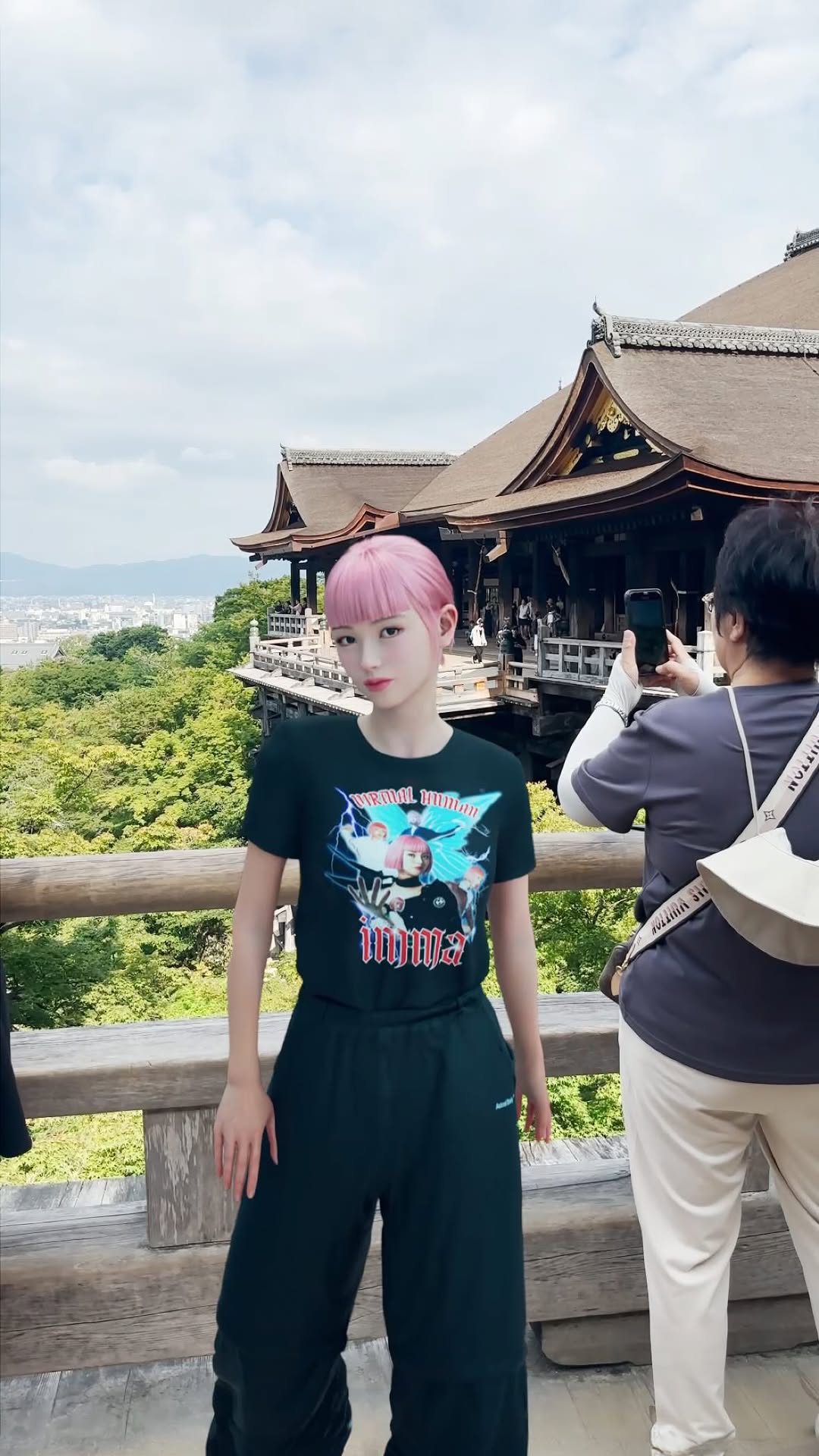
This post performs because it combines person, place, and proof in a single shot. The pink-haired subject gives immediate identity, the temple architecture gives location authority, and the tourist on the right quietly confirms this is a real active site. That three-layer structure makes the image feel both stylized and believable.
The second growth driver is contrast between modern styling and historical backdrop. A black graphic streetwear look against classic wooden roofs creates visual tension without feeling forced. Audiences respond well to this format because it communicates exploration, not costume play. The creator is clearly present in the place, not just using a decorative backdrop.
It also respects travel-photo readability. Horizon and architecture remain visible, sky gives breathing room, and the subject is not too close to camera. That balance makes the post useful for both destination curiosity and personal-brand storytelling.
Signal Table
| Signal | Evidence (from this image) | Mechanism | Replication Action |
|---|
| Identity anchor | Distinct pink bob and dark outfit in foreground | Fast character recognition improves stop rate | Keep one unmistakable personal style cue in every travel shot |
| Location proof | Temple structure clearly visible, not cropped out | Trust rises when destination context is explicit | Reserve at least 40% of frame for landmark architecture |
| Candid realism | Another visitor photographing on right side | Ambient human activity makes scene feel authentic | Allow one natural background human element instead of full isolation |
| Balanced composition | Subject left, architecture right, sky above | Visual flow increases dwell time and swipe-through | Use a three-zone layout: person, place, breathing space |
Use Cases and Transfers
Best-fit scenarios
- Landmark travel diaries: fit is high because personal style and destination are both legible.
- City-guide creator content: fit is high because image acts as both portrait and location evidence.
- Cultural trip recap posts: fit is high where modern outfit contrasts with heritage architecture.
- Tourism partnership soft-sell: fit is high because frame feels organic, not ad-heavy.
Not ideal
- Fashion e-commerce shots needing clean product detail close-ups.
- Pure landscape photography where no people should appear.
- Crowd-sensitive campaign visuals requiring controlled empty backgrounds.
Exactly 3 transfer recipes
-
Landmark Portrait Transfer
Keep: person-left/place-right composition and visible horizon layer.
Change: temple to castle, cathedral, or fort wall.
Slot template (EN): "{subject_style} at {landmark}, left-of-center portrait, clear architecture background, soft daylight"
-
Candid Tourism Transfer
Keep: one background bystander for realism.
Change: bystander action (map reading, camera use, walking).
Slot template (EN): "{subject} in foreground with one natural {bystander_action}, authentic travel viewpoint"
-
Style-vs-History Transfer
Keep: modern streetwear against heritage architecture.
Change: color signature and garment graphics.
Slot template (EN): "modern {outfit_palette} in front of {historic_site}, documentary travel framing"
Aesthetic Read
This image is built on layered storytelling rather than styling alone. Foreground wood railing grounds the perspective, the subject provides a recognizable avatar, and the temple roofline carries cultural weight. The cloudy daylight helps by reducing harsh contrast so both skin and architecture stay readable. The composition leaves generous sky, which prevents the frame from feeling cramped despite many details. For creators, this is a practical formula for travel posts that need to communicate "I was there" without losing personal visual identity.
| Observed | Recreate |
|---|
| Subject slightly left of center | Avoid centered symmetry; leave room for landmark context |
| Historic architecture fully readable | Keep roofline and structure edges unobstructed |
| One ambient bystander | Allow one candid human element for realism |
| Soft overcast daylight | Shoot in diffused light to preserve texture and skin tones |
| Foreground railing layer | Use a near object to create depth and place anchoring |
Prompt Technique Breakdown
| Prompt chunk | What it controls | Swap ideas (EN, 2-3 options) |
|---|
| Hair/style anchor | Creator recognizability | "pink bob" | "silver blunt bob" | "neon streak bob" |
| Landmark specificity | Place trust and search relevance | "wooden temple" | "stone castle" | "historic pagoda" |
| Bystander realism knob | Candid documentary feel | "one tourist with phone" | "one walker" | "small pair in distance" |
| Lighting mode | Mood and readability balance | "overcast soft daylight" | "morning side light" | "late afternoon neutral" |
| Frame zoning | Narrative clarity | "person-place-sky" | "person-stairs-sky" | "person-waterline-city" |
Remix Steps
Baseline Lock: lock landmark visibility, subject placement, and daylight softness first.
One-change rule: adjust one to two variables per run only.
- Iteration 1: keep composition fixed, test outfit color contrast against architecture.
- Iteration 2: keep color winner, test bystander presence (on vs off).
- Iteration 3: keep realism winner, test crop height (more sky vs more railing).
- Iteration 4: keep structure winner, test expression (neutral vs slight smile).