We just launched AI Motion Graphics with Anthropic. Think vibecoding for motion design.
The cost of professional motion work just dropped to zero.
All generated from a single prompt. Small teams can now produce the same quality as large agencies.
No After Effects, no templates, no code — just describe what you want.
Comment ‘MOTION’ for access.
How invideo.io Made This AI Motion Graphics With Anthropic Launch
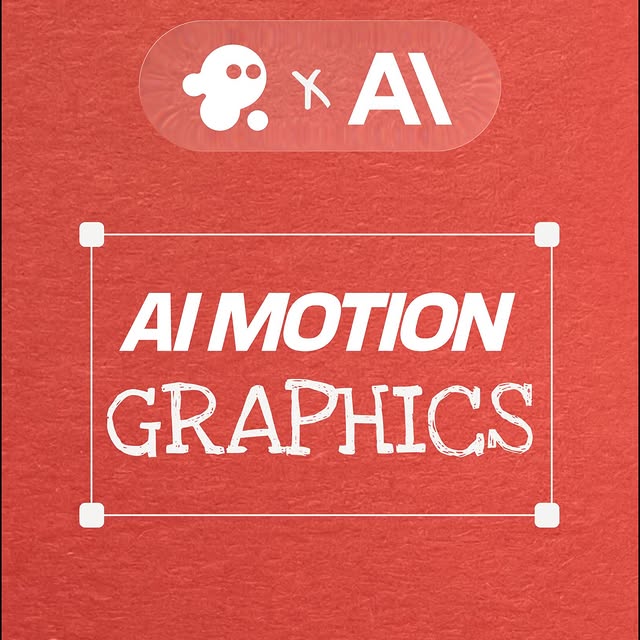
This creative works because it visually encodes the product promise, not just the words. The transform box around the headline signals editability and motion-design workflow in one glance. Users do not only read “AI motion graphics”; they see the interface metaphor behind it.
The composition is also platform-smart: high contrast, minimal objects, and centered typography. That makes it durable across feed compression and thumbnail previews, especially in fast-scrolling short-form contexts.
Message Efficiency
Element
Interpretation
Marketing advantage
Bounding-box frame
Editable content workflow
Conveys product utility visually
Large uppercase headline
Strong category claim
Improves stop-and-read rate
Minimal color system
Low cognitive friction
Faster comprehension
Top brand badge
Source trust anchor
Supports recall and attribution
Best Use Cases
Use this format for feature teasers, template announcements, and creator-tool launch posts. It also works as a cover frame for reels where the first second needs to establish topic before animation begins.
For performance campaigns, test headline variants while retaining the same frame motif. This isolates copy impact while preserving brand consistency.
Prompt and Design Notes
Prioritize typography clarity and geometric alignment. If outputs look noisy, reduce texture intensity and keep white elements sharp. The card succeeds through structure, not decorative complexity.
Avoid adding too many secondary icons; the bounding-box metaphor is already sufficient to communicate creation/editing context.