How kakudrop Made This Music Video Still AI Portrait — and How to Recreate It
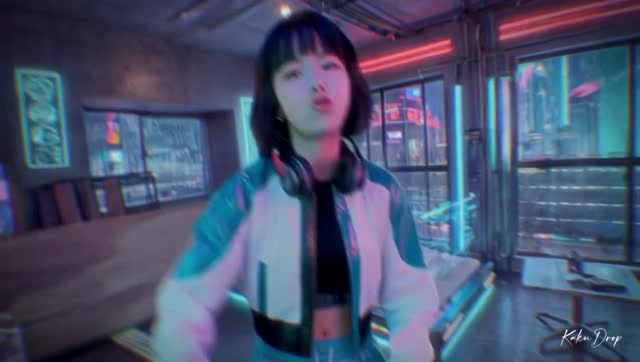
This image shows an important creator truth: technical perfection is not always the goal. The frame is slightly soft and compressed, but the mood is unmistakable. Neon color contrast, centered subject, and music context cues (headphones, loft setting) make it instantly recognizable as a performance moment.
For short-form content, emotional readability often beats pixel purity. If viewers can feel the scene quickly, they stay. This is why stylized video stills frequently outperform overly polished static portraits.
Signal Table
| Signal | Evidence (from this image) | Mechanism | Replication Action |
|---|
| Scene identity in 1 second | Headphones + neon-lit loft interior | Immediate music/performance context recognition | Include one role prop and one environment cue in first frame |
| Mood-first storytelling | Cyan/magenta glow with soft blur | Atmosphere carries engagement before detail inspection | Prioritize color mood and silhouette over micro-detail |
| Platform-native authenticity | Slight compression and motion softness | Feels like a real captured moment, not overproduced ad | Allow controlled imperfection in selected teaser frames |
| Replay potential | Centered figure with implied movement | Viewers rewatch to decode expression and scene elements | Use dynamic mid-gesture frames for loop-based posts |
Use Cases and Transfer
Best-fit scenarios
- Music teaser snippets: Great for pre-release atmosphere building.
- Behind-the-scenes edits: Great for creator authenticity narratives.
- Neon aesthetic reels: Great for moodboard-led audience growth.
- DJ/producer identity posts: Great when audio culture cues are needed.
Not ideal
- Product-detail ads requiring crisp visual clarity.
- Formal press portraits that need high-resolution polish.
- Instructional content where text legibility is critical.
Three transfer recipes
| Recipe | Keep | Change | Slot template (EN) |
|---|
| Studio-night variant | Neon color pair and center framing | Swap loft set for recording booth | {night interior} + {streetwear look} + {headphone cue} + {neon mood} |
| Club corridor variant | Soft motion texture and cyan-magenta grade | Add reflective hallway and passing silhouettes | {club corridor} + {performance outfit} + {light strips} + {video-frame blur} |
| Monochrome pulse variant | Mid-gesture pose and low-res authenticity | Convert color to high-contrast monochrome + one accent | {urban set} + {single subject} + {motion softness} + {pulse lighting} |
Aesthetic Read
The frame is powered by light geometry more than detail. Neon strips create perspective lines that pull the eye inward, while the subject remains the anchor in center. Slight blur and compression flatten technical perfection but boost emotional immediacy.
For creators, this is a valuable reminder: not every post should be clean studio quality. Strategic roughness can improve authenticity, especially for music and nightlife narratives where atmosphere is the primary message.
Prompt Technique Breakdown
| Prompt chunk | What it controls | Swap ideas (EN, 2-3 options) |
|---|
| "short-haired subject centered in neon loft" | Character and setting identity | "hooded subject in alley" / "duo performance frame" / "solo studio close-up" |
| "headphones around neck + streetwear jacket" | Role signaling | "handheld mic" / "DJ deck headphones" / "guitar strap cue" |
| "cyan-magenta practical light strips" | Atmosphere signature | "amber-violet mix" / "all-red neon" / "cold blue only" |
| "low-res video still with motion softness" | Platform-native realism | "clean 4K still" / "heavy grain VHS" / "crisp editorial frame" |
Remix Steps
Baseline Lock: lock neon color pairing, lock center framing, lock video-still texture level.
- Run 1: keep baseline; test three gesture frames from same movement sequence.
- Run 2: keep best gesture; adjust one blur intensity parameter.
- Run 3: keep blur; test one background depth variation.
- Run 4: finalize color balance and face readability.