How lilmiquela Turned Her Music Archive Into This Collage Story
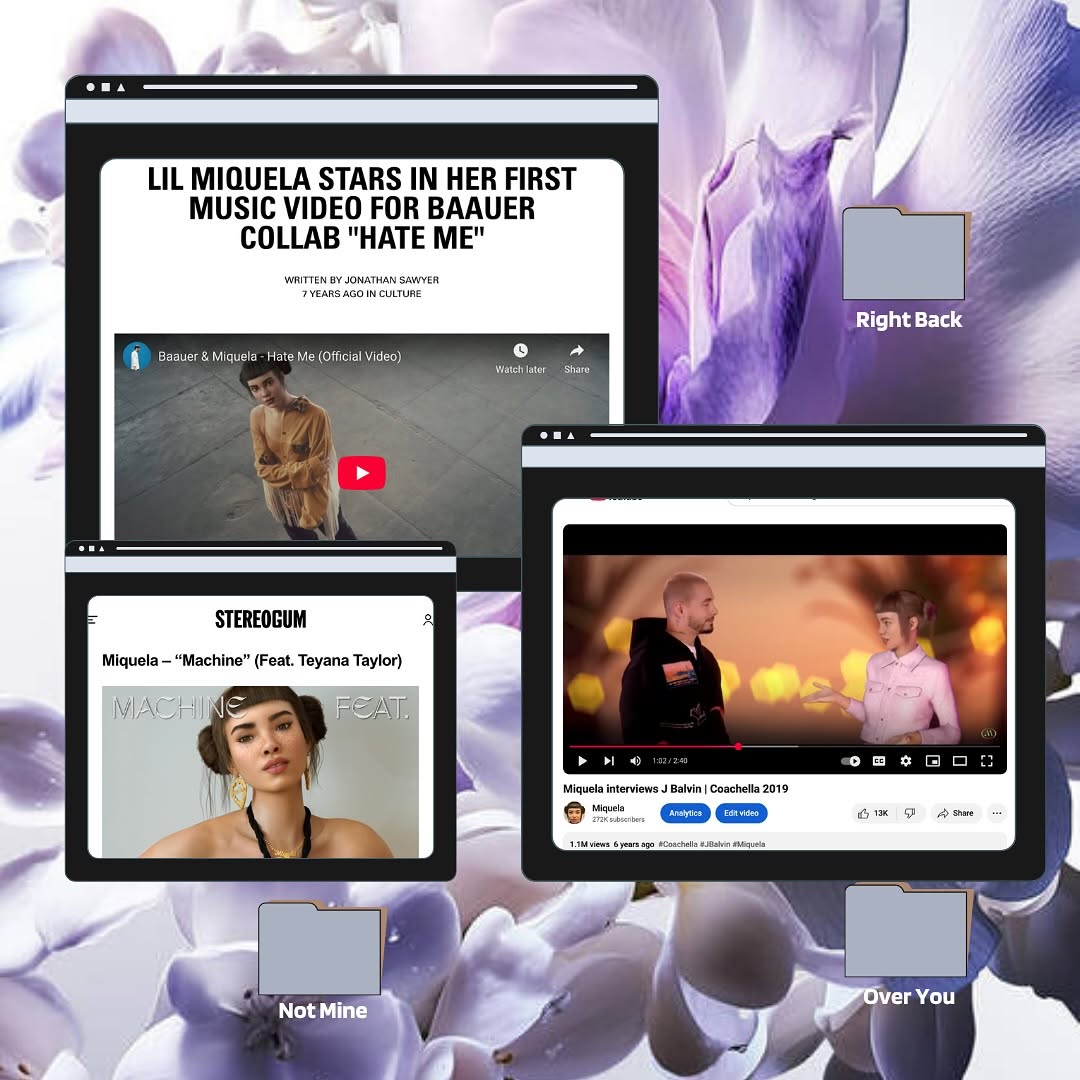
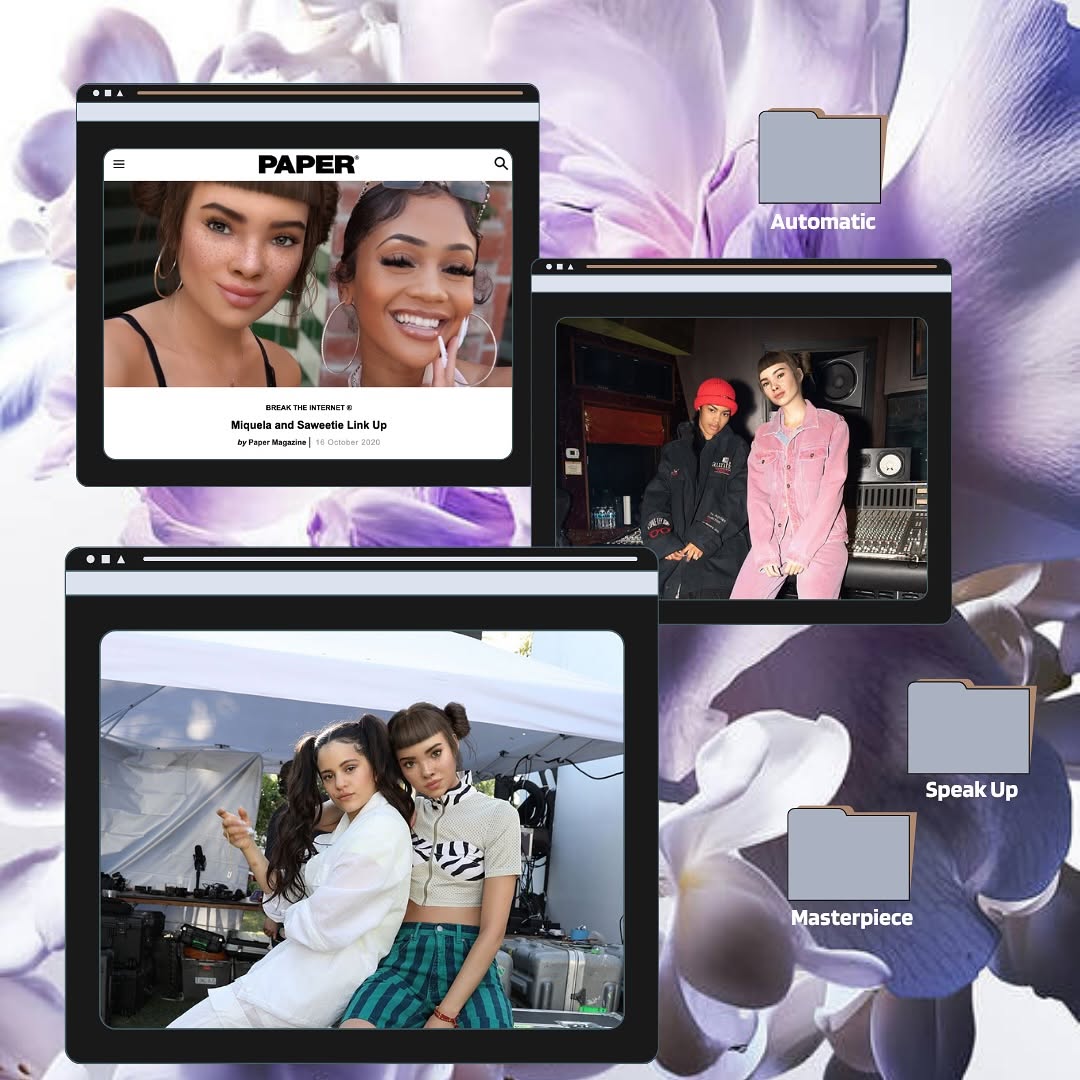
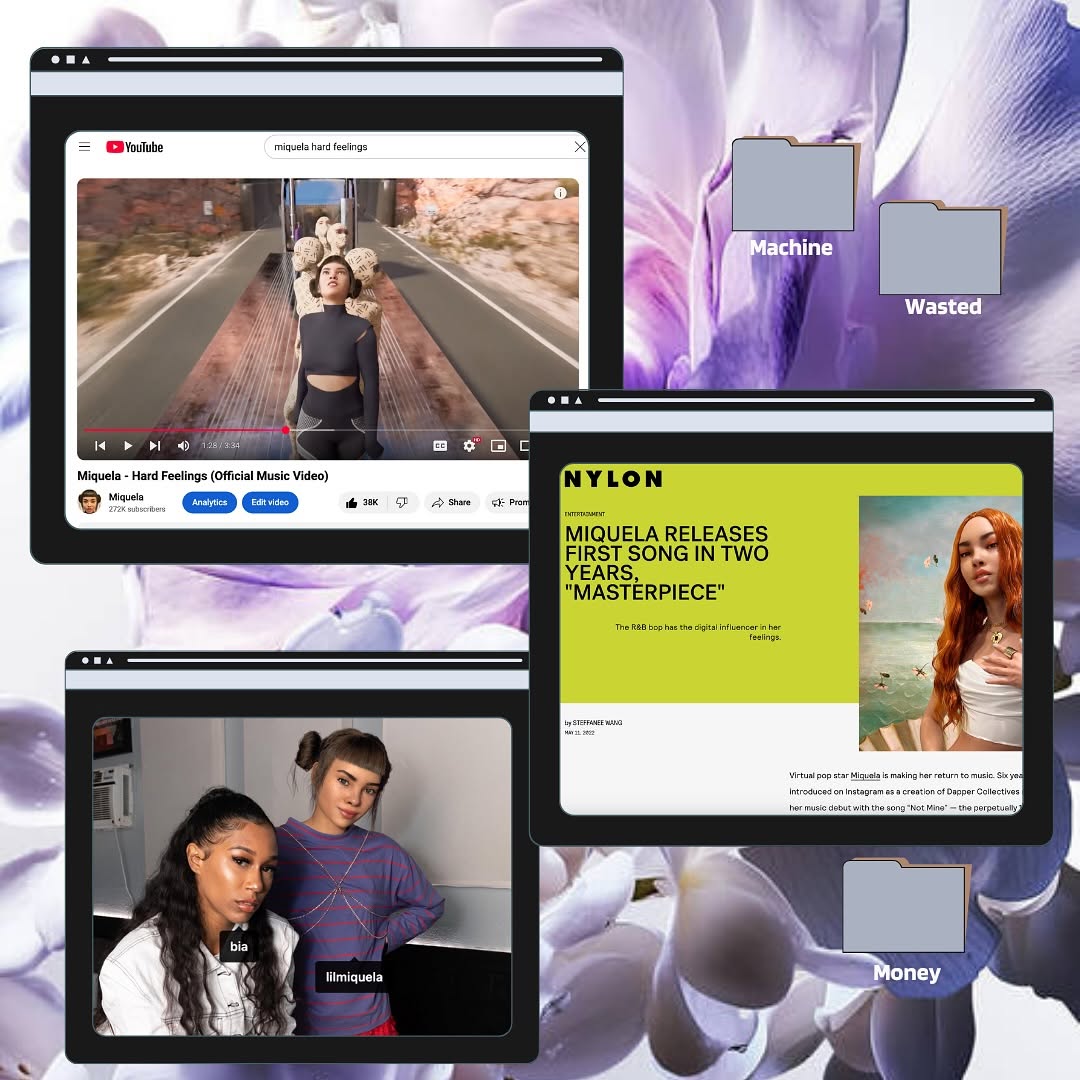
This image is not trying to be a single heroic photo. It is doing something more strategic: compressing years of cultural receipts into one digestible collage. For creator growth, that is powerful because it reframes old moments as fresh narrative context.
The audience gets three layers at once: career history, platform legitimacy, and aesthetic identity. Instead of asking people to read a long caption, the visual itself performs the timeline work.
Signal Table
| Signal | Evidence (from this image) | Mechanism | Replication Action |
|---|
| Proof stacking | Multiple publication/video windows in one frame | Compounds credibility quickly | Use 2-4 archival receipts in one slide, not one |
| Nostalgic frame | Soft purple floral backdrop | Converts raw screenshots into branded storytelling | Place hard evidence on top of one emotional background motif |
| Readable hierarchy | Largest card carries headline; smaller cards support | Guides attention order and improves comprehension speed | Assign one hero card, then supporting cards by size |
| Micro-tags for tone | Short labels like "Right Back" and "Over You" | Adds personal voice without long text blocks | Add 2-3 short mood tags to frame your narrative |
Where This Format Fits
- Milestone recaps: perfect when you need to show trajectory, not just one achievement.
- Press-feature highlights: great for reminding new followers why your name matters.
- Music/video catalog storytelling: strong for linking eras, collaborators, and audience memory.
- Pitch decks converted to social posts: effective when creators need sponsor-facing proof in public form.
Less ideal for first-time introductions (too much context needed), product macro detail posts, or tutorials where one clear process image works better.
Transfer Recipes (3)
- Keep: 3-card evidence stack. Change: background theme. Template:
{hero article card} + {2 support cards} on {brand texture background}
- Keep: one large headline window. Change: source types. Template:
{press clipping} + {video frame} + {social analytics card}
- Keep: short emotional labels. Change: narrative intent. Template:
{archive collage} with tags: {mood_1}, {mood_2}, {mood_3}
Aesthetic Read
The visual language is "soft nostalgia + hard receipts." Clean UI cards signal factuality, while flower texture softens the frame into lifestyle territory. This blend is useful for creators who want to celebrate achievements without feeling corporate.
| Observed | Why it matters | How to recreate |
|---|
| UI cards with browser bars | Immediate recognition of "real source" | Keep top chrome lines and navigation hints visible |
| Overlapping card geometry | Creates depth in a flat slide | Layer cards with slight offsets and shadow |
| Pastel floral base layer | Adds emotional softness | Use one thematic texture behind all receipts |
| Small text tags near corners | Injects creator voice | Add tiny label chips to direct interpretation |
Prompt Technique Breakdown
| Prompt chunk | What it controls | Swap ideas (EN, 2-3 options) |
|---|
| "overlapping browser windows collage" | Structural format | "polaroid collage" / "magazine clipping grid" / "desktop screenshot board" |
| "lavender flower background" | Mood and softness | "newsprint texture" / "chrome gradient" / "torn paper" |
| "hero headline card + support video cards" | Information hierarchy | "hero chart + support posts" / "hero quote + support photos" |
| "small mood labels" | Narrative framing | "era tags" / "date stamps" / "chapter names" |
| "clean UI readability" | Trust and legibility | "retro lo-fi blur" / "high-contrast modern" / "monochrome archive" |
Remix Playbook
Baseline lock: keep one hero proof card, two support cards, and one consistent background motif.
- Run 1: build hierarchy only (no decorative labels).
- Run 2: add mood labels to shape narrative tone.
- Run 3: keep layout fixed, swap only background texture.
- Run 4: keep texture fixed, rotate card sources (press, video, chart) for A/B test.
This sequence tells you whether your performance boost comes from proof density, visual mood, or text framing.