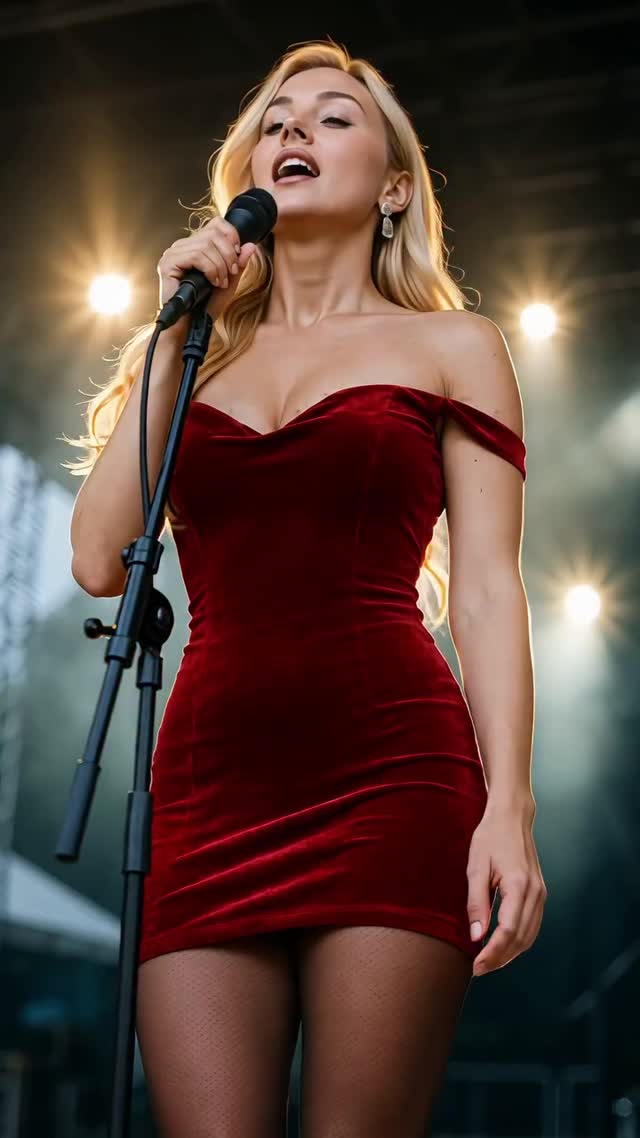
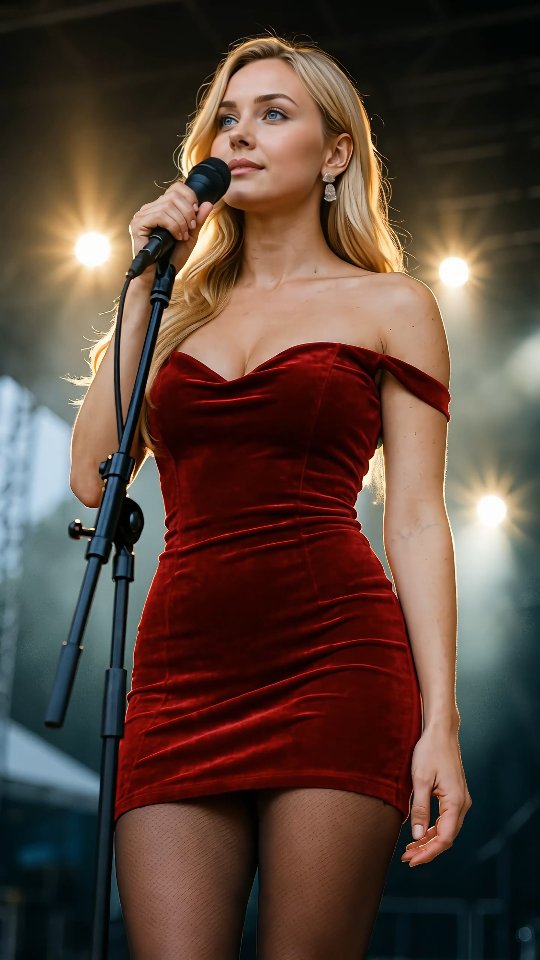
This is a visual tribute performance of Always Remember Us This Way, the iconic ballad originally performed by Lady Gaga in A Star Is Born.
This is not a vocal cover — it’s a visual interpretation that pays homage to the song’s message of love, memory, and longing. With cinematic styling and expressive movement, this performance was created with deep respect for the original.
💫 For fans of Lady Gaga, emotional music, and artistic tributes.
🎧 Don’t forget to like, comment, and subscribe if the story touched you.
How millasofiafin Made This Always Remember Us This Way AI Portrait - and How to Recreate It
This frame is built for authority. The low camera angle gives the performer presence, while the red off-shoulder dress locks visual memory. Add warm stage bulbs in the back and the image immediately reads as “main act” content, even without seeing a crowd.
For creators, this is useful because it scales: you can shoot one strong hero frame and repurpose it across release announcements, event posters, reel covers, and social headers. The structure is simple but high-impact when the three anchors are stable: angle, color, and role prop.
Why this shot performs
First, the image has instant status signaling. Low-angle framing naturally amplifies presence. Second, the wardrobe is single-color dominant, so it remains recognizable in tiny thumbnails. Third, microphone visibility removes ambiguity: this is a performance moment, not a generic portrait.
The lighting strategy matters too. Warm point lights behind the singer create depth and atmosphere without requiring a complicated set. That means creators can achieve a premium feeling with a relatively minimal scene if they control light placement and composition discipline.
Signal
Evidence (from this image)
Mechanism
Replication Action
Hero perspective
Camera slightly below subject line
Perceived confidence and stage authority increase
Drop camera height by 10-20% and keep subject centered
Color memory anchor
Deep red dress dominates frame
Faster recognition and stronger visual recall
Use one dominant wardrobe hue across campaign assets
Role clarity
Visible mic + stand and singing expression
Instant narrative decoding improves hold rate
Keep role prop near face in every key frame
Depth via practical lights
Warm bokeh bulbs in background
Adds production value without scene clutter
Place 2-4 warm practical backlights behind subject plane
Use Cases and Transfers
Single launch poster: ideal hero image for release week branding.
Event lineup card: strong when you need authority in one still.
Short-form cover: works as thumbnail for performance reels.
Press-kit portrait: gives professional stage identity quickly.
Not ideal for
Intimate acoustic storytelling that needs softer eye-level mood.
Multi-artist narratives requiring scene interaction.
Product demonstration videos where object detail is primary.
Three transfer recipes
Blue-jazz transfer
Keep: low-angle framing and mic prominence.
Change: red wardrobe to midnight blue, warm bulbs to dim amber clubs.
Keep: authoritative low-angle and centered composition.
Change: stage environment to studio performance booth.
Slot template:{host_or_singer} with {mic_type}, low-angle cinematic portrait, controlled practical lights
Aesthetic Read: observed evidence
This frame feels premium because it avoids competing stories. There is one person, one role, one dominant color, and one light architecture. That discipline is what makes it reusable for growth campaigns.
Observed
Why it matters
How to recreate
Low-angle camera
Adds visual authority
Place camera below chest level and tilt slightly up
vintage chrome stand; handheld wireless mic; studio condenser
warm stage practicals with dark backdrop
Mood and depth
neon magenta stage; cool blue theater; candlelit acoustic set
low-angle vertical full-body portrait
Status and platform formatting
eye-level medium crop; ultra-close headshot; wide stage frame
Remix Steps
Baseline lock
Lock angle: slight low-camera hero perspective.
Lock role prop: mic always visible near performance gesture.
Lock lighting architecture: warm practical backlights + soft front fill.
One-change rule sequence
Run baseline with red dress and warm bulbs.
Change only wardrobe color to test retention differences.
Reset baseline, change only expression phase (open-note vs closed-mouth focus).
Reset baseline, change only light density (2 bulbs vs 4 bulbs) and compare saves.
Caption pairing
Use a two-line structure: one emotional lyric fragment + one clear action (“out now”, “pre-save today”, “live version tonight”). This preserves feeling while driving conversion.