How millasofiafin Made This Red Velvet Stage AI Portrait - and How to Recreate It
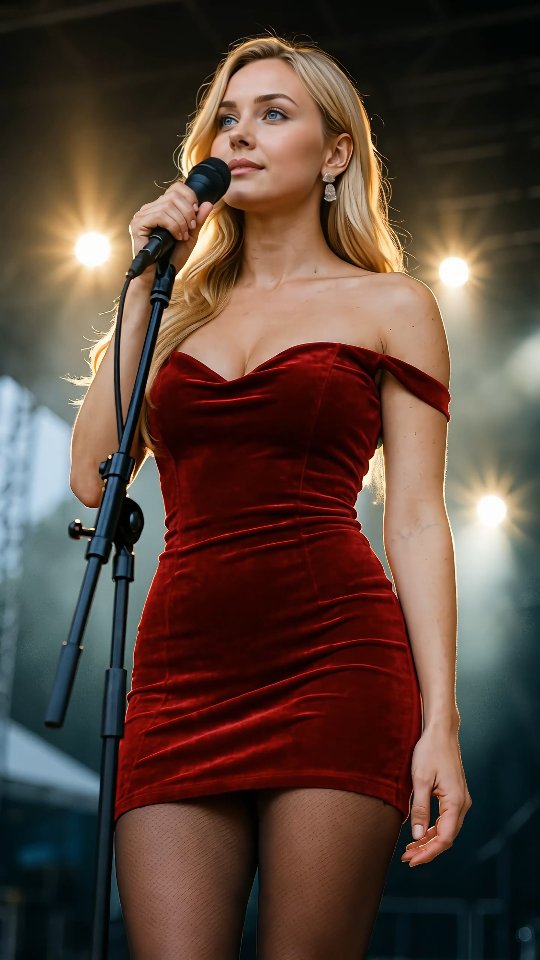
This image is effective because it delivers a clear role signal immediately: performer, mic, lights, stage. Nothing is ambiguous. At the same time, the expression stays calm rather than exaggerated, which makes the frame feel confident instead of theatrical.
For creators in music or speaking niches, this is a strong hero format. It communicates professionalism while remaining emotionally accessible.
Signal Table
| Signal | Evidence (from this image) | Mechanism | Replication Action |
|---|
| Role certainty | Microphone on stand held near mouth | Defines subject function in under one second | Use one unmistakable role prop in primary frame |
| Color authority | Red velvet dress against dark stage | Creates premium focal contrast | Choose one high-impact wardrobe color against darker backdrop |
| Stage authenticity | Backlights and visible rig-like background depth | Signals real performance context | Keep practical stage lights in frame instead of cropping them out |
| Composed expression | Focused, relaxed facial tone | Adds credibility and maturity | Direct subject to hold neutral confidence, not forced smile |
Where This Format Performs
- Tour or show announcements: ideal for immediate event relevance.
- Single-cover alternates: strong for artist identity consistency.
- Speaker lineup promotions: useful for authority-led personal branding.
- Media kit imagery: effective as a clear signature portrait.
Not ideal for informal daily diaries, humor-first meme pages, or tutorial posts requiring hands-on process visibility.
Transfer Recipes (3)
- Keep: mic + stage lights. Change: wardrobe color. Template:
{performer portrait} with {mic stand} under {stage light style}
- Keep: vertical three-quarter framing. Change: expression mood. Template:
{stage subject} in {calm/intense/smiling} expression, dark background
- Keep: dark backdrop and bright practical lights. Change: genre styling. Template:
{artist look} with {performance prop} and {backlight bokeh}
Aesthetic Read
The frame relies on classic performance contrast: luminous skin and fabric against a dark field. The microphone stand acts as a compositional spine, while light flares behind the subject add depth and legitimacy without crowd noise.
| Observed | Why it matters | How to recreate |
|---|
| Vertical prop line from mic stand | Stabilizes composition | Align stand slightly off center for structure |
| Warm white backlights | Adds stage realism and dimension | Place practical lights behind subject at varied heights |
| Single dominant wardrobe color | Improves thumbnail recognition | Use one saturated garment, avoid multicolor patterns |
| Minimal background detail | Keeps attention on performer | Let stage structure stay soft and dark |
Prompt Technique Breakdown
| Prompt chunk | What it controls | Swap ideas (EN, 2-3 options) |
|---|
| "single performer with microphone stand" | Narrative role | "podium speaker" / "acoustic singer" / "host intro" |
| "red velvet off-shoulder dress" | Visual signature and texture | "black satin" / "white tailored suit" / "metallic stagewear" |
| "dark stage with bright circular lights" | Environment mood | "LED wall stage" / "theater spotlight" / "club practicals" |
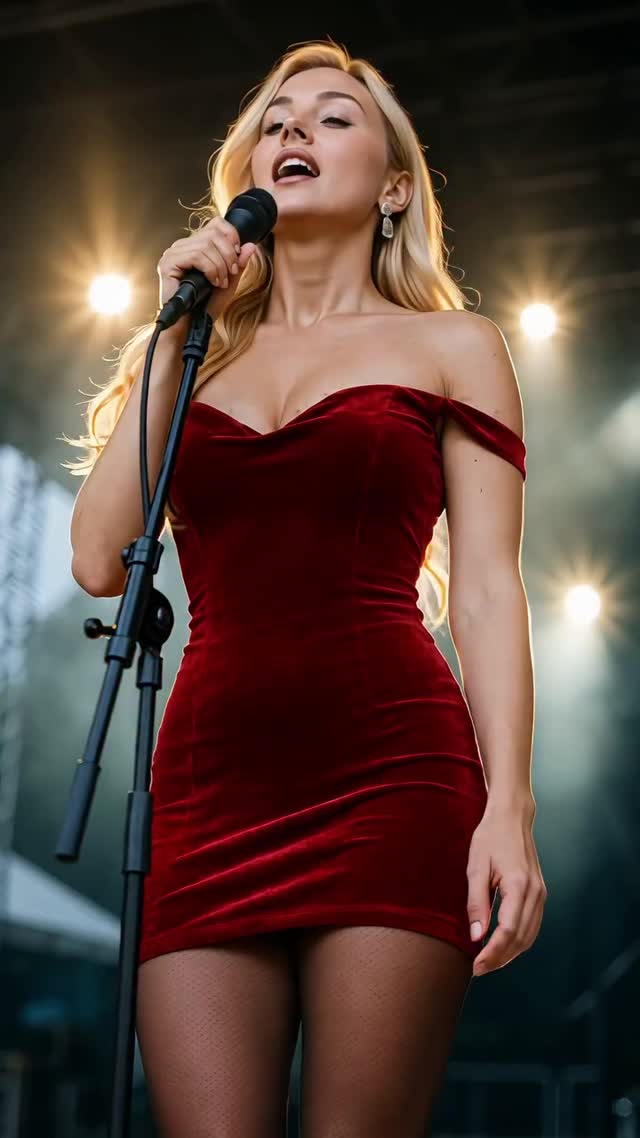
| "calm focused expression" | Emotional tone | "smile" / "intense gaze" / "eyes closed singing" |
| "vertical three-quarter performance portrait" | Framing consistency | "tight headshot" / "full-body wide" / "side profile" |
Remix Steps
Baseline lock: lock role prop, stage light pattern, and vertical framing.
- Run 1: generate subject + microphone with neutral background.
- Run 2: add dark stage and backlights.
- Run 3: keep scene fixed, test wardrobe color and texture.
- Run 4: keep styling fixed, test expression variants for campaign tone.
This sequence reveals whether your engagement driver is stage context, styling color, or emotional expression.