Letting the words and melody speak for my heart 💕 ‘Woman in Love’ — Dana Winner.
Letting the words and melody speak for my heart 💕 ‘Woman in Love’ — Dana Winner.
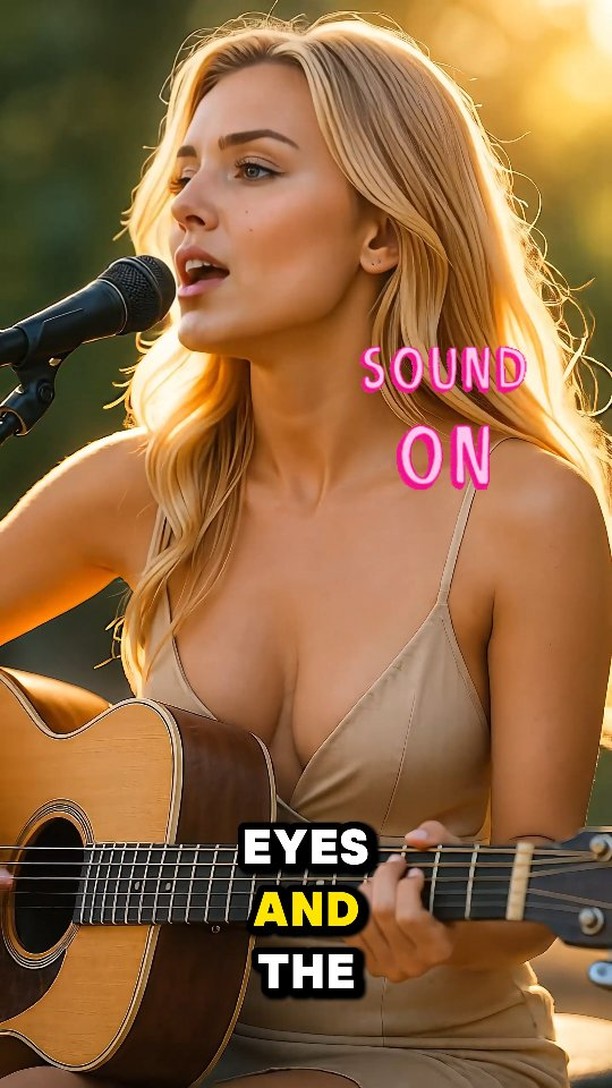
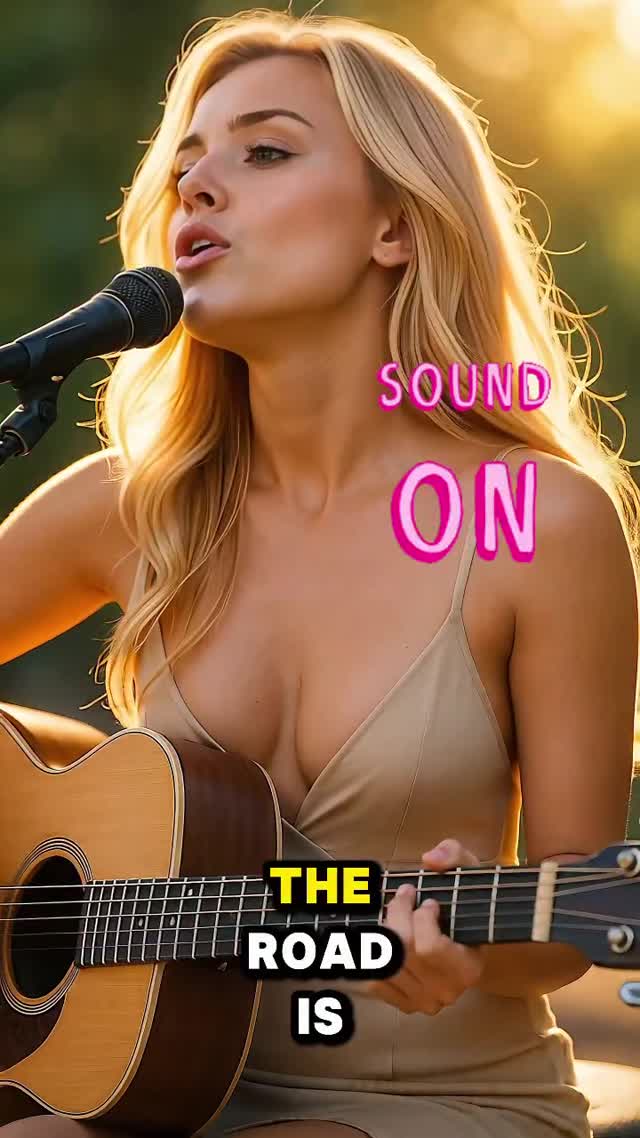
Some images don’t just show a person—they imply a soundtrack. This one does it with a simple recipe: a believable performance moment (mic + guitar), a warm cinematic rim light, and text that turns a silent scroll into an invitation to listen.
The first hook is explicit: SOUND ON. It’s a micro-command that pairs perfectly with a visual that already suggests audio—open mouth mid-lyric, microphone close enough to catch breath, and hands placed like the next chord change is happening right now. The second hook is emotional: golden-hour backlight reads as “memory” and “romance” in a fraction of a second, which makes the moment feel personal, not promotional.
What makes it shareable isn’t complexity—it’s clarity. The scene is almost aggressively readable: one subject, one instrument, one mic, one warm light direction. That clarity gives viewers confidence to react fast (“I get it”), and it gives creators an easy mental model to recreate (“I can do that”).
Finally, the typography is doing subtle distribution work. The big bottom caption (“EYES AND THE”) signals a lyric or story fragment, which triggers curiosity and encourages replay. The color choices (pink neon + yellow accent) create a modern Reel-cover vibe without competing with the face as the focal point.
| Signal | Evidence (from this image) | Mechanism | Replication Action |
|---|---|---|---|
| Audio invitation | “SOUND ON” neon text on the right | Turns passive viewing into an action loop; viewers feel they’re missing the “real” moment unless they listen | Add a 2–3 word audio CTA; lock placement in negative space; keep it readable at thumbnail size |
| Instant context | Microphone near mouth + acoustic guitar in-frame | People understand the content type in under a second (music/performance), reducing bounce | Include 1–2 unambiguous props (mic/instrument); avoid busy backgrounds that dilute the story |
| Cinematic warmth | Strong golden rim light on hair; sun bloom top-right | Warm backlight reads as high production and emotion, increasing watch time and saves | Prompt for back-right golden rim + soft fill; keep highlights warm with gentle bloom |
| Lyric fragment | Big stacked caption “EYES AND THE” at the bottom | Creates curiosity and replay; implies continuation beyond the thumbnail | Use a partial line (not the whole sentence); emphasize one word with a contrasting color |
{city_scene} {wardrobe} {instrument} {mood}{studio_scene} {outfit} {instrument} {lighting_motif}{outdoor_scene} {two_subjects_pose} {call_to_action} {song_genre}The beauty here is not random—it’s a stack of controllable decisions. The directional backlight creates a halo around the hair, separating the subject from the background. The background stays clean by being fully blurred into green bokeh, which makes the face and the mic the obvious story. The color palette is disciplined: warm golds and tans dominate, then typography introduces a modern pop (pink + yellow) without stealing focus.
| Observed | How to recreate (prompt evidence) |
|---|---|
| Golden rim light from back-right | “strong golden-hour backlight from back-right, warm rim on hair and shoulder, subtle sun bloom” |
| Shallow depth of field, creamy foliage bokeh | “85mm portrait, wide aperture, fully blurred green foliage background, creamy bokeh” |
| Performance authenticity cues | “mouth slightly open mid-lyric, microphone positioned close to mouth, hands placed for playing” |
| Negative space reserved for text | “subject left-of-center with negative space on the right for the CTA text” |
| Warm editorial grading (soft contrast) | “editorial color grading, warm highlights, soft contrast, natural skin texture” |
If you want this to be repeatable, treat your prompt like a control panel. Each chunk locks a different failure mode.
| Prompt chunk | What it controls | Swap ideas (EN, 2–3 options) |
|---|---|---|
| Subject + action | Expression and believability of the performance moment | “singing softly into the mic” / “mid-chorus power note” / “close-mic whisper verse” |
| Props (mic + instrument) | Instant category recognition | “acoustic guitar” / “electric guitar + small amp” / “handheld mic + headphones” |
| Lighting direction | Mood and separation | “golden-hour back-right rim” / “soft window light left” / “stage spotlight with haze” |
| Lens + depth of field | Intimacy and background cleanliness | “85mm f/1.8 look” / “50mm f/2.0 look” / “135mm creamy compression” |
| Typography overlay | Attention routing + CTA | “SOUND ON” / “LISTEN” / “TURN UP” |
[Subject] {singer description}, {expression}, {singing action}
[Props] {microphone type/position}, {instrument type/position}
[Scene] {outdoor foliage}, {time of day}
[Camera] {85mm portrait}, {shallow DoF}, {vertical 9:16}, {framing}
[Light] {back-right golden rim}, {soft fill}, {sun bloom}
[Style] photorealistic, editorial grade, natural skin texture
[Text] {CTA}, {lyric fragment}Your job is to stabilize the three things that define the look, then only change one knob at a time.
Per run, change only 1–2 variables. If you change wardrobe, lighting, and lens together, you won’t know what broke the vibe.