How rioaigc Made This Attack on Titan Mikasa Titan Concept AI Art -- and How to Recreate It
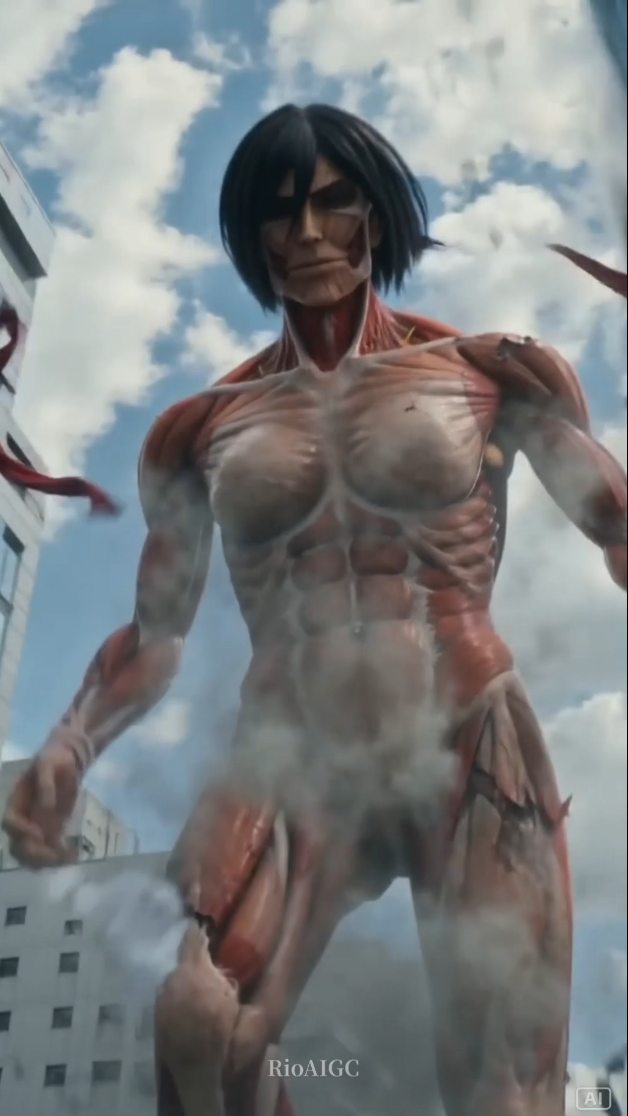
This image works because it understands that scale itself can be the main spectacle. The composition presents a colossal humanoid giant towering above a city street, framed from a low angle so that surrounding buildings become visual measuring tools. The figure is not shown in the middle of a dramatic attack or explosive motion. Instead, the poster relies on reveal energy: the giant simply exists, upright and overwhelming, and that presence alone creates tension. If you are trying to write stronger AI prompts for kaiju-inspired anime imagery, this is an excellent lesson in how proportion, camera angle, and urban context can do more than special effects ever could.
The first reason the image lands so effectively is that the giant is still recognizably human in structure. The body proportions, short black bob haircut, stern facial expression, and upright stance all suggest a human-derived design rather than a beast or mechanical monster. That matters because humanoid scale is psychologically unsettling in a different way from creature scale. A giant reptile or alien is expected to be strange. A towering human-like figure, by contrast, makes the familiar world feel unstable. In prompt writing, that distinction can radically change the mood. If you want something closer to uncanny grandeur than pure monster action, emphasizing human-like anatomy at impossible scale is a strong move.
The haircut is a subtle but important choice. A short black bob gives the giant a clear silhouette and a stylized anime identity that separates the image from more generic kaiju designs. Hair can be one of the easiest ways to make a giant figure feel specific, especially in poster art. Without it, a humanoid colossus may drift toward faceless titan or armored mannequin territory. With it, the giant becomes a character. In practical prompt language, specifying hairstyle, expression, and body posture helps keep oversized figures from becoming blank statues.
The low-angle shot is arguably the most important compositional decision. Low-angle framing is one of the oldest and most effective visual methods for communicating dominance and size. Here it does more than flatter the subject. It turns the surrounding city into a vertical scale grid. Buildings, signs, and street-level structures all exist to show how impossibly large the figure is. This is a great prompt-writing lesson: if you want scale to feel real, you need reference objects in the frame. Saying “giant” is rarely enough. Showing the subject against skyscrapers, rooftops, or street infrastructure allows the model to express proportion more clearly.
The city environment also makes the image feel immediate and contemporary. A giant in an abstract void would still look large, but it would not feel disruptive. Placing the figure above a street lined with buildings, signage, and urban geometry makes the image read as an event. The city is not only a background. It is the world being interrupted. This is particularly powerful in kaiju-style poster design because urban environments are symbols of order, density, and everyday human life. A giant body entering that grid introduces instant tension, even before anything physical happens.
Another strength of the image is its restraint. The giant is not throwing debris, firing beams, or stomping through explosions. That choice gives the poster more confidence. It behaves like a reveal image, the kind of visual designed to make viewers stop and absorb what they are seeing. This is useful to remember when prompting cinematic art. Not every high-impact image needs maximum movement. In fact, stillness can be more intimidating. A calm giant often feels more powerful than a frantic one because the lack of effort implies total control.
The stern facial expression supports that same tone. Expression is especially important when the figure is human-like. A neutral or vaguely pleasant face would weaken the atmosphere. A stern expression, however, makes the giant read as purposeful, distant, and potentially dangerous. In prompt design, emotional specificity helps large-scale figures feel intentional. Words like stern, severe, impassive, commanding, or emotionally unreadable can nudge the image toward mythic authority rather than random spectacle.
From a color and mood perspective, the concept benefits from keeping the palette relatively controlled. Dark hair, urban grays, deep shadows, and muted city tones likely dominate the frame, allowing skin, architecture, and atmospheric lighting to do the rest. This is often a better choice for giant reveal posters than hyper-saturated chaos. The image wants the viewer to focus on mass, presence, and proportion. Overly noisy color treatment would distract from that. In prompt writing, terms like cinematic city haze, restrained palette, moody urban atmosphere, and grounded lighting can help preserve this seriousness.
If you wanted to build a prompt inspired by this image, it would help to structure it in clear layers. Start with the subject: “a colossal humanoid anime giant with a short black bob haircut and stern expression.” Then define the setting: “towering above a modern city street surrounded by tall buildings.” After that specify the camera: “low-angle reveal shot emphasizing overwhelming vertical scale.” Finally add style language: “dark anime kaiju poster, cinematic atmosphere, urban tension, dramatic perspective, monumental human-like proportions.” This structure helps the model understand the key hierarchy of the scene.
The image also teaches an important lesson about reveal versus action. Many people prompting for giant characters jump straight to destruction, but reveal imagery often has more staying power. A reveal poster lets the audience imagine what might happen next, which can be more gripping than showing every consequence immediately. In franchise key art, that kind of anticipation is powerful. The viewer does not just see a giant. They begin to imagine the story of what that giant means. If your goal is iconic promotional art rather than chaotic scene illustration, reveal-focused prompting is often the better route.
There is also strong potential here for tonal variation without losing the core concept. You could shift the scene into a rain-soaked neon city for a cyber-noir giant reveal. You could turn the figure into a pale stone-skinned colossus for a mythic urban intrusion. You could place the same subject at dawn, under emergency lights, or in heavy fog. But the essential design principle should stay constant: a human-like giant presented at monumental scale through camera angle and architecture. As long as that relationship remains clear, the image can evolve in many directions.
For SEO and educational content, this image fits naturally under topics such as anime kaiju prompt design, giant woman city poster concepts, low-angle scale prompts, humanoid titan AI art, and cinematic reveal composition. It works well as a teaching example because the visual idea is easy to understand yet rich enough to analyze from several angles. Readers can quickly grasp why the image feels powerful, and creators can point to specific decisions like viewpoint, silhouette, environment, and pose rather than relying on vague claims about cinematic style.
One of the strongest takeaways is that giant-character prompts benefit enormously from environmental honesty. The world around the figure must behave like a real world. Buildings need believable spacing. The perspective needs to support the claimed scale. The body needs to sit naturally inside the frame. When those elements align, even a highly stylized anime giant feels more convincing. When they do not, the image can quickly become toy-like or unintentionally comical. This poster avoids that trap by letting the city serve as a sober witness to the giant’s existence.
Ultimately, what makes this image memorable is not just that the subject is huge. It is that the hugeness is presented with discipline. The low angle, the stern expression, the controlled urban context, the readable silhouette, and the stillness all contribute to a coherent visual thesis. This is not random giant chaos. It is the arrival of something monumental. If you want stronger AI-generated kaiju or titan prompts, focus less on adding more destruction and more on making the scale believable, the character specific, and the composition authoritative. This image proves that a giant can feel most powerful in the moment before action, when the city and the viewer are simply forced to look up.