How rioaigc Made This Chun-Li Subway Car AI Portrait -- and How to Recreate It
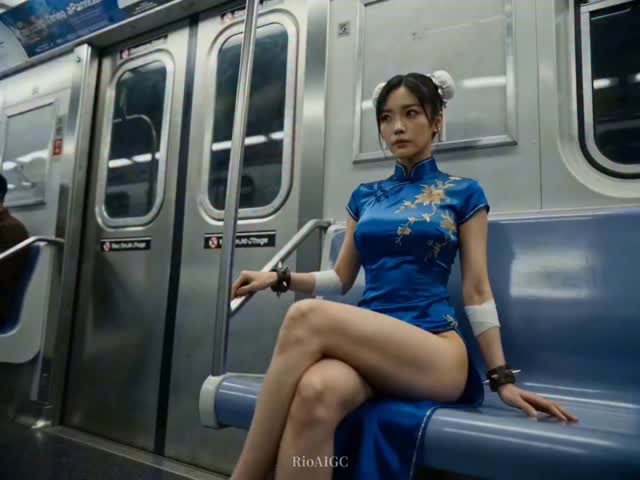
This image works because it places highly recognizable character styling inside a totally ordinary public setting. Instead of pushing the subject into a battle pose, a fantasy arena, or a neon combat backdrop, it shows her seated quietly in a subway car. That choice is what gives the image its tension. The costume carries franchise-coded strength, but the transit environment introduces realism, routine, and pause. The result is not a typical action tribute. It is a character study disguised as everyday urban photography.
The most effective decision here is the use of stillness. The subject sits upright, composed, and controlled. One hand rests near the bench while the other engages lightly with the rail, suggesting alertness without movement. This matters because many game-inspired portraits default to kicks, weapon poses, or aggressive stance language. Here, the image becomes stronger by refusing that path. The viewer is invited to observe rather than react. That shift turns the portrait into something more personal and psychologically interesting.
The royal-blue qipao is the key visual anchor. In a carriage built from stainless steel, blue bench seating, and muted fluorescent light, the embroidered costume becomes the loudest visual signal in the frame. It immediately identifies the subject as stylized, intentional, and distinct from the surrounding environment. That relationship is essential. If the subway were equally colorful or full of visual clutter, the wardrobe would lose its force. If the outfit were more neutral, the whole concept would collapse into a generic commuter portrait.
The environment is carefully restrained. The subway car is detailed enough to feel real, but not so crowded that it competes with the subject. The sliding doors, vertical poles, bench geometry, and cool interior lighting are all recognizable public-transit markers. That realism matters because it gives the image its emotional premise: a powerful, game-coded figure briefly existing in a mundane, shared, everyday world. That premise is what creates the picture’s memorability.
Compositionally, the subway car acts like a contained stage. Horizontal bench lines, vertical poles, and door frames give the image a strong geometric base. The subject sits slightly right of center, which keeps the frame stable while allowing the environment to remain readable. This is especially helpful in portrait prompts where you want place identity without letting the place overpower the figure. The subway does not dominate the image, but it absolutely defines it.
| Visual Layer | Observed Detail | Why It Works | Prompting Recommendation |
|---|---|---|---|
| Character anchor | Blue embroidered qipao, dual hair buns, white wrist wraps | Provides instant identity and visual contrast inside a neutral setting | Keep one or two unmistakable franchise-style markers, but do not overload the costume |
| Everyday environment | Silver subway doors, blue bench seating, transit poles | Makes the character feel placed rather than floating in abstraction | Use clear public-space markers to build believable urban context |
| Still posture | Calm seated pose with restrained gesture | Creates a between-moments feeling rather than a performance pose | Describe quiet readiness instead of action if you want emotional depth |
| Color hierarchy | Blue costume against metal-gray carriage interior | Keeps the subject visually dominant without needing effects | Let one garment color lead the frame while the setting stays subdued |
One of the strongest ideas in this image is the suggestion of off-screen narrative. The viewer can imagine that this character has come from somewhere or is going somewhere, but the image never states it directly. That ambiguity is powerful. It gives the portrait more life than a fully explained action scene. In prompt writing, these “in-between” moments are often more effective than obvious climactic poses because they leave imaginative space for the audience.
Lighting also helps hold the image together. The fluorescent subway illumination is realistic and mildly flat, which is exactly what the concept needs. The scene would weaken if it used dramatic cinematic backlight or fantasy glow effects, because those would fight the realism of the commute setting. Here, the lighting supports the documentary quality of the environment while still preserving enough face and fabric detail for the image to feel polished and intentional.
This image is especially useful as a template for urban character portraiture, fan-art realism, cosplay-inspired editorial work, “fictional character in the real world” series, and creator content that wants to soften iconic figures by placing them inside recognizably modern environments. It is less useful for explosive action or ensemble storytelling, because the whole point of the image is concentration and pause.
| Prompt Chunk | Function | Alternative Swaps |
|---|---|---|
| blue qipao character seated in a subway car | Establishes the central contrast between iconic styling and mundane setting | martial-arts heroine on a bus seat; fantasy uniform character on a train platform; stylized fighter waiting at an airport gate |
| silver sliding doors, blue bench, vertical poles | Defines the transit realism and structural composition | rainy bus window; metro platform glass; tram interior with empty seats |
| quiet alert expression and composed posture | Shifts the image away from fan-service action toward observation | looking out the window thoughtfully; adjusting wrist wraps; leaning slightly forward in thought |
| cool fluorescent public-transit lighting | Keeps the scene grounded and believable | late-night station lighting; muted dawn commute light; soft overcast train interior illumination |
| urban realism with fandom-inspired styling | Balances tribute and believability | live-action anime adaptation mood; grounded cosplay editorial; cinematic everyday-character portrait |
If you want to recreate this effect successfully, begin with the environment, not the costume. Define the subway car as a believable transport space with metal surfaces, transit seating, poles, and constrained proportions. Then introduce the subject and let her styling disrupt the environment in a controlled way. If you start with only the costume idea, the result often becomes generic cosplay. If you start with the transit logic and then add the character language, the frame becomes far more believable.
Another useful lesson is that realism and reference can strengthen each other instead of competing. The qipao and hair buns tell the viewer there is a specific character heritage involved. The subway carriage tells the viewer the image wants to live in the present world. Together, they generate a productive friction. The subject looks iconic because the environment is ordinary. The environment looks cinematic because the subject is iconic. That reciprocal effect is difficult to achieve unless both halves are described clearly.
For blog writers and prompt educators, this image is a strong example of what happens when you shift the storytelling question from what is the character doing to where does the character exist when nothing dramatic is happening. That question often produces richer images. It forces the prompt to consider space, mood, behavior, and emotional residue rather than defaulting to combat poses. This is why the frame feels fuller than its simple setup might suggest.
A common failure mode for this type of image is making the subway too empty of detail or too crowded with people. If there are no visible transit markers, the environment loses identity. If too many passengers appear, the subject stops reading clearly. Another common problem is over-stylized lighting. This image needs the ordinary logic of a commute space. The more grounded the environment remains, the more effective the character styling becomes.
The frame also benefits from respecting restraint in facial expression. A neutral or slightly alert look is far more useful than a broad smile or an exaggerated glare. The subdued expression keeps the portrait in character-study territory. It suggests that the subject belongs to a larger world, but is currently suspended in a quiet human moment. That subtlety is what makes the image adaptable for blogs, galleries, and social content with more reflective or cinematic ambitions.
In practical terms, this is the right prompt structure whenever you want to blend fandom identity with real-world atmosphere. Keep the transit details specific, keep the costume readable, keep the posture calm, and let the color hierarchy do the work. The image will feel stronger if it looks like an authentic subway photograph first and a stylized tribute second. That inversion is what makes the result feel fresh rather than predictable.
Ultimately, the image succeeds because it gives the character room to exist outside spectacle. The subway car is not only a background. It is a psychological container that makes the figure feel temporarily ordinary without making her anonymous. That balance between iconicity and everyday life is what gives the portrait its unusual staying power.