How tapewarp.ai Made This Internet Search Poster AI Art -- and How to Recreate It
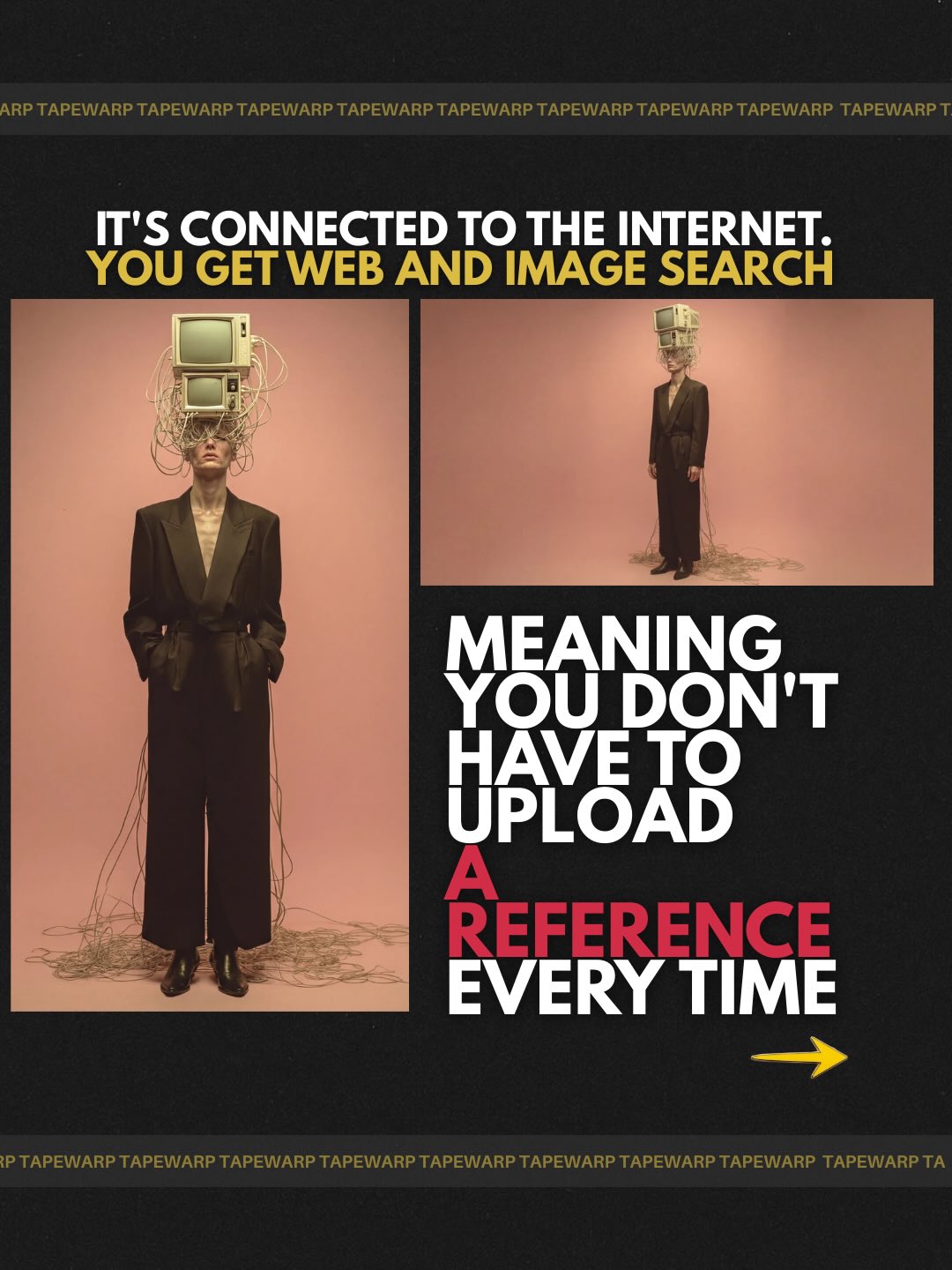
This poster works because it uses fashion imagery to carry a technical product message without making the design feel technical. Instead of showing a browser window or a search interface, it builds a surreal human metaphor: a model literally wearing stacked screens and trailing wires. That move makes the feature feel cultural and visual, not just functional.
The strongest decision is the separation of roles inside the layout. The photography delivers intrigue. The typography delivers the promise. The black framing structure keeps both under control. Because each system has a clear job, the poster feels sharp rather than overloaded, even with a lot of large copy on the page.
| Signal | Evidence (from this image) | Mechanism | Replication Action |
|---|
| Feature metaphor | CRT monitor head and cables replacing a normal portrait identity | The surreal styling stands in for connectivity and search without relying on literal UI screenshots | Translate the feature into a single strong symbolic object instead of explaining everything visually |
| Campaign hierarchy | Headline on top, photography in the middle, product copy on the lower right | The message reads in a controlled sequence and feels like a launch asset | Design the poster with a strict reading order before adding decorative decisions |
| Editorial tension | Soft pink studio photographs inside a hard black poster frame | The contrast between gentle image space and assertive graphic framing creates premium tension | Combine a soft fashion-photo palette with severe black structural panels |
| Readable contrast | White, yellow, and red type against black | The copy remains legible even when oversized and broken into many lines | Use only a few high-contrast text colors and assign each one a specific role |
Another reason the piece lands is that the model is not doing too much. The stance is calm, the clothes are dark and minimal, and the pose is almost mannequin-like. That restraint matters because the surreal device on the head is already doing the conceptual work. If the body language became theatrical too, the poster would tip into noise.
If you want to recreate this style, think like a creative director building a feature campaign. Start with the product claim, then ask what editorial image could embody it. After that, force the layout into a disciplined grid. The more conceptual the photography becomes, the more structured the typography needs to be.
| Prompt chunk | What it controls | Swap ideas (EN, 2–3 options) |
|---|
| “full-body model with stacked CRT monitor head and trailing cables” | Creates the central tech-fashion metaphor | “fashion figure with retro screen headpiece”, “editorial model wearing television hardware”, “surreal connected figure with wired monitor head” |
| “blush studio backdrop inside a black poster frame” | Locks the soft-versus-hard visual tension | “muted pink studio panel within a matte black layout”, “soft nude backdrop framed by dark campaign blocks”, “editorial blush set inside a rigid poster grid” |
| “bold uppercase sans-serif product copy in white, yellow, and red” | Defines the ad hierarchy and feature emphasis | “launch-campaign typographic stack”, “oversized SaaS ad headline system”, “high-contrast product poster copy treatment” |
| “editorial fashion meets creative-tech campaign poster” | Sets the overall tone away from generic tech marketing | “avant-garde product-launch poster”, “premium creative-software campaign visual”, “fashion-led AI advertising asset” |
The practical takeaway is that product posters become more memorable when the feature is converted into a visual metaphor first and a sentence second. Here, internet connectivity is not only stated. It is embodied. That is what gives the poster recall value and makes the design reusable for an entire campaign system.