How feedthekittys Made This Retro Anime Cyber Armor AI Portrait - and How to Recreate It
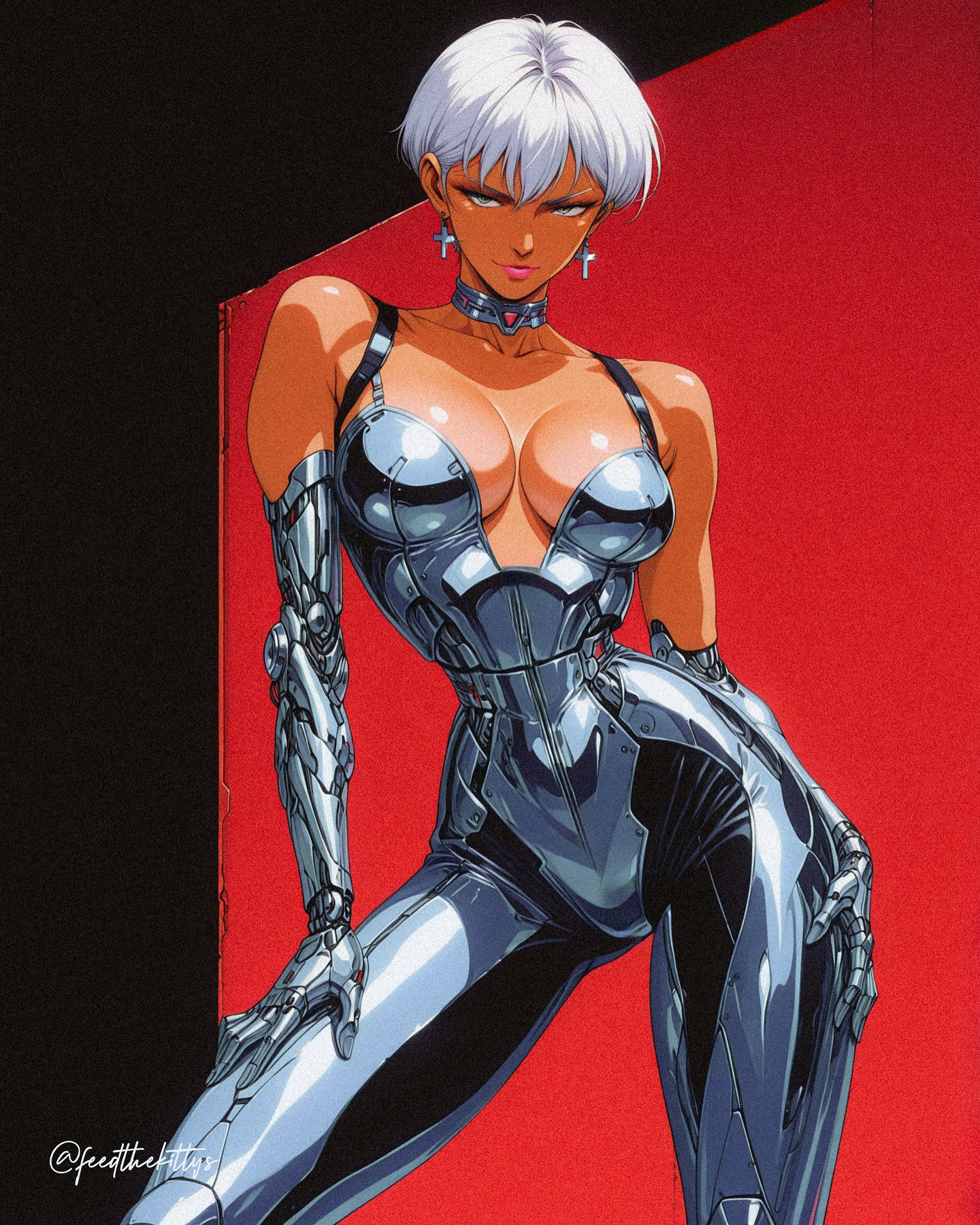
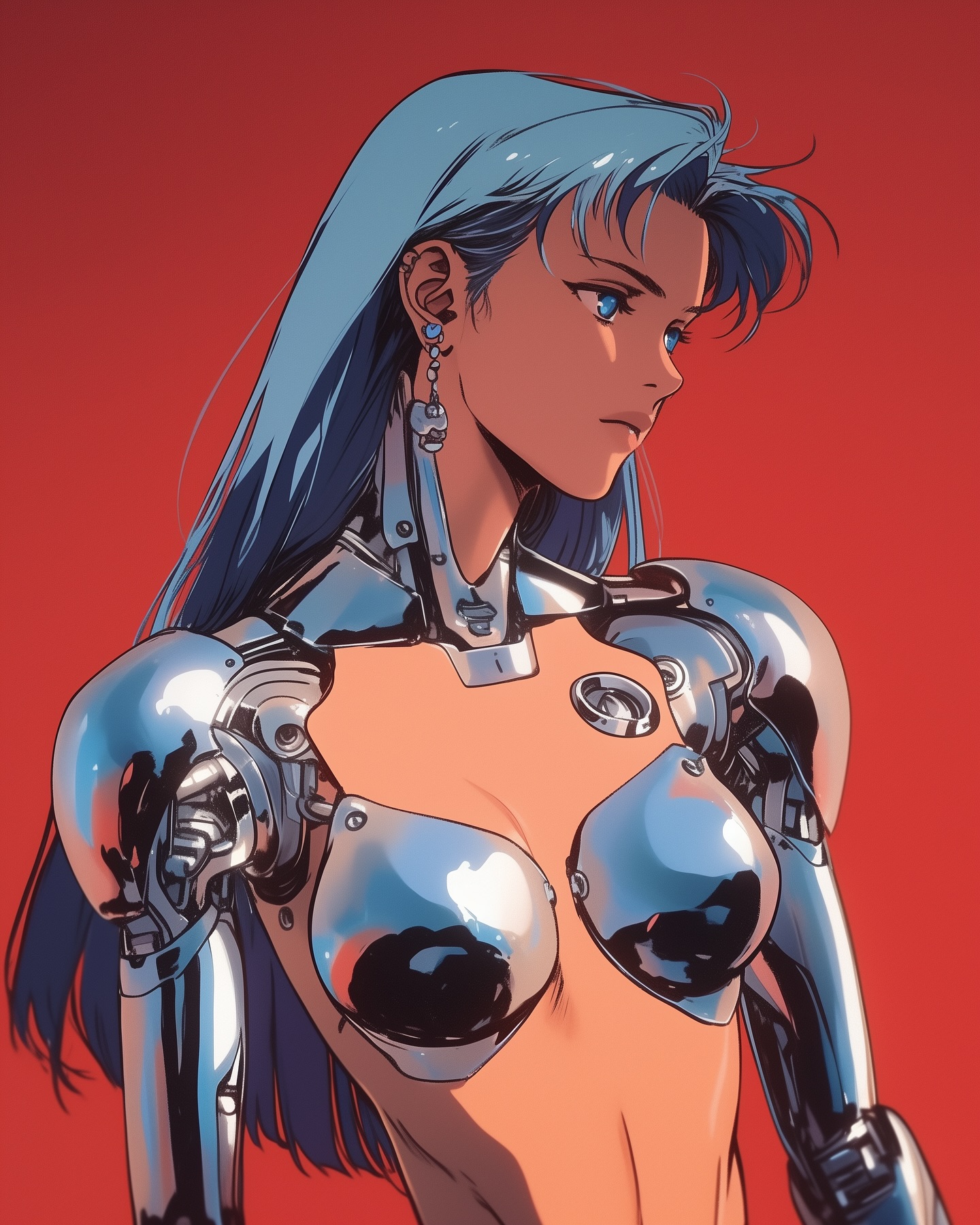
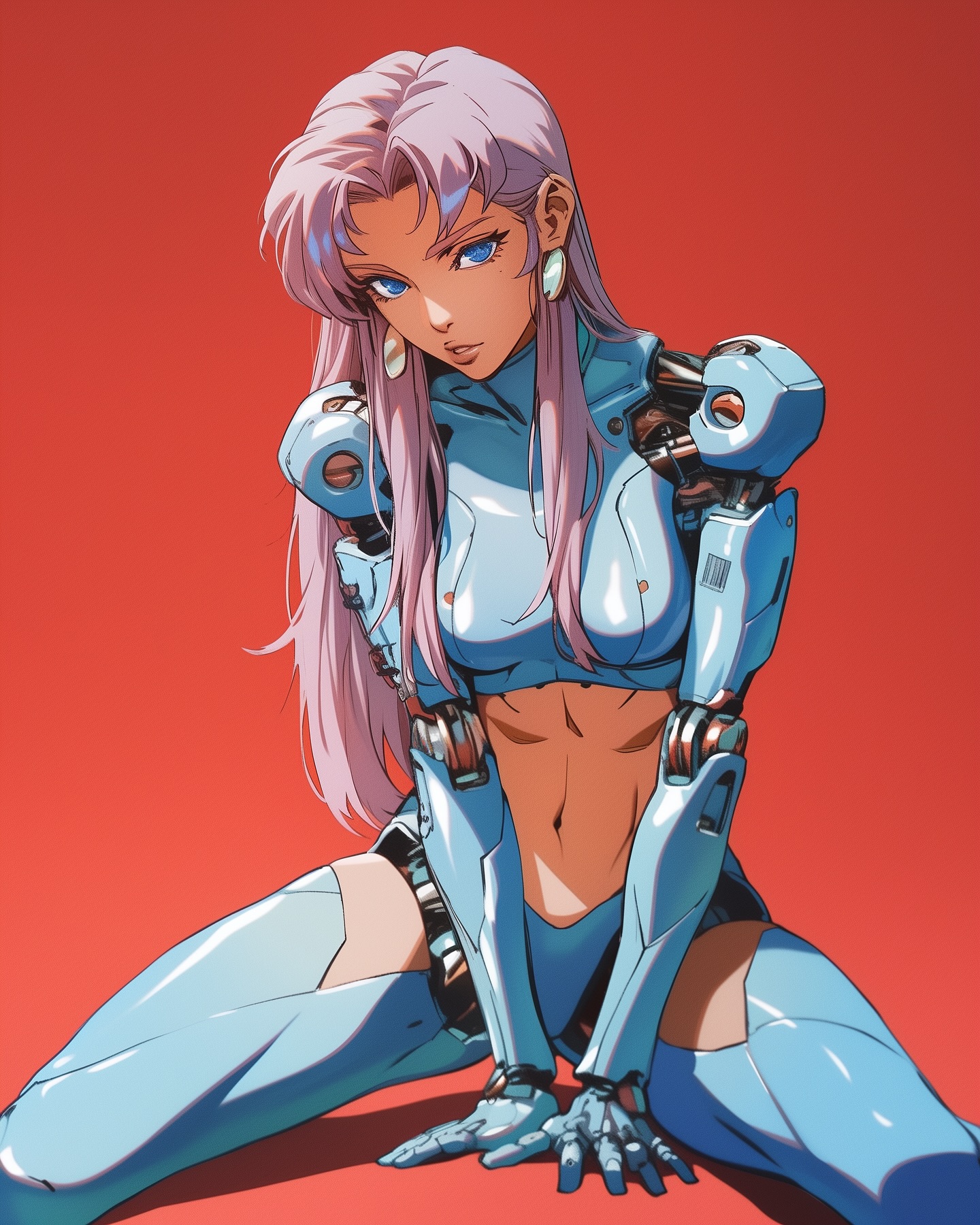
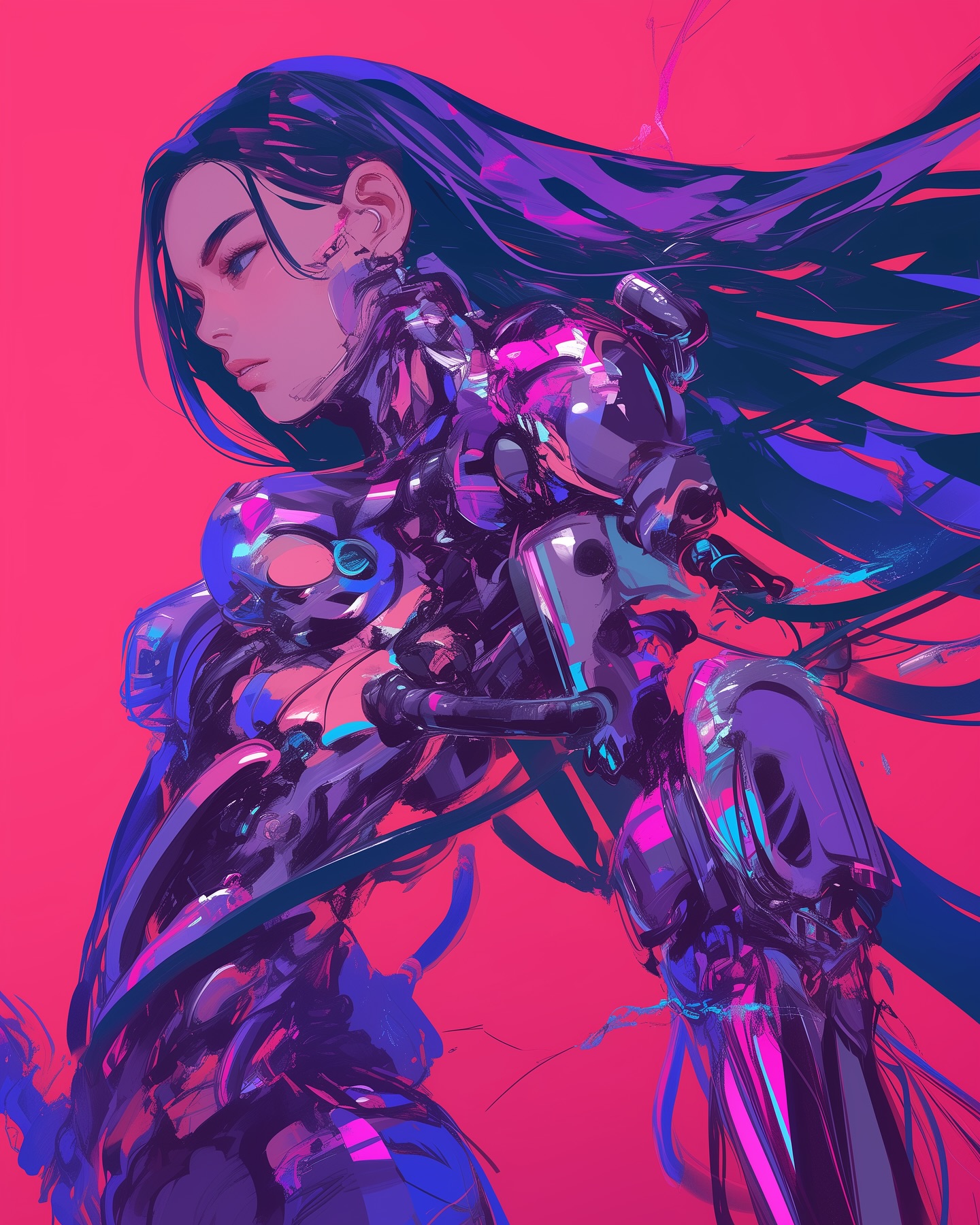
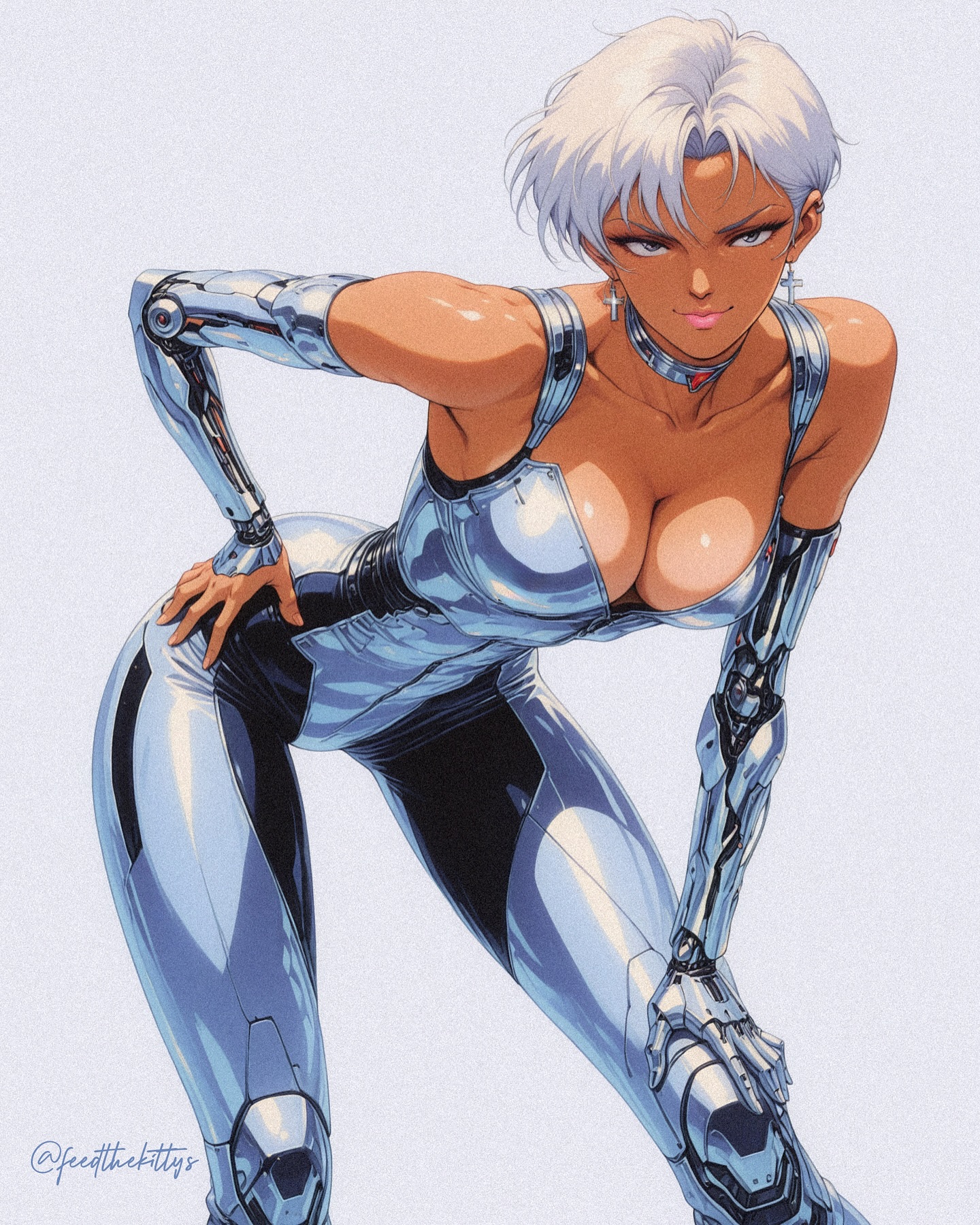
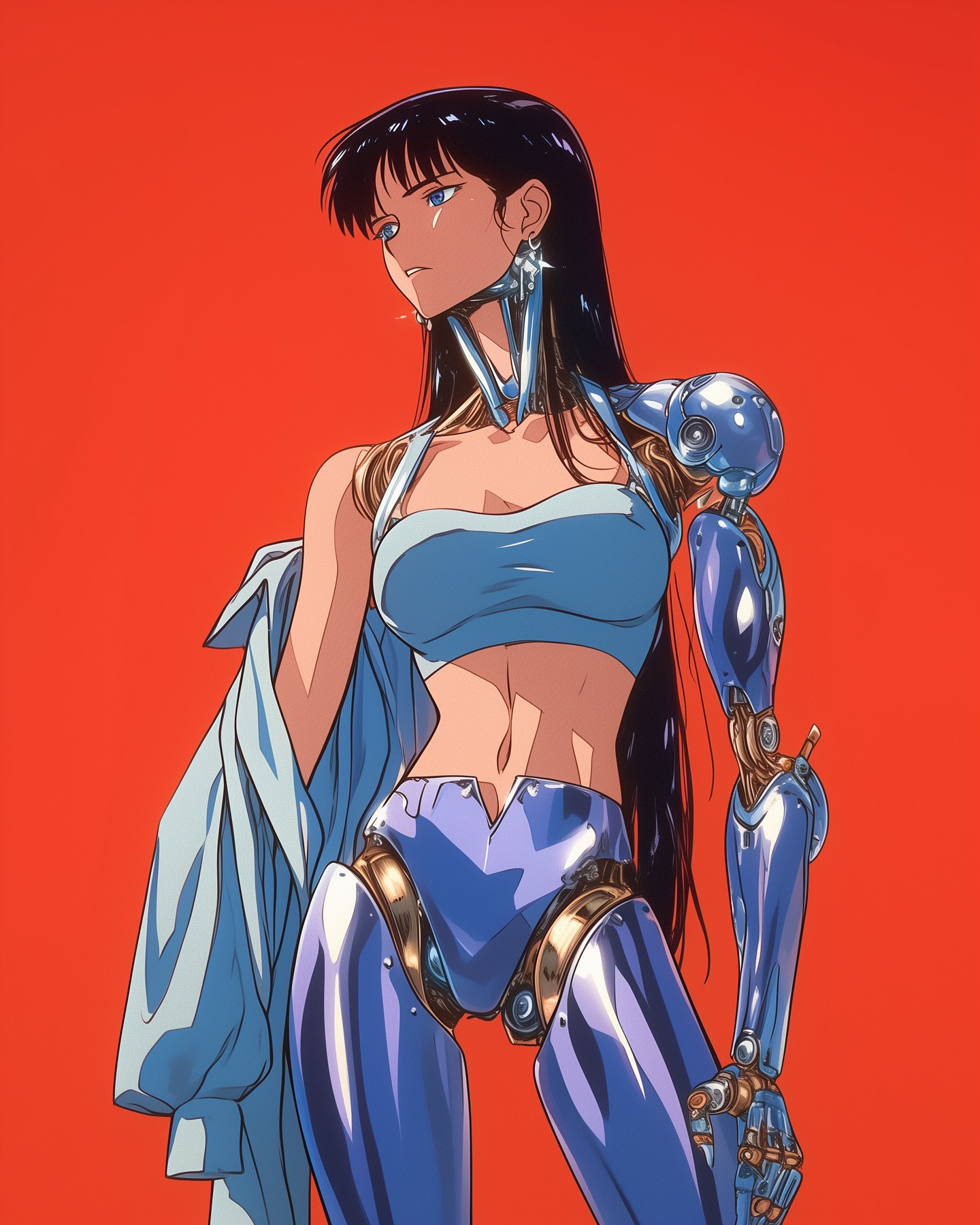
The image works because it feels engineered. The subject is centered against a hard red geometric field, and the silver armor reflects light like a machine part rather than a fabric costume. That makes the portrait feel precise and controlled. The viewer gets a clear impression of force, but it is a force that has been designed rather than improvised.
The downward gaze is key. It gives the figure a dominant read without needing a lot of motion. The low-seated or crouched stance reinforces that authority, while the mechanical arms and chrome surfaces keep the body visually complex enough to stay interesting. The frame is strong because it reduces the background to an abstract shape and lets the posture do the rest.
| Signal | Evidence (from this image) | Mechanism | Replication Action |
|---|
| Hard red panel | Geometric red backdrop cuts behind the figure | Creates a bold poster shape and isolates the subject | Use one sharp color plane or panel to anchor the composition |
| Chrome armor | Silver-black suit catches bright reflections | Turns the body into a high-contrast design object | Choose one reflective material and let the lighting define it clearly |
| Downward gaze | Eyes look out from under the brow with severity | Conveys authority without extra action | Angle the head down so the expression feels controlled and dominant |
What the aesthetic is really doing
This is a cyber portrait that treats geometry as mood. The red field is not just colorful; it creates a boundary that makes the figure feel like she is inside a manufactured stage. The black negative space around it sharpens the edges and keeps the image from getting too noisy. That discipline is what gives the portrait its expensive look.
The body pose is equally important. By leaning forward and keeping the legs apart, the subject fills the frame with a grounded, confrontational shape. There is no ambiguity about her presence. She owns the image. For creators, that is a useful recipe when you want a sci-fi portrait to feel authoritative without using weapons or action effects. Let the pose and surfaces carry the command.
| Observed | Why it matters | Recreate move |
|---|
| Silver chest armor | Creates a strong reflective focal area | Make the torso the most polished part of the design |
| Mechanical forearms | Adds future identity and hard surfaces | Use one or two clear machine limbs or panel-heavy arms |
| Black negative space | Prevents the red backdrop from becoming overwhelming | Balance one bold color plane with deep surrounding darkness |
| Low crouched posture | Signals readiness and dominance | Choose a low body angle that feels grounded instead of floating |
Best-fit uses and transfer paths
- Hard-surface cyber portraits: ideal when you want the character to feel like a precision-built icon.
- Poster-style sci-fi branding: strong for feeds that need a severe but stylish future image.
- Minimal graphic backdrops: useful when the environment should be abstract, not literal.
- Mechanical-limb character sheets: effective when the body is the main design story.
This direction is less suitable for soft futurism or story-heavy scenes. Its strength is the hard-edge, poster-quality read of the silhouette and materials.
Three transfer recipes
- Black triangle remix — Keep: hard geometric backdrop and chrome armor. Change: red panel to a black triangle with thin red rim lighting. Slot template:
{graphic_shape}, {subject} grounded power pose, {material} reflective exosuit, {mood} severe precision - White plane remix — Keep: controlled posture and reflective surfaces. Change: red field to a white angular studio plane with darker borders. Slot template:
{minimal_graphic_backdrop}, {figure} crouched stance, {palette} silver black and white, {mood} cold command - Split-panel remix — Keep: poster clarity and downward gaze. Change: single red panel to a split red-black geometric field. Slot template:
{abstract_panel}, {wardrobe} chrome sci-fi armor, {pose} low seated power stance, {mood} engineered dominance
Prompt chunks worth controlling separately
| Prompt chunk | What it controls | Swap ideas (EN, 2-3 options) |
|---|
| short white hair | Silhouette and value separation | silver bob; black hair; platinum pixie |
| glossy silver-black exosuit | Material and authority | chrome bodysuit; black lacquer armor; white steel armor |
| angled graphic red panel | Composition and mood | black triangle; split red-black field; white angular plane |
| low-seated power pose | Dominance and body language | standing frontal stance; one-knee crouch; forward lean |
| stern downward gaze | Emotional tone | cool stare; unreadable expression; narrowed eye glare |
Execution playbook
Lock three things first: the graphic backdrop, the reflective armor, and the low power pose. Those are the core supports. Once they are stable, refine the gaze and arm mechanics separately.
- Run 1: establish the red plane and the body angle.
- Run 2: refine the chrome reflections so the armor reads clearly.
- Run 3: tune the eyes and mouth so the severity stays intact.
- Run 4: test a transfer such as black triangle or split-panel without losing the same poster logic.
The broader lesson is simple. When a portrait feels designed, it becomes memorable even without narrative context.