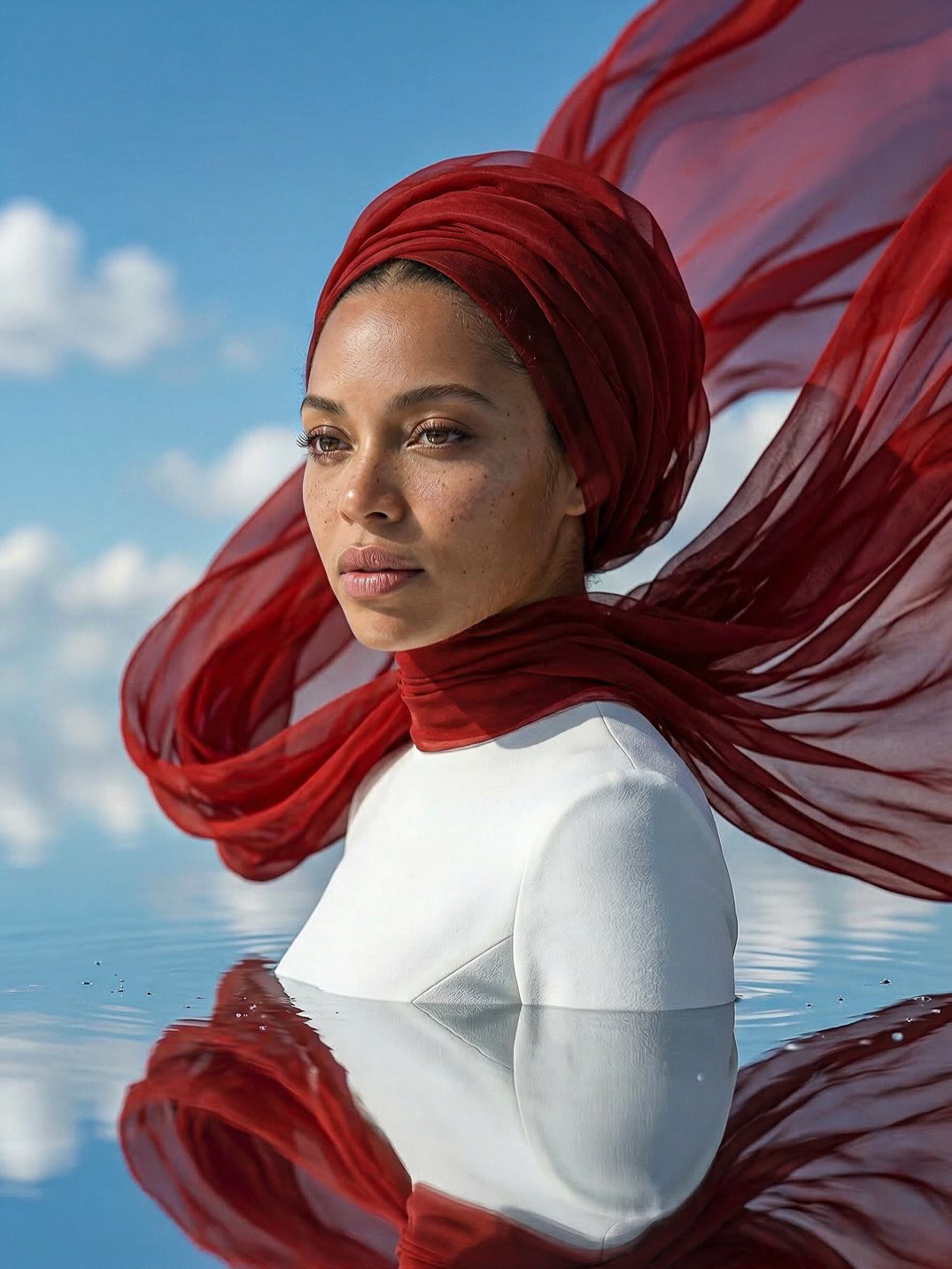
How timtadder Made This Mirror Water Anime Fashion Editorial AI Art - and How to Recreate It
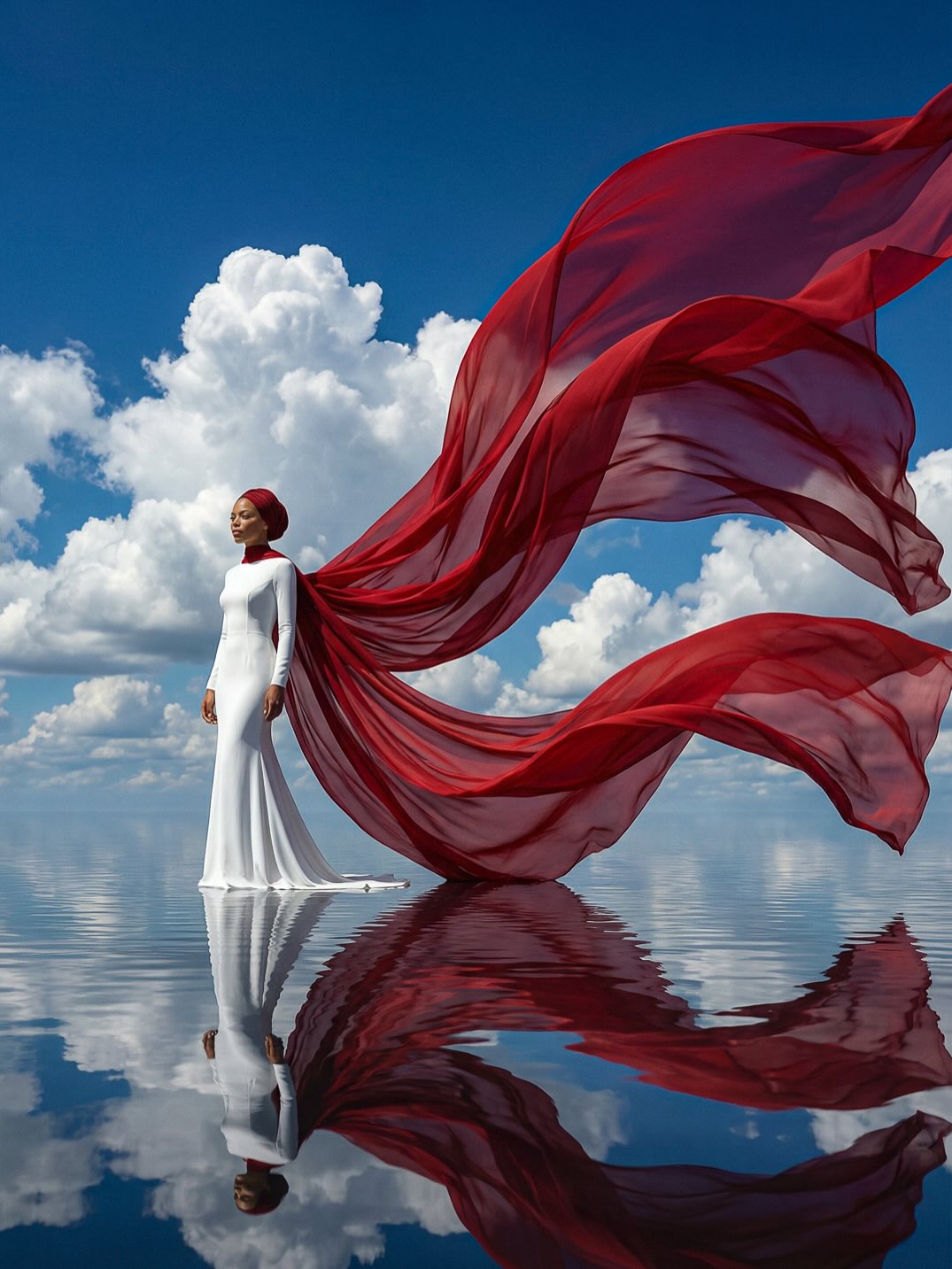
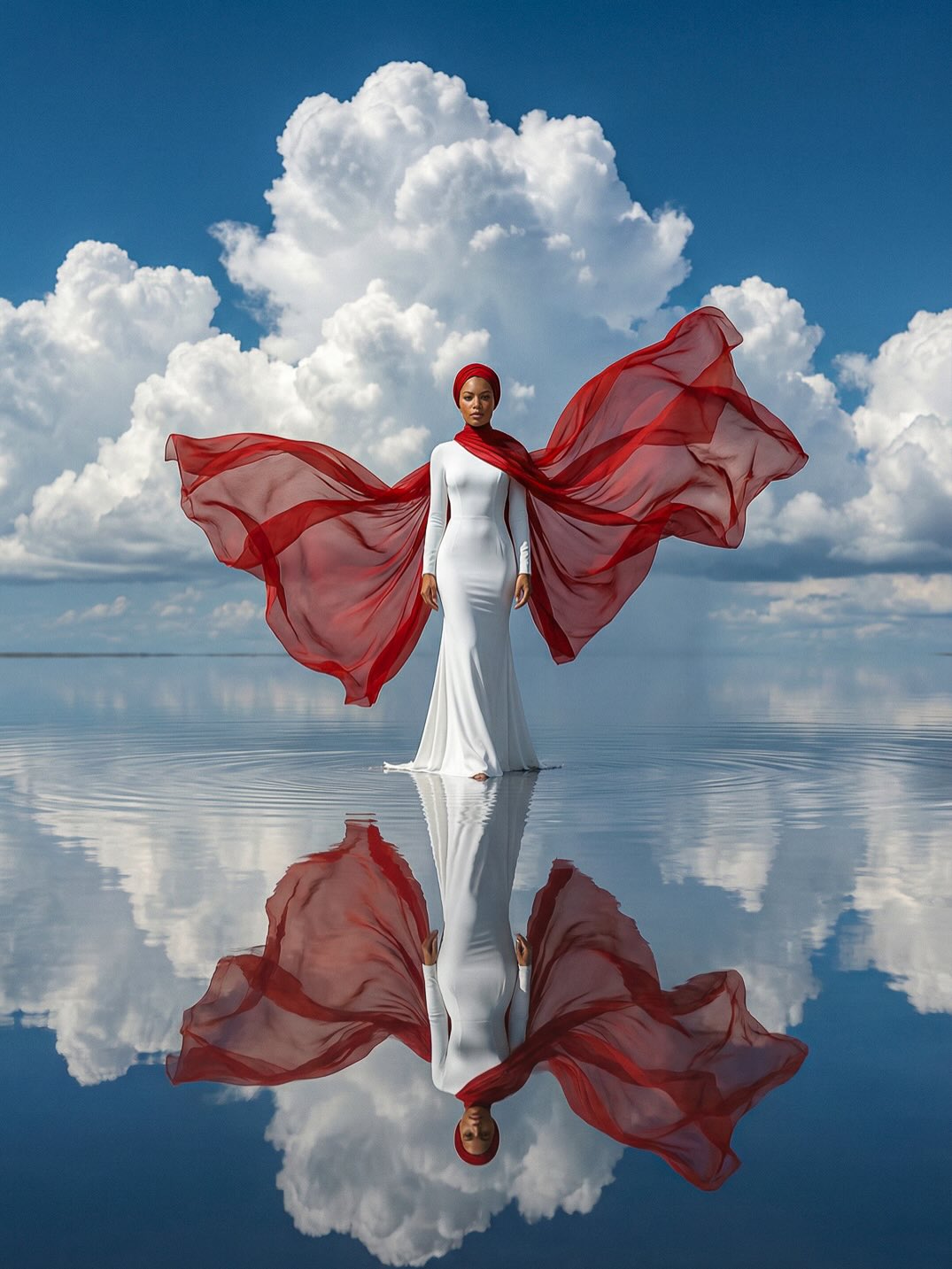
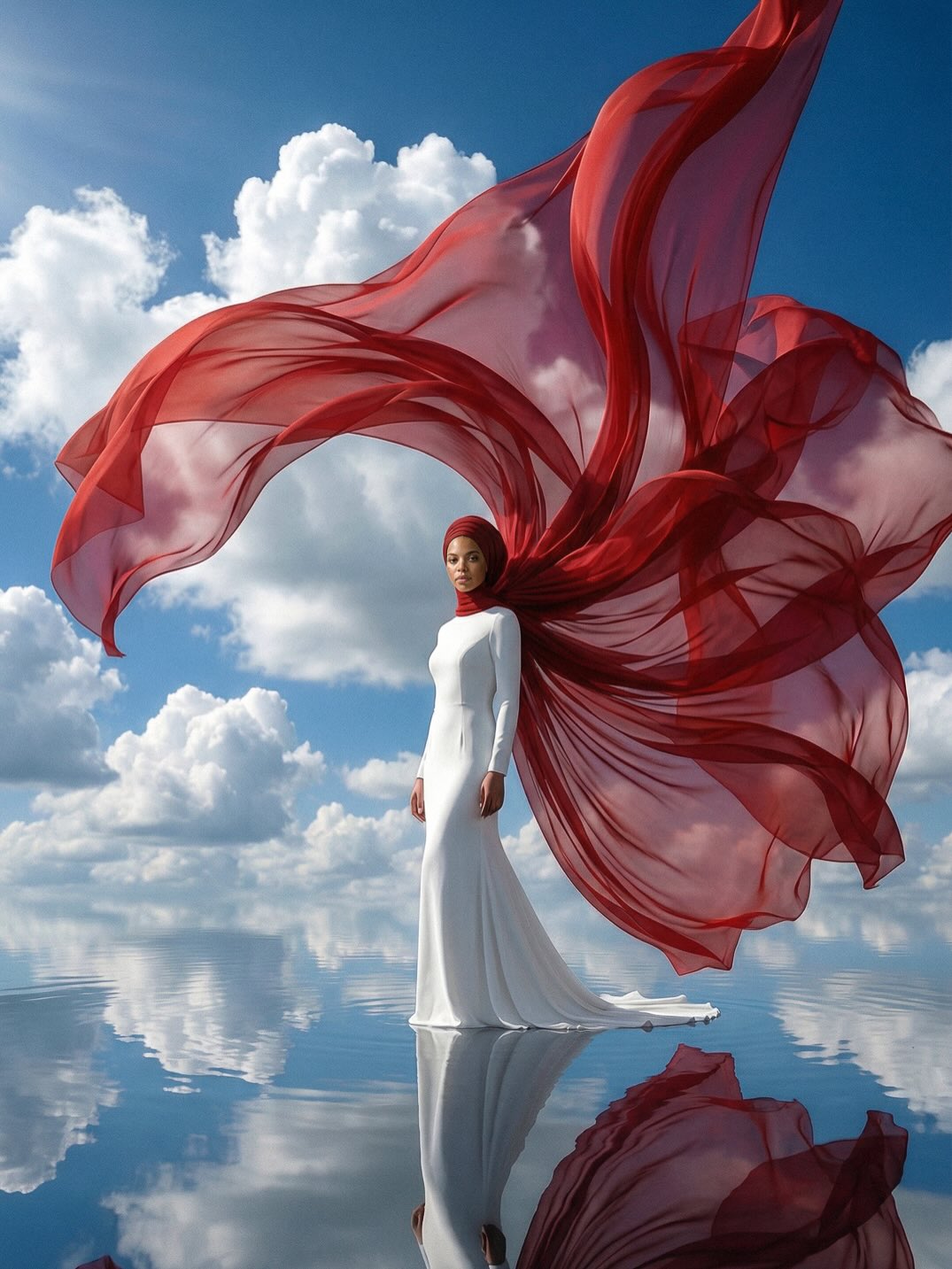
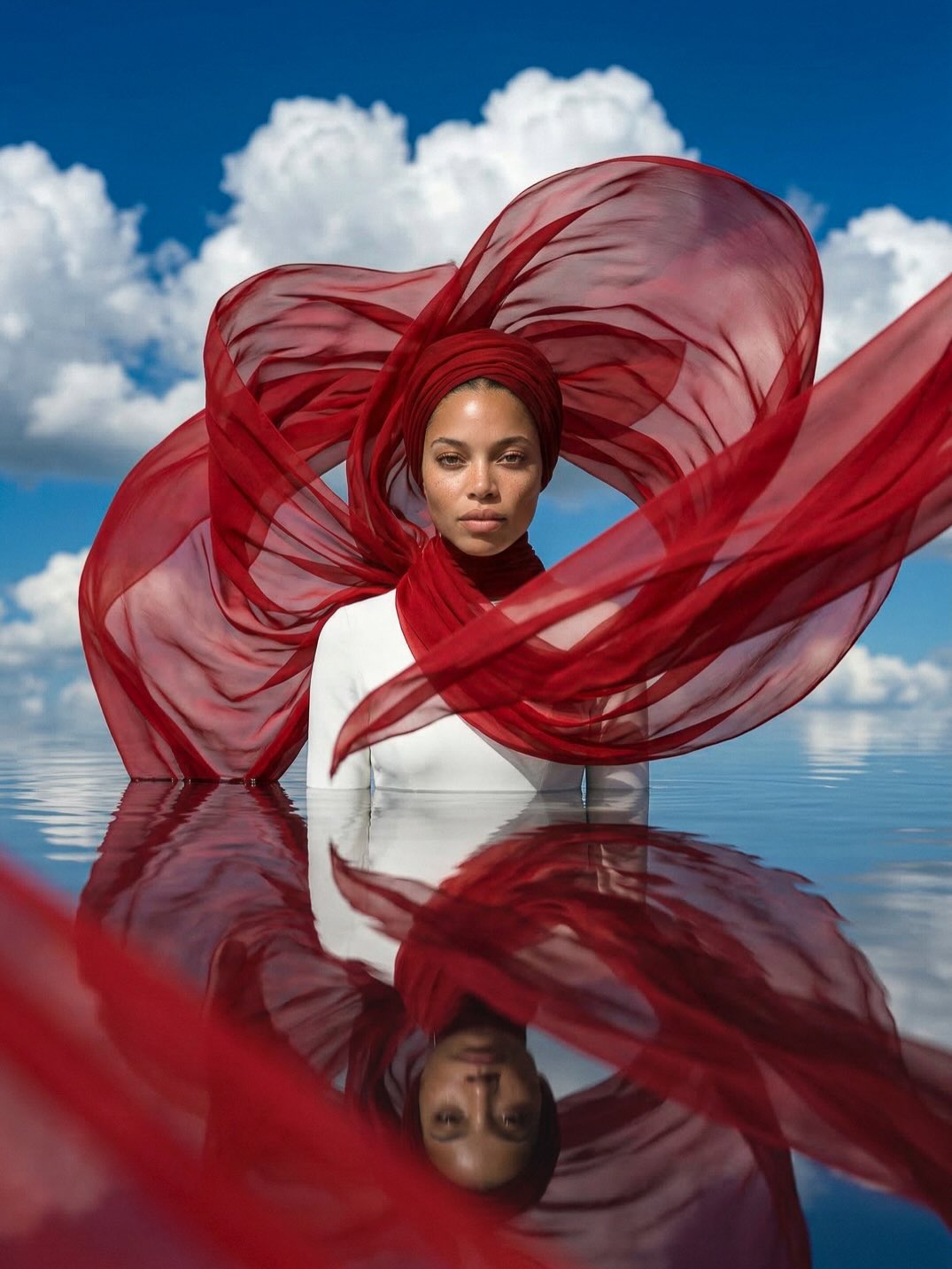
This image concept is a strong example of how editorial fashion prompt writing can expand into surreal territory without losing photographic discipline. A single woman stands on a mirror-still surface of shallow water beneath a blue daytime sky, while enormous translucent crimson fabric arcs outward from her headwrap and shoulders like a living extension of wind. She wears a fitted white floor-length gown, her reflection appears clearly beneath her, and the entire image is suspended between realism and impossible elegance. The visual appeal comes from sharp control: one figure, one palette, one open environment, one monumental textile gesture. That clarity is what makes the image feel luxurious rather than chaotic.
At first glance, the composition appears simple. But its strength lies in how few ingredients are used to create an enormous emotional field. White gown, red fabric, blue sky, cloud architecture, mirrored water, and a poised standing subject are enough to produce a frame that feels simultaneously like high-fashion campaign work, conceptual poster design, and fine-art editorial photography. For prompt builders, this is useful because it demonstrates how scale, texture, and spatial emptiness can carry a scene more effectively than clutter or heavy symbolism.
Why This Image Works as High-Fashion Surrealism
The image succeeds because it treats surrealism as an extension of fashion logic rather than as fantasy chaos. Nothing in the scene feels random. The subject is composed and upright. The dress is elegant and structurally simple. The sky is bright, not ominous. The fabric is enormous, but its movement remains graceful. The water is reflective, but not turbulent. Each element contributes to a sense of clean luxury. This restraint is what allows the scene to feel expensive rather than merely strange.
In weaker prompts, surreal fashion concepts often fail because too many dramatic ingredients compete at once. Floating objects, extra symbols, ruins, dramatic lighting, or decorative accessories can quickly weaken the central silhouette. Here, however, the subject and fabric remain the clear heart of the image. The world around them is almost empty. That emptiness is a strength, because it gives the red fabric room to perform at full scale.
This is also why the prompt should avoid unnecessary mythic language. The image does not need to become fantasy royalty, desert goddess, or celestial empress in order to feel powerful. It already has enough authority through shape, composition, and textile drama. The more the prompt preserves editorial realism, the stronger the surreal gesture becomes.
Building the Subject Correctly
The subject description should stay precise and composed. One woman, medium-brown skin, elegant posture, calm expression, and a slight turn of the head are enough to create a portrait that feels poised rather than stiff. The fitted white long-sleeve gown helps lengthen the silhouette and provides a visual anchor against the strong movement of the red fabric. Because the dress is a clean column shape rather than a heavily layered costume, it allows the textile to remain the dominant motion element in the frame.
That balance matters. If the gown became too embellished, the image would split its focus between outfit ornament and fabric spectacle. By keeping the dress simple, the prompt makes the textile the main dramatic instrument. The subject becomes a calm center around which movement unfolds. This is exactly how many strong fashion images are built: stillness in the body, motion in one controlled accessory or garment feature.
The expression should also remain quiet. A dramatic smile or intense theatrical gaze would compete with the environment. The portrait becomes stronger when the woman appears calm, self-possessed, and almost statuesque. The surrounding movement then feels even more impressive because the subject is not performing agitation. She is letting the scene happen around her while remaining fully composed.
The Importance of the White Gown
The fitted white gown is doing more than dressing the subject. It provides tonal contrast, sculptural clarity, and a sense of purity that intensifies the red fabric’s impact. White also connects visually to the bright cumulus clouds, while remaining distinct enough to keep the body readable against the mirrored water surface. In practical prompt writing, white clothing often helps surreal outdoor fashion scenes feel more elevated because it introduces simplicity, clarity, and editorial cleanliness.
The long sleeves and floor-length silhouette are equally important. Long sleeves preserve elegance and keep the figure visually streamlined. The floor-length column form makes the subject appear taller and more architectural. A shorter dress or more casual outfit would weaken the monumental tone. The image needs to feel like a campaign or museum-scale fashion poster, not a resort snapshot.
When writing similar prompts, describe the garment in structural terms: fitted, long-sleeve, floor-length, smooth, column silhouette. Structural language helps the model preserve the clean geometry of the look. Decorative language often causes drift. Here, geometry matters more than ornament.
The Red Headwrap and Monumental Fabric Extensions
The most memorable feature of the image is the immense translucent crimson fabric that expands outward from the subject’s headwrap and shoulder area. This fabric behaves almost like a sculptural weather event. It is not just a scarf. It is a spatial force that occupies most of the right side of the composition. That scale is essential. If the fabric becomes too small, the image loses its sense of fashion spectacle and starts feeling like a regular portrait with a dramatic accessory. The fabric must be large enough to shape the whole environment.
Describing the material as sheer, chiffon-like, translucent, and wind-shaped helps maintain the correct texture. The fabric should feel airy rather than heavy. It should catch light, hold color, and remain visually rich without becoming opaque. The translucency is especially useful because it keeps the giant red forms from feeling too solid or costume-like. They read as monumental, but still elegant.
The connection point also matters. The textile should clearly originate around the headwrap, neck, and shoulders, so that it feels physically tied to the subject. If the generator turns the fabric into unrelated floating ribbons, the image loses conceptual unity. The strongest version makes the textile feel like an extension of the woman’s presence rather than an object simply passing through the scene.
Mirror Water as Both Surface and Symbol
The mirror-like water plane is one of the most important parts of the composition. It does not only provide reflection; it creates a second stage beneath the subject. The reflection doubles the visual power of the figure and fabric, making the portrait feel more complete and more monumental. This reflection also grounds the surreal setting. The image may feel dreamlike, but the mirror surface obeys a kind of physical logic, which keeps the whole frame readable as photographic rather than purely fantastical.
A perfect reflective plane also increases the precision of the composition. The subject above and the reflection below create a vertical rhythm that stabilizes the dramatic sideways movement of the red textile. This means the image balances horizontal expansion with vertical symmetry. That kind of structural balance is one reason the picture feels sophisticated even while being visually bold.
In prompt writing, it helps to specify glasslike water, mirror reflection, shallow reflective plane, and full reflection visible in the lower frame. These phrases protect one of the scene’s core visual assets. If the water becomes wavy, muddy, or indistinct, the image loses much of its architectural elegance.
Sky and Cloud Design
The sky in this image is not passive background. A deep cobalt daytime sky with bright white cumulus clouds provides both color contrast and shape contrast. The clouds echo the visual massing of the red fabric, but in a softer and more diffuse way. Together, sky and fabric create a dialogue between natural atmosphere and controlled fashion gesture. The result feels expansive and premium rather than empty.
Bright clouds also strengthen the value relationship with the white gown. Both elements contribute to the composition’s brightness, while the red fabric and darker hair provide visual punctuation. This creates a clean three-part palette that is easy to read at a distance: white, red, and blue. Strong fashion images often benefit from this kind of disciplined palette architecture because it makes the concept memorable instantly.
When prompting, you should avoid vague sky terms. Use bright cumulus clouds, saturated cobalt sky, open daytime atmosphere, and high-clarity cloud detail. These descriptors help the environment remain bold enough to support the fashion scale without overwhelming the subject.
Compositional Strategy and the Power of Negative Space
The composition works best when the subject is placed left of center and the airborne textile expands to the right. This arrangement gives the frame directional energy. The eye starts with the woman, recognizes her stillness, then travels through the huge arcs of red fabric into the open sky space. Without that asymmetry, the image would feel flatter. The left-right imbalance is therefore essential to the sense of movement.
Negative space is doing serious work here. The open right side of the image is not wasted space; it is where the textile becomes sculpture. If you overcrowd the frame with more environmental elements, the image loses that breathing room. High-end fashion concepts often depend on giving one dramatic feature enough room to dominate. In this prompt, that feature is the airborne red fabric.
The low-to-mid horizon line also helps. It gives enough room above for cloud architecture and enough room below for the water reflection. This creates a tripartite structure: sky and clouds above, figure and textile at center, reflection below. That structural order is one reason the image feels like a campaign visual instead of a casual fantasy render.
Lighting and Surface Treatment
Bright daylight is the best choice for this image because it keeps all materials legible. The white gown needs crisp fold separation. The red fabric needs saturation and translucency. The water needs enough brightness to hold a believable reflection. The clouds need luminous edges. Daylight gives the image clarity and confidence. It prevents the surreal concept from becoming murky or overdramatic.
The lighting should feel frontal-side and even rather than theatrical. This is not a moody sunset image. It is a high-fashion daytime image. That distinction matters because editorial surrealism often becomes more convincing when it is rendered in clear light. Clear light makes impossible scenes feel more credible. The viewer is encouraged to accept the image at face value because everything is visible.
Surface treatment should also remain polished but realistic. The skin should be refined, not plastic. The gown should feel premium, not synthetic. The water should be reflective, not metallic. The fabric should be sheer, not cartoonishly glowing. These material choices help the whole image remain rooted in luxury photography instead of crossing into illustration.
Prompt Writing Sequence
For strong results, the order of prompt information matters. Start with the subject and pose. Then specify the gown and headwrap. After that, describe the red textile scale and translucency. Once the figure is fully built, define the environment: mirror water, limestone cliffs if needed, but especially the open sky and clouds. Then end with the camera, lighting, and stylistic framework.
This sequence ensures that the subject remains the anchor of the image. If the environment is described first, the generation may over-prioritize landscape and reduce the fashion authority of the portrait. If the fabric is described too early without anchoring the body, the model may generate abstract textile chaos. By placing subject first and movement second, the image keeps its editorial logic.
Negative prompts should explicitly block extra people, extra dress layers, city skylines, landmass clutter, opaque cloth, broken reflections, and fantasy debris. The power of the image comes from precision and reduction. Every extra element weakens the purity of the concept.
How to Keep the Result Elegant Instead of Costume-Like
The biggest risk in a concept like this is over-dramatization. The fabric is already dramatic. The sky is already dramatic. The reflection is already dramatic. Because those three elements are naturally powerful, everything else should remain controlled. The subject’s expression should stay poised. The gown should remain minimal. The pose should remain upright. The background should remain mostly empty. This is one of the core rules of high-fashion surrealism: once one design element becomes monumental, the rest of the frame must simplify.
If the image starts looking theatrical, reduce narrative adjectives and return to editorial ones. If the red fabric becomes too costume-like, reinforce chiffon, translucency, and wind-shaped elegance. If the portrait starts looking like fantasy art rather than fashion photography, strengthen the words commercial finish, editorial realism, and campaign styling. Those cues help pull the image back into the right lane.
Remember that elegance often depends on friction between stillness and movement. The figure stays still. The fabric moves. The sky is open. The reflection is stable. That balance is what makes the whole image feel intentional rather than overloaded.
Why This Prompt Has Strong Poster and Campaign Potential
This kind of image works exceptionally well for poster design because it combines icon clarity with visual scale. The subject is isolated enough to read instantly, but the fabric and sky create enough drama to make the frame feel larger than life. The empty water and sky regions also provide graphic breathing room, which is useful in layouts where typography or branding may later be added.
The palette is another advantage. White, crimson, and cobalt create immediate recognition and strong color separation. This means the image remains memorable even in thumbnail form or at distance. Many campaign images succeed for exactly this reason: they use few elements, but each element has strong visual identity.
Because the concept is minimal yet monumental, it can function equally well in editorial spreads, lookbook covers, runway teasers, fashion-brand storytelling, or AI prompt libraries. It is not locked to one narrative use case. That flexibility comes from the prompt’s disciplined construction.
Final Takeaway
To create a successful surreal fashion portrait on mirror-still water, begin with a calm, elegant subject in a fitted white gown. Anchor her with a red headwrap that expands into monumental translucent fabric forms. Place her on a reflective water plane beneath a cobalt sky filled with bright cumulus clouds. Keep the composition left-weighted, the negative space generous, the lighting clean, and the materials believable. Then let the red fabric become the dominant visual force without overwhelming the human center of the image.
The strongest version of this concept will feel like a premium campaign still from a world that is slightly impossible but fully convincing. That is the real power of the prompt. It uses the grammar of commercial fashion photography to create a scene that feels larger, quieter, and more mythic than ordinary reality, while still staying precise enough to feel photographically real.