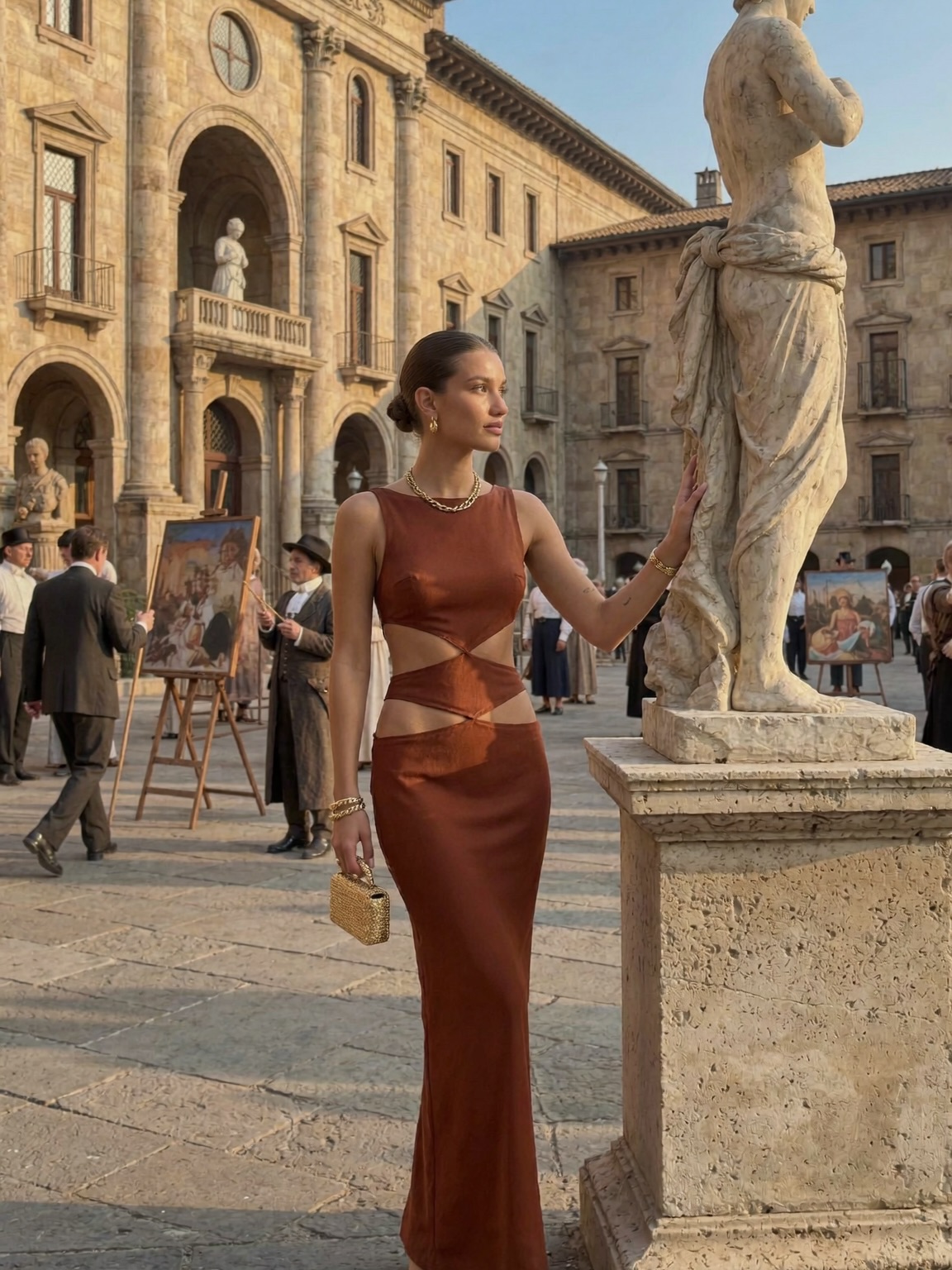

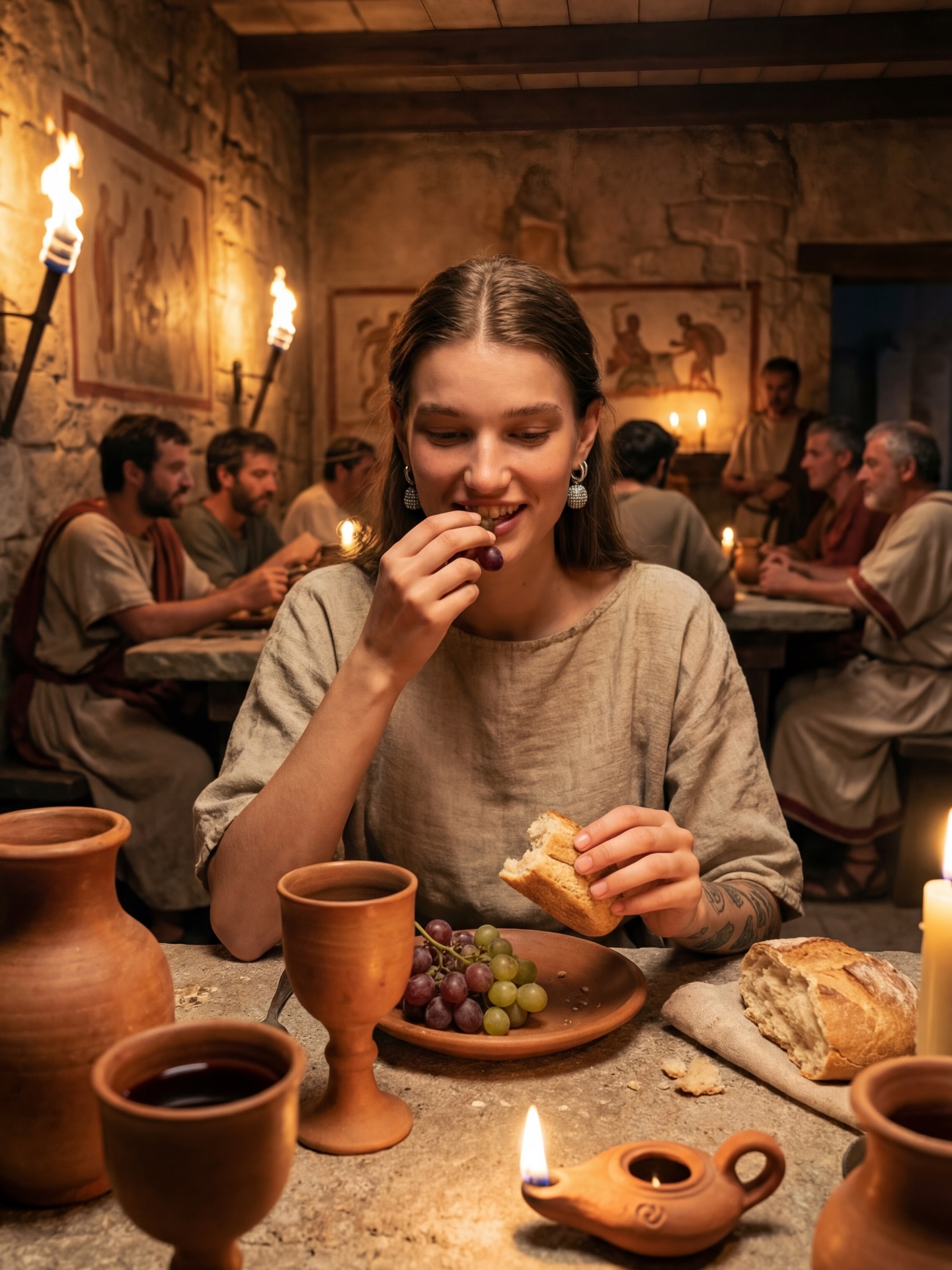
Lately 😎 I don’t mind being lost in history tbh #historyvlogger #chloevshistory #timetraveller #ancientrome #ancientegypt
Lately 😎 I don’t mind being lost in history tbh #historyvlogger #chloevshistory #timetraveller #ancientrome #ancientegypt
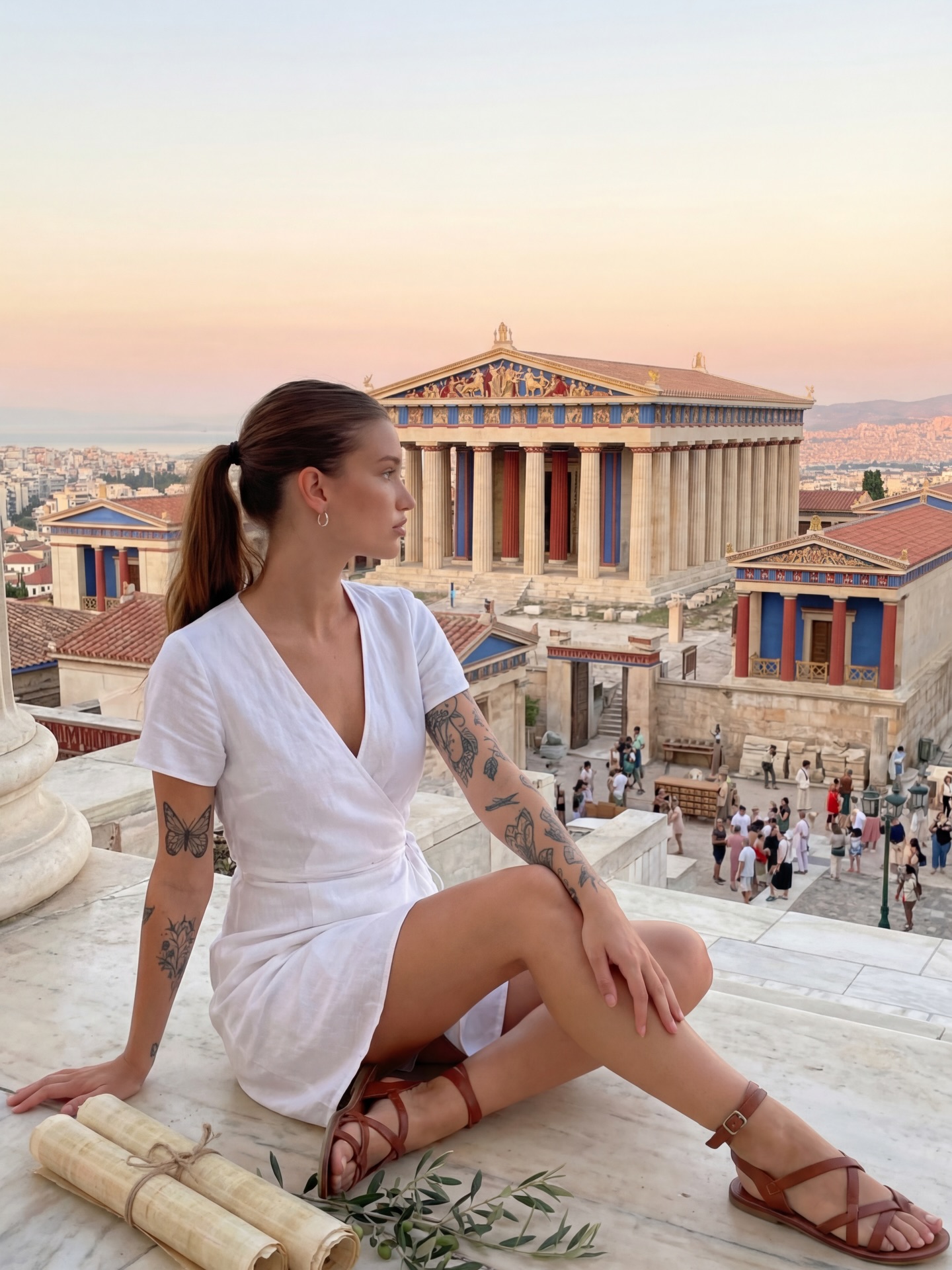
This is the kind of post that looks effortless and still racks up engagement: one creator, one iconic place, one clear emotion. For a history-travel creator like Chloe VS History, the location isn’t just scenery—it’s the story engine.
The hook here is recognition. Even if someone can’t name the exact spot, they know it’s ancient, famous, and real. That instantly upgrades the post from “pretty photo” to “I want to be there.”
Then the frame layers a second hook: roleplay. The scrolls and olive branches are tiny props, but they whisper “historian” and “time traveler.” They turn a travel photo into a character moment—perfect alignment with the caption’s vibe of being “lost in history.”
Finally, the lighting does a lot of invisible work. Golden-hour pastel skies plus bright stone surfaces create a soft, expensive look that feels cinematic but still believable. Viewers stop because it feels like a scene, not a snapshot.
| Signal | Evidence (from this image) | Mechanism | Replication Action |
|---|---|---|---|
| Iconic landmark proof | Classical temple dominates the background | Instant trust + aspiration; location becomes the hook | Choose one recognizable architectural form and keep it readable (don’t blur it away) |
| Character props | Rolled scrolls + olive branches on the stone | Turns travel into narrative (“I’m in a story”) | Add 1–2 small themed props and name them explicitly in the prompt |
| Foreground subject, background story | Subject in left foreground; temple centered behind | Creates depth and makes the viewer scan the image longer | Lock a layered composition: subject foreground + landmark background + sky negative space |
| Golden-hour palette | Pastel sunset sky; warm stone tones | Feels cinematic and “expensive,” boosts shareability | Use “golden hour, pastel gradient sky, warm stone bounce fill” |
Recipe 1: Ancient Egypt vibe
{ancient landmark} {white minimal outfit} {two small props} {reflective pose}Recipe 2: Ancient Rome sunset
{roman ruins} {wardrobe} {prop pair} {pastel sunset gradient}Recipe 3: Modern museum “time traveler”
{museum scene} {minimal outfit} {research props} {quiet cinematic light}The aesthetic is “quiet cinematic.” The white wrap dress keeps the subject clean and timeless against the textured stone. The pastel sky is soft, not dramatic, so the mood reads as reflective rather than epic. And the composition does the classic travel-editorial trick: put the person close, put the monument big, and leave the sky open so the scene can breathe.
| Observed (concrete) | Recreate (prompt control) |
|---|---|
| Subject in left foreground; monument centered behind | “layered composition, subject foreground left, landmark centered background” |
| Golden-hour pastel gradient sky | “pastel sunset gradient sky, peach to pale blue, clear weather” |
| Bright stone bounce fill | “warm soft key light + stone bounce fill, gentle shadows” |
| Minimal wardrobe and props | “white wrap dress, two small props (scrolls + olive), no clutter” |
| Prompt chunk | What it controls | Swap ideas (EN, 2–3 options) |
|---|---|---|
| Landmark specificity | SEO relevance + recognizability | “Acropolis temple” / “Roman forum arches” / “Egyptian columns” |
| Wardrobe minimalism | Timeless feel; avoids trend noise | “white wrap dress” / “linen tunic” / “simple neutral two-piece” |
| Prop pair | Narrative identity (“historian”) | “scrolls + olive” / “map + compass” / “notebook + sketch” |
| Golden-hour light | Cinematic softness and warmth | “pastel sunset” / “late afternoon warm sun” / “blue hour soft ambient” |
| Composition layers | Depth and scroll-stopping clarity | “foreground subject + landmark background” / “silhouette + wide vista” / “over-the-shoulder landmark” |
Ultra-realistic travel/editorial photo.
{one person} seated on {pale marble steps}, {white wrap dress}, {brown strappy sandals}
{two small props} (rolled scrolls, olive branches)
{Acropolis/Parthenon-like Greek temple} in the background, tourists far below
portrait 3:4, 28–35mm travel lens feel, moderate depth of field
golden hour pastel gradient sky, warm soft key light, stone bounce fill
no foreground crowds, no modern signage, no textChange only 1–2 knobs per run. Keep the composition and light stable while you test variations in landmark or props.