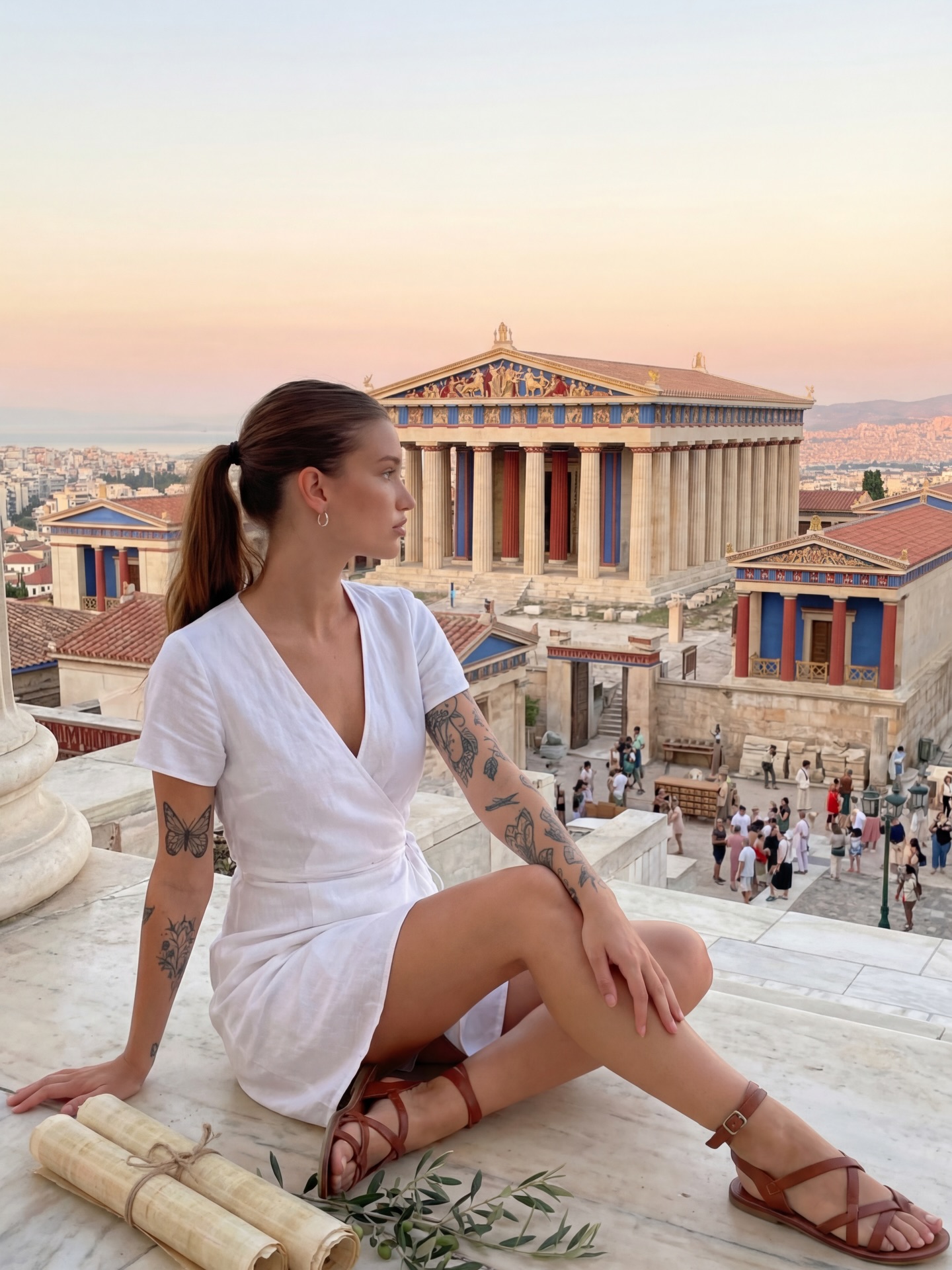
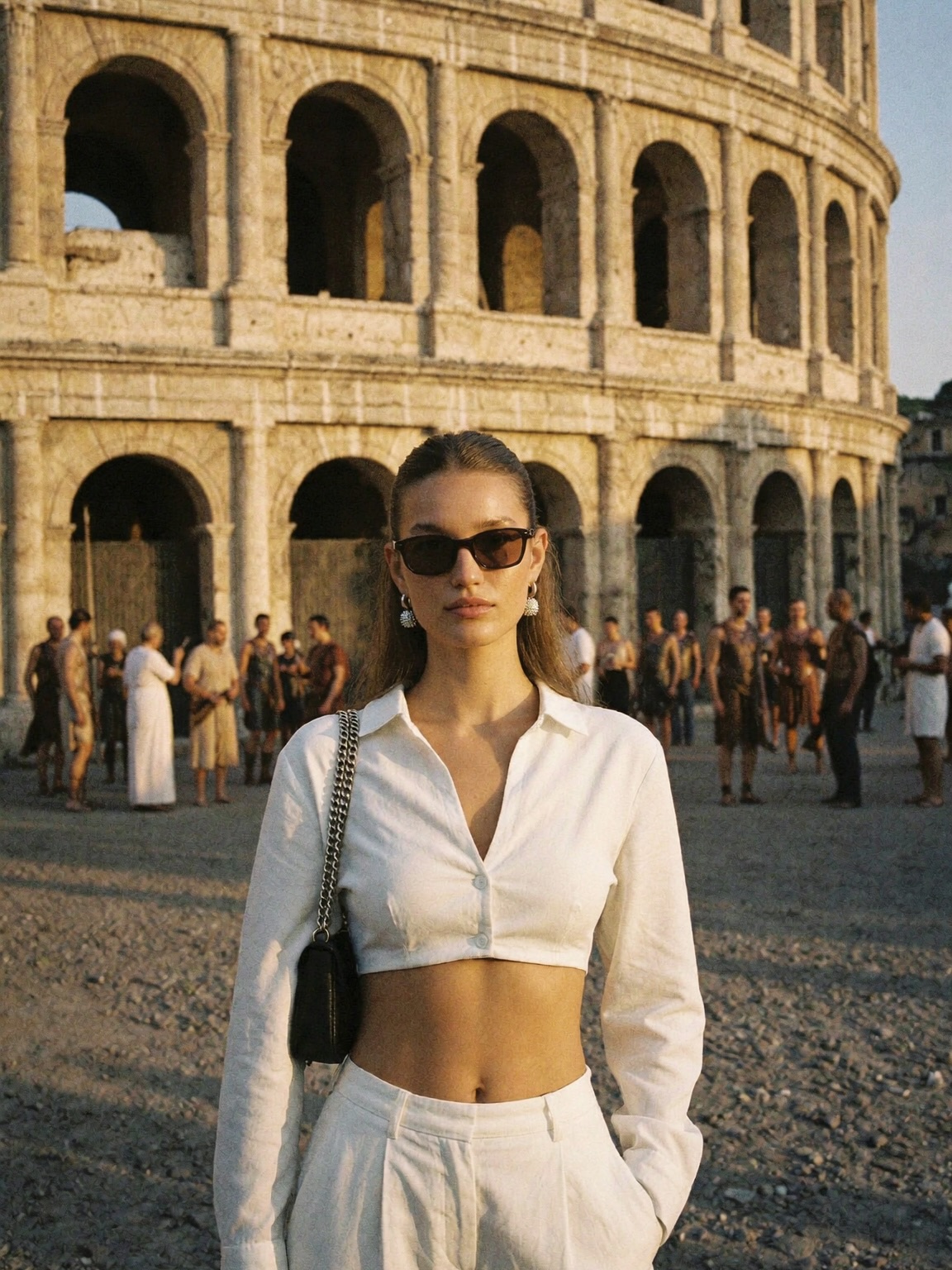
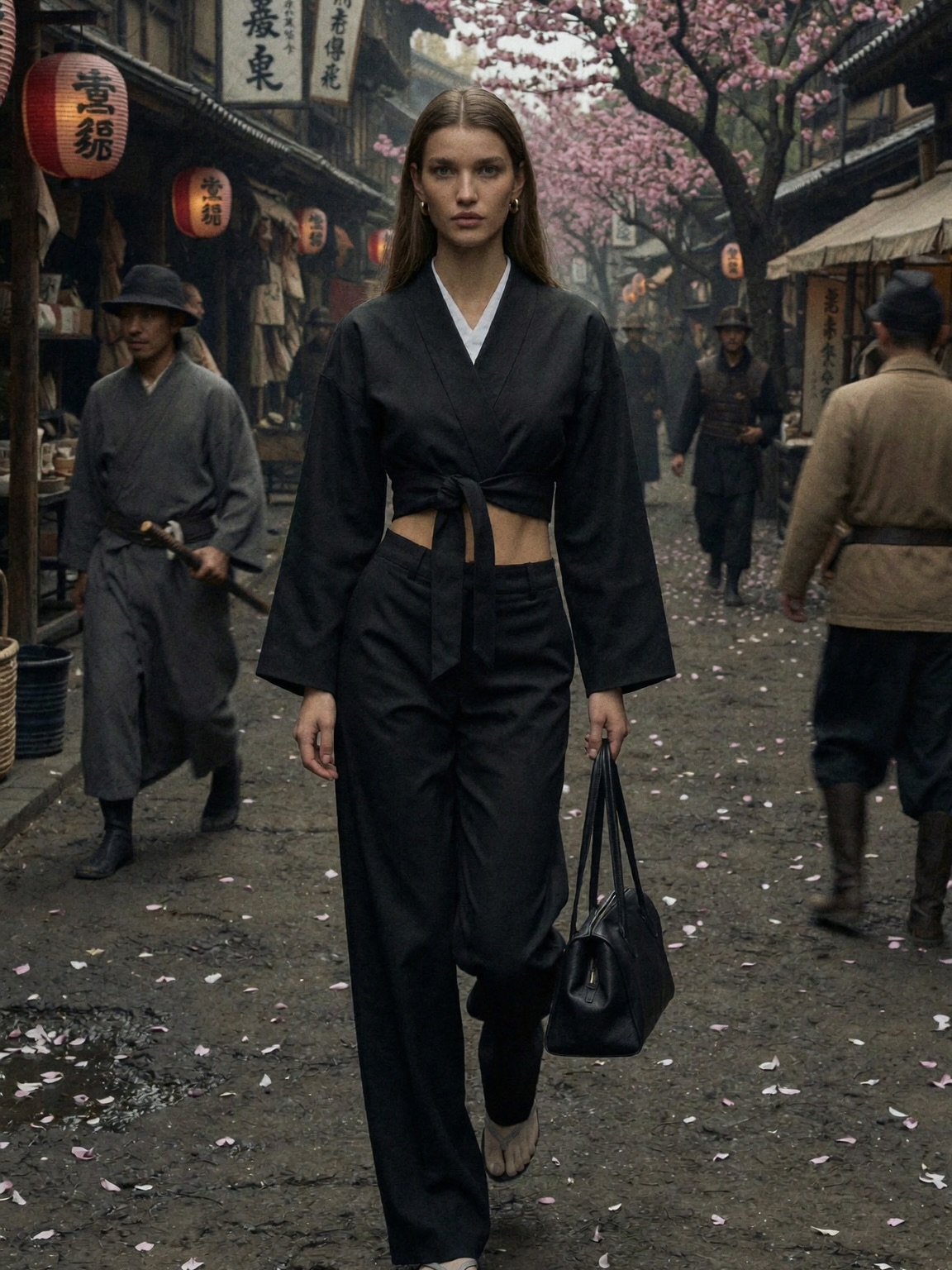
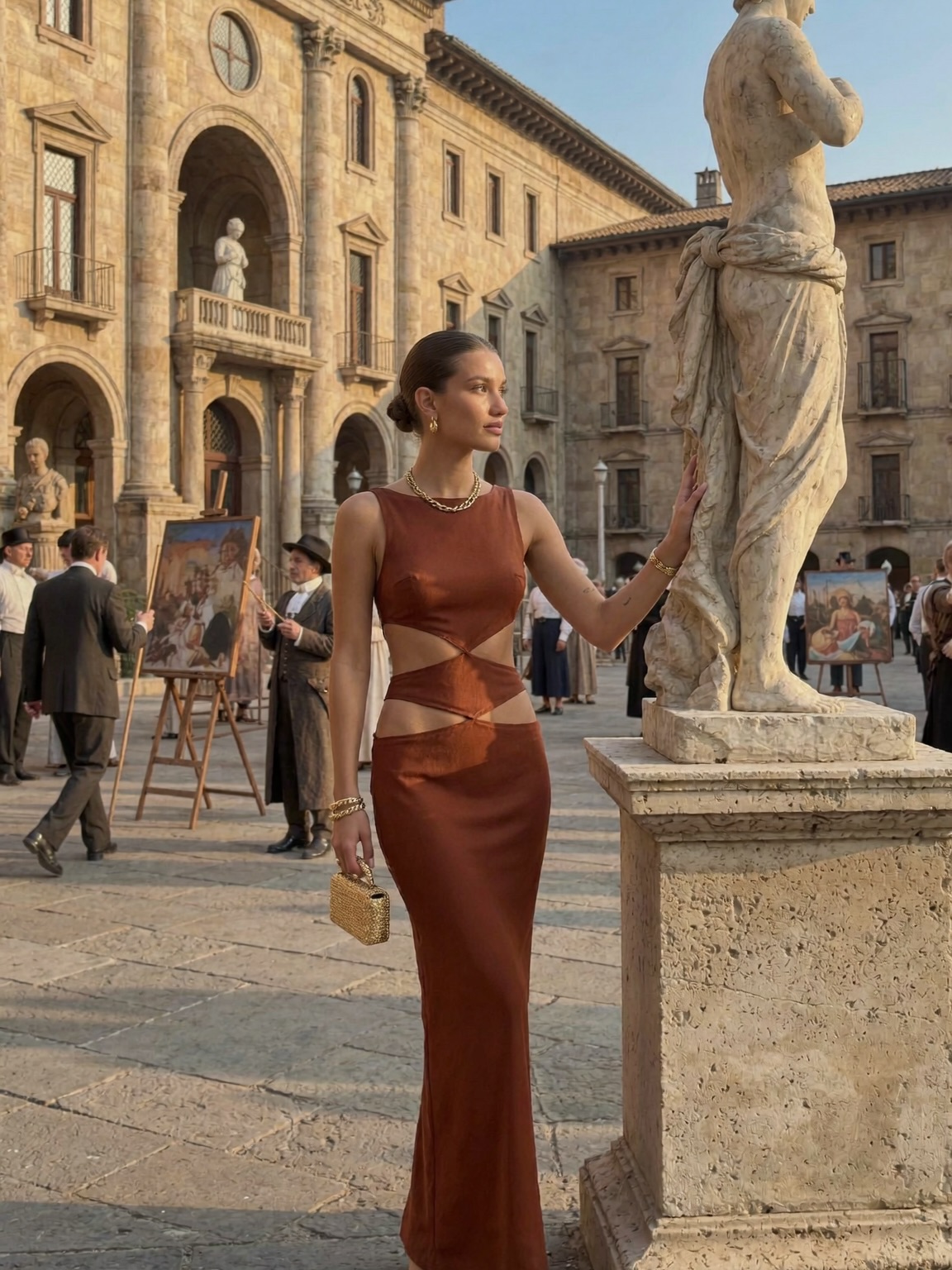

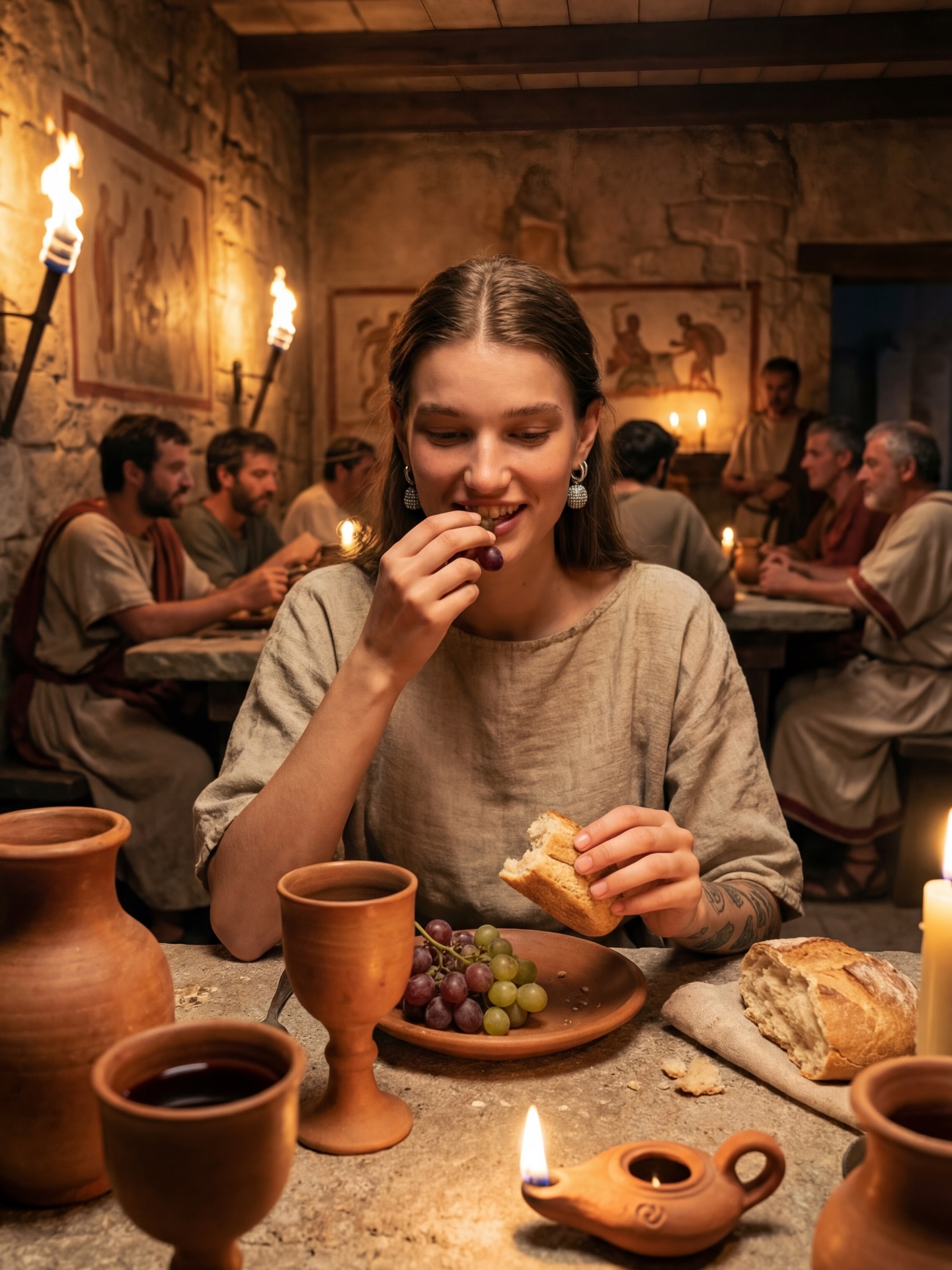
Lately 😎 I don’t mind being lost in history tbh #historyvlogger #chloevshistory #timetraveller #ancientrome #ancientegypt
Lately 😎 I don’t mind being lost in history tbh #historyvlogger #chloevshistory #timetraveller #ancientrome #ancientegypt
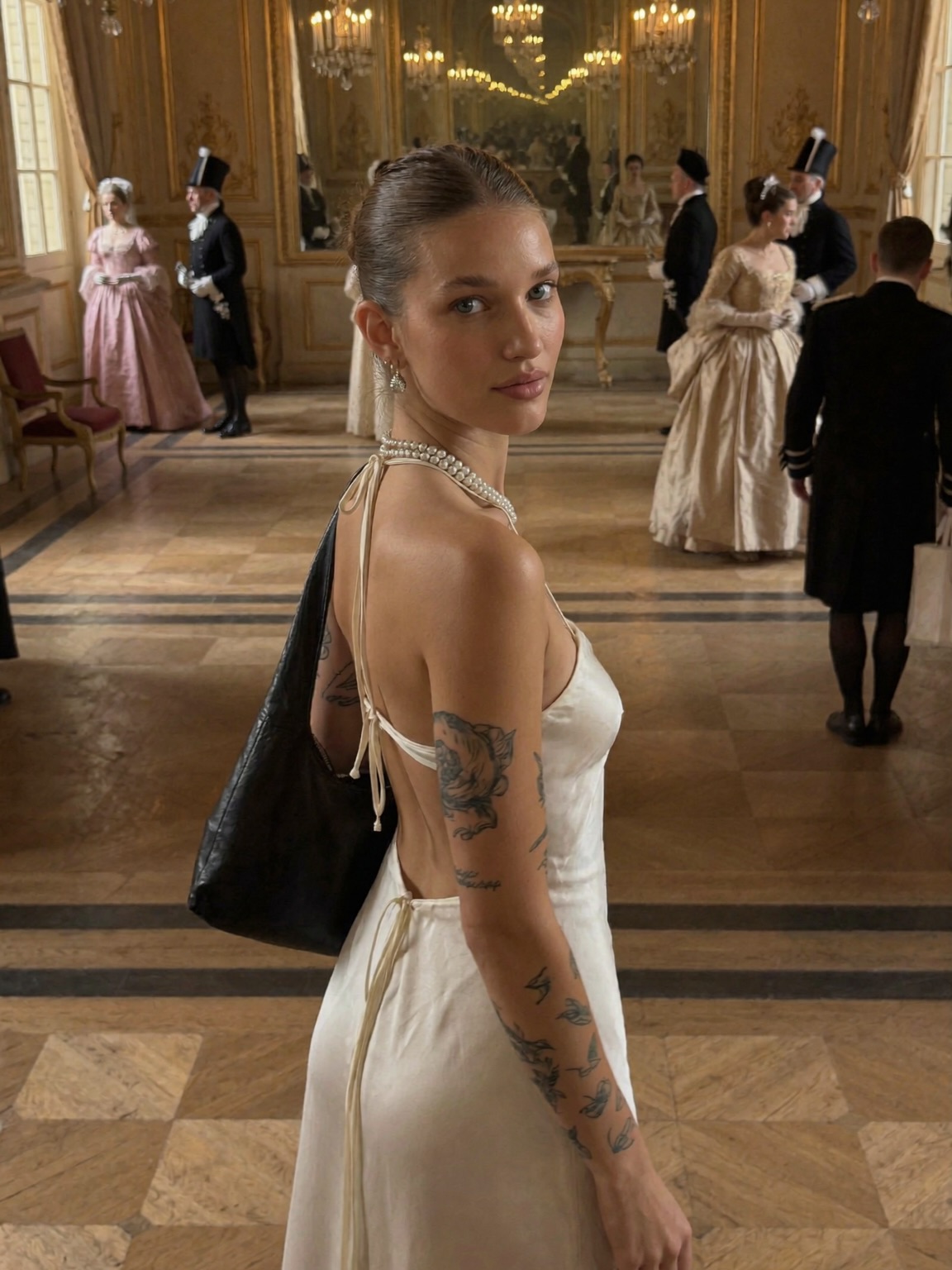
This image is a perfect example of “lost in history” content done right. It’s not just a costume moment—it’s a story. For creators in the history/travel lane (like Chloe VS History), this kind of frame performs because it lets viewers step into a scene and imagine themselves there.
The first reason people stop is the cinematic setting. Mirrors, chandeliers, parquet floors—your brain instantly tags it as “period drama,” even before you process the outfit. The second reason is the look-back gesture. A subject walking away but turning back to meet the camera creates tension: it feels like the scene continues after the frame.
But the real secret is contrast. The styling is timeless—pearls, satin, an elegant silhouette—yet the tattoos and the black tote introduce a subtle modern edge. That tension reads as “time traveler,” which is exactly the kind of identity hook people comment on: Where is this? What era is this? Is it a film set?
Finally, the warm chandelier light makes everything feel expensive. It’s soft enough to flatter but directional enough to make the satin catch highlights—so the image keeps its punch even after social compression.
| Signal | Evidence (from this image) | Mechanism | Replication Action |
|---|---|---|---|
| Over-the-shoulder glance | Subject walking away, turning back to camera | Creates narrative tension; viewers pause to “read” the scene | Lock pose: “walking away, look back over left shoulder, direct eye contact” |
| Period-drama environment | Chandeliers, mirrors, ornate gold walls, parquet floor | Instant genre recognition (cinema memory) | Choose 3 anchors: chandeliers + mirrors + parquet, and keep them readable |
| Modern-vs-vintage contrast | Pearls and satin + visible tattoos and tote bag | Feels like a “time traveler” character | Add one modern detail (tattoos/bag) while keeping wardrobe classic |
| Warm chandelier lighting | Soft warm highlights on satin and face | Luxury feel; better skin tones; stronger perceived quality | Prompt “warm chandelier light from above, soft glow, cinematic warm grade” |
Recipe 1: Ancient Rome banquet hall
{historical hall} {classic outfit} {one modern detail} {look-back pose}Recipe 2: 1920s jazz club
{1920s club} {wardrobe} {lighting fixtures} {over-shoulder glance}Recipe 3: Modern museum, “time traveler” twist
{museum gallery} {satin + pearls} {one modern prop} {quiet cinematic light}The aesthetic is “quiet luxury meets story.” The satin catches light, the pearls give a classic anchor, and the background stays softly readable—enough detail to feel real, not so much that it competes with the subject. The tattoos are the modern signature that keeps it from feeling like a costume rental photo.
| Observed (concrete) | Recreate (prompt control) |
|---|---|
| Warm chandelier glow from above | “warm chandelier lighting, soft overhead highlights, gentle shadows” |
| Mirrors and ornate walls as genre anchors | “ornate ballroom, mirrors reflecting chandeliers, gold wall molding” |
| Over-shoulder look-back with direct eye contact | “walking away, turning back over left shoulder, direct eye contact” |
| Classic styling + one modern edge | “satin dress + pearls + visible tattoos + black tote bag” |
| Prompt chunk | What it controls | Swap ideas (EN, 2–3 options) |
|---|---|---|
| Pose / glance | Narrative tension | “look-back over shoulder” / “half-turn mid-step” / “glance into mirror” |
| Wardrobe material | Luxury cues and light behavior | “white satin” / “black velvet” / “champagne silk” |
| Environment anchors | Era recognition | “chandeliers + mirrors” / “opera house balconies” / “palace corridor” |
| Lighting warmth | Cinematic mood | “warm chandelier” / “candlelit” / “soft window light” |
| Modern detail | Time-traveler twist | “tattoos” / “modern tote bag” / “smartphone hidden (subtle)” |
Ultra-realistic editorial photo.
{one woman} walking away, turning back over left shoulder, direct eye contact
white satin halter open-back dress, layered pearl choker, pearl earrings
visible arm tattoos, black tote bag
ornate ballroom with chandeliers and mirrors, parquet floor, period-costume guests in background (soft blur)
warm chandelier lighting, cinematic warm grade, shallow-to-moderate depth of fieldChange only 1–2 knobs per run. Keep pose and lighting stable while you test era shifts (Rome vs 1920s vs museum).