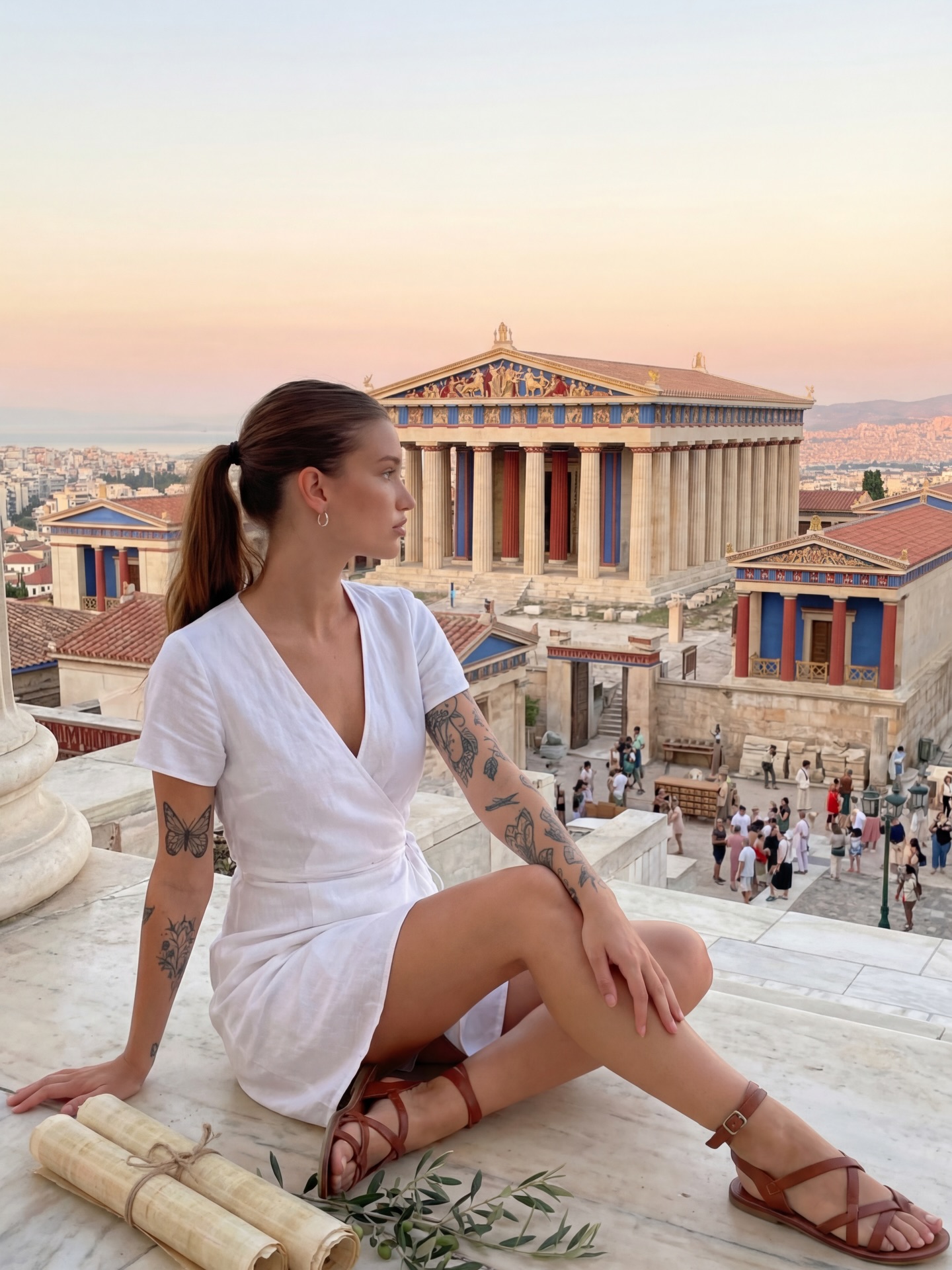
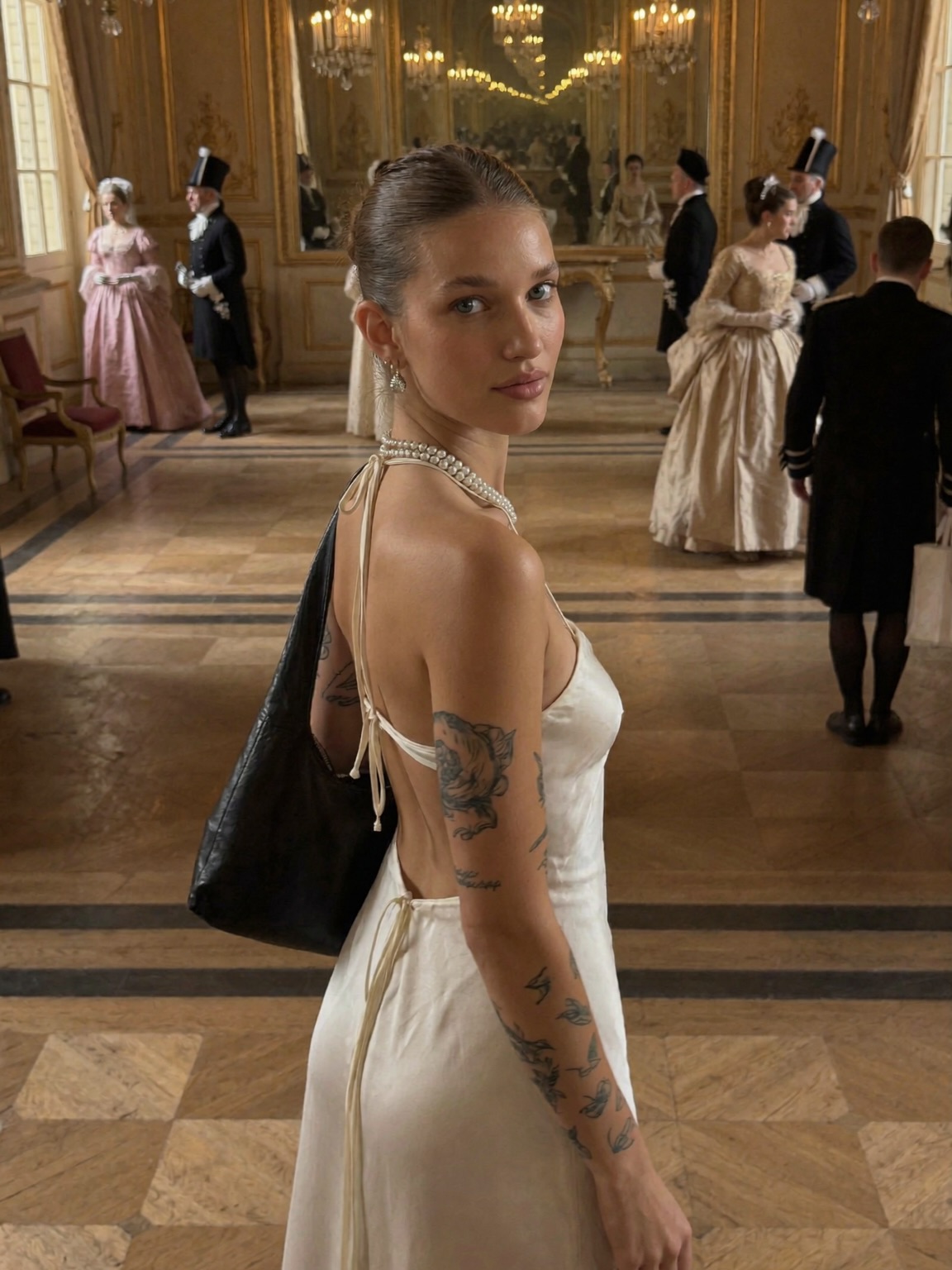
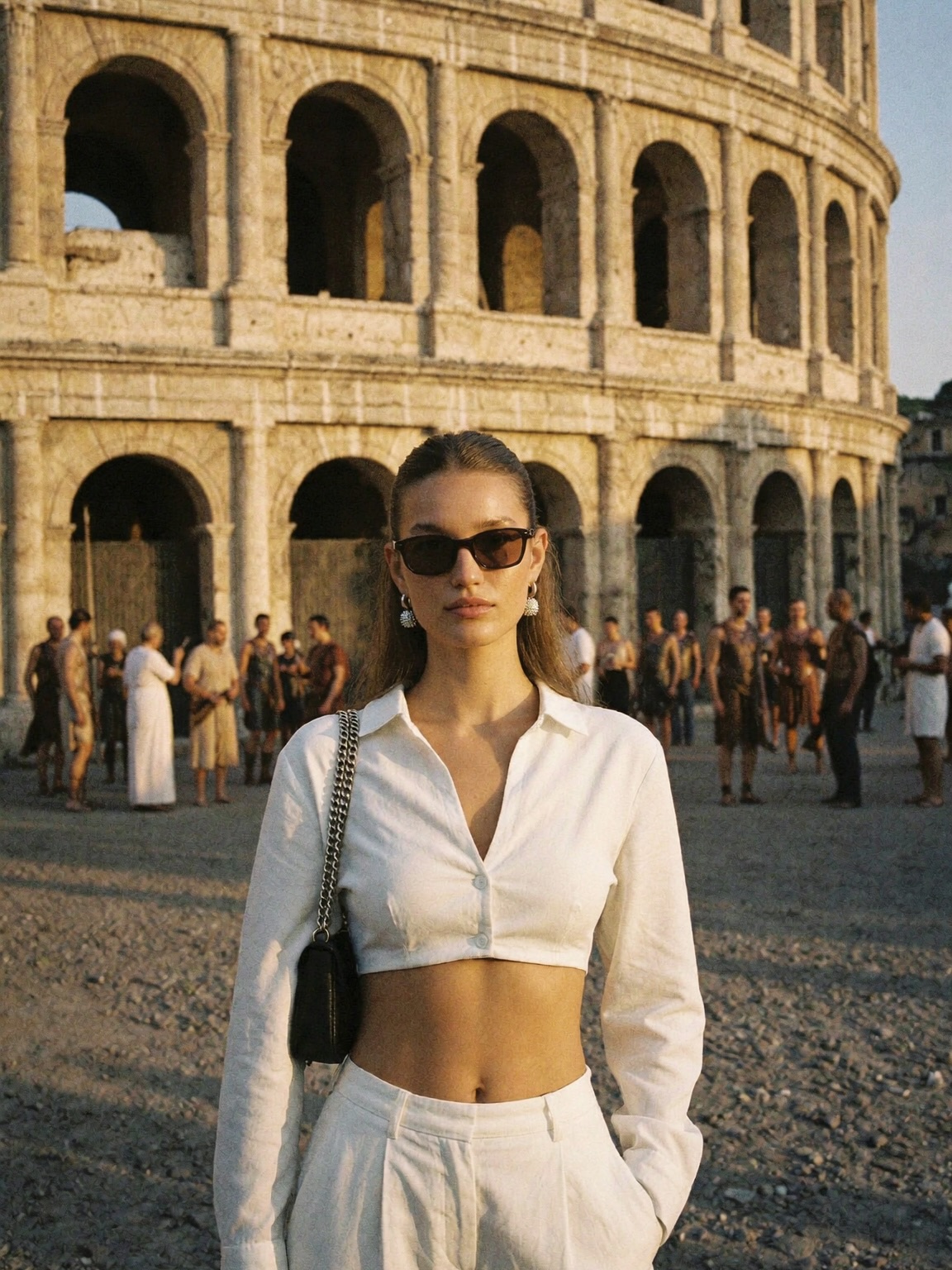
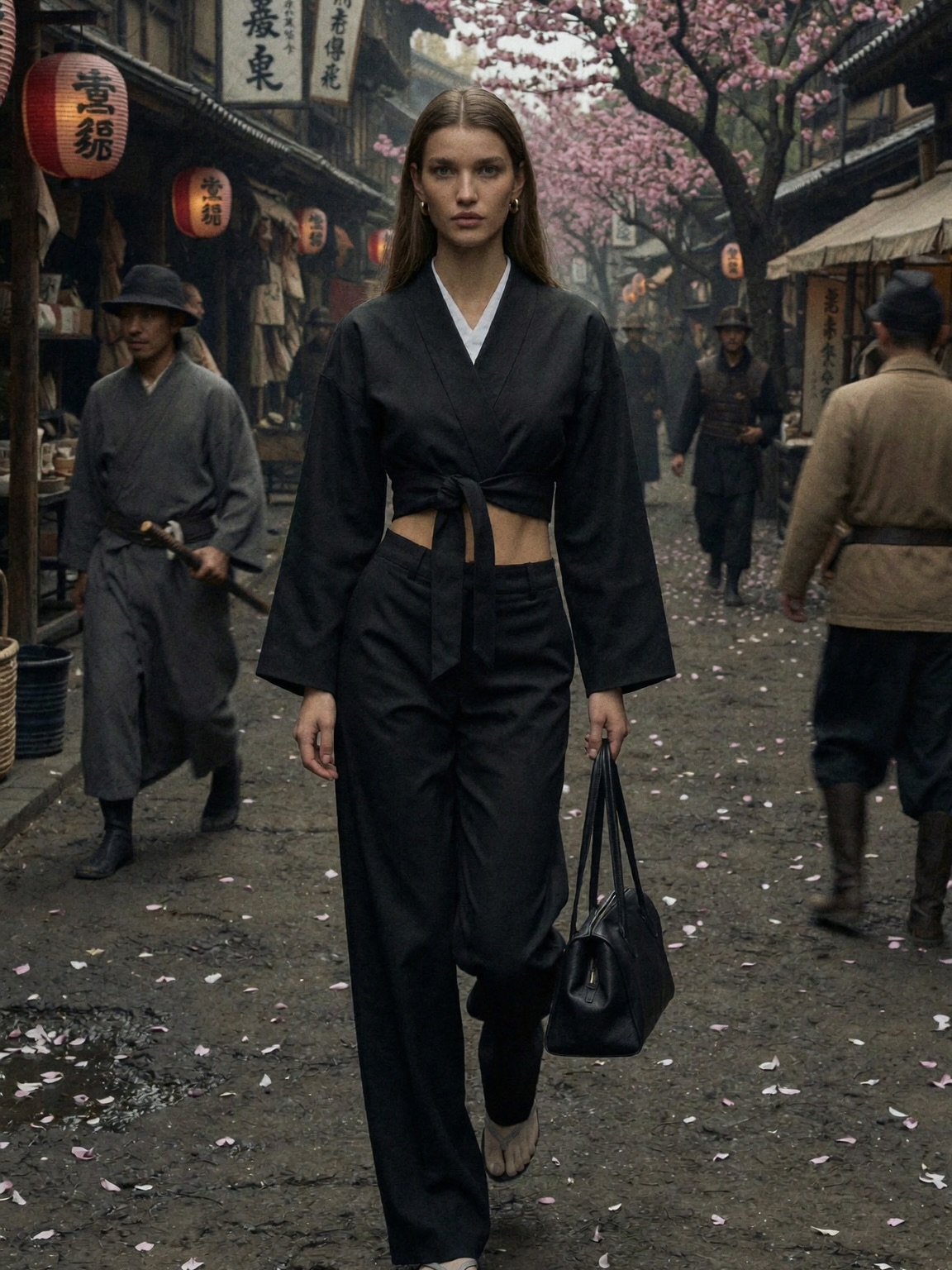
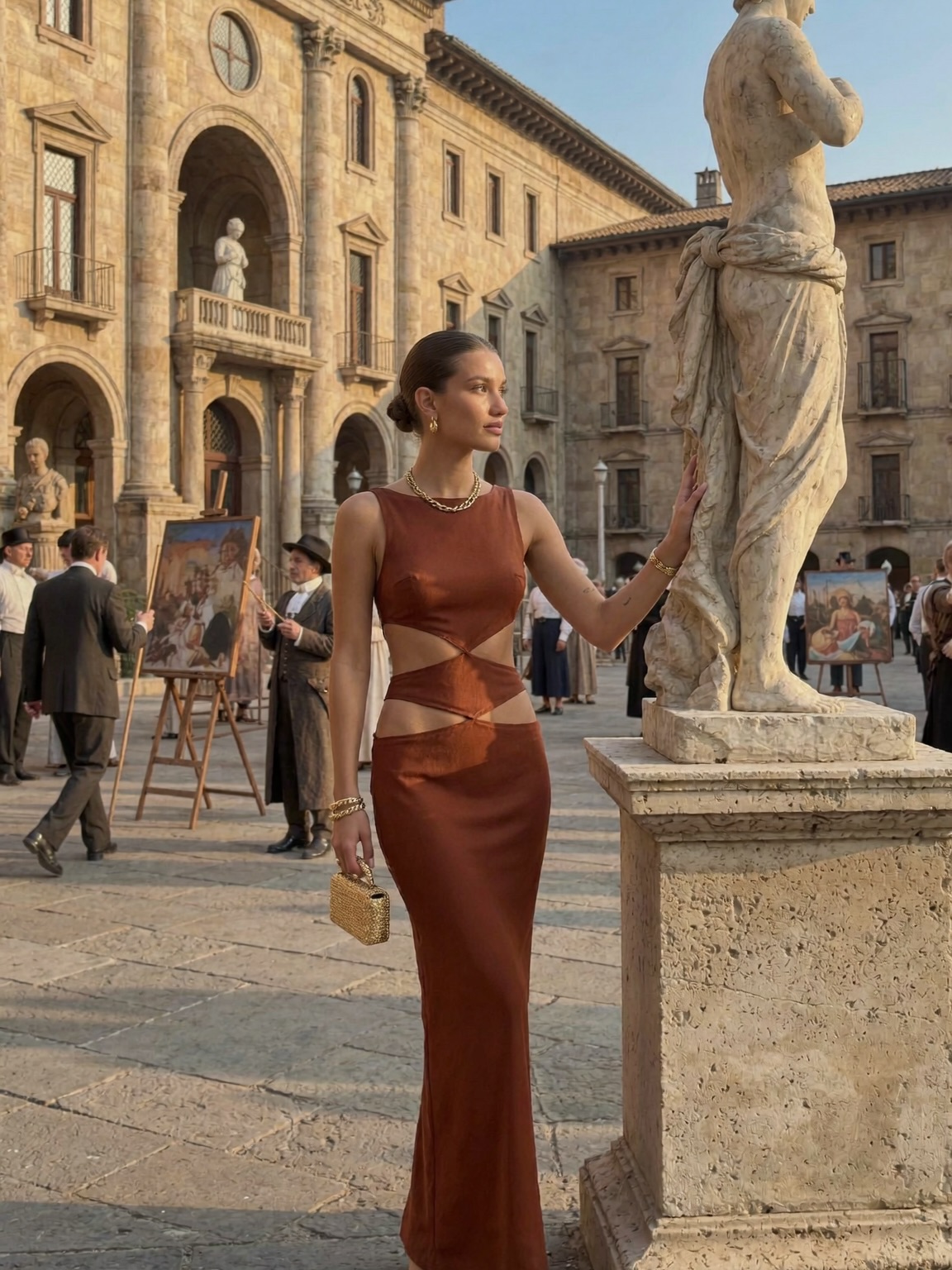

Lately 😎 I don’t mind being lost in history tbh #historyvlogger #chloevshistory #timetraveller #ancientrome #ancientegypt
Lately 😎 I don’t mind being lost in history tbh #historyvlogger #chloevshistory #timetraveller #ancientrome #ancientegypt
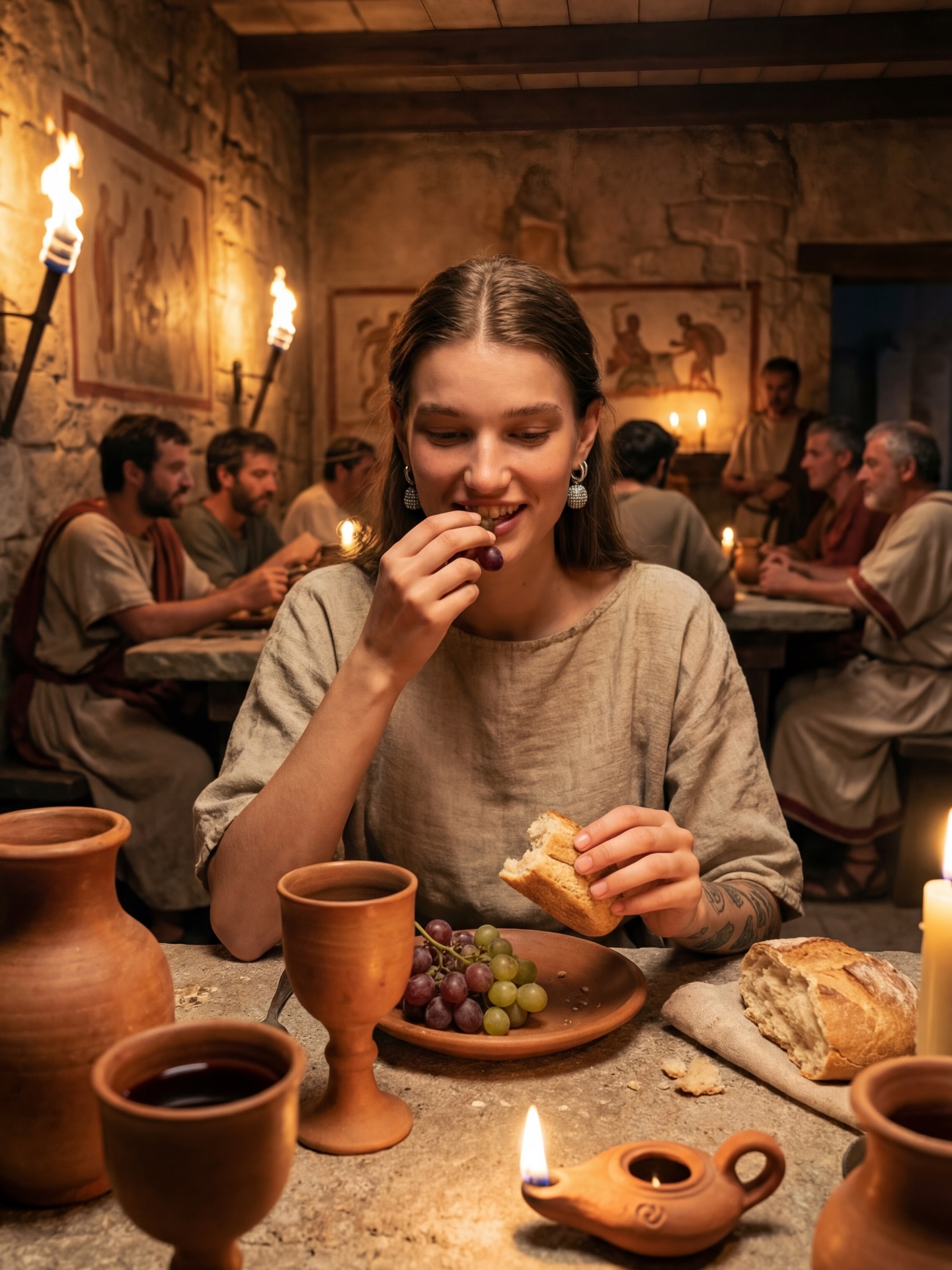
History content goes viral when it stops feeling like a lecture and starts feeling like a life you can touch. This image nails that: warm firelight, real food, and a candid human moment. For a creator like Chloe VS History, it’s the perfect “lost in history” beat—because it’s not about monuments, it’s about living inside the era.
The hook is sensory realism. Grapes, bread, terracotta cups, an oil lamp flame—your brain immediately fills in smell and sound. That’s what makes viewers linger. They’re not just looking at a costume; they’re tasting a scene.
Then there’s the second hook: candid joy. The subject is mid-bite, smiling to herself. That’s rare in “period” imagery, which often feels stiff. Candid moments make the era feel believable, and believability drives comments like “this looks real,” “I want to be there,” and “what are they eating?”
Finally, the lighting does the persuasion. Firelight creates a warm gradient and soft shadows that feel expensive, cinematic, and intimate. It’s the easiest shortcut to “film still” energy.
| Signal | Evidence (from this image) | Mechanism | Replication Action |
|---|---|---|---|
| Edible props | Grapes and bread on a plate | Triggers sensory imagination; increases dwell time | Lock 1–2 foods and name them precisely (grapes + rustic bread) |
| Practical flame lighting | Oil lamp + candles + torches | Instantly signals “pre-electric era” and adds cinematic warmth | Prompt “visible flame oil lamp on table” and “torchlight on stone walls” |
| Candid micro-action | Grape-to-mouth gesture, soft smile | Feels like a captured moment, not a posed reenactment | Use one clear action: eating, pouring wine, laughing, tearing bread |
| Background social proof | Other diners in tunics/togas | Makes the world feel populated and real | Keep background diners present but softly blurred |
Recipe 1: Ancient Egypt dinner room
{ancient interior} {two foods} {visible flame} {candid action}Recipe 2: Edo-era tea house
{tea house} {snack props} {lantern light} {quiet smile}Recipe 3: Roman kitchen prep moment
{rustic kitchen} {terracotta tools} {firelight} {hands doing one task}The aesthetic is “warm realism.” The stone and linen are matte, the ceramics catch tiny highlights, and the flame gives everything a living edge. The background stays social but soft, which keeps the viewer focused on the action and the food.
| Observed (concrete) | Recreate (prompt control) |
|---|---|
| Visible flame practicals on table and walls | “oil lamp flame on table, torchlight on stone walls, candles” |
| Terracotta + stone textures | “terracotta cups and clay jug, rough stone table, matte textures” |
| Grape-to-mouth candid action | “mid-bite gesture, lifting grape to mouth, soft smile” |
| Background diners in soft focus | “Roman diners in tunics/togas, softly blurred background” |
| Prompt chunk | What it controls | Swap ideas (EN, 2–3 options) |
|---|---|---|
| Practical flames | Era authenticity + cinematic warmth | “oil lamp flame” / “wall torches” / “candle cluster” |
| Food props | Sensory hook | “grapes + bread” / “figs + cheese” / “wine + olives” |
| Material palette | Believability | “linen + stone” / “wood + paper” / “sandstone + bronze” |
| Background population | World-building | “distant diners” / “server silhouette” / “busy tavern crowd” |
| Action verb | Stops stiff posing | “eating” / “pouring wine” / “tearing bread” |
Ultra-realistic cinematic period-drama still.
{one woman} seated at rough stone table, lifting grape to mouth, holding torn bread, soft smile
beige linen tunic, natural wrinkles
ancient Roman tavern interior, stone walls, fresco panels, background diners in togas (soft blur)
terracotta cups, clay jug, plate of grapes, oil lamp with visible flame
warm candlelight and torchlight, subtle film grain, shallow-to-moderate DOFChange only 1–2 knobs per run (food props or background density). Keep the flame lighting stable or the era illusion breaks.