

ready for a zombie apocalypse? 😈 #zombieapocalypse #thewalkingdead #militarywomen
ready for a zombie apocalypse? 😈 #zombieapocalypse #thewalkingdead #militarywomen
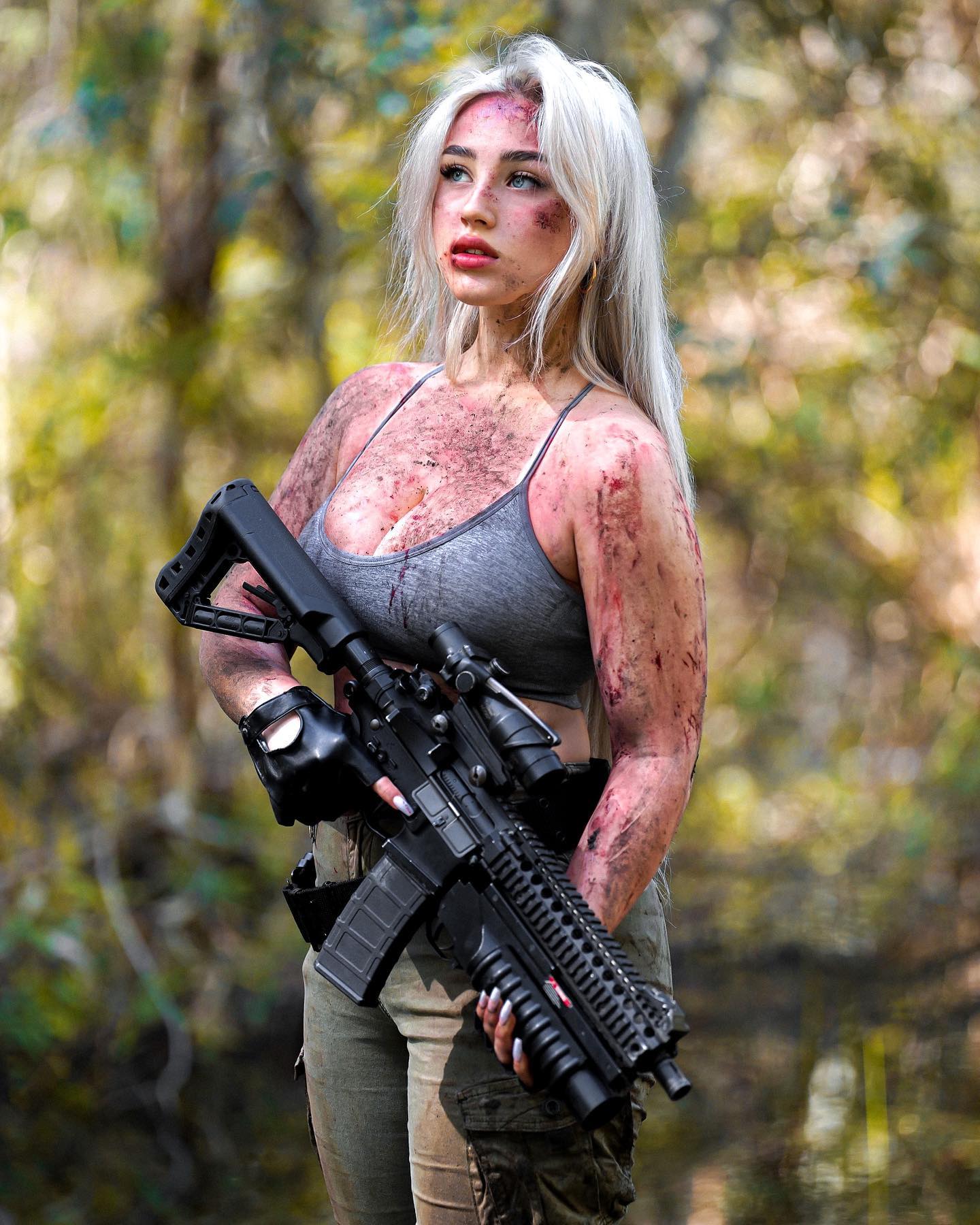
The reason this image works is that it does not try to show the apocalypse directly. There are no zombies on screen, no burning city, no giant effects. Instead, it focuses on aftermath coded into the body: grime, scratches, exhaustion, and vigilance. That restraint makes the frame feel more like a still from a story than a costume demonstration.
The strongest visual move is the contrast between beauty styling and damage styling. The silver hair and clear facial structure keep the image aspirational. The blood-and-dirt makeup breaks that polish just enough to create narrative tension. That kind of contrast is often stronger than pure horror because it keeps the audience looking instead of recoiling.
The forest background helps in a quiet way. It stays blurred and generic, which means the image does not need production design to feel like a survival scenario. The body, the weapon, and the expression carry most of the storytelling.
| Signal | Evidence (from this image) | Mechanism | Replication Action |
|---|---|---|---|
| Aftermath storytelling | Dirt, cuts, dried blood makeup, tense gaze | Viewers infer the unseen story, which often feels more cinematic than showing everything | Use damage as narrative evidence, not just decoration |
| Beauty versus survival | Clean silver hair and strong facial beauty mixed with grime and weaponry | The contrast keeps the image attractive while still feeling dangerous | Preserve one clear beauty anchor even in harsh genre styling |
| Contained genre cues | One rifle, one forest, one survivor, no extra chaos | Clean genre signals make the frame easy to read on a fast feed | Limit the scene to 2-3 unmistakable apocalypse cues |
This look is less useful if you need realism in a documentary sense. It is stylized survival, not reportage. Its strength is emotional readability, not factual grit.
{survivor outfit} {damage makeup} {forest mood} {vigilant pose}{beauty anchor} {aftermath texture} {genre cue} {quiet tension}{soft ruined environment} {single survivor} {weapon prop} {cinematic restraint}The image uses a smart hierarchy. The face is still the emotional center, the rifle is the genre cue, and the damage textures are the narrative evidence. Because those three layers are distinct, the frame reads quickly even though it carries a lot of information.
The gray tank and olive pants also matter. They keep the palette grounded. If the outfit were brighter or more tactical-complex, the frame would start feeling like gear cosplay. Here it stays in the sweet spot between beauty portrait and survivor fiction.
Creators trying to replicate this should remember that post-apocalyptic images become stronger when the environment stays quiet. Too much visible destruction usually makes the frame cheaper, not richer.
| Prompt chunk | What it controls | Swap ideas (EN) |
|---|---|---|
| silver-white hair, clear blue eyes, soft beauty realism | Beauty anchor and memorability | ash blonde hair, darker brunette survivor, braided version |
| dirt, scratches, dried-blood makeup | Narrative aftermath and genre coding | mud splatter, ash, bruising, rain-soaked distress |
| gray crop tank, olive cargo pants, black rifle | Simple survival silhouette | hoodie version, tank with harness, field jacket |
| blurred woodland background | Quiet cinematic setting without overbuilding the world | abandoned field, roadside brush, foggy pines |
Baseline lock: keep the damage makeup, the simple survivor outfit, and the off-frame vigilant gaze. Those three details create most of the image’s story tension.