
ready for a zombie apocalypse? 😈 #zombieapocalypse #thewalkingdead #militarywomen
ready for a zombie apocalypse? 😈 #zombieapocalypse #thewalkingdead #militarywomen
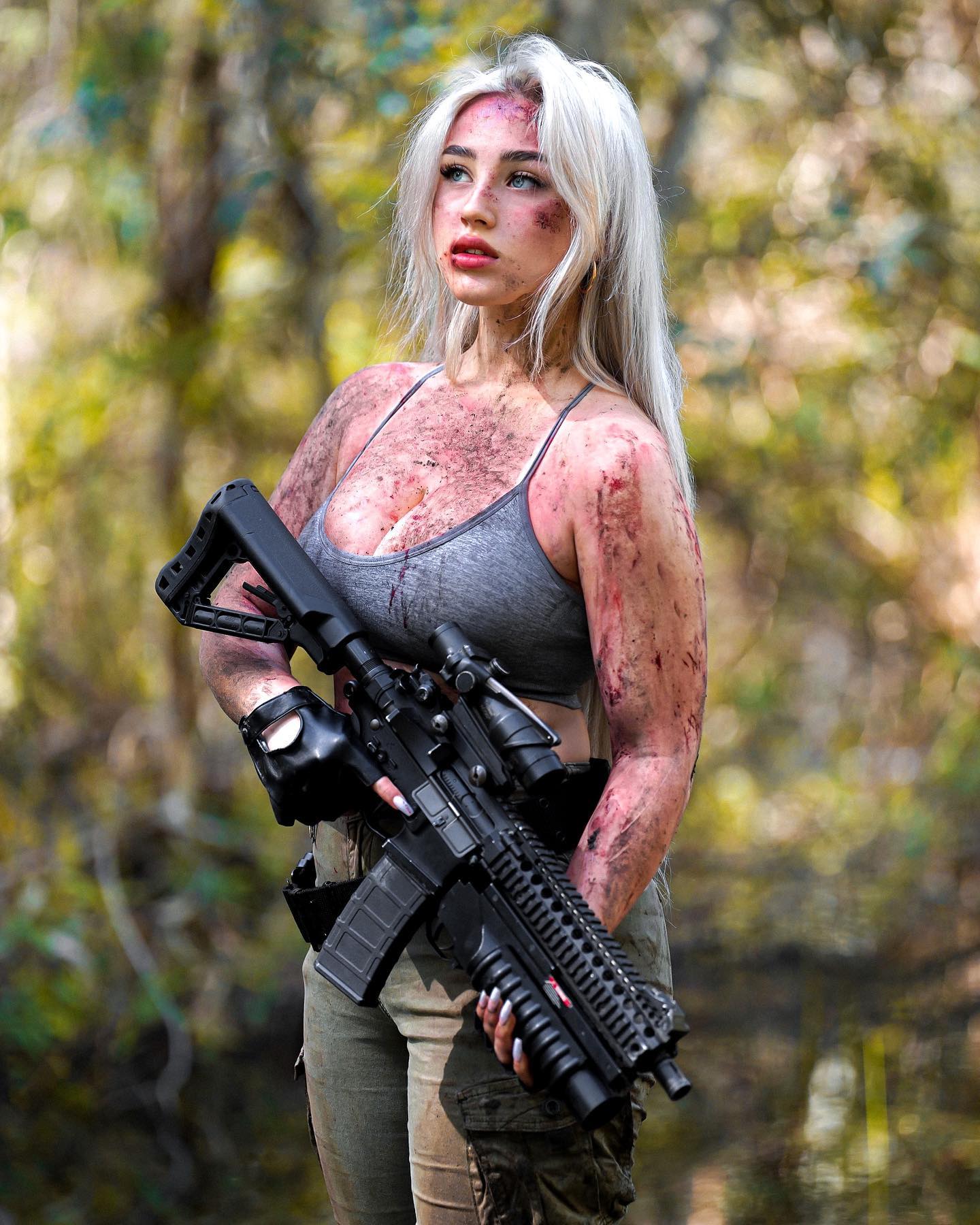
This image succeeds because it mixes beauty portrait language with survival aftermath. At first glance, the face, hair, eyes, and shallow depth of field feel like a polished outdoor portrait. Then the dirt, scratches, blood, and bruised skin shift the reading completely. The result lands somewhere between cinematic still, cosplay realism, and apocalypse key art.
The strongest decision here is restraint. The image does not rely on screaming, exaggerated terror, or dramatic action. Instead, it captures a quiet moment after impact. The subject looks off into the distance, breathing, listening, processing. That pause makes the scene more believable than a chaotic action frame would.
The styling is also grounded. A simple gray spaghetti-strap tank top keeps the silhouette modern and minimal, while the body carries the real storytelling through grime, red abrasion, and smeared blood. Because the clothing is so plain, the skin effects become the central narrative layer.
The partial rifle crop is another smart touch. It tells you this is a survival setting without overwhelming the portrait. If the gun were centered and fully visible, the image would become gear-focused. By keeping it at the edge of frame, the tension remains psychological and character-driven.
To recreate this image well, describe the damage carefully. Use words like dried blood, dirt smears, scratch marks, forehead wound, bruised redness, dusty skin, and exhausted expression. Avoid stylized "gore" language unless you want the result to drift into horror poster territory. The image works best when the injuries feel recent and real, not theatrical.
The forest background should stay soft and warm. You want enough green and gold bokeh to signal an outdoor environment, but not so much detail that the scene becomes busy. A blurred woodland backdrop gives the portrait emotional space and keeps attention on the face.
Hair matters more than many people expect in this setup. Loose platinum hair with a few tangled strands helps sell the idea that the subject has been moving, sweating, and surviving. Perfect salon hair would weaken the illusion. Small imperfections make the scene believable.
For prompting, lock the identity and mood first: platinum blonde woman, chest-up forest portrait, dirt and blood across face and shoulders, gray tank top, tense off-camera gaze, soft daylight, shallow depth of field, partial black rifle in lower frame. Those anchors usually keep the image from drifting into glam fashion or generic action poster territory.
This kind of image is especially useful for zombie-apocalypse concepts, survival thumbnails, game-inspired cover art, or creator content built around post-disaster aesthetics. It feels cinematic because it focuses on emotional residue instead of spectacle. The character looks like she has already lived through the dangerous part, which makes the viewer imagine the rest.