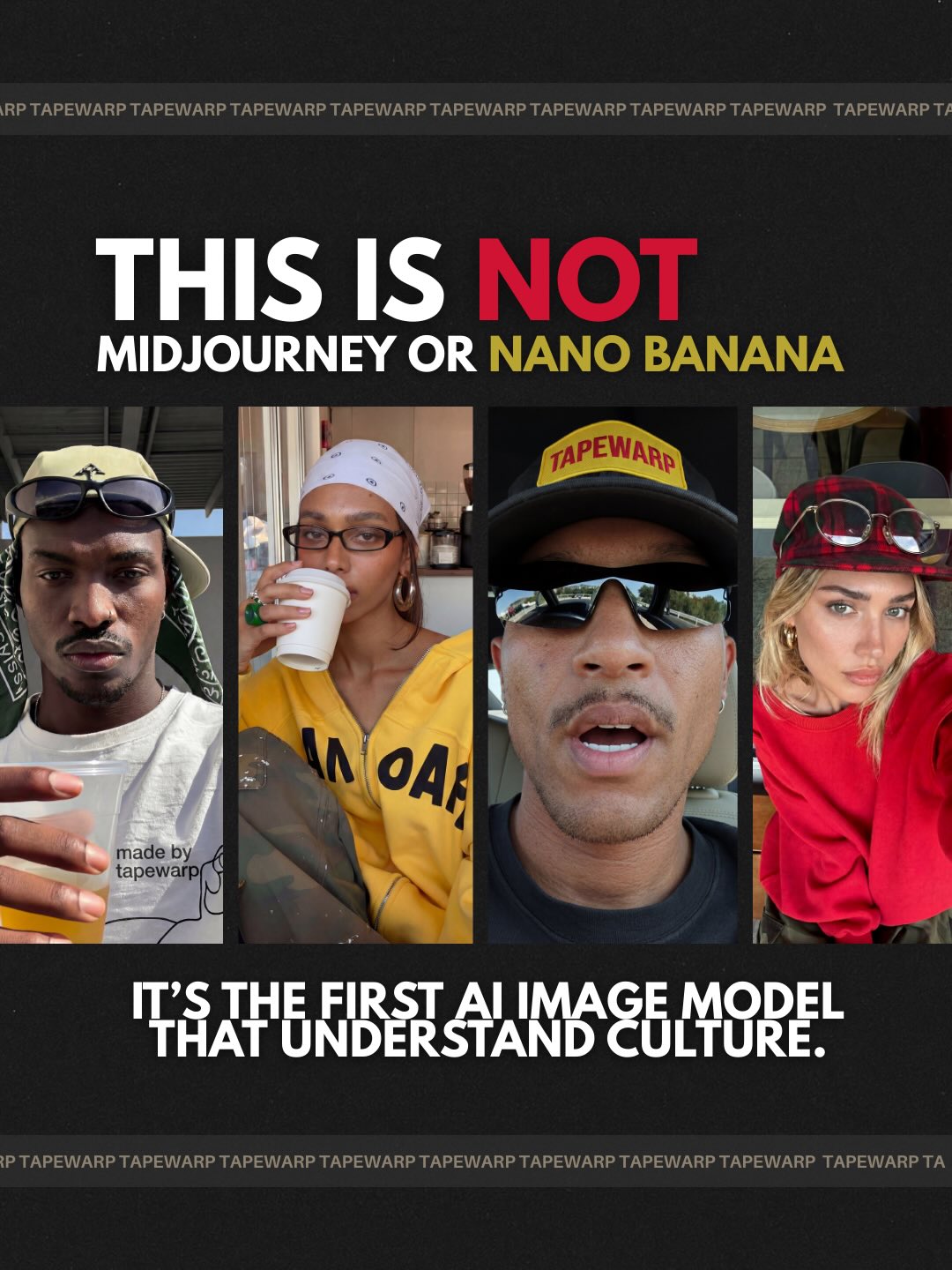
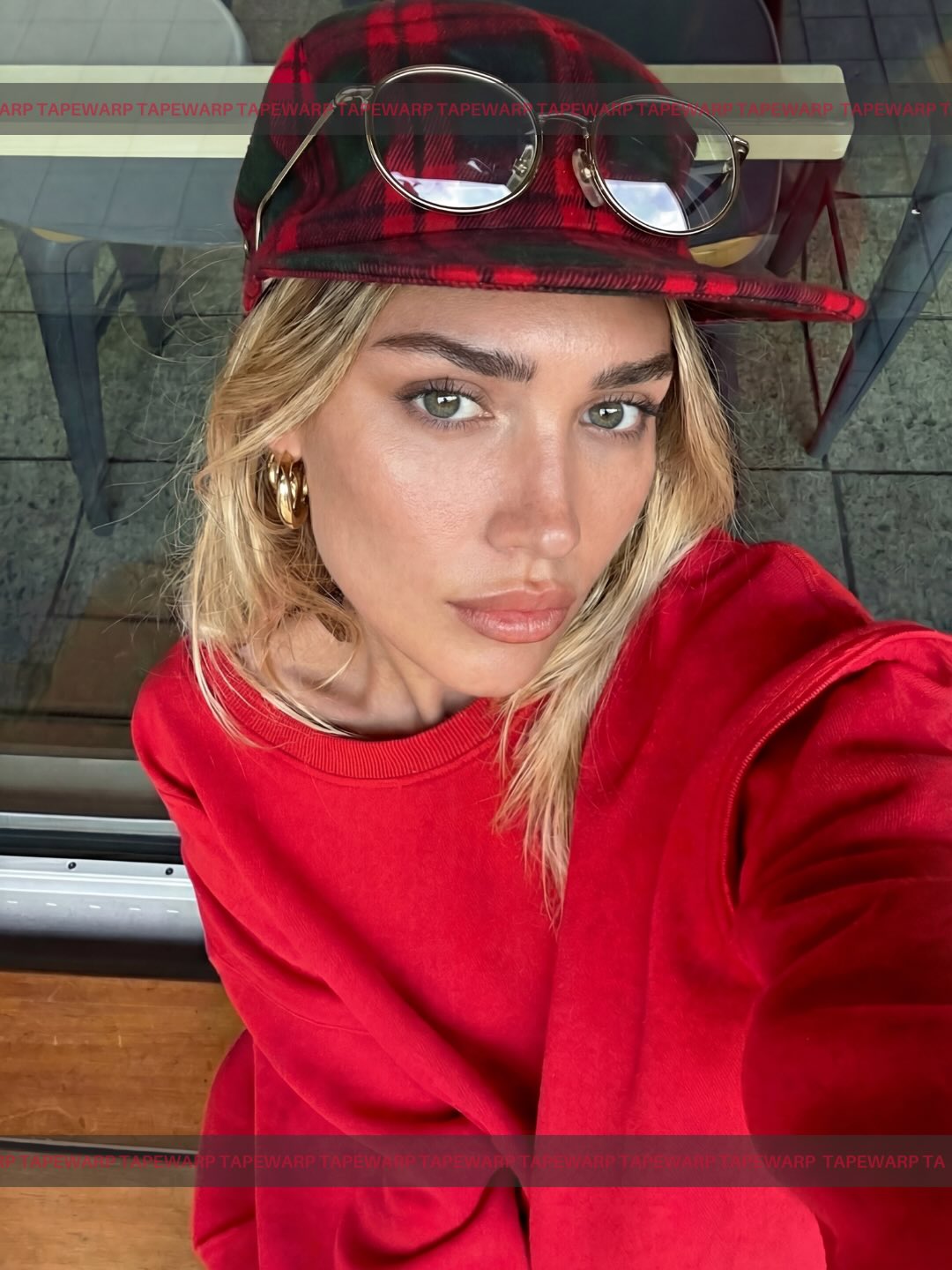
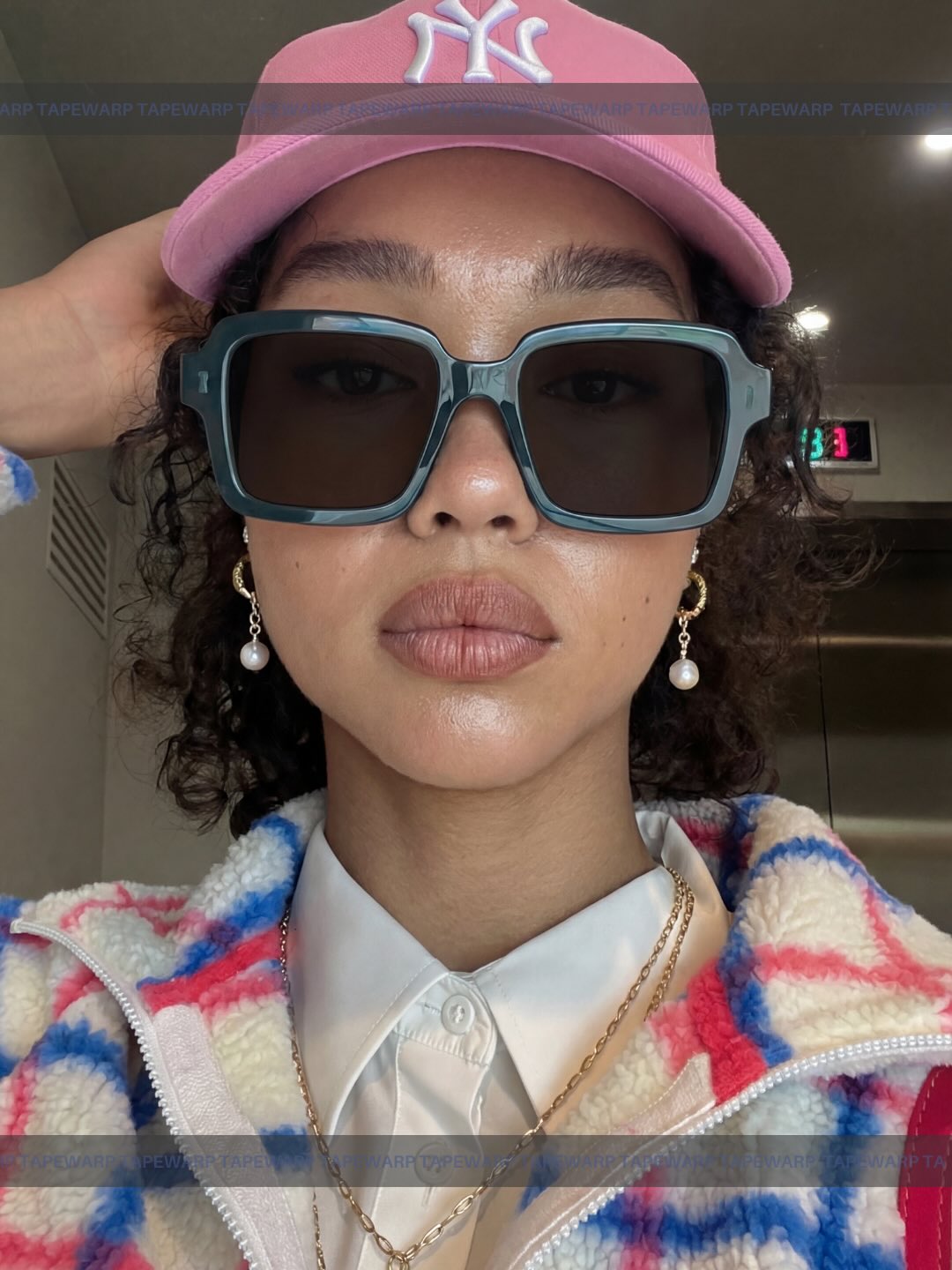
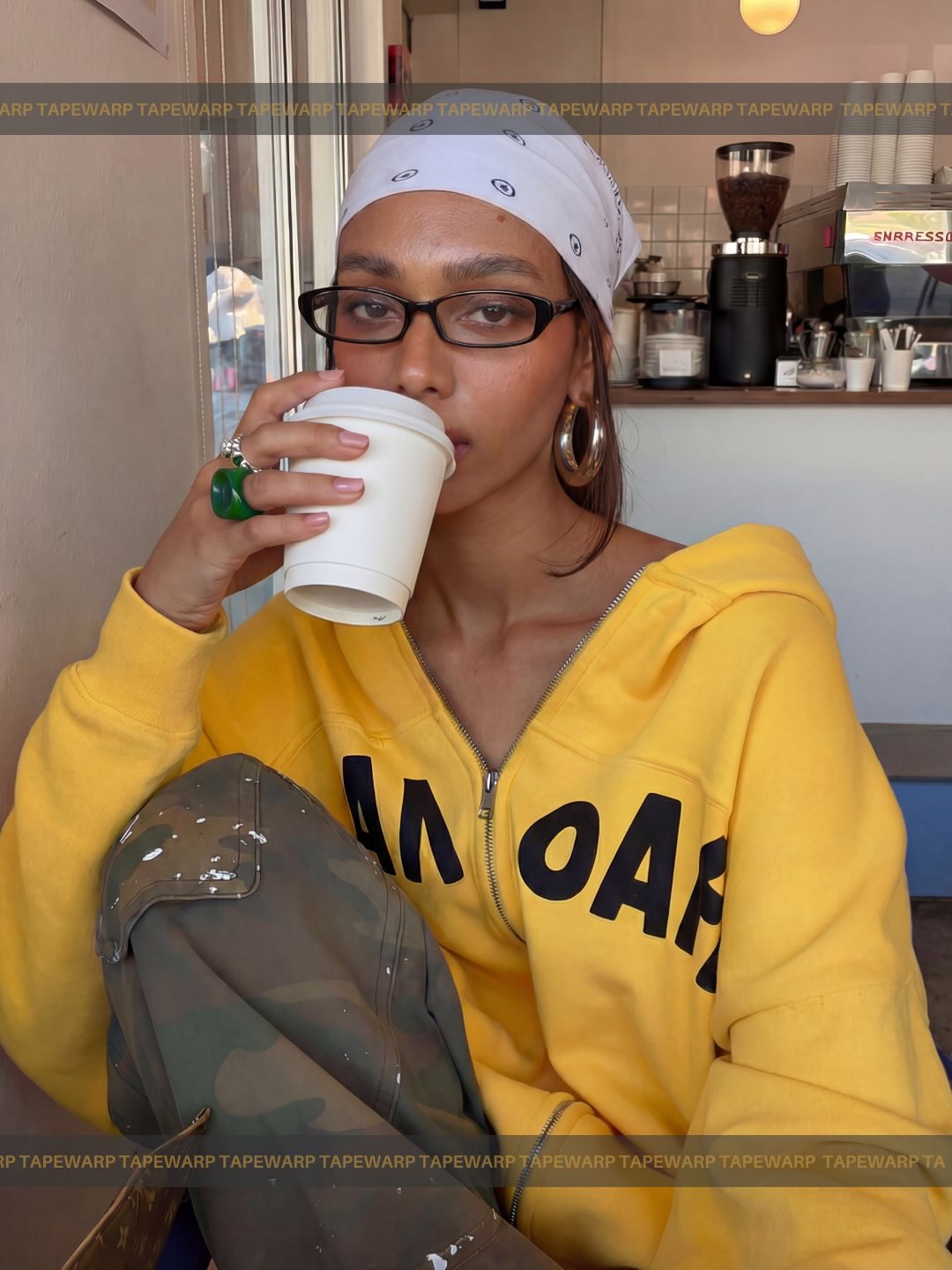
How tapewarp.ai Created This Car Selfie Cap Sunglasses AI Portrait — and How to Recreate It
This image is a strong example of how branded content can remain believable when it is built from an everyday situation rather than an obvious campaign set. The subject sits in the driver seat of a car in natural daylight, wearing reflective wraparound sunglasses, a dark cap with a bold TAPEWARP patch, and small hoop earrings. The framing feels like a paused talking selfie or a mid-sentence lifestyle update. That candid quality matters because it prevents the image from becoming stiff promotional material. Instead, it feels like personal content that has been gently shaped into a shareable brand asset.
That balance between realism and design is what makes the image useful for prompt writing. A weaker prompt might push too hard toward advertising, which would remove the social-native quality that gives the portrait its charm. Another weak prompt might leave out the branding entirely, which would reduce the image to an ordinary car selfie. Here, the image succeeds because it preserves the informality of a real in-car moment while using a few strong visual signals to frame it as intentional content.
The result is a portrait that feels contemporary, creator-friendly, and highly reusable. It could function as a campaign post, a social promo, a branded creator update, or a visual example in a prompt library about natural lifestyle branding. That flexibility is one of its greatest strengths. The image is not dependent on elaborate styling, luxury scenery, or aggressive graphic intervention. It works because one branded object, one clear setting, and one believable expression are enough.
Why the Cap Patch Becomes the Central Anchor
The strongest visual decision in the image is the cap patch. Without it, the portrait would still have style, but it would not have a clear branded center. The patch introduces strong color contrast and an obvious identity marker directly above the face. That placement is important because it lets the eye read the cap and the subject as one unified signal. In practical prompt terms, this means the hat is not just a wardrobe item. It is the compositional anchor that turns the photo into brand-aware lifestyle content.
This is a good lesson for prompt writers working with soft-branding scenarios. If you want an image to feel natural but still carry affiliation, one dominant branded object can often do the job more effectively than multiple heavy-handed elements. Here, the patch on the cap is enough to establish identity, while the rest of the styling remains subtle. That keeps the portrait from feeling cluttered or overmarketed.
The shape and readability of the patch also matter. Because the logo is clear and high-contrast, it works instantly at a glance. If the prompt under-describes it, the output may lose that clarity and the portrait’s strongest organizing element disappears. This is why branded prompts should specify not only that a logo exists, but how legible and visually central it should remain in the final frame.
How the Car Interior Keeps the Image Believable
The car environment is doing more than providing location. It grounds the portrait in an everyday routine. Beige seats, visible steering wheel, and windshield light all create the feeling of a real pause in the middle of motion. That lived-in context helps the image feel social and immediate. It suggests that the viewer is seeing a real moment rather than an artificially manufactured studio concept.
This matters because much of the image’s appeal comes from its credibility. If the interior became too luxurious, too cinematic, or too stylized, the portrait would begin to feel less honest. The current environment is recognizable and modest, which supports the intended creator-lifestyle tone. It communicates that the subject’s confidence comes from presence and style, not from expensive staging.
For prompt design, the car should therefore be described with restraint. The writer should preserve the beige seats, steering wheel framing, and daylight entering through windows, but avoid adding unnecessary luxury details or excessive dashboard complexity. The point is to give the subject a real-world context, not to compete with the face and cap for attention.
Why the Mid-Speech Expression Works
A major reason this image feels alive is that the expression appears conversational. The subject looks as if he is talking, reacting, or recording a quick update rather than posing silently for a formal portrait. That small difference changes the whole tone of the image. A static fashion expression would make the shot feel more editorial and less human. The mid-speech feeling keeps it dynamic while preserving realism.
This is particularly useful in prompt writing because expressions are often flattened into generic categories like “confident” or “cool.” Those words are not always enough. Here, the specific idea of a candid paused-video moment is much more useful than abstract emotional labeling. It gives the model something behavioral to reproduce, not just a mood word to approximate.
The conversational expression also matches the setting. Inside a car, a talking-selfie or in-the-moment update feels natural. That harmony between location and expression is part of what keeps the image believable. Prompt writers should pay attention to those alignments. The best lifestyle prompts often succeed because the subject’s behavior matches the environment in a convincing way.
Reflective Sunglasses as Style and Surface
The reflective wraparound sunglasses add surface complexity without overwhelming the portrait. They contribute visual sharpness, a sense of personal style, and just enough mystery to keep the image current. At the same time, they still belong to the everyday logic of the scene. They do not feel like costume pieces. This is an important distinction. Accessories in a lifestyle portrait should elevate the frame without pushing it into parody or over-styling.
The reflections in the lenses are especially helpful because they make the image feel more spatially real. They hint at the outside world beyond the vehicle and prevent the glasses from becoming flat graphic shapes. In prompt terms, that means the reflections should be described as subtle and believable rather than dramatic or hyper-mirrored. The goal is realism with polish, not spectacle.
The sunglasses also help balance the cap visually. The cap anchors the upper frame, while the glasses reinforce the face area and keep the image from feeling too empty in the middle. This creates a compact but layered portrait design. For prompt writing, that kind of accessory balance can matter a lot. Good portraits often rely on a few carefully placed visual weights rather than a long list of decorative details.
How Branding Bands Turn a Selfie into a Designed Asset
The repeated branding strips across the top and bottom edges are subtle, but they are doing important work. They frame the image as designed content rather than raw personal photography. This is one of the best ways to maintain social-native realism while still introducing campaign structure. The viewer still reads the portrait as a real moment, but the graphic borders suggest it belongs to a broader brand system.
That approach is often more effective than putting large text blocks or obvious promotional overlays directly onto the image. Heavy-handed graphics would break the candid energy. Border-based branding, by contrast, preserves the photograph while still giving it repeatable campaign formatting. For creators and brand teams alike, this is a useful model for subtle visual system building.
In prompt terms, the branding bands should be described as thin, repeating, and restrained. They should feel integrated into the layout rather than pasted on top of it. This helps keep the image elegant and modern. It also protects the subject from being visually buried under branding elements.
Prompt Construction Strategy
A strong prompt for this type of image should begin with the subject and the primary brand anchor: young man, trimmed mustache, small hoop earrings, reflective wraparound sunglasses, dark baseball cap with a bold yellow-and-red TAPEWARP patch. Then it should define the setting and pose: seated in the driver seat of a modern car, visible steering wheel in the foreground, beige leather seats, natural daylight from the windshield, candid talking-selfie expression.
After the core scene is established, the prompt should define the style logic: lifestyle selfie realism, branded social-post photography, creator-native editorial polish, and documentary-level credibility. Then it should add the design layer: subtle repeating TAPEWARP bands at the top and bottom of the frame. This order matters because it keeps the realism foundation intact before layering in the graphic structure.
Negative constraints should prevent over-retouching, luxury-car exaggeration, studio glamour lighting, unreadable hat branding, distorted steering wheel, or cluttered interior. The strength of the image depends on moderation. It should feel polished, but still casual. It should feel branded, but still personal. Good constraints protect that balance.
What This Image Teaches About Modern Creator Branding
This portrait is a strong example of how modern creator branding often works best when it looks adjacent to ordinary life instead of separated from it. The car is a familiar environment. The subject’s expression feels conversational. The accessories feel chosen, not costume-like. The branding is present, but it does not dominate. This combination creates trust because the image still feels like something a real person would actually post.
That is important for prompt libraries and educational content because many people still assume branded content must look heavily produced to be effective. In practice, contemporary audiences often respond better to content that feels close to real life while still showing intentional design control. This image demonstrates that principle clearly. It is polished enough to be useful and casual enough to feel true.
For bloggers, marketers, and visual strategists, the image can support discussions about lifestyle branding, social-native campaign design, everyday product identity, or how to build recognizable content without relying on large sets or overt promotional messaging. It is a good teaching example because it shows how little is actually needed when the right signals are chosen well.
Common Mistakes to Avoid
A common mistake would be making the car interior too luxurious or too elaborate. That would shift the image away from believable creator content and toward artificial aspiration. Another mistake would be losing the cap patch clarity, which would remove the frame’s strongest brand anchor. If the logo becomes vague, the whole image becomes less intentional.
Another issue would be over-styling the expression. If the subject looks too posed, too severe, or too obviously camera-aware, the candid energy disappears. The portrait works because it feels like a real moment paused at the right second. That quality should be protected in any rewrite or prompt refinement.
It is also important not to overdo the graphic framing. The border branding should remain subtle. If it becomes too heavy, the image stops feeling like a lifestyle portrait and starts feeling like a poster. The current power of the image comes from its tension between informal realism and quiet design control.
Final Takeaway
This portrait succeeds because it shows how branding can live inside an ordinary moment without ruining its authenticity. The cap patch, sunglasses, steering wheel, daylight, and casual expression all contribute to one coherent message: this is real life, but it is also visually intentional. That is why the image feels current, social-native, and strategically useful.
For prompt writers and content creators, the lesson is straightforward. Anchor the image with one strong branded object, keep the environment believable, preserve natural behavior, and use graphic framing with restraint. If you do that well, a simple in-car portrait can become a compelling brand asset without losing the candid honesty that makes people stop and pay attention.